Does the Shoe Fit? Re-evaluating and Re-discovering an Amenable PUA Solution
Since we last discovered our polyurethane acrylate (PUA) has a shelf life (described here) and received a new solution of PUA, we have been trying to replicate the results that we had before. Unfortunately, we have realized that this is much easier said than done. What we have found is the specific dilution of PUA that we use is very important and any small variation completely changes how it behaves when coating our chips. We also realized that it is very challenging to get accurate volumetric dilutions using the stock PUA since it is extremely viscous and sticky. Detailed below are our attempts at coating chips with different dilutions of PUA to replicate the results that we had seen in the past and the protocol modifications that we made in order to make our final PUA product more reproducible moving forward.
First 2:1 THF:PUA Dilution
There was some confusion surrounding our first request for PUA after our previous batch went bad. The graduate student that makes the solutions for us was unsure of the dilution that he made the first time. Because of this, we decided we would just try a 2:1 THF:PUA dilution since we thought at worst this would just give us thinner coatings.
Spin Protocol 1
Volume Deposited: 25 uL
Spin Steps: 1. 2500 rpm for 10 seconds 2. 7500 rpm for 300 seconds
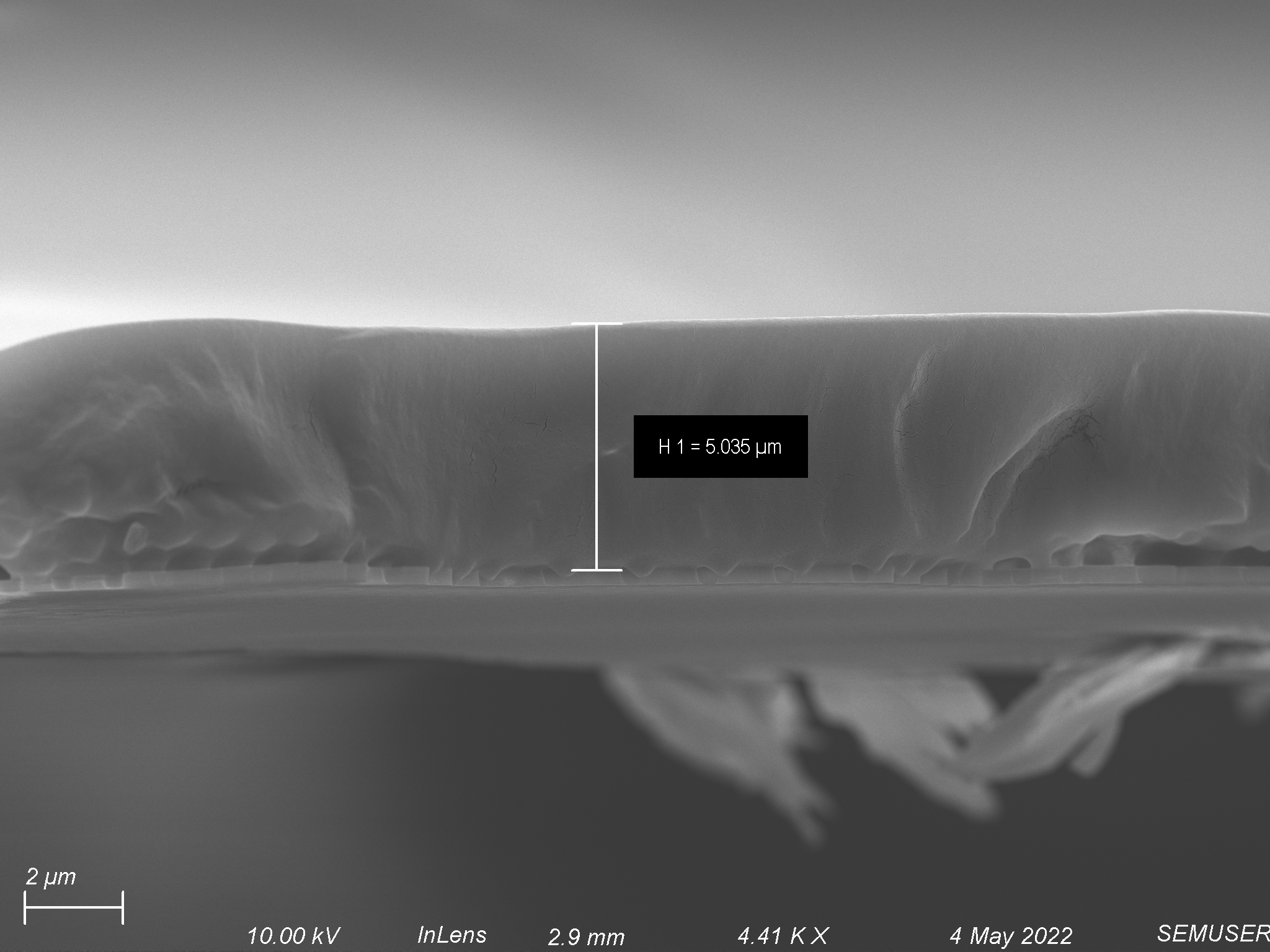
Results: Using our previously established spin protocol, we found out that we were very wrong about our assumption that all PUA solutions behave similarly. This PUA solution acted nothing like our previous one. The coatings were not very uniform or continuous and there were large holes in it. The images below show how the PUA had different thicknesses across the membrane. To try to compensate for these holes and mitigate thickness issues, I increased the volume of PUA to 35 uL in the next protocol.

Spin Protocol 2
Volume Deposited: 35 uL
Spin Steps: 1. 2500 rpm for 10 seconds 2. 7500 rpm for 300 seconds
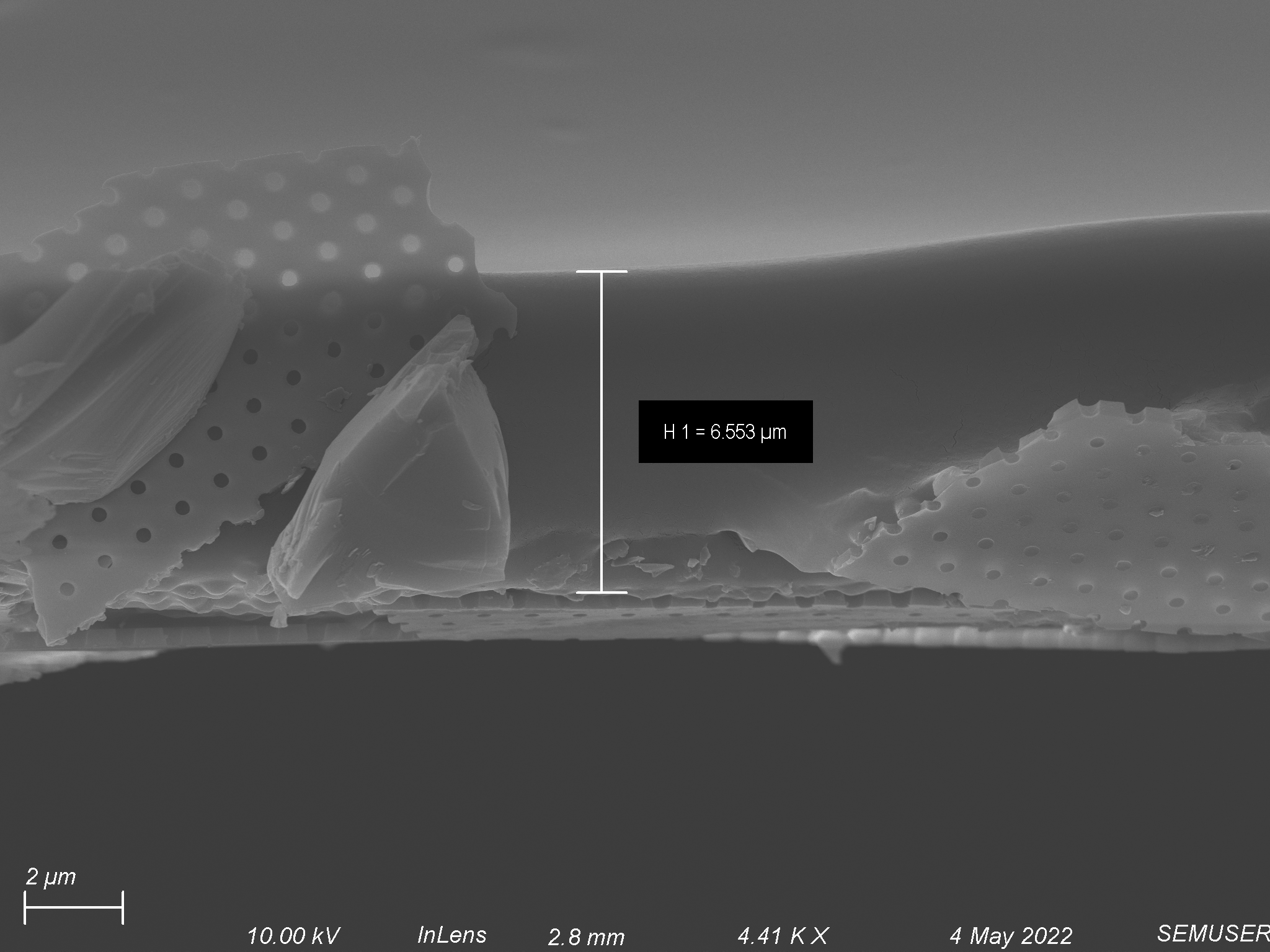
Despite increasing the volume by 10 uL, the coating got worse. Less PUA was left behind on the membrane, leading me to believe that this issue was with the PUA itself and not the coating method. The first two images below show once again a variability in thickness across the chip and the last image shows a variability in thickness across one region of the membrane.


Since these coatings were splotchy compared to our previous work and adding more PUA volume made the coatings worse, I thought that our issues might be related to the 2:1 composition of this PUA solution. I began to think that our previous solution must have had more PUA in it and less THF since having more THF present per volume should make the solution more polarized. As our membranes are traditionally hydrophobic, my hypothesis was that this 2:1 PUA had a higher polarity than our previous PUA and therefore desired to stick to itself rather than the membrane, thus causing our bad coatings.
Second 2:1 THF:PUA Dilution
I relayed my concerns to the graduate student who makes these solutions and he decided it would be best to try the same dilution but more carefully prepared. This solution acted differently than the first two dilutions, once again indicating that its composition was different in some way.
Spin Protocol 1
Volume Deposited: 25 uL
Spin Steps: 1. 2500 rpm for 10 seconds 2. 7500 rpm for 300 seconds
Results: The viscosity of this solution seemed closer to what we had worked with in the past, but upon completion of the spin the PUA had been pushed through the membrane. I have seen this happen before as an indicator that my spin speed was too high. This time around, being that I was spinning at the same speed as my original spin protocol where I had gotten successful coatings, the results indicated that this polymer was less viscous than the two different PUA dilutions we had worked with in the past. This clearly indicates that this dilution is not the same as our original dilution, but we still moved forward and tried to make the coatings better anyways. These efforts are represented by the three protocols below.
Spin Protocol 2
Volume Deposited: 25 uL
Spin Steps: 1. 2500 rpm for 10 seconds 2. 7000 rpm for 300 seconds
Results: Just as it had in the first protocol with this dilution, the PUA was pushed through the membrane. We further slowed the spin speed in the next protocol to account for this.
Spin Protocol 3
Volume Deposited: 25 uL
Spin Steps: 1. 2500 rpm for 10 seconds 2. 6500 rpm for 300 seconds
Results: At this speed, we were finally able to keep all of the PUA on top of the chip. That being said, the coating looked awful and did not cover the entire chip. It got worse upon cross linking under UV light, beading up and covering even less of the chip. We tried to adjust for this by adding more volume at the same speed in the next protocol.
Spin Protocol 4
Volume Deposited: 30 uL
Spin Steps: 1. 2500 rpm for 10 seconds 2. 6500 rpm for 300 seconds
Results: The coating was slightly better with this effort, but our coverage and beading issue remained. At this point we called it quits and decided to ask for another dilution of PUA which had an even lower ratio of THF:PUA.
1:1 THF:PUA Dilution
This dilution of PUA acted much more similarly to our original diluted PUA solution. That being said, it still was not exactly similar and we had some issues. The results of our spins with this dilution are shown below.
Spin Protocol 1
Volume Deposited: 25 uL
Spin Steps: 1. 2500 rpm for 10 seconds 2. 7500 rpm for 300 seconds
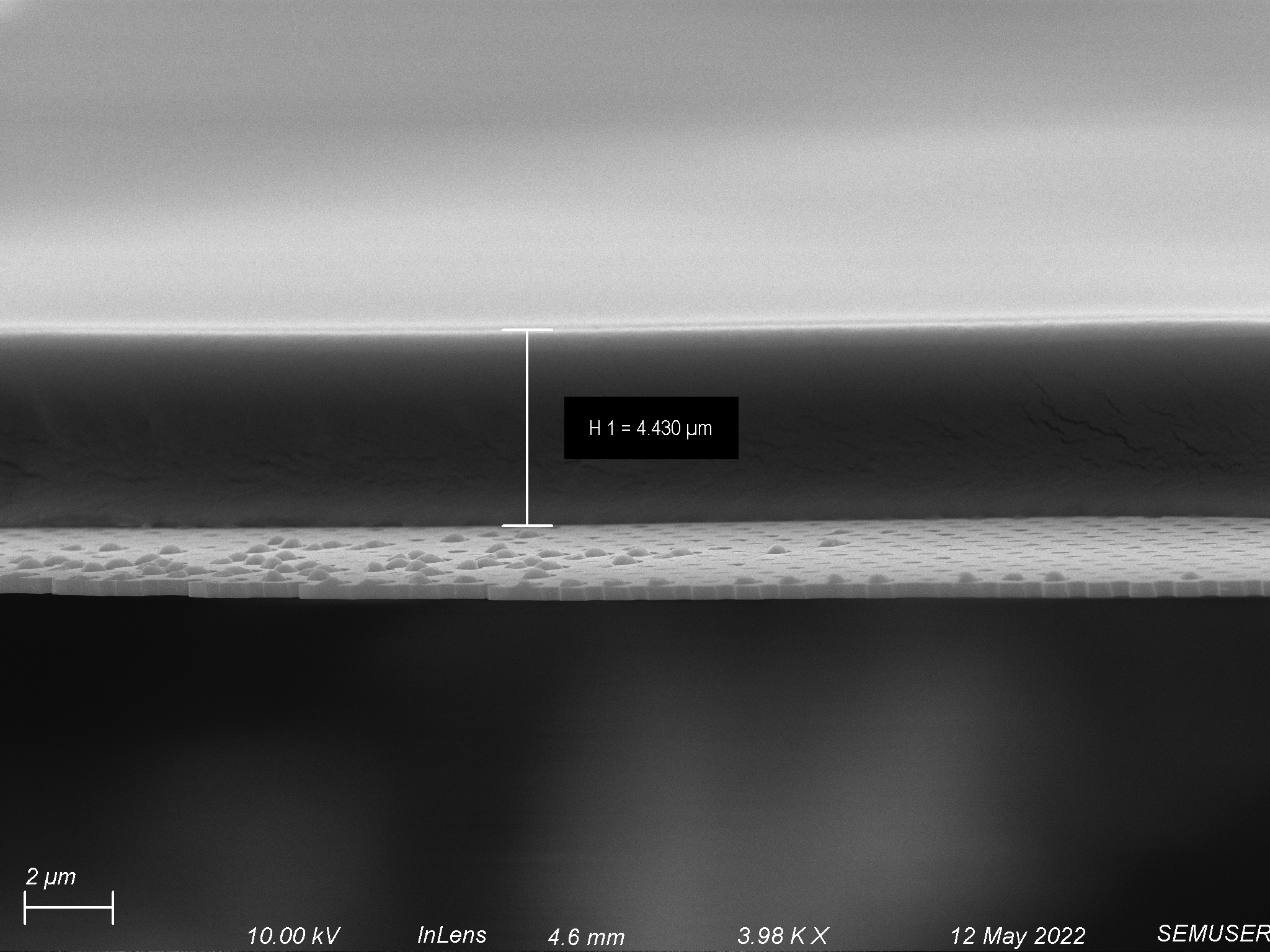
Results: These coatings looked much better. Thickness was consistent across the entire chip and around 4 um again. The only issue we had were some bald spots on the chip. These seemed to originate at the edges of some of the windows and we thought we could eliminate them by depositing either a larger volume of PUA or by slowing our spin speed down. We tried both approaches in the next few protocols.
Spin Protocol 2
Volume Deposited: 30 uL
Spin Steps: 1. 2500 rpm for 10 seconds 2. 7500 rpm for 300 seconds
Results: In this protocol we increased the volume of deposited PUA to see how it would affect our coating. While the coating overall looked okay, it did not look as good as our previous attempt. The bald spots we saw in our previous attempt persisted, but this time we also had variability in the thickness of our coating. Interestingly, a closer look at these bald spots revealed that they were not completely lacking polymer, but instead had a very thin coating. We attempted to address these issues by decreasing the spin speed in the next protocol.


Spin Protocol 3
Volume Deposited: 25 uL
Spin Steps: 1. 2500 rpm for 10 seconds 2. 7000 rpm for 300 seconds
Results: This coating was not continuous, containing areas which had many holes and other areas that beaded up. Clearly this meant slower spins alone would not help us. Instead, we next tried combining approaches and increased our deposition volume while also slowing our spin speed.
Spin Protocol 4
Volume Deposited: 30 uL
Spin Steps: 1. 2500 rpm for 10 seconds 2. 7000 rpm for 300 seconds
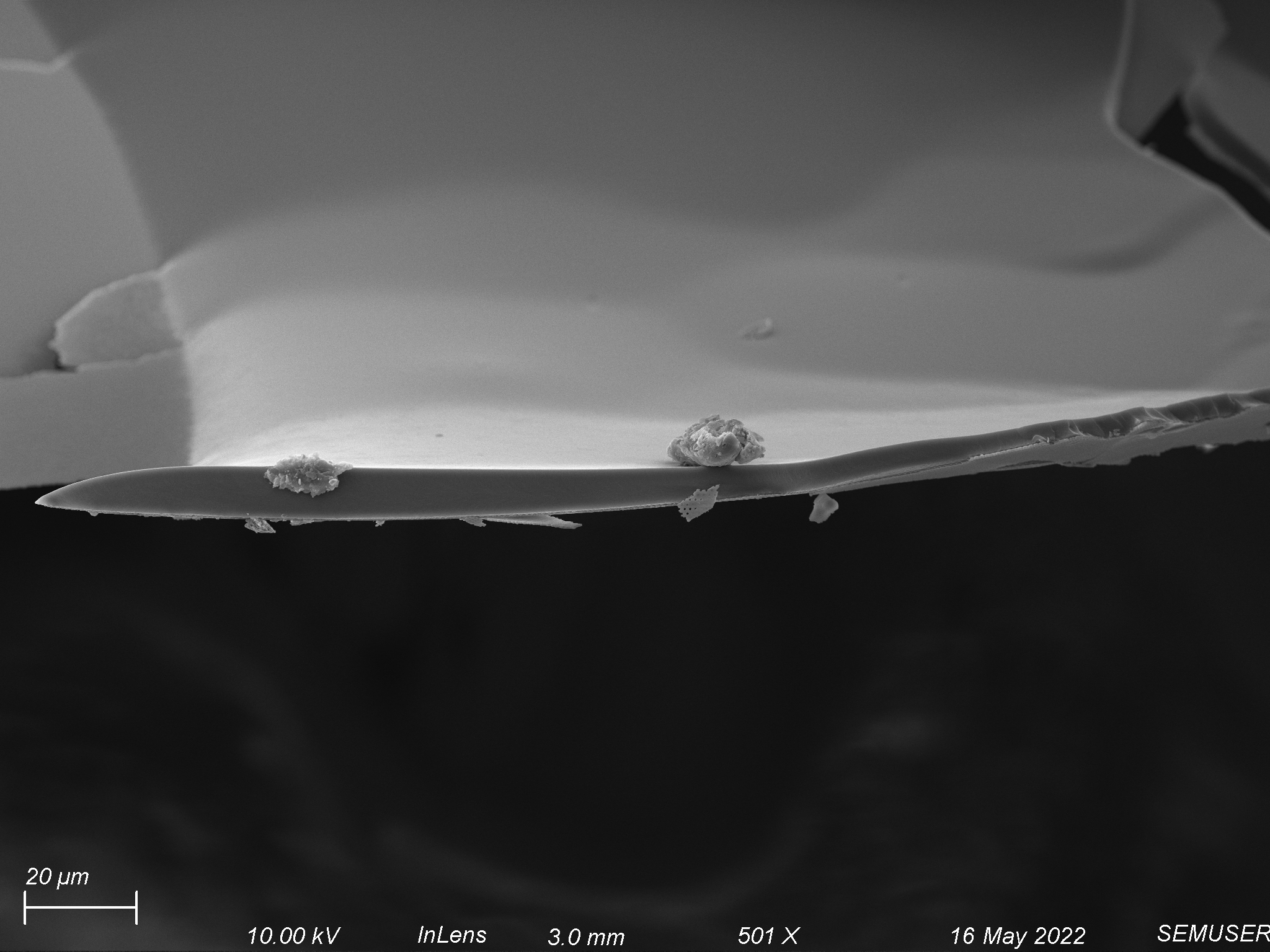
Results: This produced a coating whose quality was between the second and third protocol in this section. Most of the chip was covered in polymer but unfortunately we also saw variability in the coating thickness and there were still bald spots within the coating.
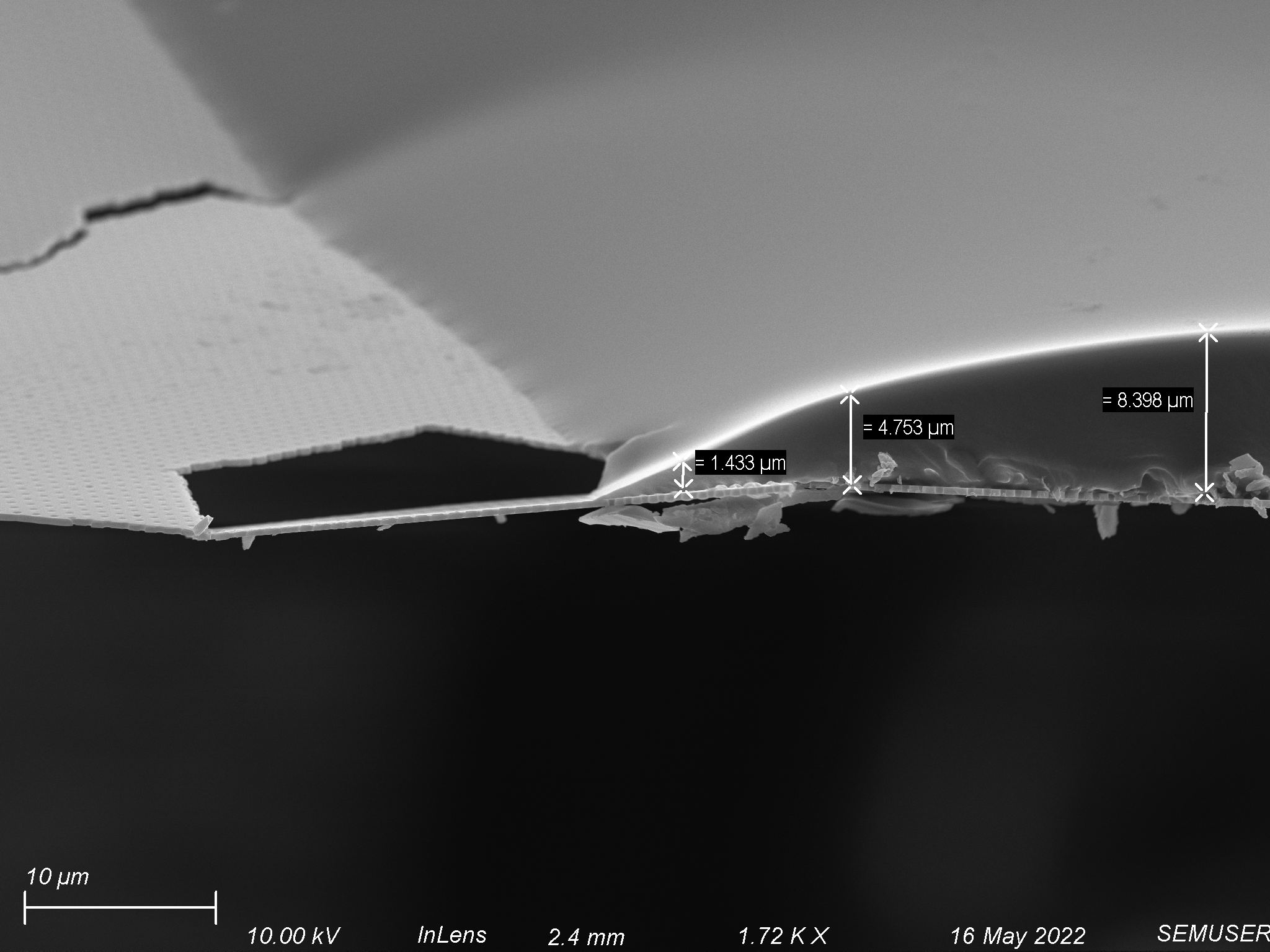
At this point having changed spin speed and deposition volume to no positive effect, we decided it was best to try a different dilution. Since coatings have improved when more PUA is present compared to THF, we decided to ask for our next dilution to have a higher ratio of PUA to THF.
4:3 PUA:THF Dilution (Our Cinderella in this story)
Compared to the other dilutions we used up until this point, this dilution was by far the most viscous. When coating, it acted even more similarly to our original dilution of PUA and finally gave us continuous and uniform coatings. Despite coating a bit thicker than the original dilution of PUA, this dilution showed a lot of promise and provided a foundation with which future solutions of PUA could be based off of.
Spin Protocol 1
Volume Deposited: 25 uL
Spin Steps: 1. 2500 rpm for 10 seconds 2. 7500 rpm for 300 seconds
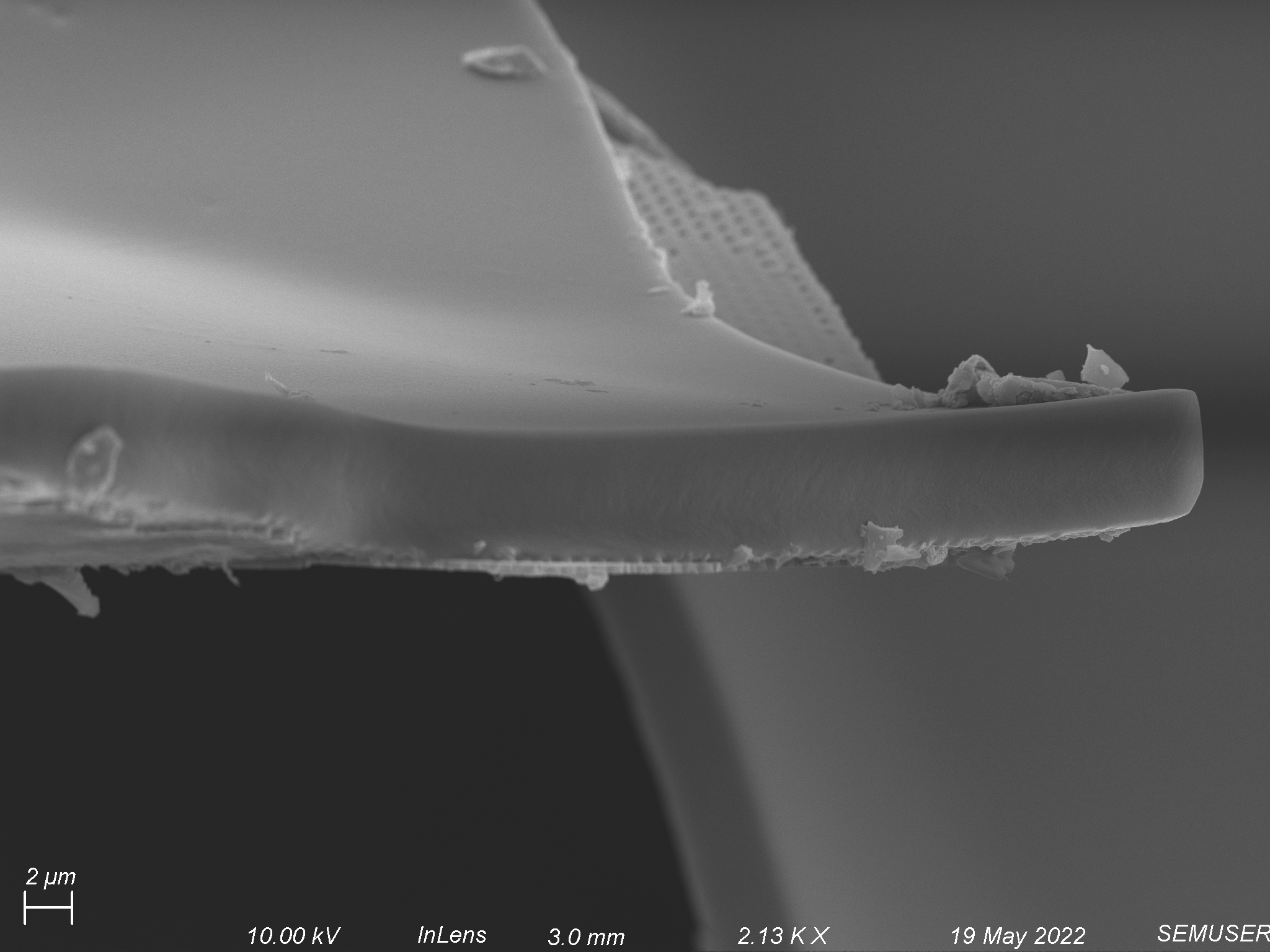
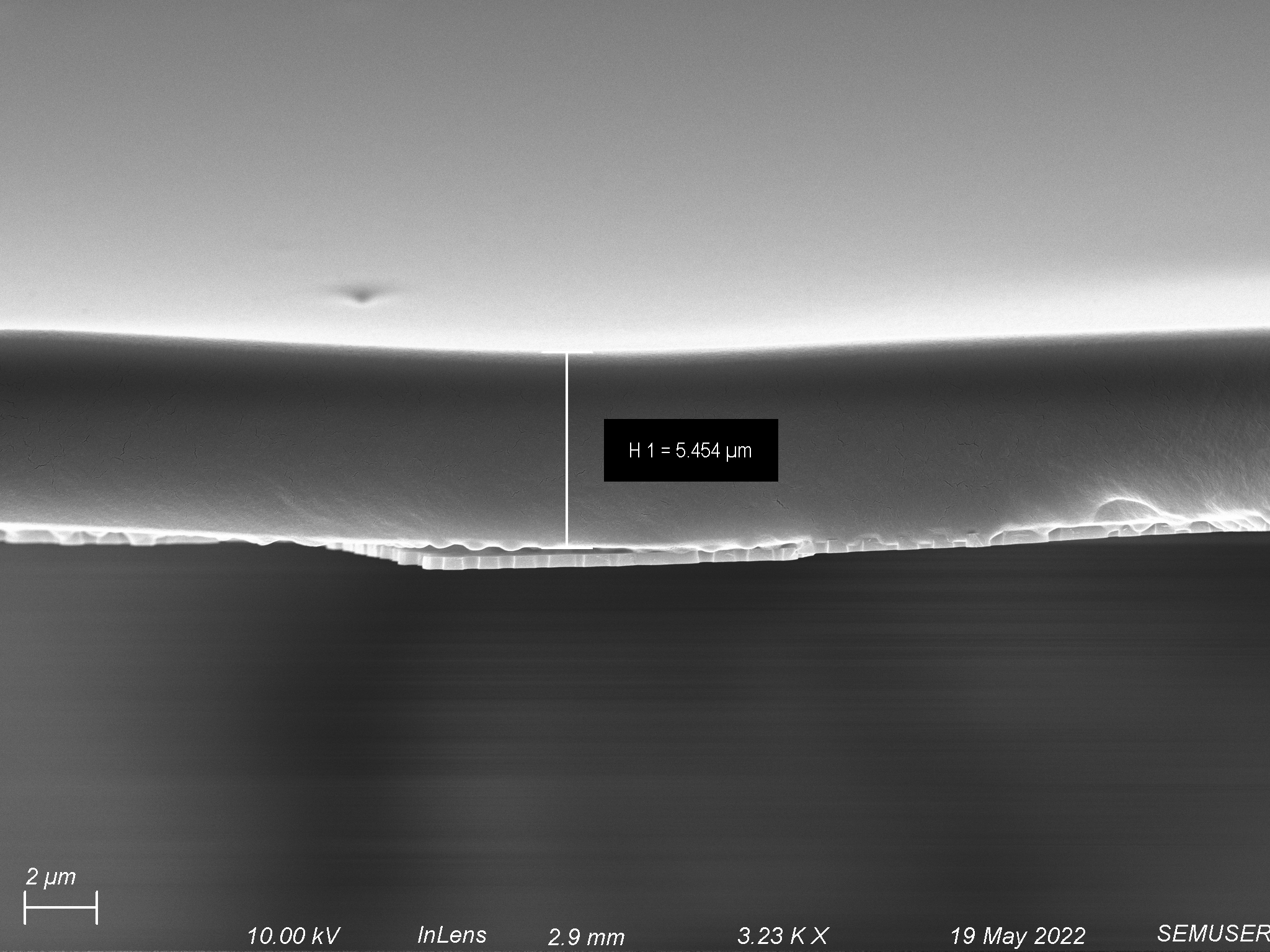
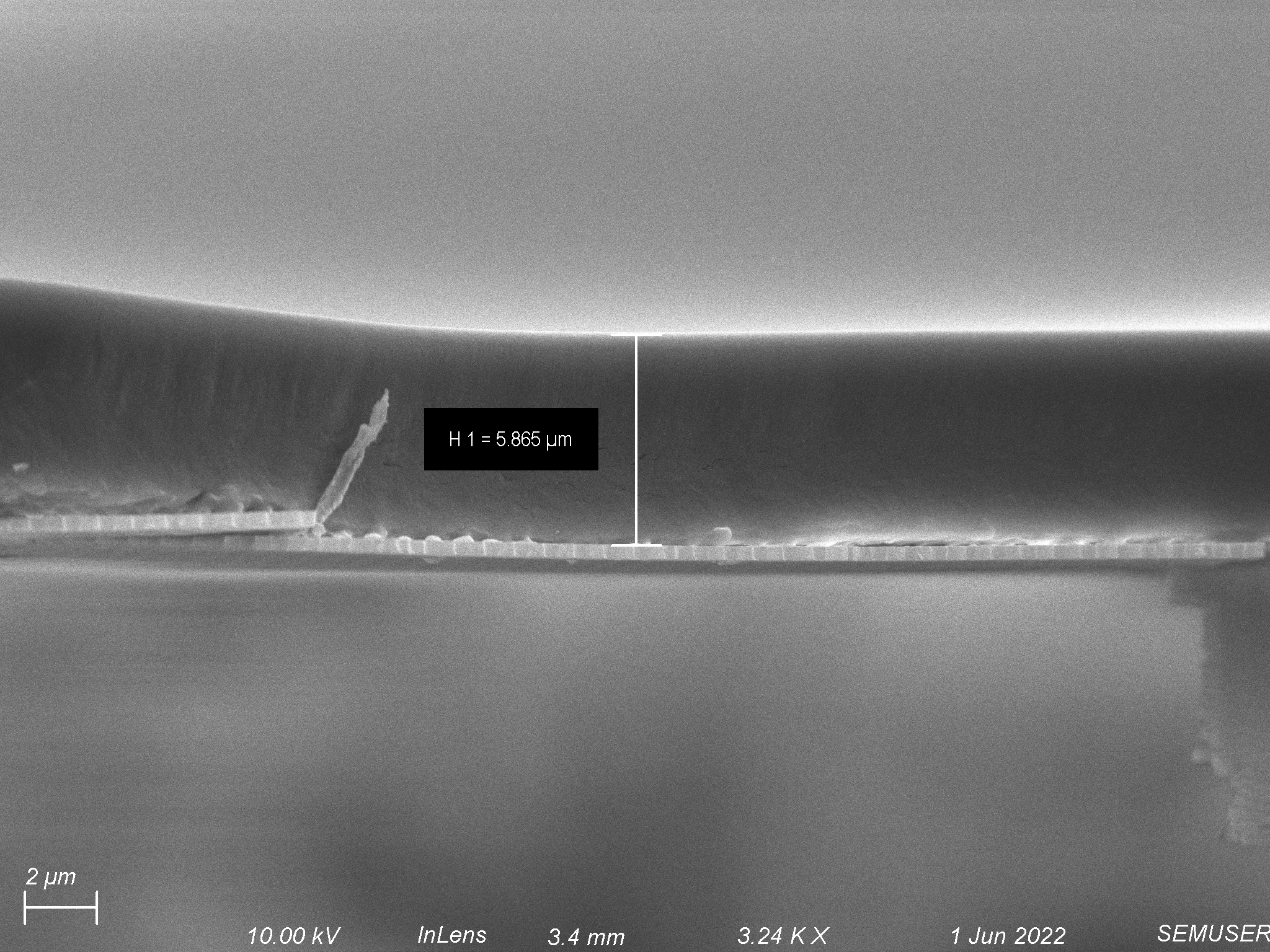
Results: Coatings were continuous and uniform, finally free of bald spots. Through two attempts, the only downside is that the coatings are about 1 um too thick. We adjusted the following spin protocols accordingly by increasing our spin speed in an attempt to thin the PUA down.
First attempt
Second attempt

Protocol 2
Volume Deposited: 25 uL
Spin Steps: 1. 2500 rpm for 10 seconds 2. 8000 rpm for 300 seconds
Results: We achieved a similar coating quality to before but at a similar thickness. Cue more speed!
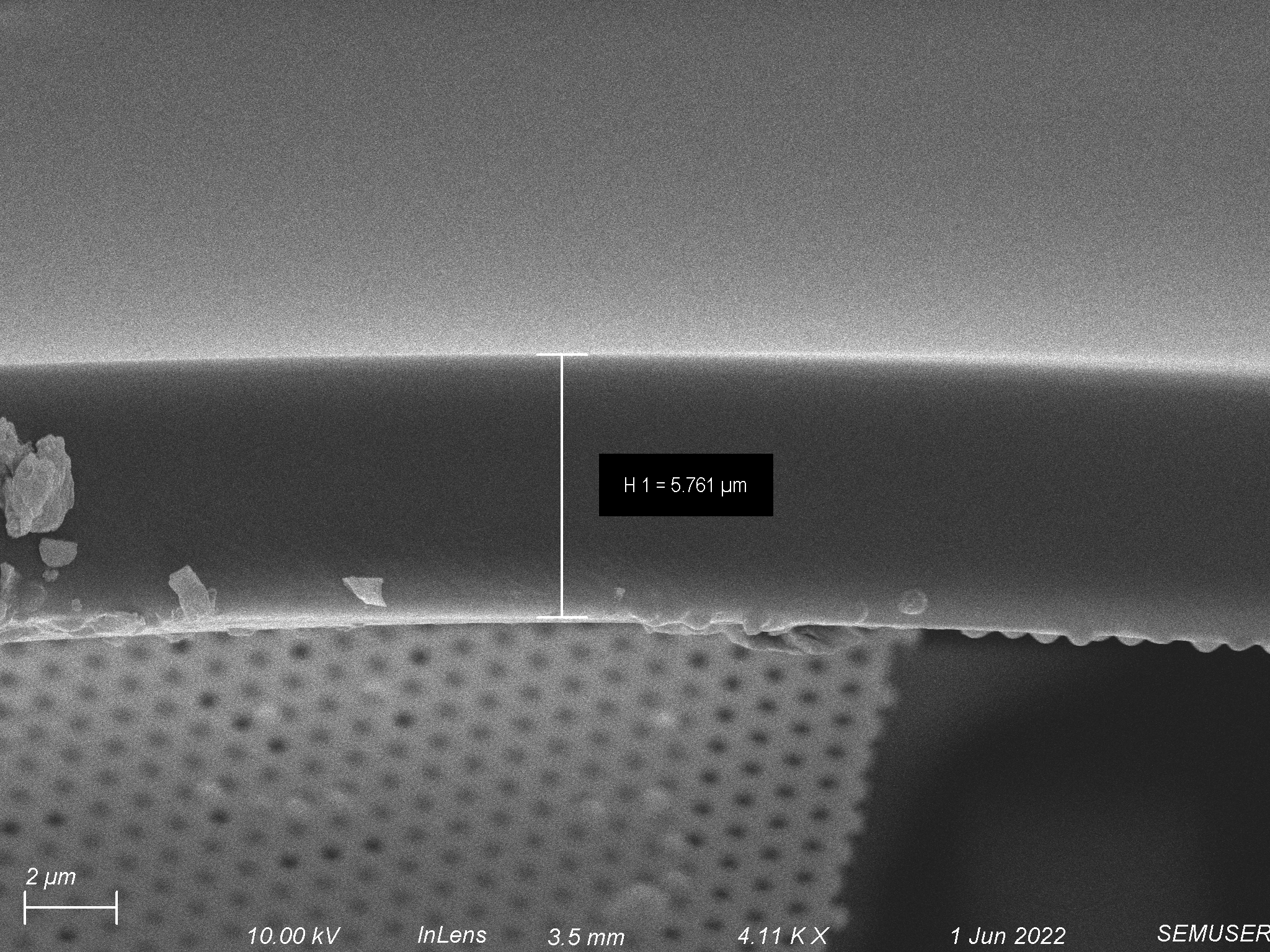
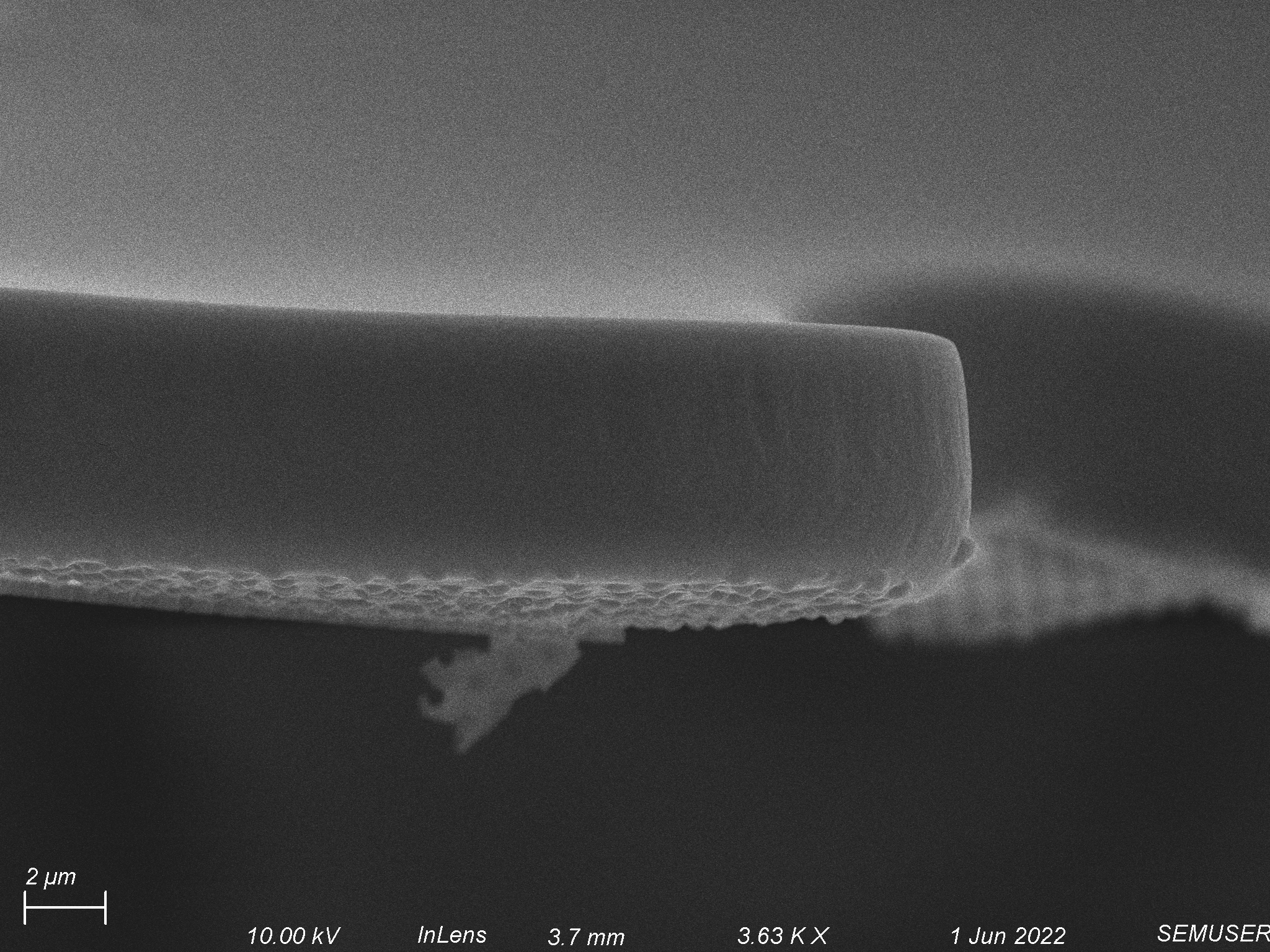
Protocol 3
Volume Deposited: 25 uL
Spin Steps: 1. 2500 rpm for 10 seconds 2. 8500 rpm for 300 seconds
Results: Again we achieved a good coating but it still maintained a similar thickness. More speed!
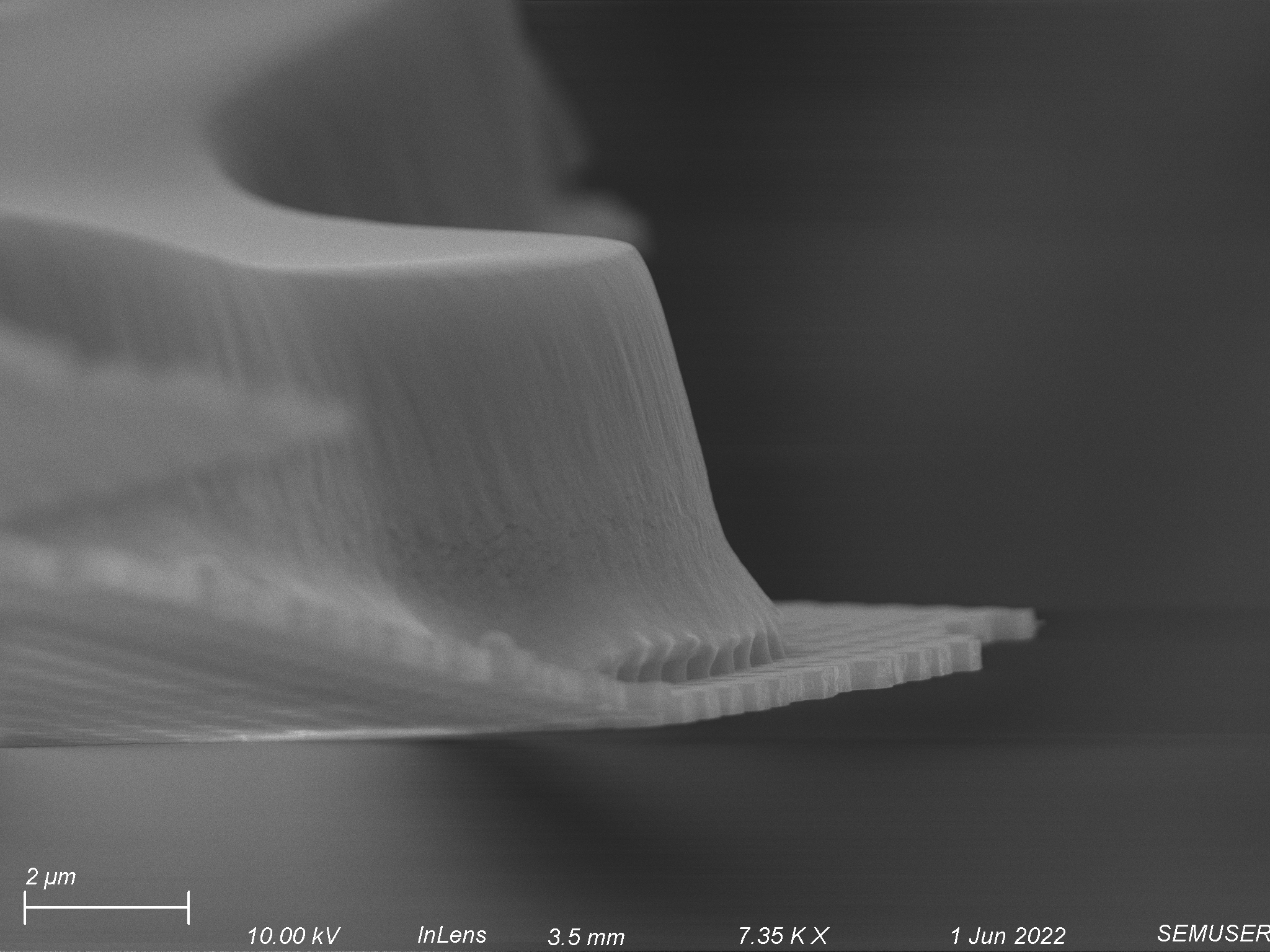

Protocol 4
Volume Deposited: 25 uL
Spin Steps: 1. 2500 rpm for 10 seconds 2. 9000 rpm for 300 seconds
Results: Once again, produced a good coating but this time slightly thinner. Can more speed get us even thinner?
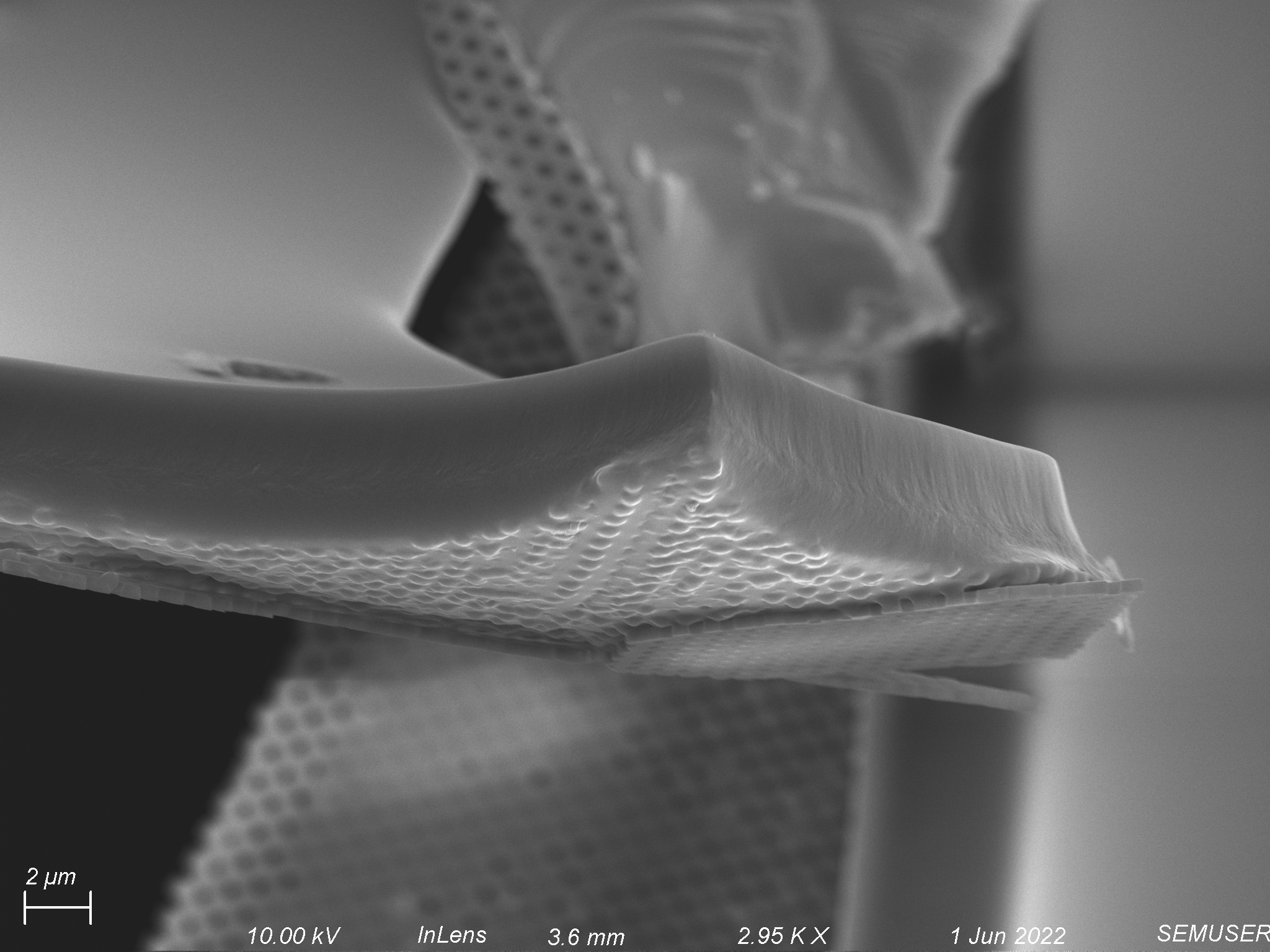

Protocol 5
Volume Deposited: 25 uL
Spin Steps: 1. 2500 rpm for 10 seconds 2. 10000 rpm for 300 seconds
Results: Finally at the highest setting of our spin coater, we achieved a good coating which has a more reasonable thickness around 4.5 um. I was pretty happy with this, but decided to try to dilute the PUA slightly further to see if we could maintain our coating quality while decreasing the coating thickness even further.
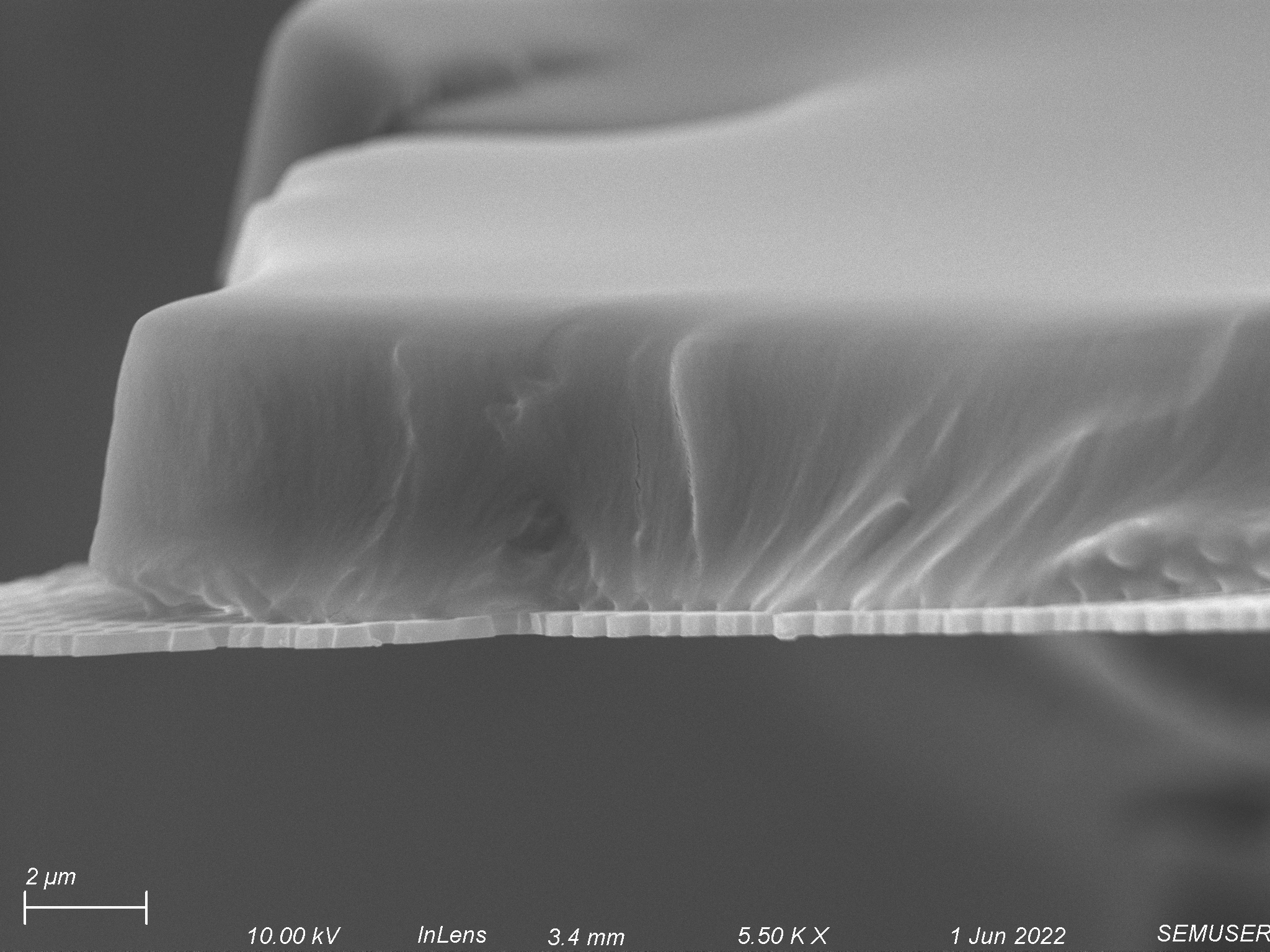

1:0.875 PUA:THF Dilution
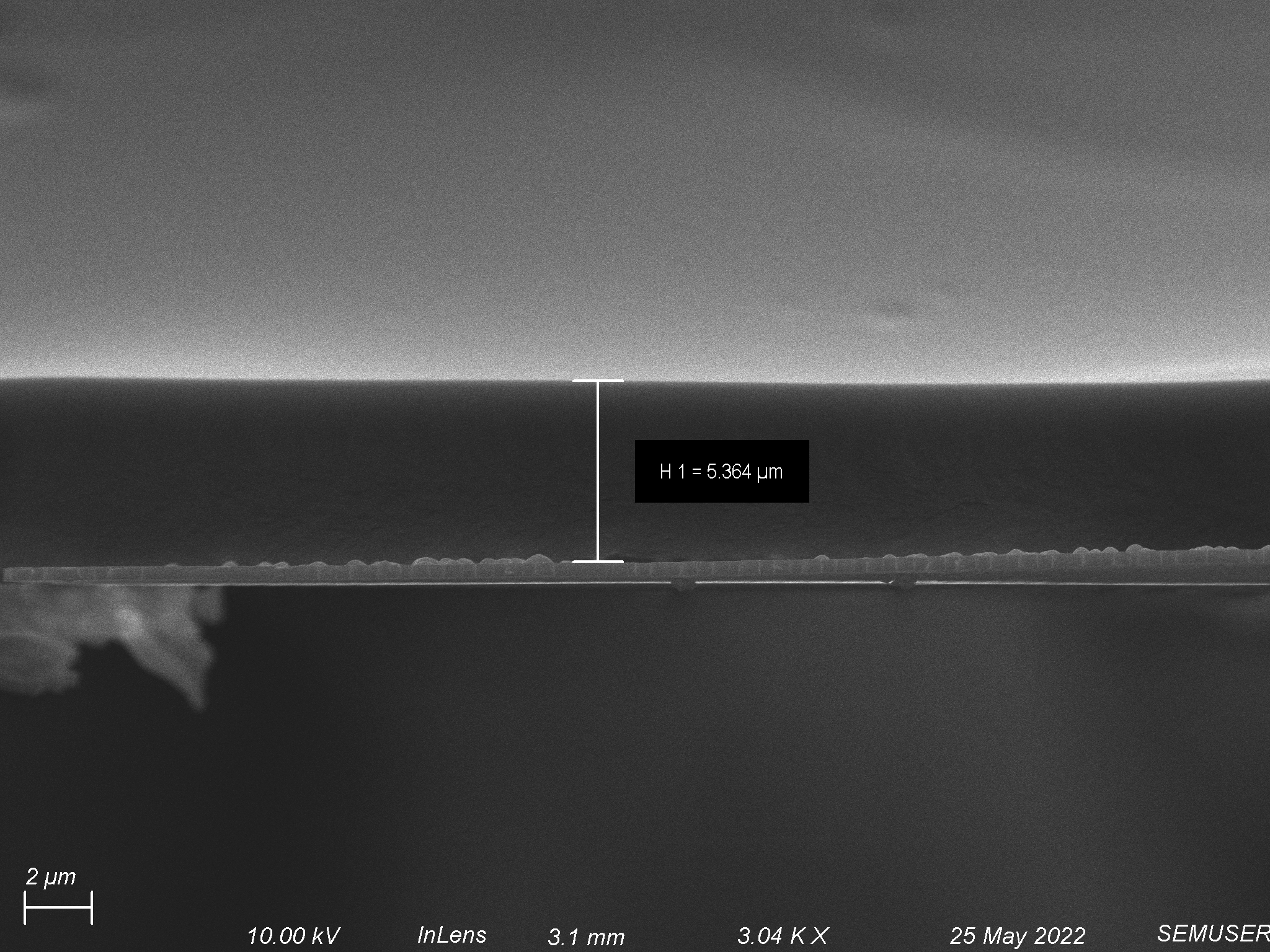
With a now well-behaved PUA dilution discovered, we tried to dilute it slightly more to see if we could maintain good coatings with slightly thinner layers. We did this by diluting very small volumes (100 uL) of the 1:0.75 PUA:THF solution. Unfortunately, little to no effect was seen on the coating thickness.
Protocol 1
Volume Deposited: 25 uL
Spin Steps: 1. 2500 rpm for 10 seconds 2. 7500 rpm for 300 seconds
Results: The coating quality was still good, but there was no change on coating thickness. As a result, we next tried to dilute the PUA slightly more.
1:0.813 PUA:THF Dilution
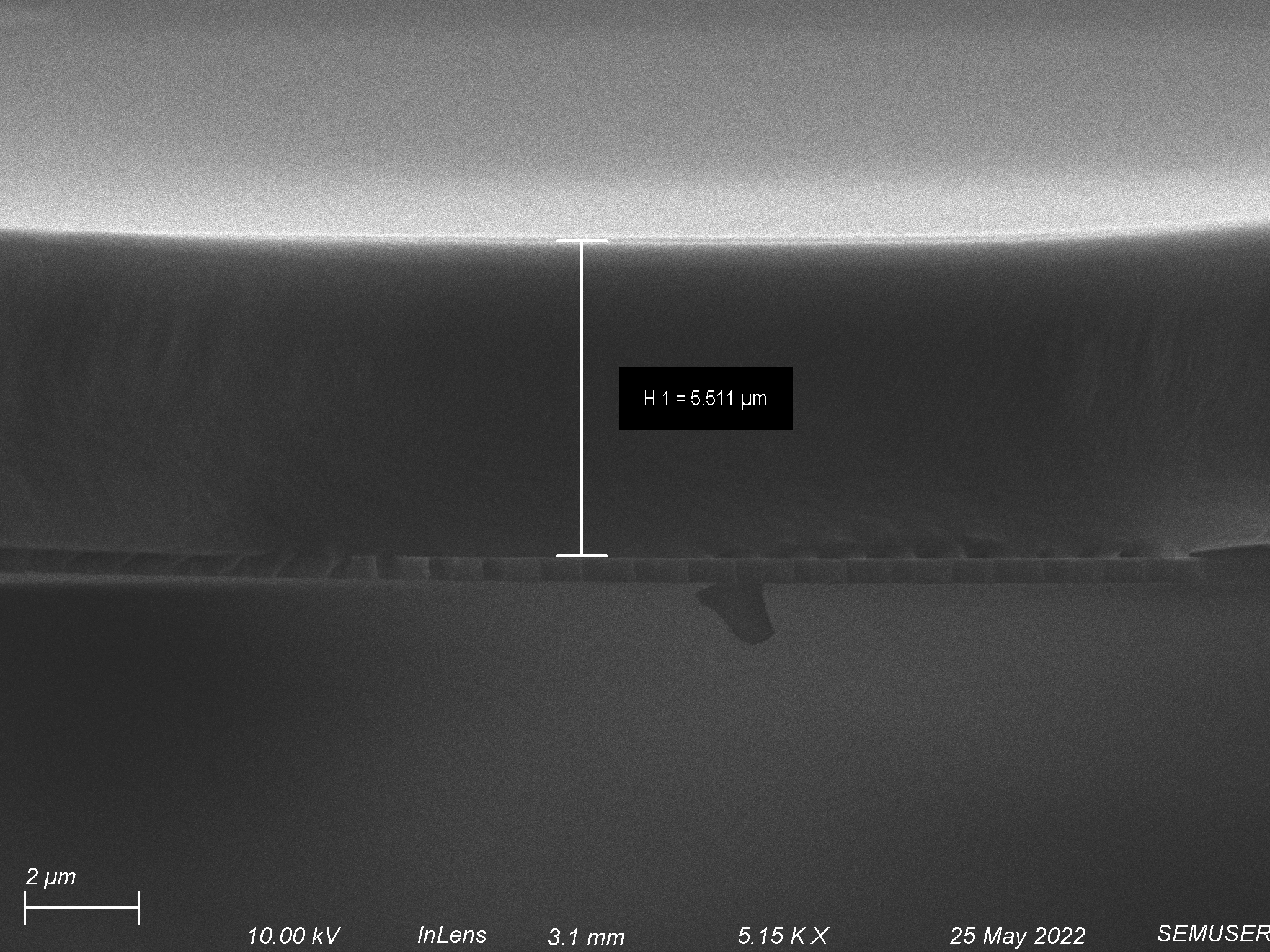
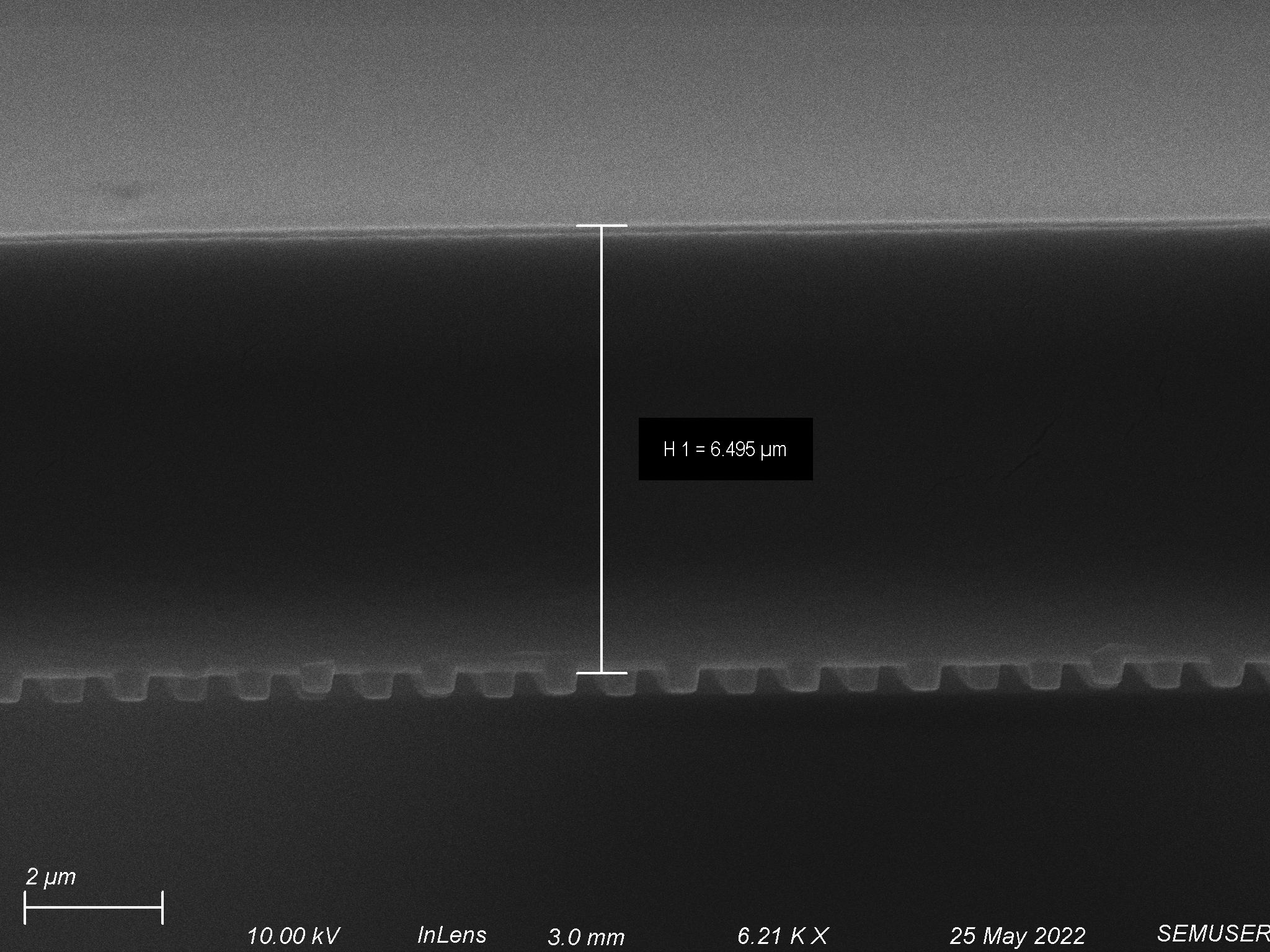
Similar to the approach above, we diluted 100 uL of the 1:0.75 PUA:THF solution to make this one as well. Unfortunately, this also did not thin the coating but instead added variability in our coating thickness. With not improvement made, we decided to discontinue our efforts to thin the polymer.
Protocol 1
Volume Deposited: 25 uL
Spin Steps: 1. 2500 rpm for 10 seconds 2. 7500 rpm for 300 seconds
Results: The coating still covered the entire chip with no bald spots, but thickness was variable and still quite thick.
Conclusions
This journey was not one I anticipated and in retrospect I cannot believe how lucky we got with the very first dilution that we received. Despite the pains of this process, I do understand the polymer a lot more than I had before and moving forward this will be helpful in ensuring that this process and coatings like these will be more reproducible. Having found a behaved PUA dilution, I am finally able to move back to etching the PUA coatings down to the correct thickness (1 um) and transferring the microporous pattern of our membranes into them for our osteomyelitis work.