Similar Posts
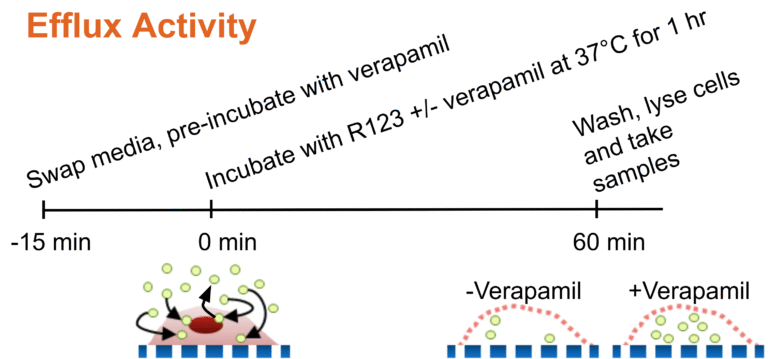
IMR90 EECM-BMEC-Like Cells Lack P-gp Efflux Activity
Introduction During the January TraCe-bMPS progress meeting, Jon Flax presented some interesting findings in the iPSC-derived extended endothelial culture method brain microvascular endothelial cell-like cells (EECM-BMECs, hereafter referred to as BMECs) [1]. While these BMECs tended to have high expression of most transmembrane transport proteins, they had relatively low expression of p-glycoprotein (ABCB1/MDR1) (Figure 1)….
μSiM Vasc-SkM update 2025.06.24
Since the last TraCe-bMPS update in April, we continued to explore different conditions to optimize the μSiM hVasc-SkM systems to obtain stable results. Enhanced imaging for PDMS beams with Rhodamine staining Previously we established a MATLAB program that detects the border of the PDMS beams and converts the movement of the PDMS beam from myobundle…
μSiM Vasc-SkM update 2024.03.13
The μSiM Vasc-SkM Microphysiological development can be separated into 4 parts: Media tuning for integrated culture Force sensing element setup Assembly of the μSiM Vasc-SkM and setting up the perfusion Transendothelial Electrical Resistance (TEER) measurement of the Vast component Work has been done on the first 2 parts. Media tuning for integrated culture In order…
Comparing Apical and Basal Secretome Levels in Static vs. Apical Flow Conditions
We’ve long speculated that adding fluid flow over our tissue models would reduce the concentration of pro-inflammatory factors secreted in response to inflammatory challenges, dampening the overall inflammatory state compared to static culture. We now have evidence that this is true and the results are important as benchmarks for our future studies. In response to…
Investigating BCRP Efflux Activity in hCMEC/D3
A central goal of our research is to replicate the blood–brain barrier (BBB) within the µSiM platform. To establish this platform as a valid tool for transport neurotoxicity assays and drug development studies, it is essential to confirm that the barrier not only forms tight junctions but also exhibits functional efflux transporter activity. The BBB…
A DDT for ICANS Risk Assessment in T Cell–Engaging Bispecific Antibody Immunotherapies: Strategy and Rationale
ByJimWork in progress … **************** T cell–Engaging Immunotherapies Pose a Predictable but Complex RiskT cell–engaging bispecific antibodies (BsAbs), particularly those targeting CD3 and a tumor-associated antigen, have emerged as a powerful class of immunotherapies. These agents leverage endogenous T cells to induce targeted tumor cell death, often achieving deep and durable responses in hematologic malignancies….
