"Separations" with pinholes
One question we recently had was what does it look like when we perform a separation experiment when a membrane has a pinhole. I selected two membranes off 621 that appeared to have pinholes on both slits. I applied 1:2 standards to the top and allowed to diffuse for 24 hours. I collected the retentate and filtrate and ran this gel:
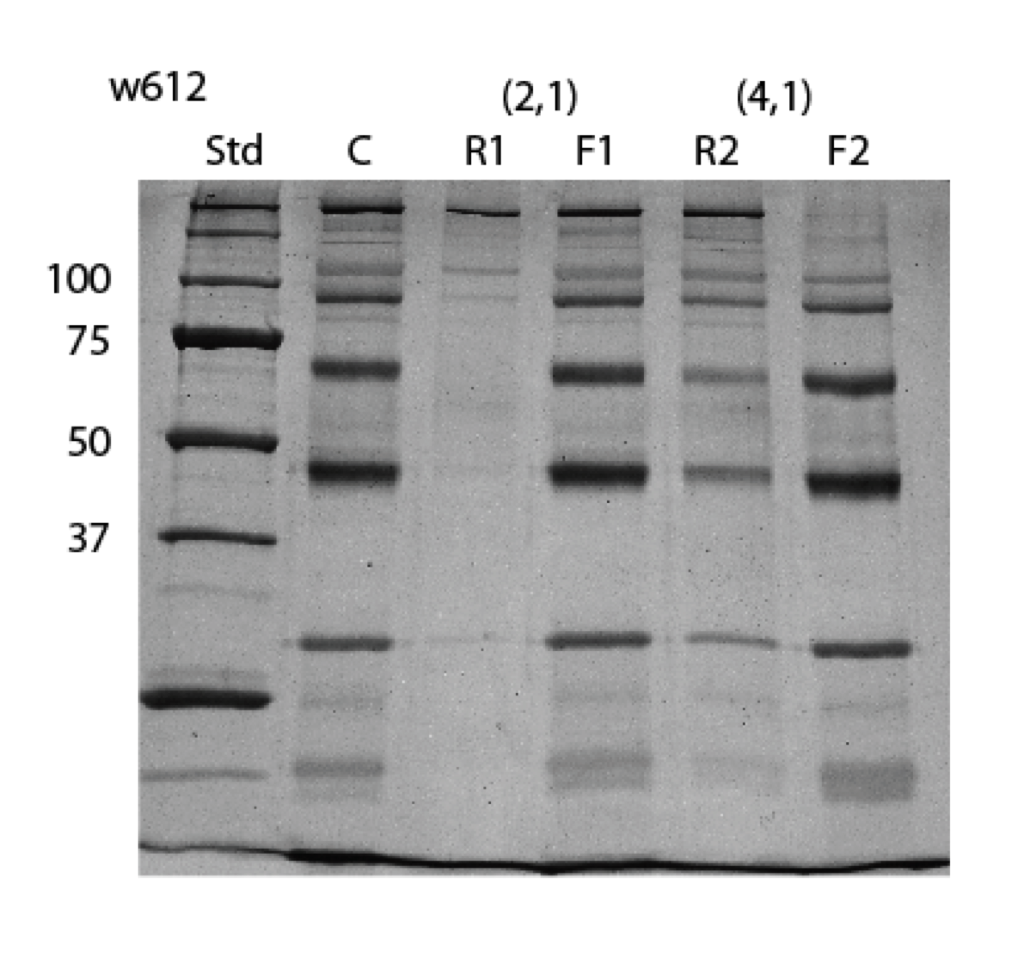
So it looks like mostly all of the protein went through to the filtrate in the first membrane, although a good portion of the myosin still appears on the top. The second separation here looks like what I’d expect a normal separation to look like. Everything but the myosin goes through with reduction of the smallest species in the retentate. All of the membranes were compromised on this wafer, so I’m a little concerned about these results.
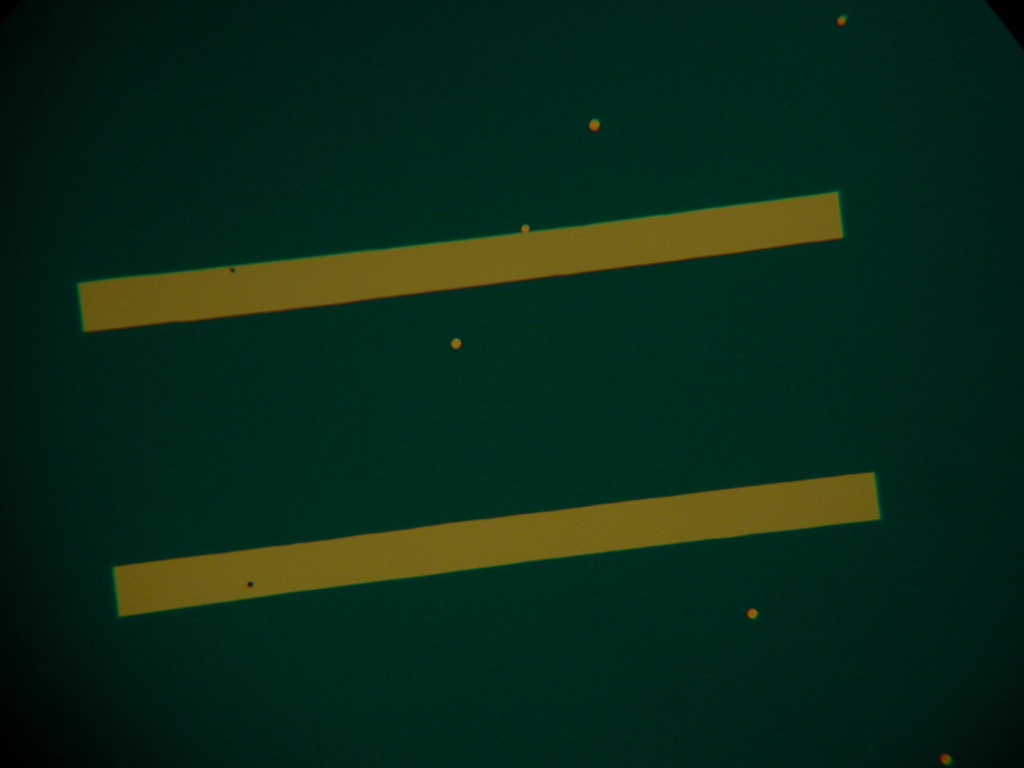
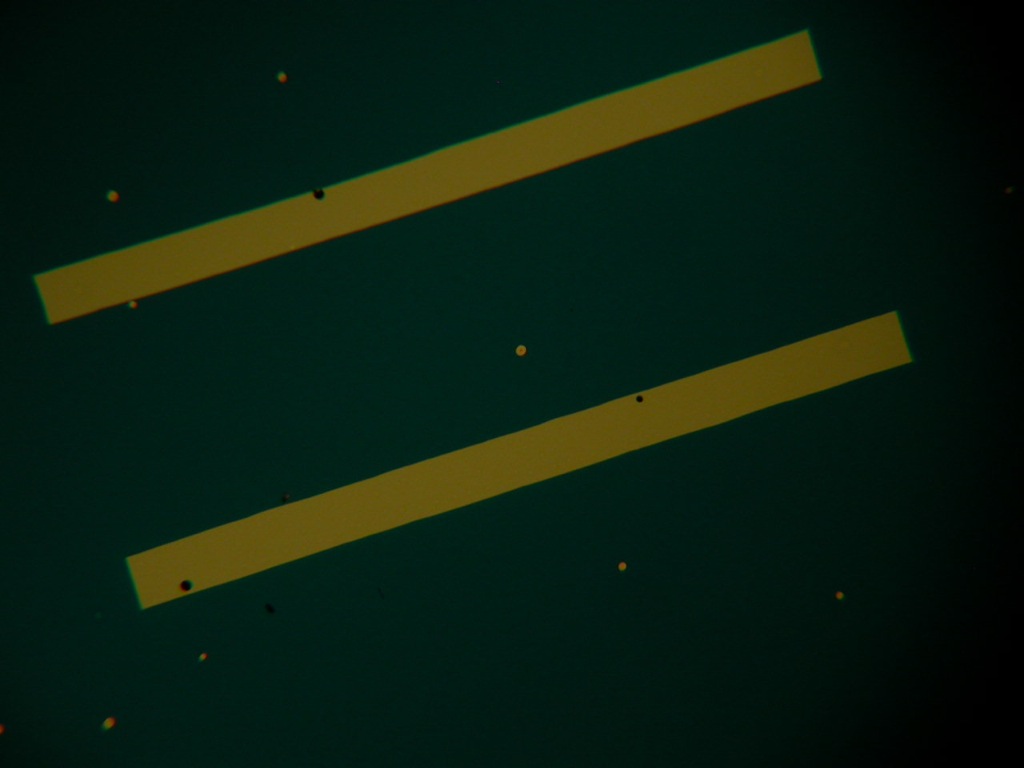
I’m redoing this experiment today, and I took pictures of the membranes that I am using:
(-2,-1)
(-1,-2)
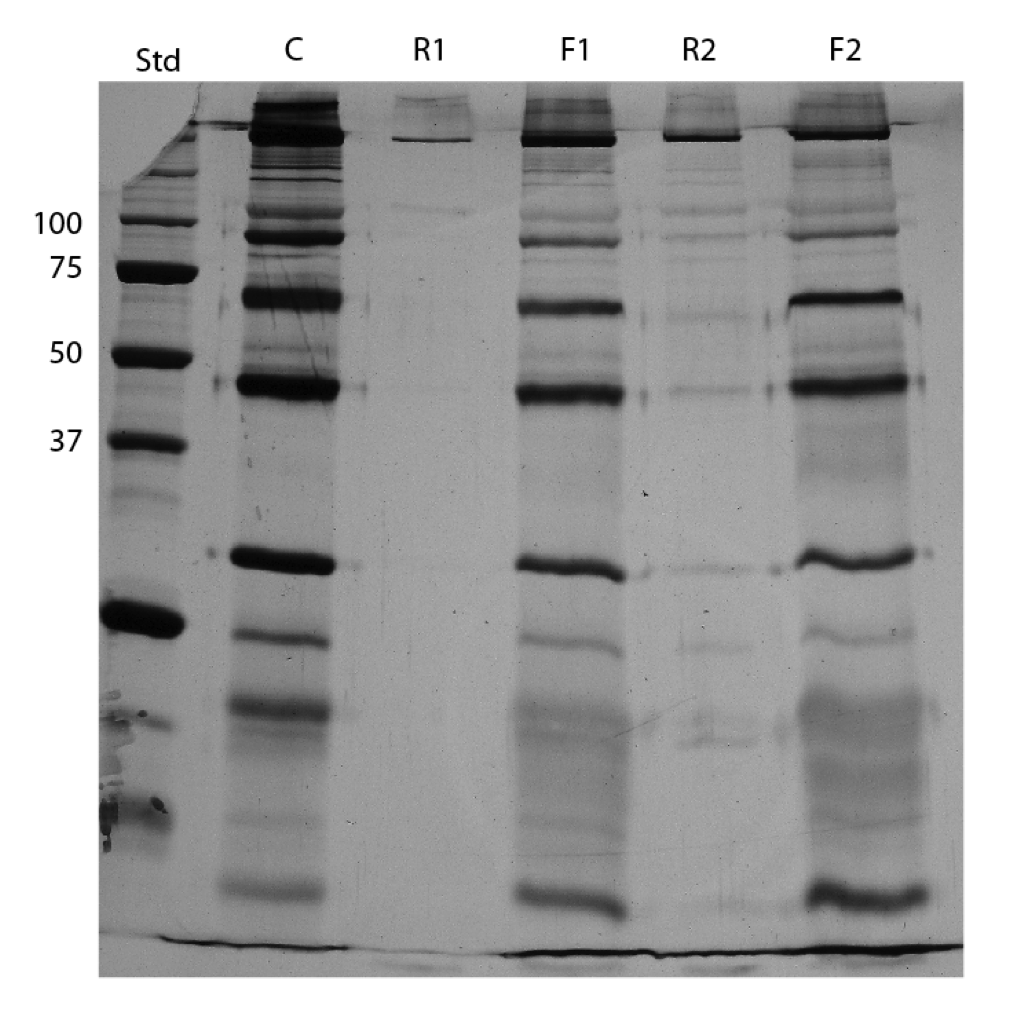
Here are the results from these two separations:
Hmm… is it possible that an air bubble could form over the pinhole?
I’m not even sure how we’d check that.
In the first separation, what did the pinholes look like? Did one have more than the other? In your second separation, which is which on the gel? Obviously, membrane “1” allowed more protein to pass, and I would suspect that this is (-1,-2).
Any idea how far the diffusion front would move in 24 hours for these proteins. I’m a little skeptical that a single pinhole could drain all the protein for a mm-scale well in 24 hours. I would tend to argue that membrane wetting and protein adsorption are larger factors that may be varying from samples to sample. The situation is much different for pressure-driven flow where pinholes certainly dominate….
They are shown in order unless I messed something up (#1 is -2,-1 and #2 -1,-2). I’m usually very careful, so I doubt that happened. I can try again to see if there is any agreement between # pinholes and the separation we see.
It may seem surprising that a pinhole is capable of such a drastic change from the regular separations, but I’m honestly setting these up the same as my other separations. Unless this particular wafer has some a very different porosity/pore size, then this is what we should expect to see with a pinhole. There may be some variations, but this has been reproducible for 3/4 tests and I’m not doing anything different.