Why nanomembranes will not make good virus filters, but just might make great sterile filters.
We have been in discussions with a large membrane company (lets call them Big Filter Inc.) on the topic of using our membrane for virus applications. Josh Miller did a rather remarkable thing and affixed 5.4 mm NPN chips into their standard housings so they could test them directly.
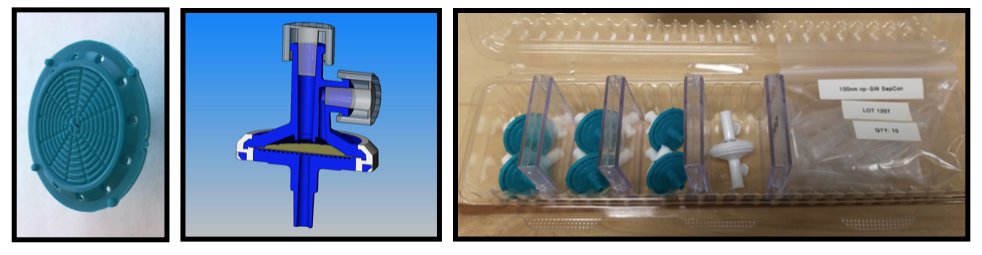
Using these devices BF Inc. tested our membranes as virus filters … filters used to remove virus from samples in monoclonal antibody production.

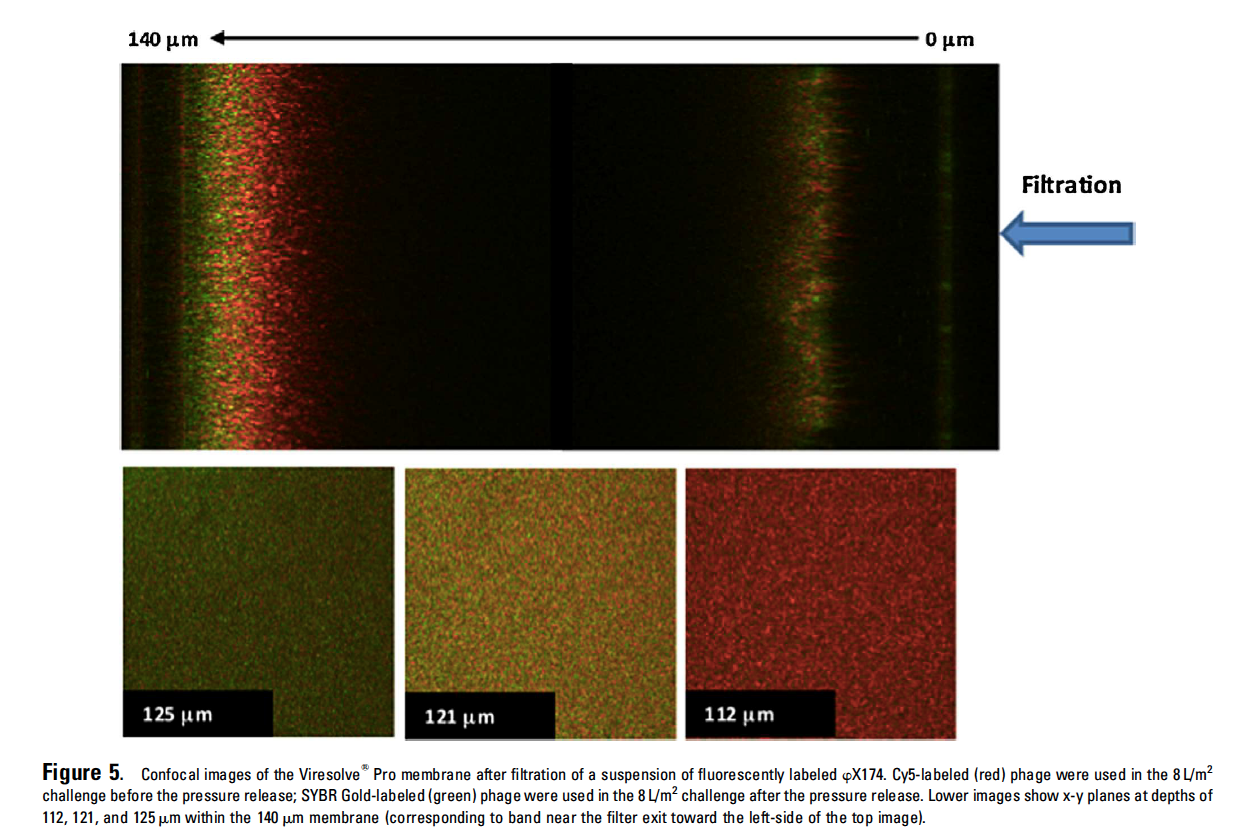
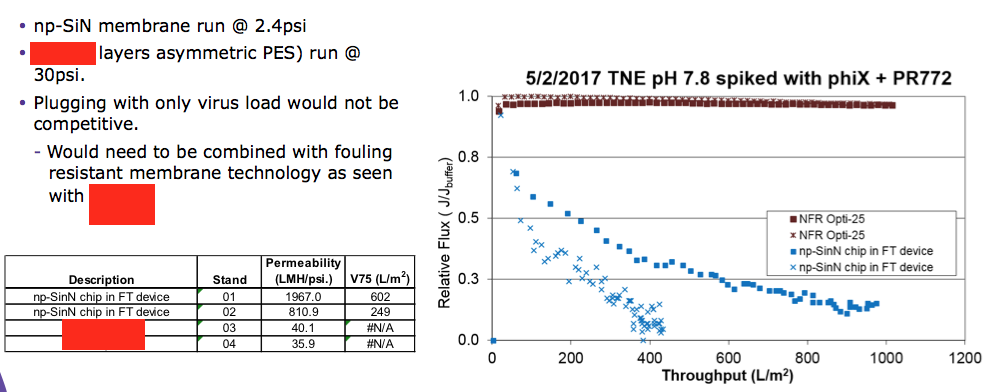 Why does this happen? Pore blocking. BF Inc. estimated <0.1 pfu PR772/pore at 90% plugging (pfu = plaque forming units) and about 100 virus particles per PFU. So we are quickly occupying all the pores with viruses. Virus filters are thick materials with a huge capacity for virus capture. The most compelling imagine is from a Zydney paper (of course) in Dishari_et_al-2015-Biotechnology_and_Bioengineering
 All is not lost. First, NPN might make a good virus sensor for the same reasons it fails as a virus filter.
Second, there is a second application space where nanomembranes might have the perfect solution sterile filters for virus as a product. The terminology is a bit confusing but sterile filters” are designed for the removal of bacteria, not viruses. Sterility is required for the use of viruses as oncolytic (tumor destroying tools) and standard 0.2 µm filters remove 80% of all virus in these applications because of their broad pore distributions. Furthermore, high pressures can destroy enveloped viruses (many oncolytic viruses are). Low pressure filters with precise pores that can remove bacteria but pass viral particles do not exist and so folks making oncolytic viruses use sterile technique at every step. BF Inc. and the Latuilippe group at McMaster are both interested in seeing if nanomembranes can fill this gap. Watch this space for updates. I’ll also revisit this post with references to support these claims later.