Currently, no FDA approved drug exist for the treatment of sepsis. Past sepsis pharmaceuticals attempted to target mediators of the innate immune response. These drugs, however, struggled to balance remedial immune suppression from complete immune knockdown in a patient population plagued my a maladative immune system. This fundamental issues is due in part to targeting blanket mediators of inflammation, both when presented systemically as in sepsis or locally as in primary infections. To this end, discovery pharmaceutical targets that can distinguish systemic and local infections in key to the future of sepsis treatment.
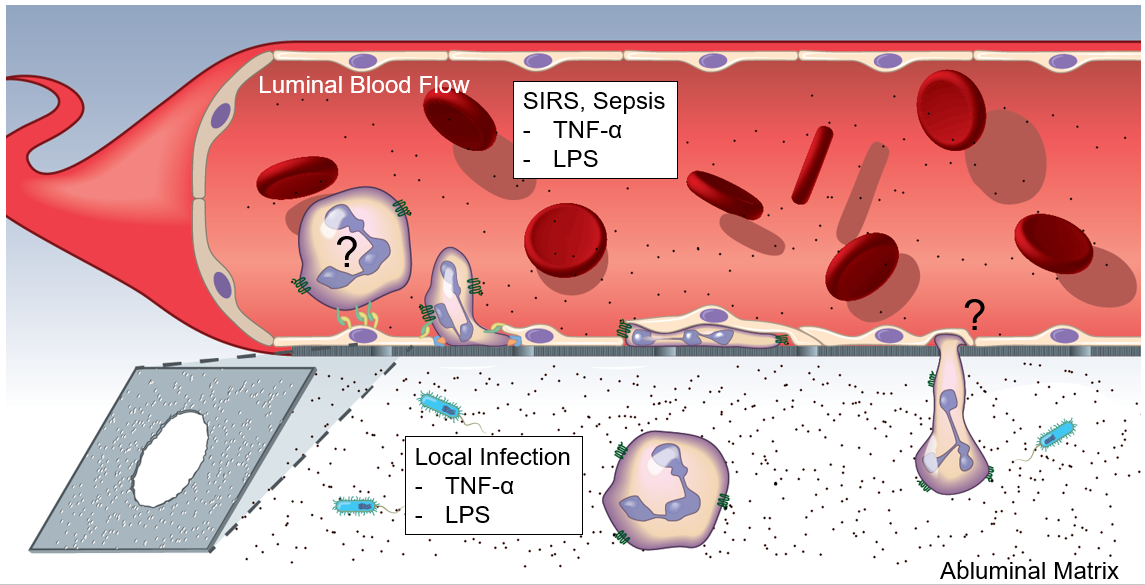
Invivo, microvascular endothelial cells present defined luminal and abluminal interfaces. In the case of primary infections, cytokines and bacterial derived endotoxins are presented to the abluminal cell interface. In sepsis, however, this signally is shifted to the lumin. We hypothesize that the apicobasal polarity of endothelial cells may regulate the innate immune response in these two scenarios, and thus present a target for the treatment of sepsis.
In order to test this hypothesis in a highly controlled environment, we propose the use of a microfluidic silicon membrane-enabled microvacular cell barrier model system (μSiM-MVB).
Methods
Details to come…
All experiments were performed on 75 nm NPN (1275)
TNF-α treatments were consistently 20 ng/ml for 24 h unless otherwise stated.
Automated tracking was performed in a custom written Matlab script by Jeff Tithof. Hand tracking was performed using the Manual Tracking plugin on FIJI.
TEER was performed using 1 μm PC transwell cups and a EVOM2 system with an EndOhm cup measurement chamber.
IL-8 ELISAs were performed on 3/50 diluted cell culture media samples.
Results
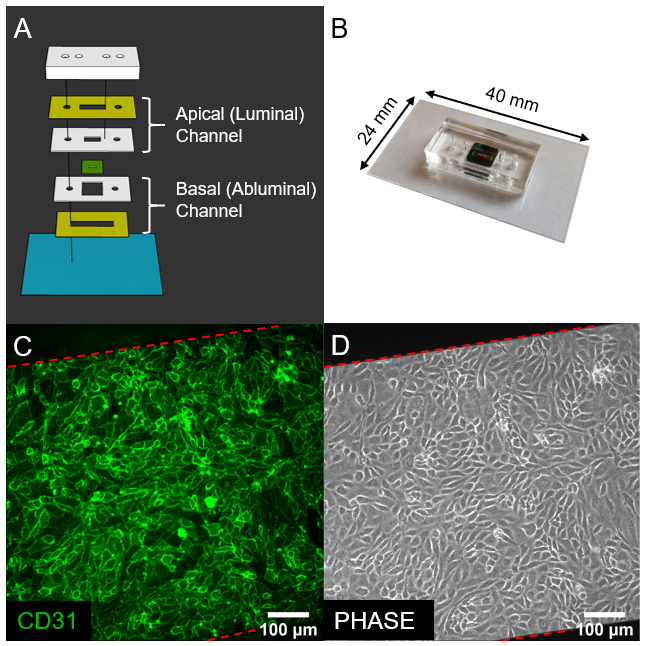
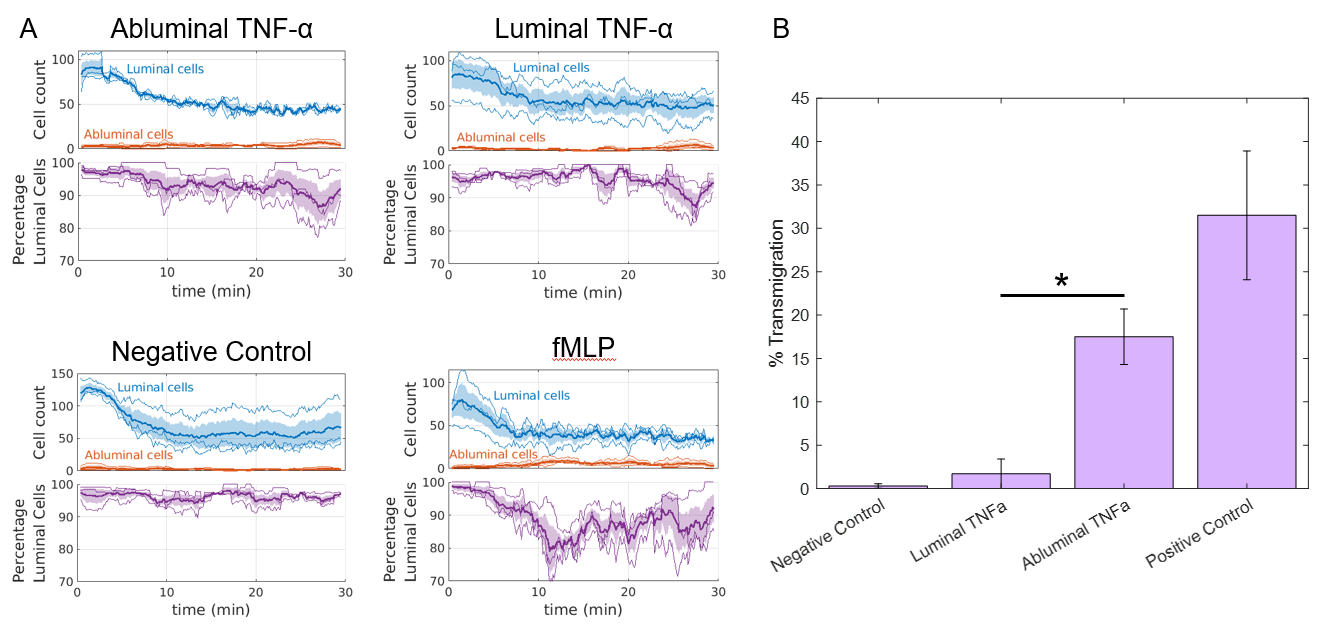
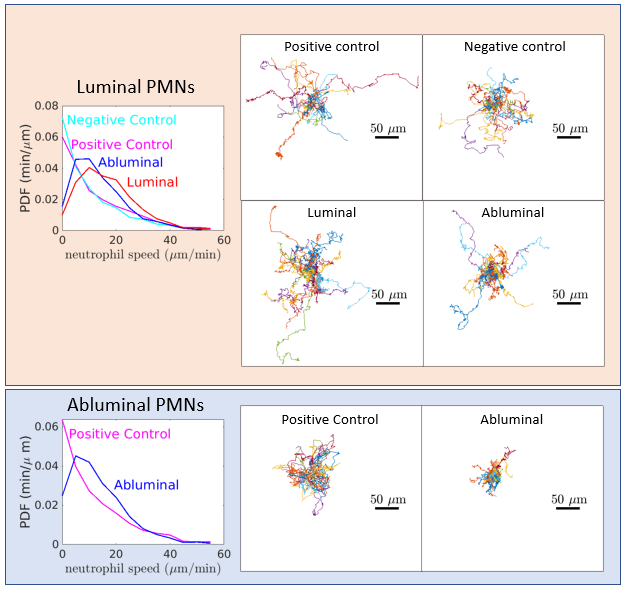
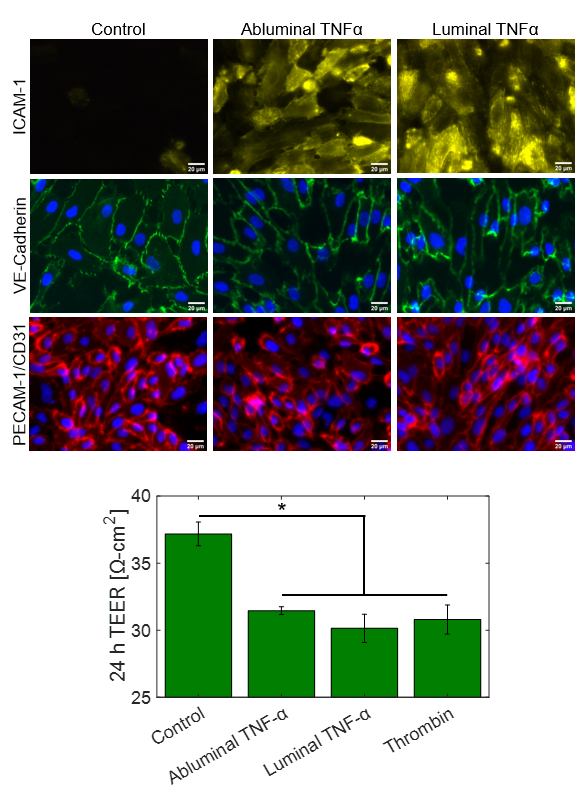
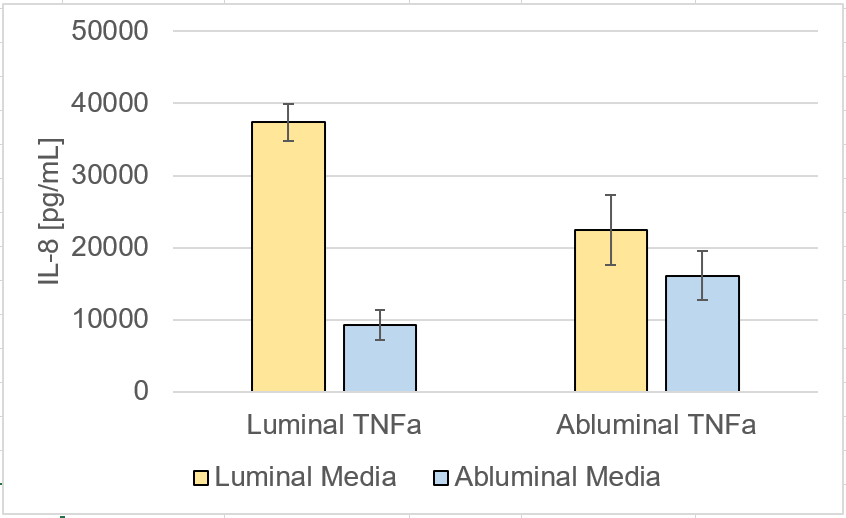
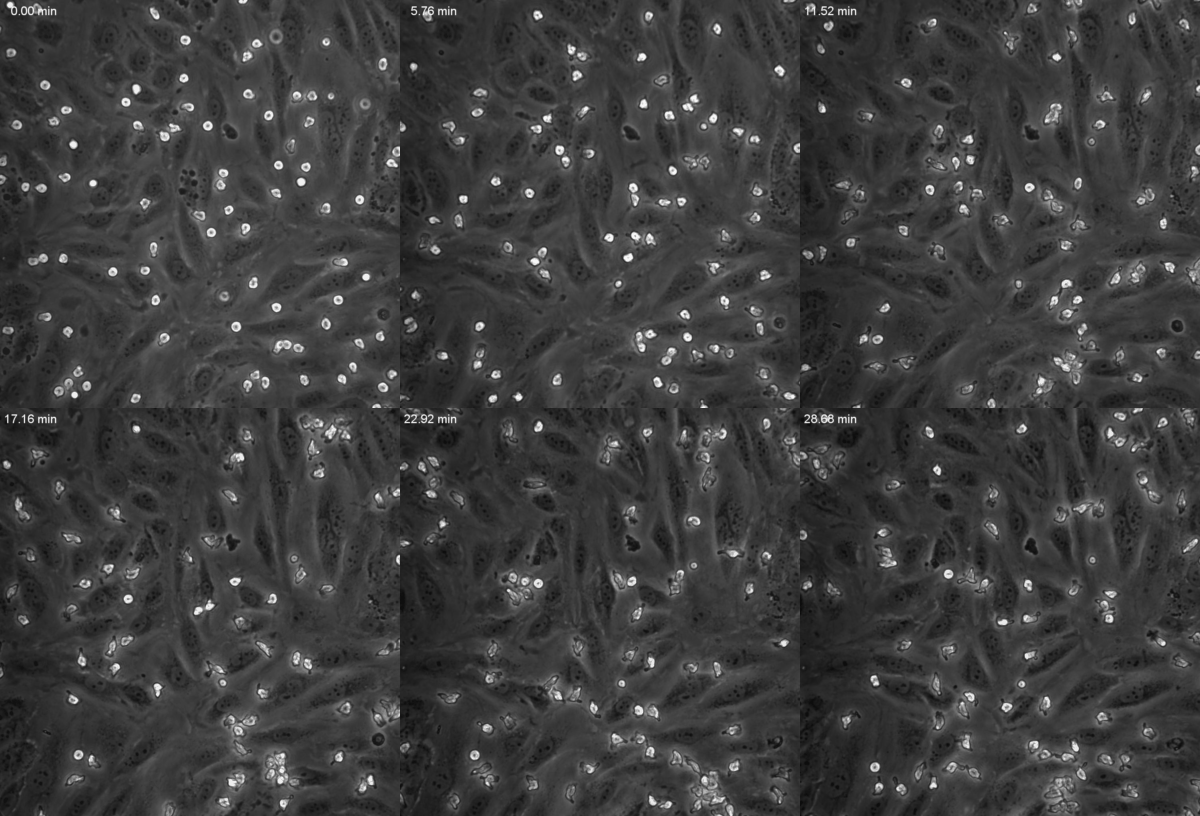
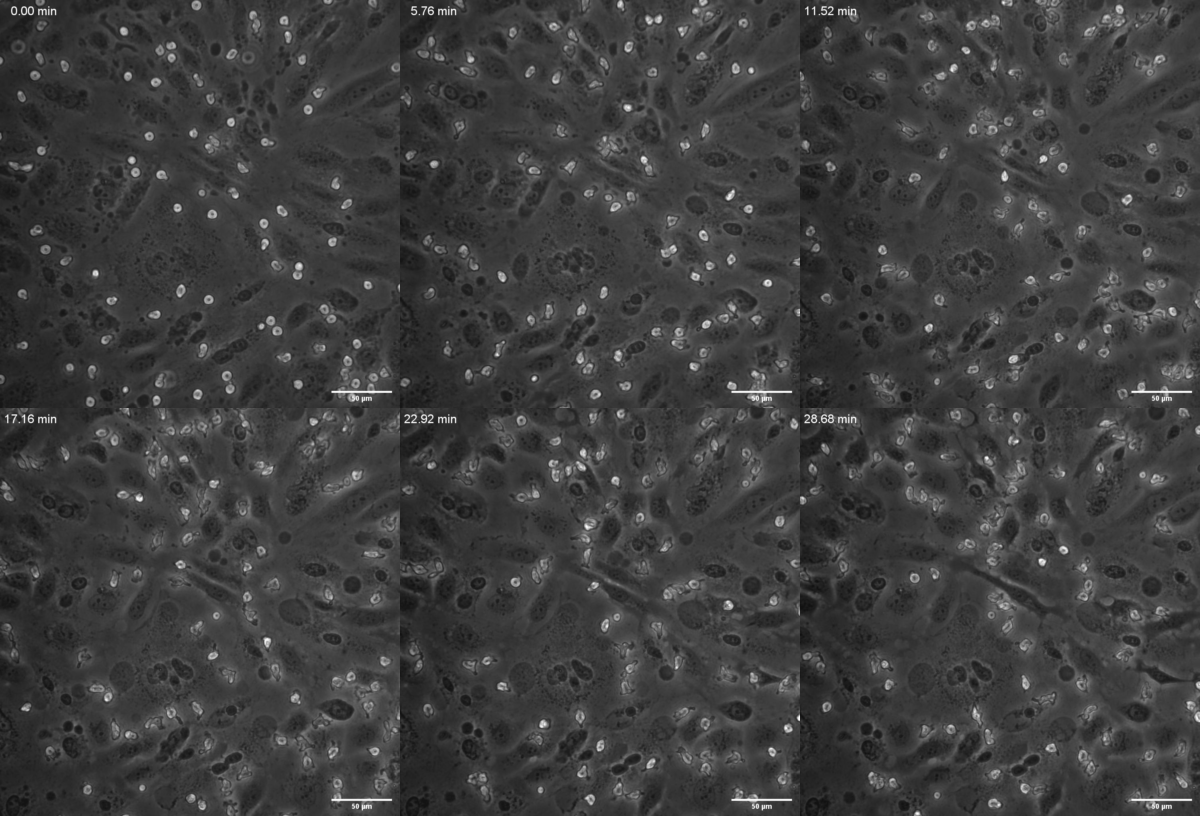
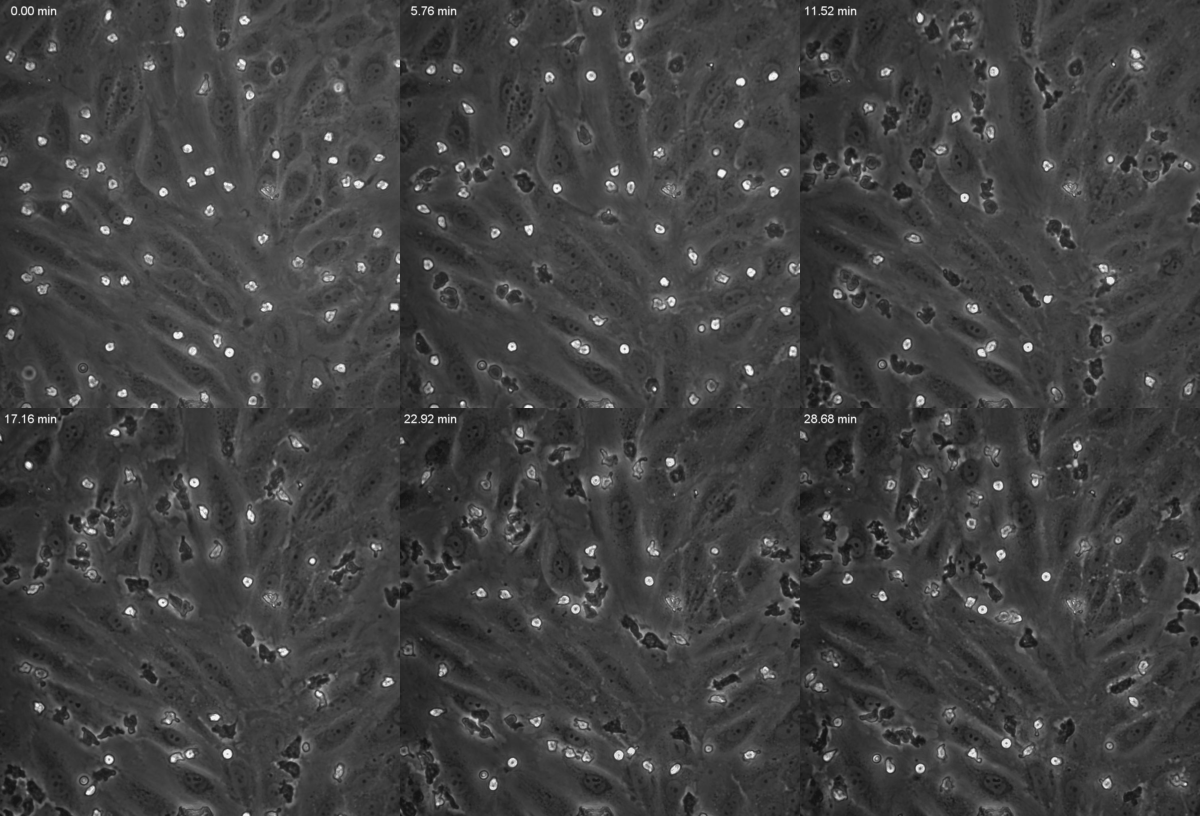
Figure 1. The μSiM-MVB for in vitro studies of the endothelium apicobasal polarity. Layered fabrication techniques produce a microfluidic device with defined top and bottom channels separated by a bio-compatible nanoporous silicon nitride membrane (A,B). The optically transparent nanomembranes permit in situ cell analysis in both fluorescence (C) and phase (D).Figure 2. Endothelial exposure to abluminal TNF-α induces a potent PMN transmigration response. Primed μSiM-MVBs were treated either abluminally or luminally with TNF-α for 24 h. Following treatment, PMNs were loaded in the μSiM-MVB’s luminal channel and time-lapse images were taken. Negative and positive (fMLP) controls were included for comparison. A custom designed automated cell tracking program determined temporal progression of PMN transmigration events (A). Hand counts of PMN transmigration events were normalized to total neutrophils observed in frame (B). Hand count results were statistically compared across experimental groups (paired t-tests; *p<0.05).Negative ControlPositive ControlLuminal TNFaAbluminal TNFaFigure 3. TNF-α increases PMN speed independent of abluminal/luminal delivery. PMNs were loaded in treated or control μSiM-MVBs and time-lapse videos were recorded. Randomly selected PMNs found migrating on top of the endothelial cell monolayer (Luminal PMNs) were hand tracked and probability density functions (PDF; A) and tracks (B) were plotted. In groups were transmigration was perviously observed, PMNs found migrating underneath the endothelial cell layer (Abluminal PMNs) were hand tracked and PDFs (C) and tracks (D) were plotted as well.Innate ImmunityFigure 4. Abluminal TNF-α induced transmigration is independent of ICAM-1 and endothelial cell permeability. Primed and treated μSiM-MVBs were fixed and stained for endothelial cell surface proteins: ICAM-1 (A), VE-Cadherin (B), and PECAM-1/CD31 (C). Cells were counterstained with DAPI (Blue) and epifluorescence images were recorded in situ. To quantify endothelial cell permeability, HUVECs grown on Transwell inserts were treated identically to μSiM-MVB groups and transendothelial electrical resistance (TEER) was recorded (D).Figure 5. Polarized secretion of IL-8 by TNF-α treated endothelial cells. Primed and treated μSiM-MVBs were removed from the incubator and cell culture media was collected from both luminal and abluminal channels. Samples were diluted and analyzed for IL-8 concentration by ELISA. [UPDATE]
On Going
Given the IL-8 ELISA results, we hypothesize that the chemokine gradient is responsible for the increase in transmigration observed in Abluminal TNF-α treatment groups. In order to further test this hypothesis, we will introduce recombinant IL-8 into control μSiM-MVBs at the observed concentrations and PMN transmigration experiments will be repeated.
Enothelium apicobasal polarity may provide an adaptive influence in innate immunity by driving transmigration through the polarized secretion of IL-8. Pharmaceutical companies interested in targeting IL-8 may benefit from this study.
Introduction The Ehler-Danlos Syndromes are a group of thirteen heritable connective tissue disorders. These disorders are genetic, and usually involve a mutation in genes that code for components in the collagen matrix (1). Some of the main characteristics in patients with these disorders include tissue fragility, joint hypermobility, and skin hyperextensibility (1). Classical EDS (cEDS),…
Since we last discovered our polyurethane acrylate (PUA) has a shelf life (described here) and received a new solution of PUA, we have been trying to replicate the results that we had before. Unfortunately, we have realized that this is much easier said than done. What we have found is the specific dilution of PUA…
Introduction: Kidney failure, also called ESRD, is the last stage of chronic kidney disease (CKD) where kidneys function below 10 to 15 percent of their normal levels. In the United States, there are over 660,000 ESRD patients from all ages, genders, and backgrounds. ESRD causes reduced urination in the body and subsequently, waste products and…
I was not entirely satisfied with the amount of data that I received from my last burst pressure wafer, so I processed another wafer. This wafer had some yield loss initially, as well as window sizes that were slightly smaller than expected (by about 50 microns). We expect the mechanical strength of the windows to…
This experiment compares the metal developer used in Integrated Nano Technologies’ device to to the flow properties of water. Using the pressure cell at 3 psi, with no allyl treatment, for 10 minutes, and 200 microliters of liquid, I pushed water and developer through our membranes and examined the difference in flow rates. All of…
I ordered some new AC160 tips last week from Asylum and got on the AFM Thursday to test them out. I think they solved some of the problems I was running into over the last few weeks. Mainly, I was finally able to image entirely in repulsive mode (which was impossible with the older tips). All of…