Similar Posts
New design of the flow platform with a functional lid (V2)
Introduction In a previous post, an initial version of the flow module and its sealing components were described. In order to improve the initial version based on collaborators’ feedback, several modifications have been made to simplify the device assembly for the end-user (Fig. 1) and address concerns about: 1) Local regions of high shear stress…
Pore Analysis for Wafer 1383 (Low Porosity Dual Scale)
ByJimFrom SiMPore’s Basecamp thread … These are the nanopore characteristics. So between 14% and 20% porosity across the wafer and between 43 nm and 50 nm average pore size. So a little under-sized. I hope T-Cells and Monocytes can get through! 0.625% microporosity 0.625% microporosity
iPSC IMR90-4 ApoE Genotyping
Introduction The ApoE4 allele of the apolipoprotein E (ApoE) gene is the greatest known genetic risk factor for Alzheimer’s disease. Further it has been linked to increased susceptibility and duration of infection. On the other hand, the ApoE3 allele has been shown to have a protective effect against severe sepsis. Importantly, ApoE has an important role…
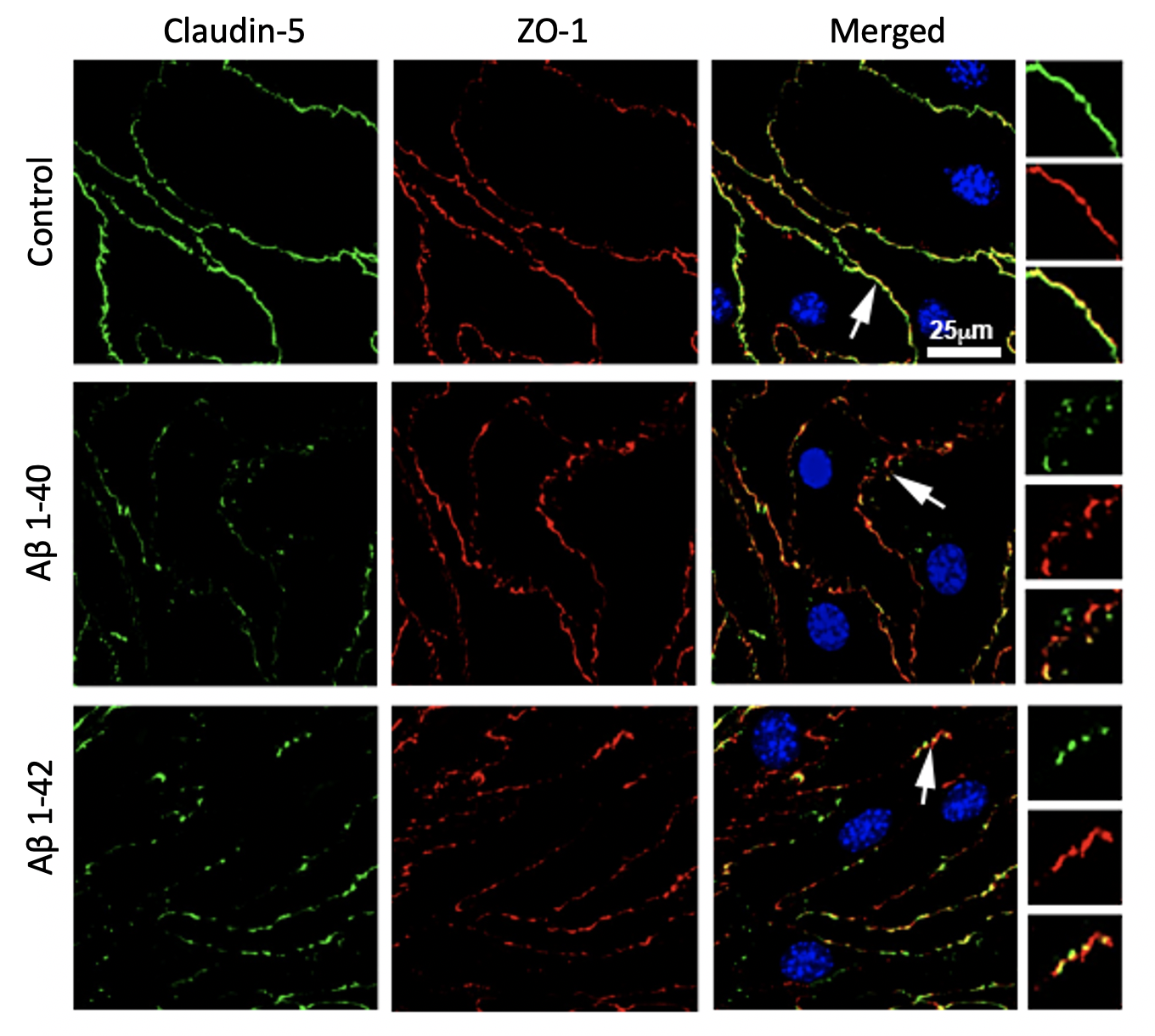
Utilizing the μSIM to model brain endothelial barrier changes in Cerebral Amyloid Angiopathy
Introduction Vascular hyperpermeability and hemorrhagic stroke are hallmark symptoms of Cerebral Amyloid Angiopathy (CAA), a cerebrovascular disease characterized by amyloid-β deposition around the brain microvasculature. In CAA pathogenesis, vascular Aβ accumulation contributes to structural alterations and loss of integrity in the neurovascular unit/blood-brain barrier (NVU/BBB) resulting in “leakier” blood vessels, intracerebral hemorrhages, increased risk of…
Neural Crest Stem Cell Differentiation into Brain Pericyte-like Cells
Introduction Breakdown of the blood-brain barrier (BBB) is one of the earliest signs of sepsis and is linked with long-term cognitive impairment. As animal models poorly recapitulate human sepsis, alternative approaches are direly needed to understand sepsis-associated brain injury and develop strategies that protect against cognitive decline. To fill this gap, we are developing a…
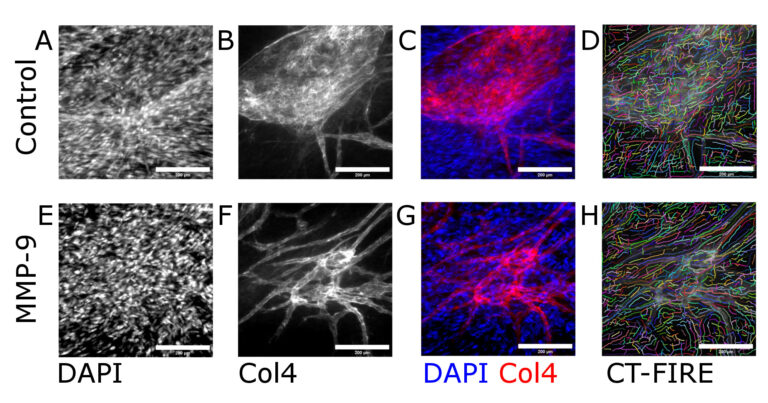
Measuring changes in endothelial basement membrane integrity
Introduction Inflammatory diseases have the potential to disrupt blood vessel permeability. This has serious ramifications for the blood-brain barrier (BBB), which is the interface between the vasculature and the brain. A healthy BBB allows essential nutrients to pass through while excluding molecules that might alter brain chemistry. If inflammation were to increase the BBB’s permeability…