Parylene penetration through pores during deposition (AFM)
First, last week I had some images taken with new “visiting” AFM. These were frontside of the membrane with parylene deposited from the well side and the front side with deposited parylene on it.
1-1. Parylene deposition was not successful and although the dummy wafer showed thickness of parylene about 22nm, I suspect the were no or very little parylene on my samples. Image 1-1 also shows no trace of it. The images are taken on freestanding pnc-Si area.
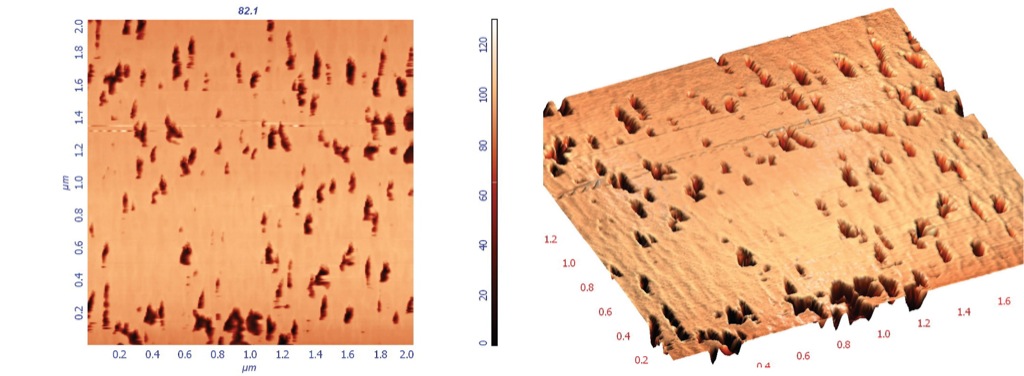
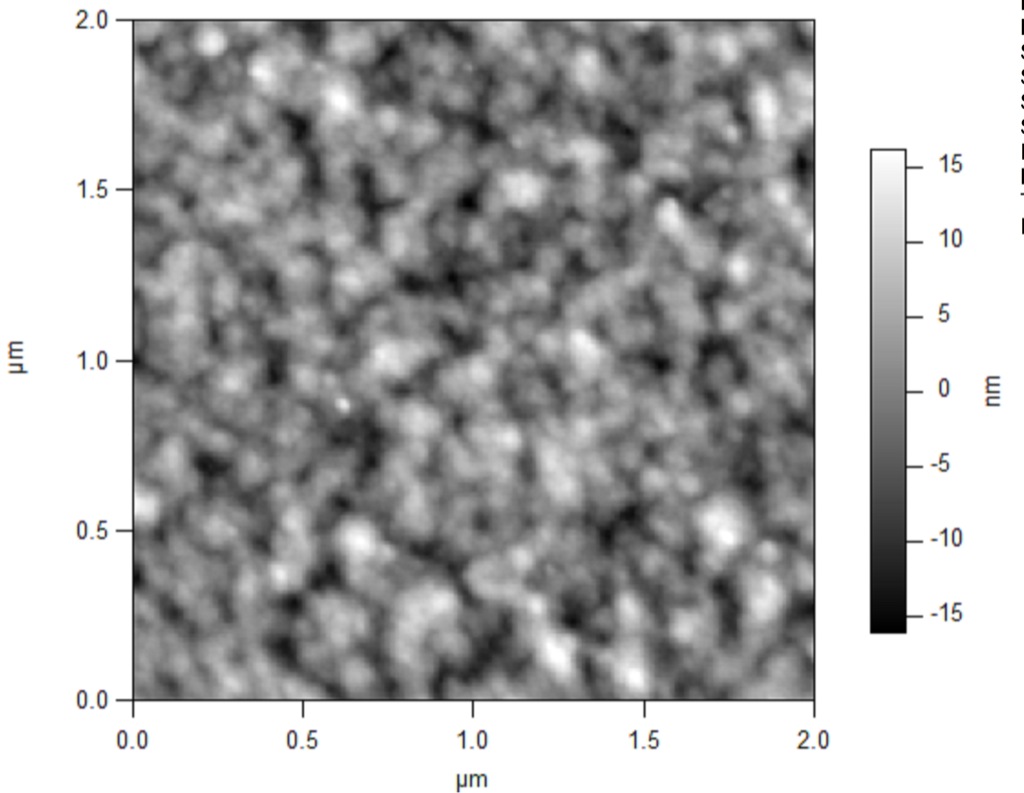
1-2. This is the roughness of the 37nm parylene layer on the membrane

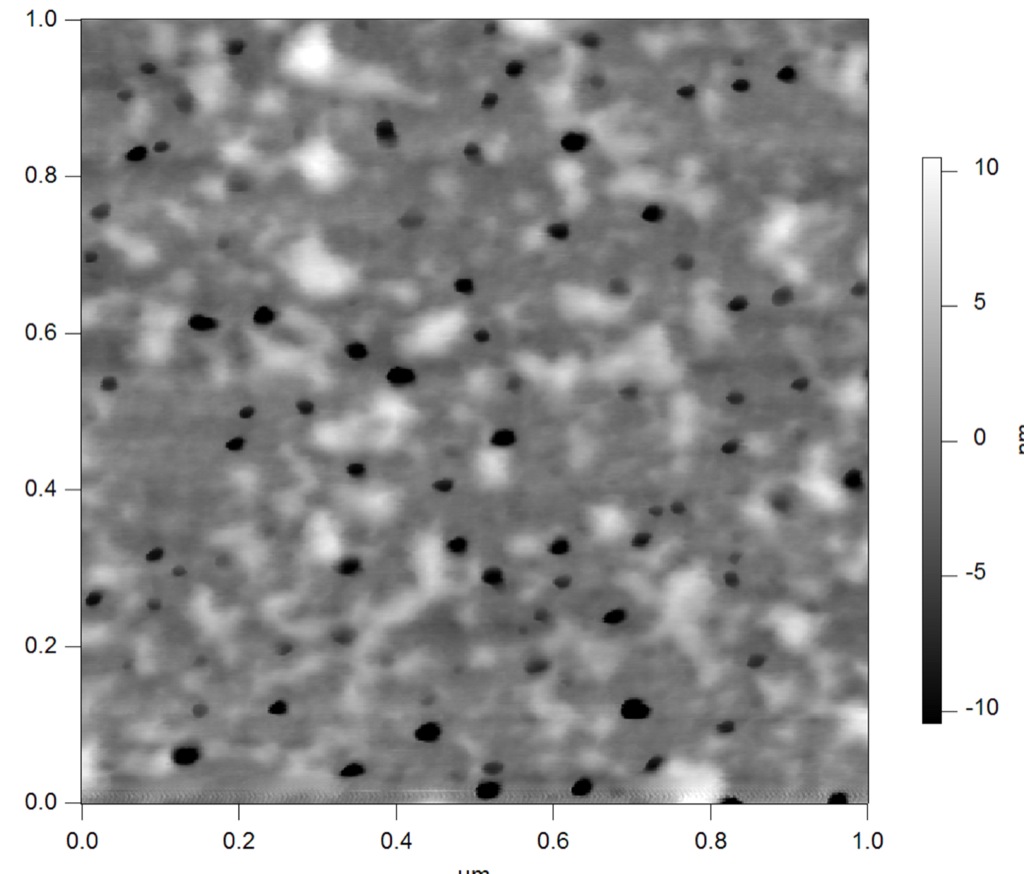
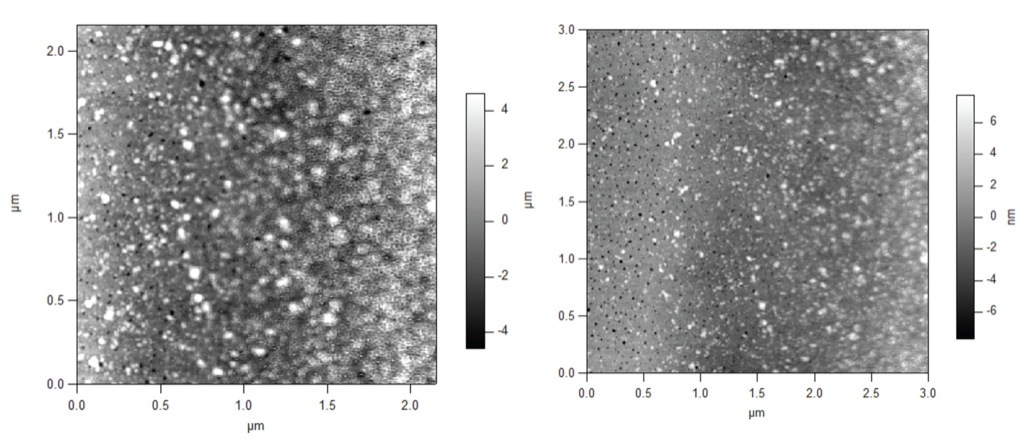
Second, as Barrett mentioned in his post, we took images on local AFM. The images are taken on the front of the sample from sc115 (parylene is deposited form the well side).
2-1. The supported pnc-Si
2-2. The edge between supported pnc-Si and unsupported, two magnifications, the edge is in the middle
2-3. Membrane
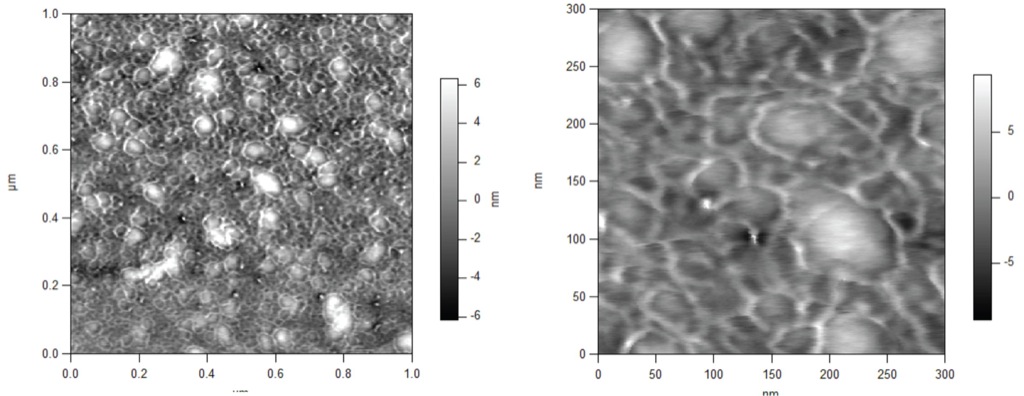
The images show that parylene penetrates pores and slowly plugs them. The white pieces on the fig2-1 are the parylene monomers that penetrated when pores were wide open and polymerized farther form the membrane. As pores became smaller the monomers due to may be slowing down in narrower pores polymerize only on membrane area (the ridges on the fig.2-3 and 2-2). The white areas on the fig 2-3 are pores that are plugged and form parylene islands.
2-4. Parylene layer (37nm) surface
All samples are from wafer sc115.
If you look at “2-1. The supported pnc-Si”, there are some ‘background’ pores. It’s puzzling to think how the AFM acquired this information. The pore is almost as black as a through pore, which means that the tip fell almost as far into the background pores as through pores. It’s possible that a thin coating of parylene is covering those pores, which could allow the tip to fall into the pore without breaking the polymer. If that’s the case, I’m surprised that the polymer didn’t bend/stretch and cause imaging artifacts.