PEG Microarray Solution Dilution and X-linker Concentration Study
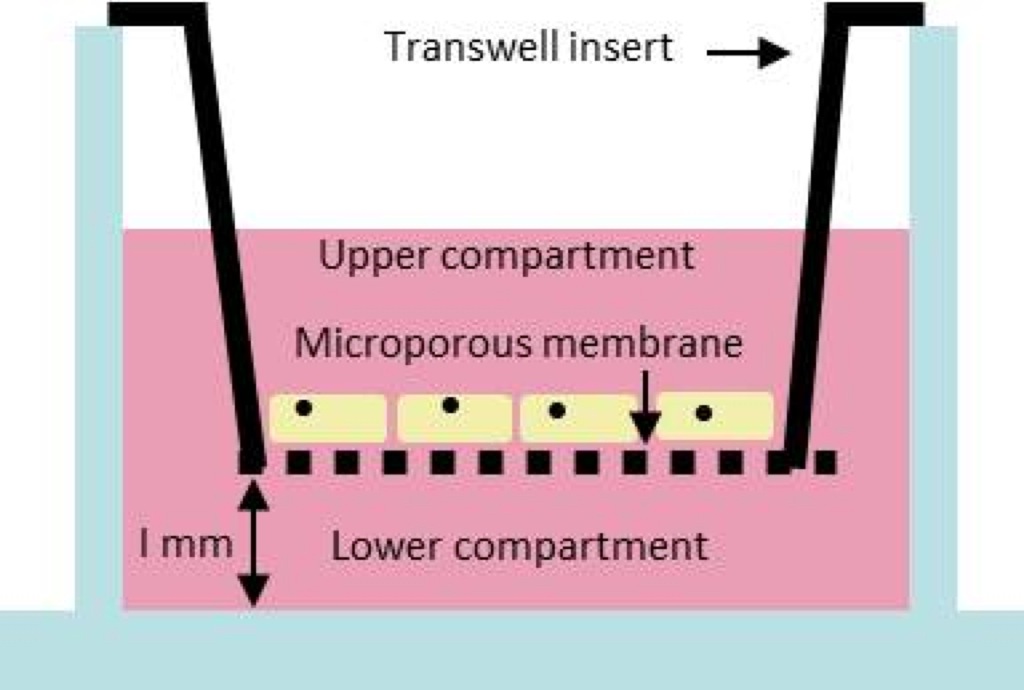
Working on the development of PEG microarrays for cell heterogeneity applications. Current work has been accomplished on TPM coated glass coverslips. Transfer to membranes are in progress.
Three different x-linker concentrations were tested in a 1:1 mixture of PEG and DI or PBS. We are testing for what will make the most optimal cell culture condition.
All microarrays were x-linked with UV light using the DAPI filter on the microscope. Completed microarray was placed in a petri dish with 8ml of PBS or DI, sterilized for 20 minutes with a UV lamp, and seeded with bEnd.3 cells.
Exposure times at 100% light intensity:
- 3% x-linker: 50oms
- 1.5% x-linker: 1200ms
- 0.3% x-linker: 5000ms
Conclusions:
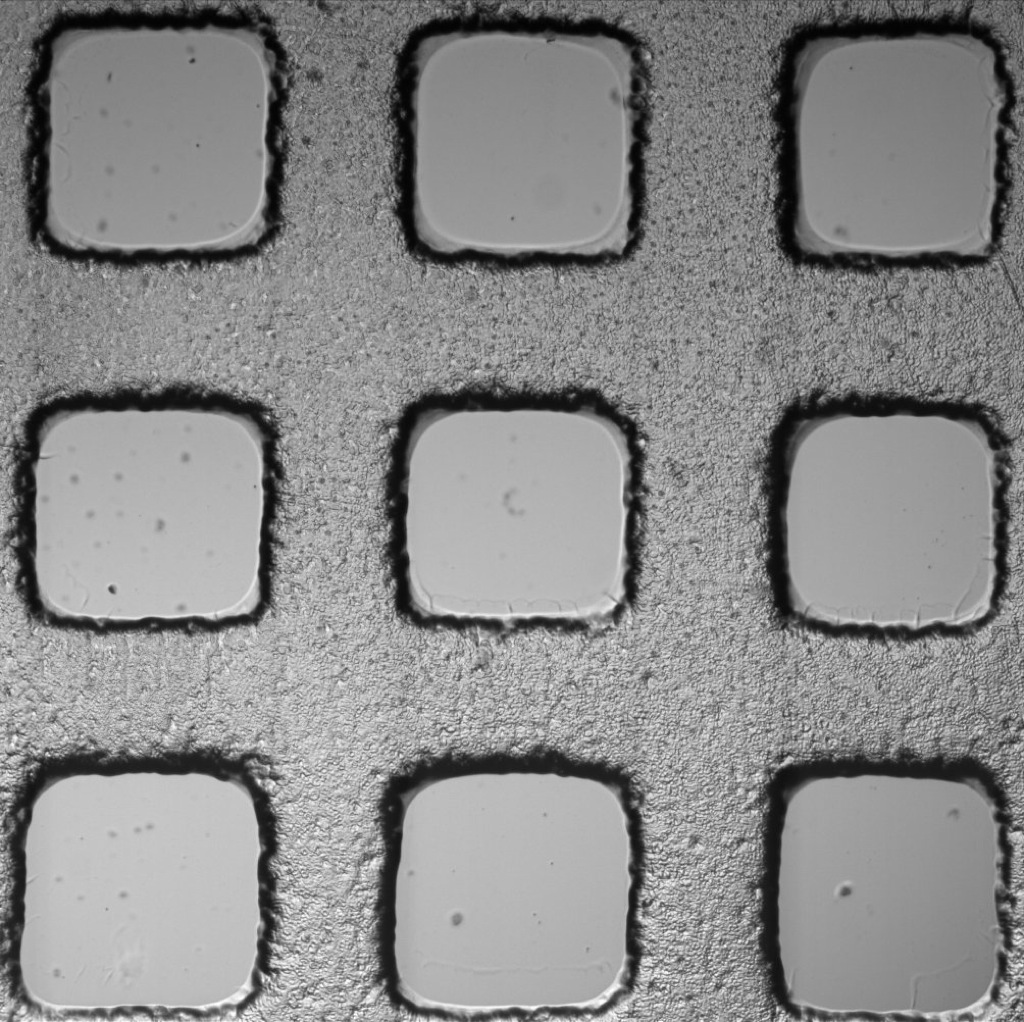
Cell growth is most responsive in the 1.5% x-linker concentration condition. This is consistent with the last test run on this subject. The higher and lower x-linker concentrations seem to have an adverse affect on the cells, making them round up and become nonadherent. The could be a result of the density of the microarray, a PEG buildup in the wells, or something else.
3% x-linker in DI – Cells have rounded up
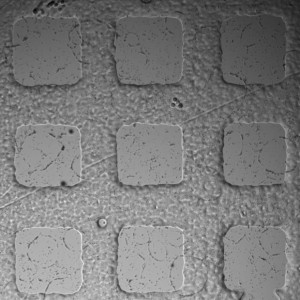

3% x-linker in PBS – Cells have rounded up
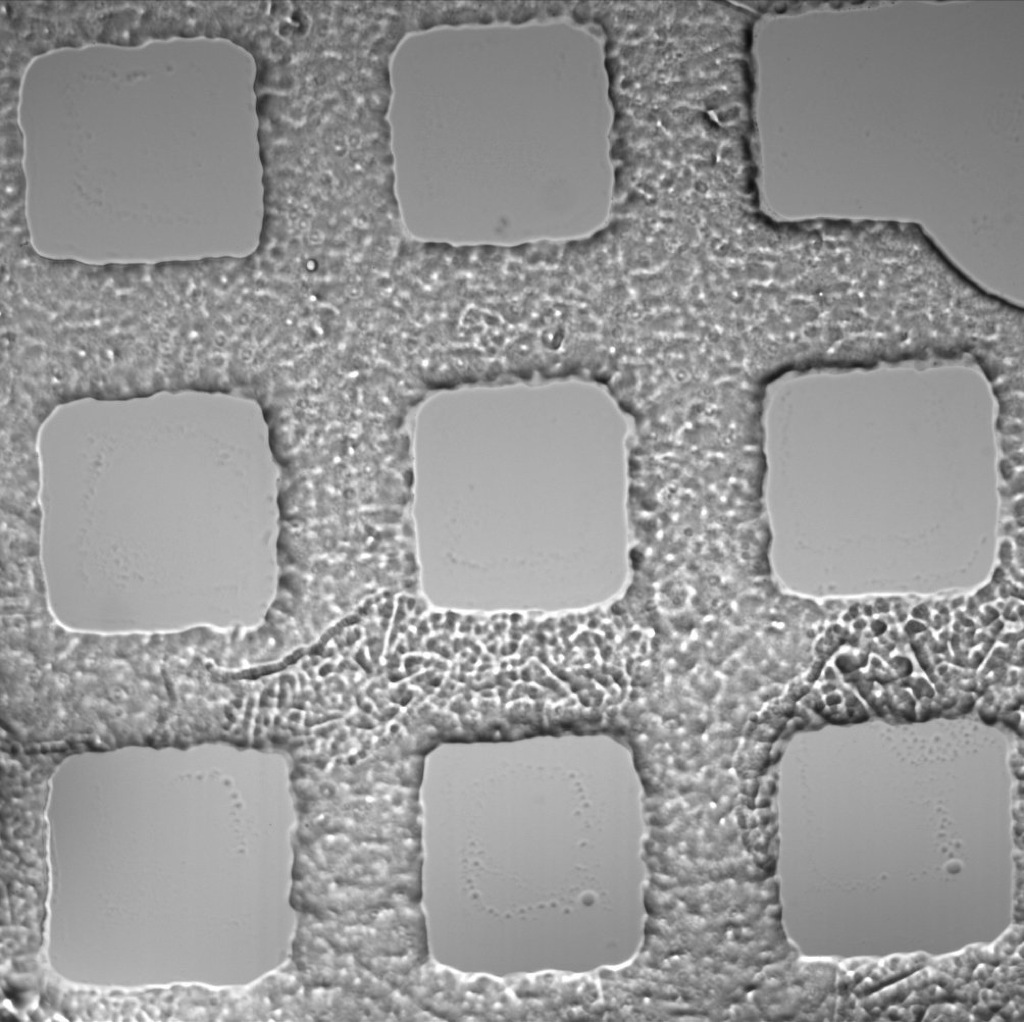

1.5% x-linker in DI – Cells are adherent
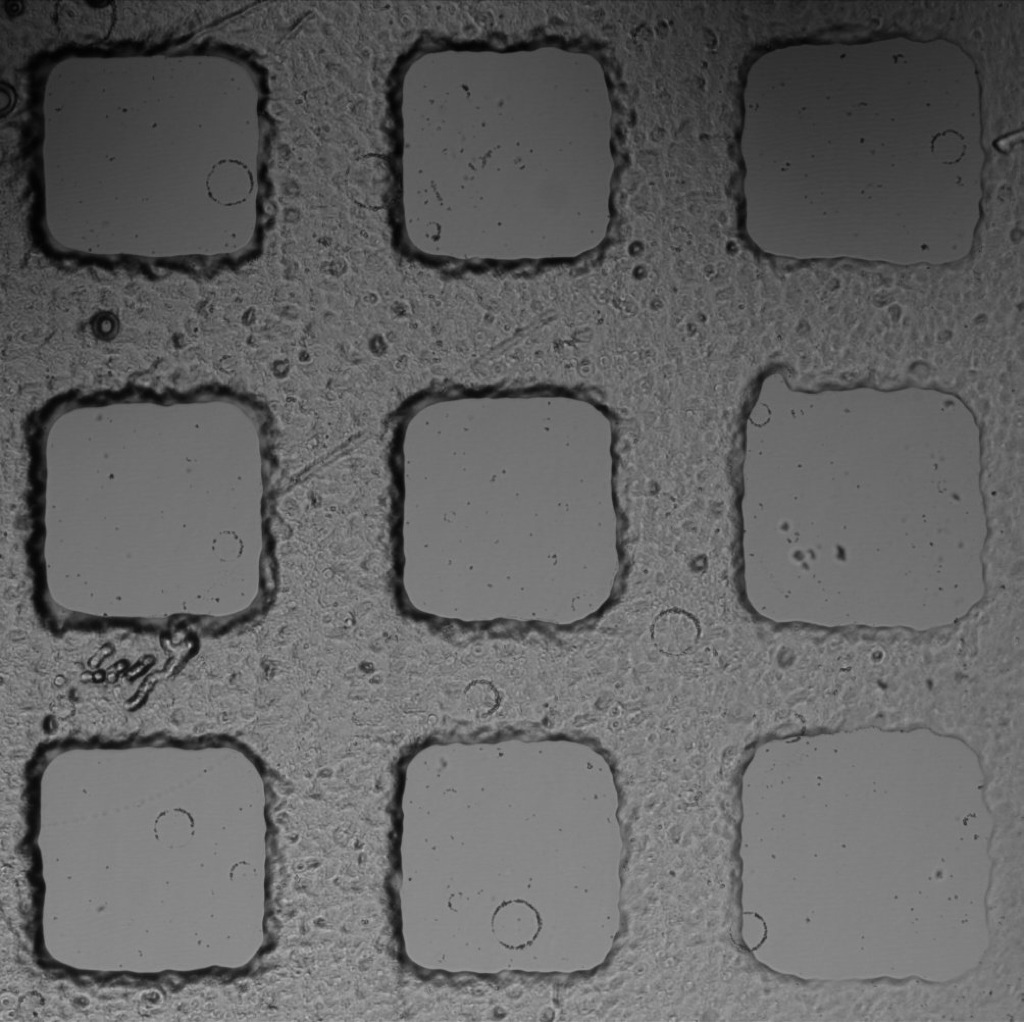
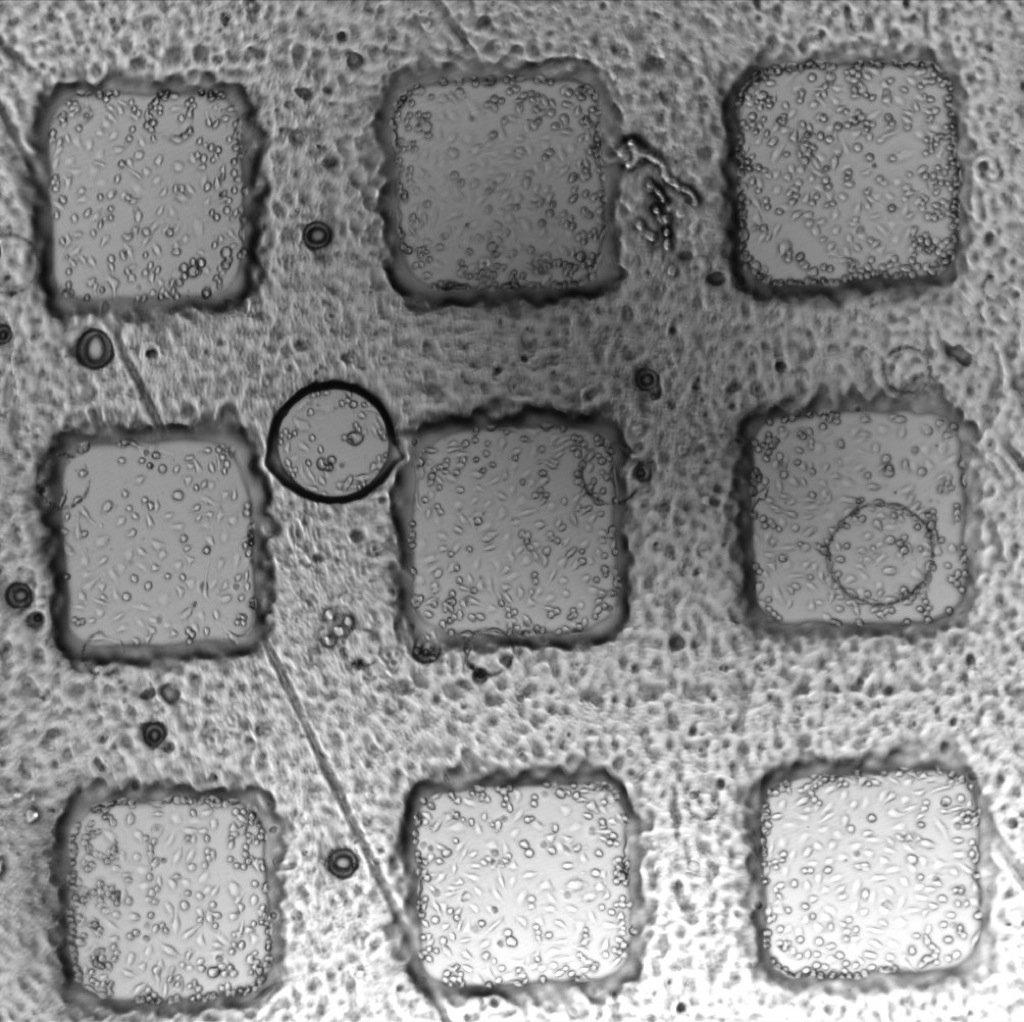
1.5% x-linker in PBS – Cells are adherent

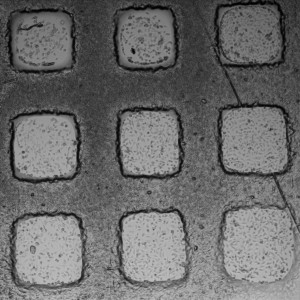
0.3% x-linker in DI – Cells have rounded up

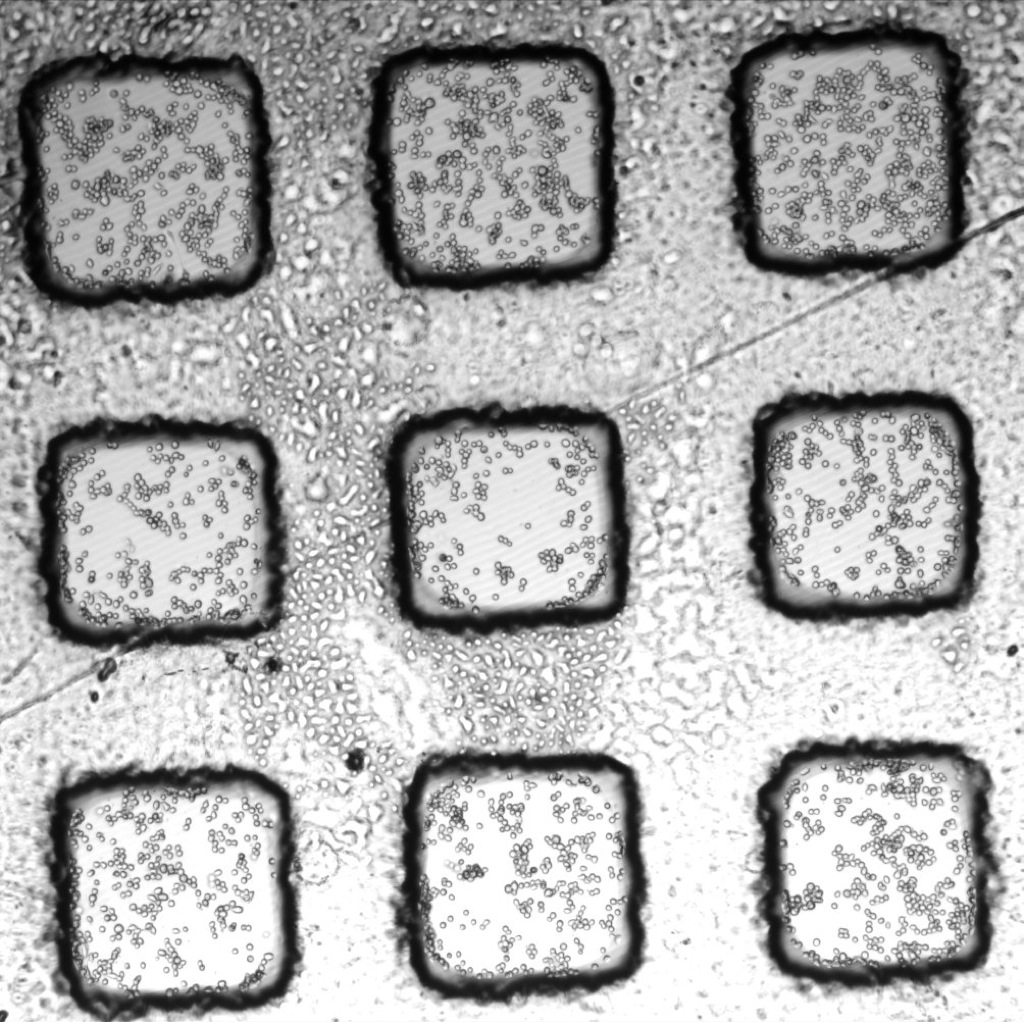
0.3% x-linker in PBS – Cells are rounded up, some displacement of microarray

Next steps:
Crosslink PEG onto Track-etched (poly)ethylene terephthalate membranes.