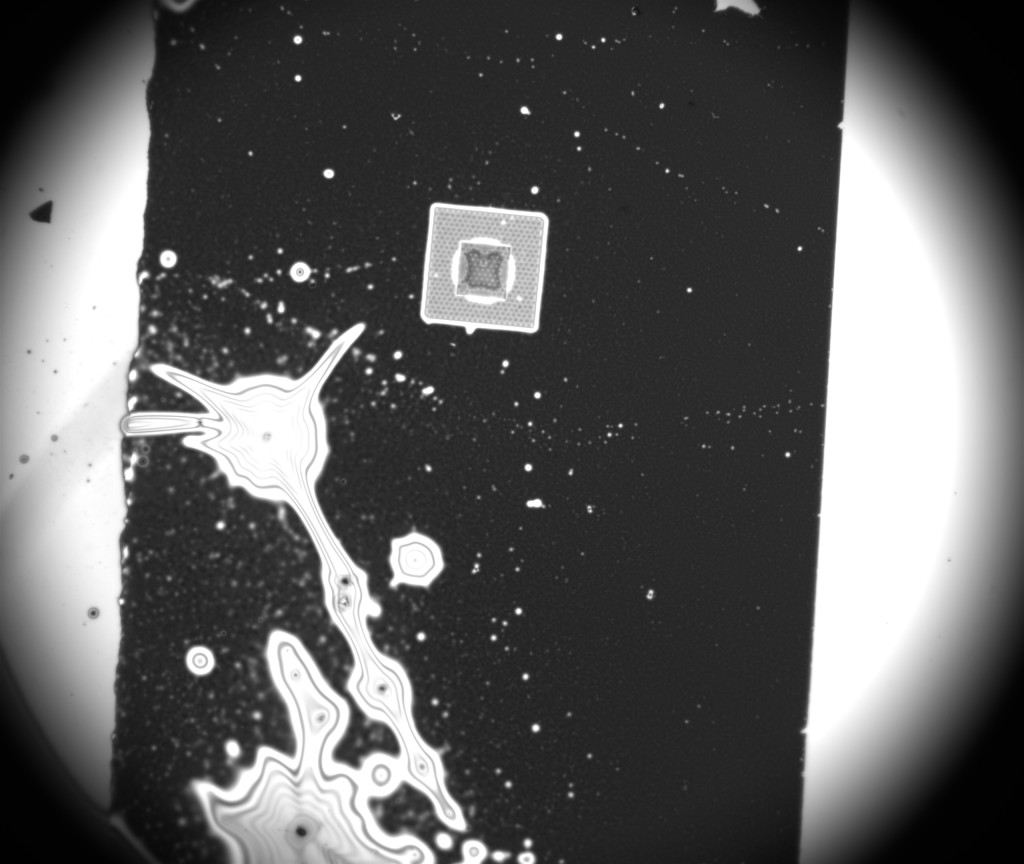
I am doing a few more membrane transfers and trying to troubleshoot my delamination problems, and I wanted to run my protocol by you guys before I mess up any more chips. I was able to get about 3/7 transfers visibly very good without any wrinkles, but they all still delaminate, either during the fabrication or moire recently as soon as they are wetted. The most recently attempt went like this:
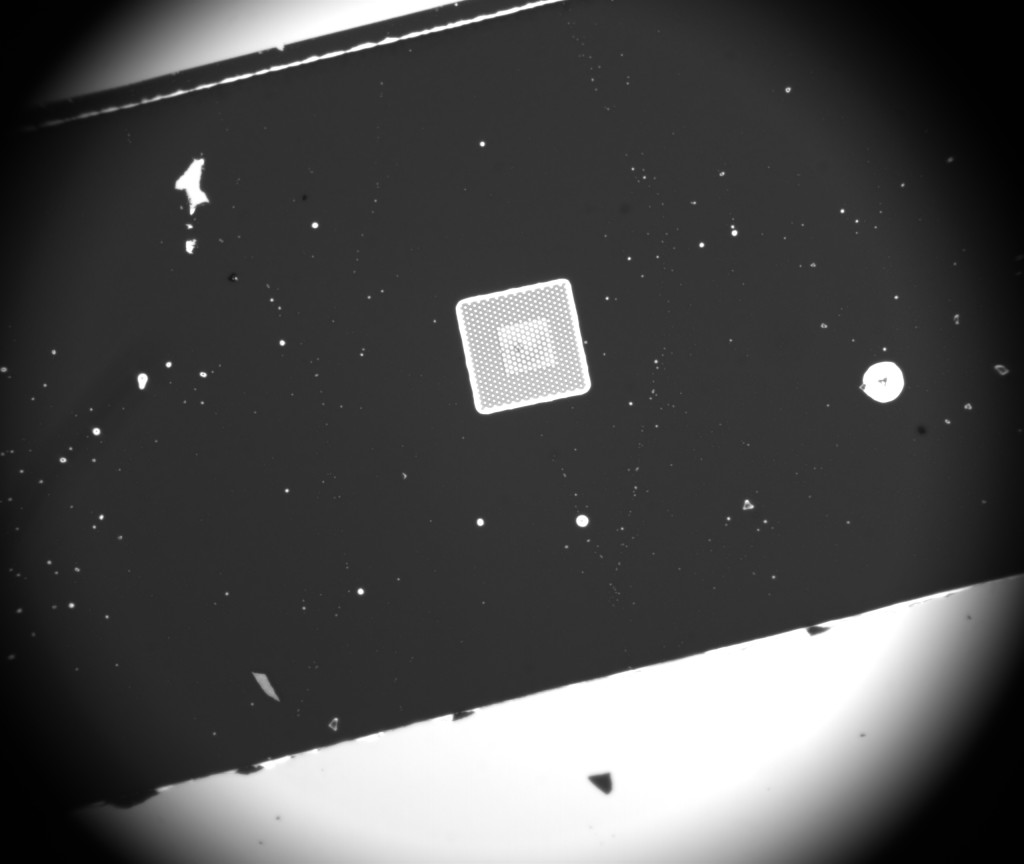
Initial transfer looked good: no wrinkles, a few points of no contact corresponding to particles on the chips, but overall pretty good.
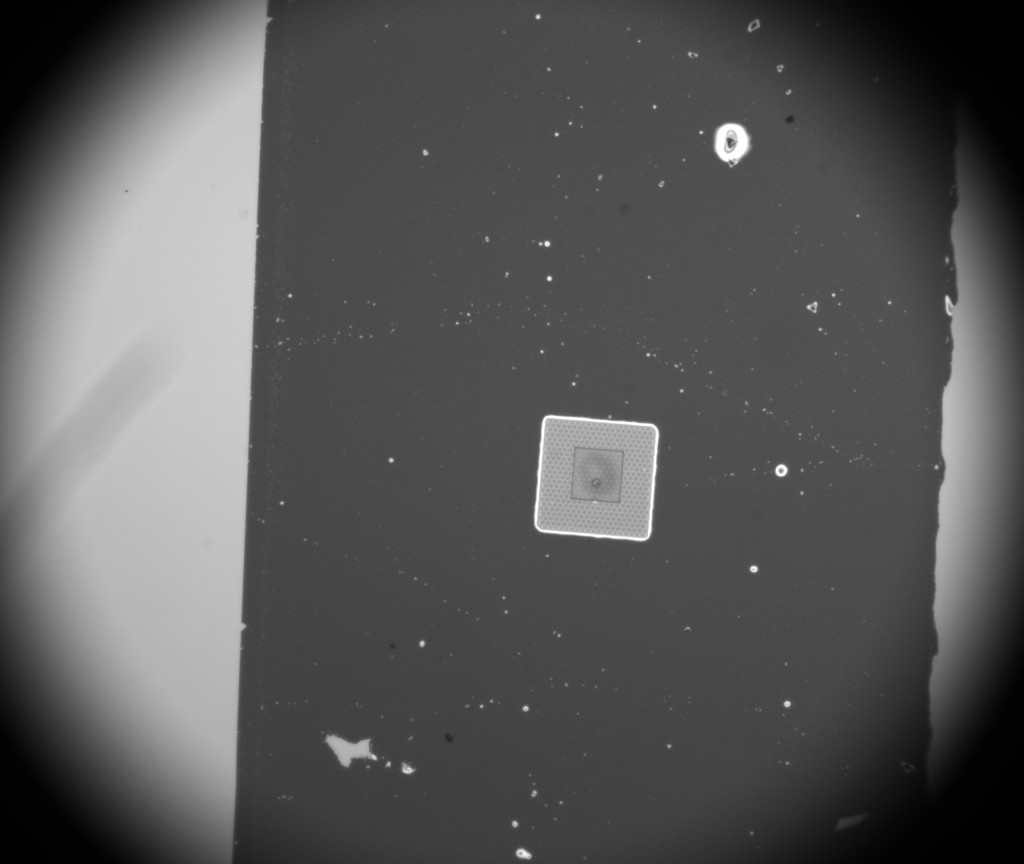
I then plasma cleaned and wetted it (plasma since cleaning seems to promote DNA experiment success, but I am thinking based on my last round of experiments that it is a mistake since it makes the surfaces hydrophilic and probably weakens the bond between membranes). Wetting didn’t cause problems immediately:
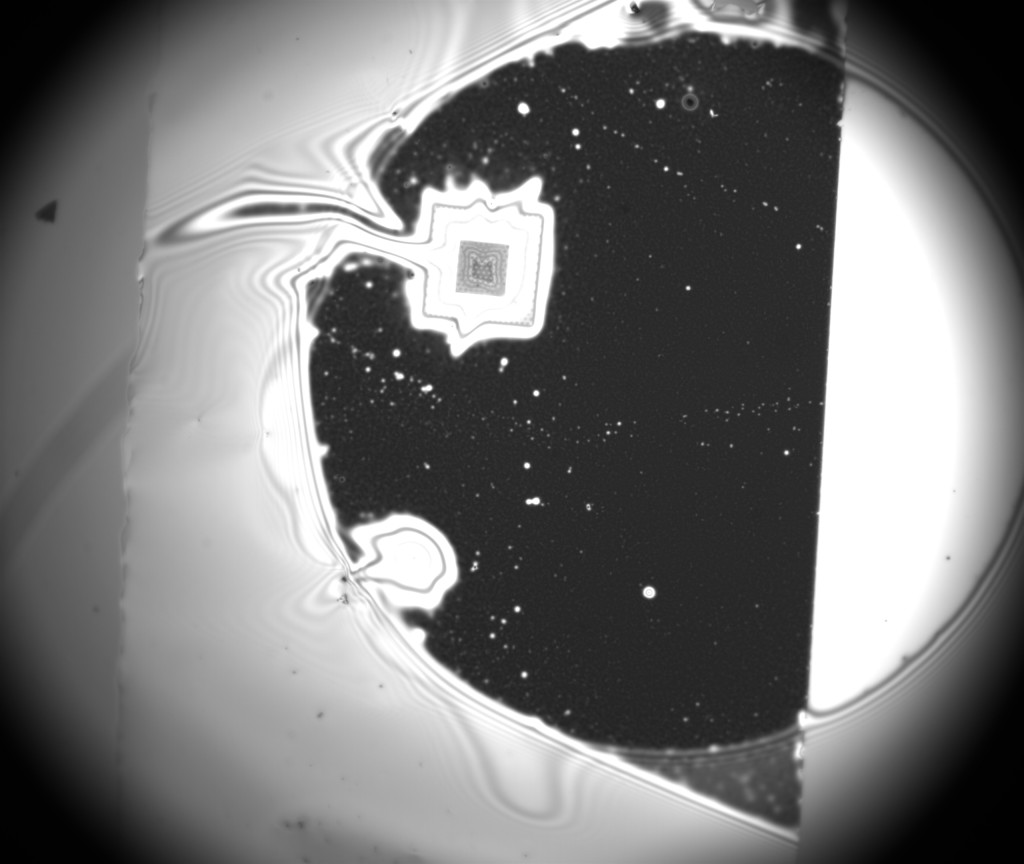
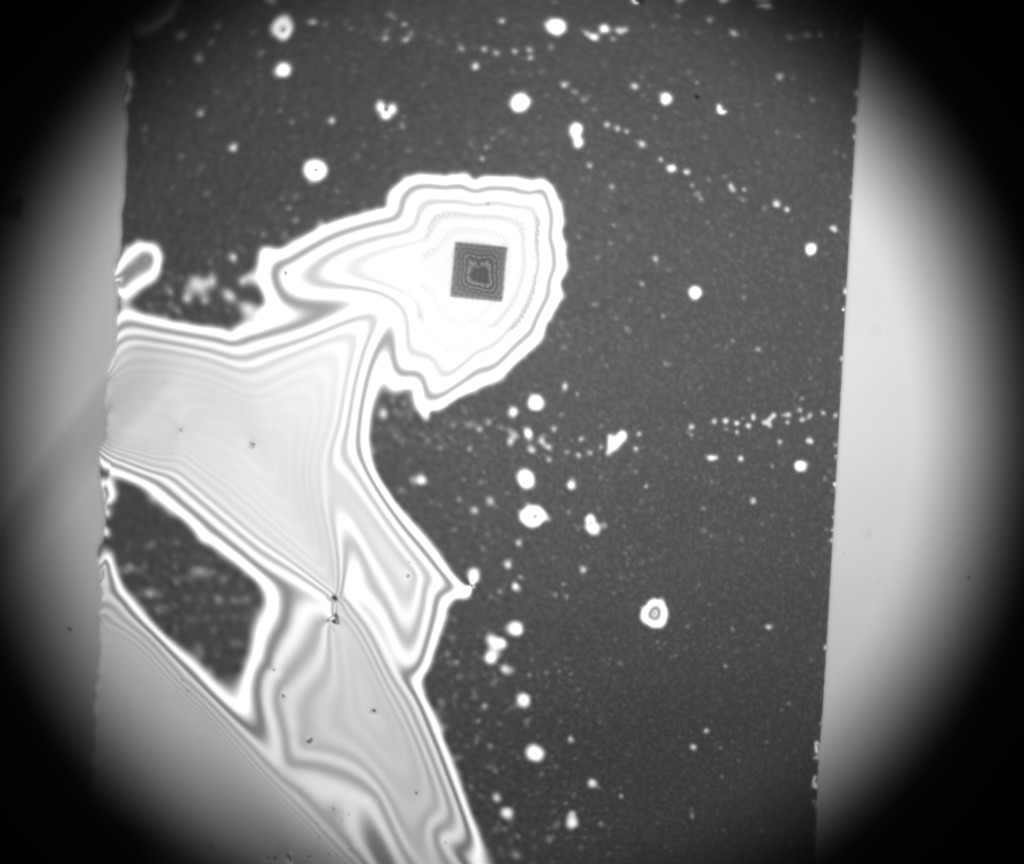
I then made a pore, and took it apart to see if it was intact before adding DNA. Here’s what I saw, over the course of about 5 minutes:
The membrane had completely delaminated in the course of about an hour. The point of nucleation you see is actually a dry area, as the water in this area is drawn under the gaskets since there is no pressure holding it together anymore. As the water is removed, the membrane relaminates together over a few minutes, recontacting wherever the water is removed. Wetting again after it achieves nearly full contact (last image) did not seem to cause problems, but the delamination I am seeing seems to be consistent and progressive.
I think part of the problem might be the piranha/plasma cleaning itself. I have been using it to remove old NPN from bad transfer attempts, but it tends to make surfaces hydrophilic which might weaken the bonding. So I have a few chips left that have no been cleaned in piranha, but I will be out pretty soon. Please tell me if you see any holes in my protocol in case I am just doing something dumb:
1 – sandwich membranes together in aluminum jig with an o-ring under the assembly and no o-ring on top
2 – gently blow down at a 45 degree angle until some condensation is visible
3 – wait for nucleation of contact to occur and spread across the two membranes, ideally from a single point to avoid wrinkles
4 – steam the contacted assembly in water vapor to strengthen contact
5 – remove NPN chip without breaking any of the edges, leaving behind an assembled membrane.
So far about 3/7 have wrinkled or partially broken during step 5, 1 has wrinkled up and broken at step 2 (I assume I blew too hard and broken an edge before it made contact), and the remaining 3 have delaminated during the nanopore experiment or immediately after a drop of water is applied to test the seal.
I know Tucker was similar things where either the membrane comes off on first wetting or it stays in good contact, so I think the next batch of chips I will have to just avoid doing anything to make the membrane at all hydrophilic.
I am wondering if the oxide spacer itself could be contributing to delamination. We have seen a few times now that the contact appears to be good between nitride and NPN, but not very good between oxide and NPN. I think the next batch of chips would be best done with a nitride layer on top of the oxide spacer.
Finally, do you have any tricks to restore a hydrophilic layer to hydrophobicity after plasma or piranha? If you do, I will be able to recover several of these chips and try the transfer again.