Quantum Dot Separations
We ordered quantum dots from Invitrogen. These QDs have a PEG coating that terminates in COOH and should cause the dots to be negatively charged. They are about 12.6 nm in diameter:
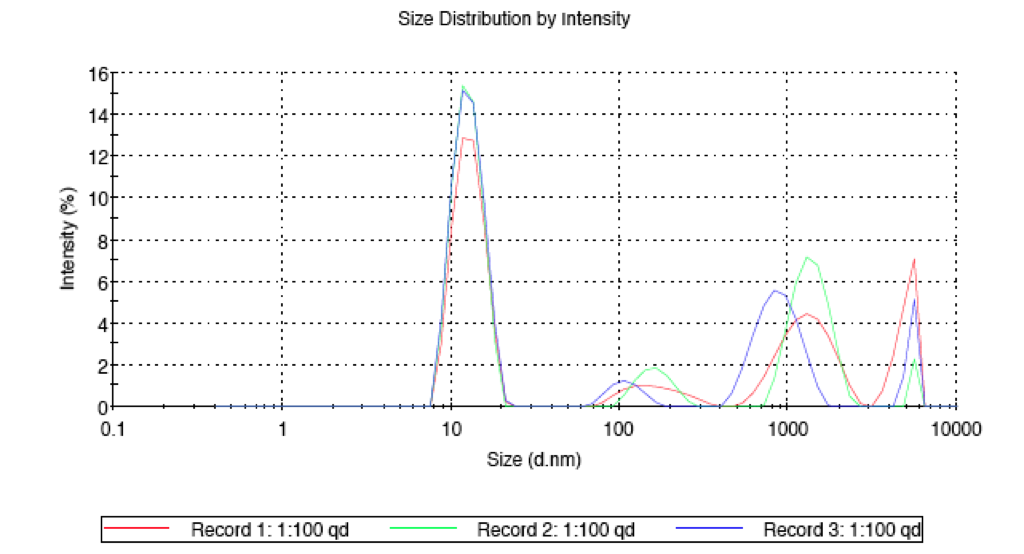
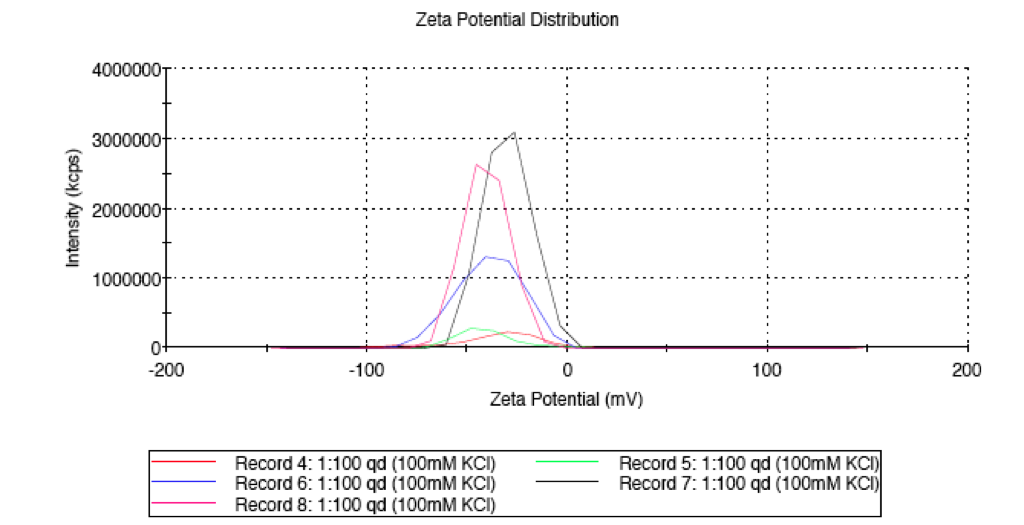
They exhibit a -40mV zeta potential by zetasizer measurements, however the particles appear to aggregate a great deal (under microscope and visibly turn to black clumps in solution):
I’ve performed two separations with these QDs: one at 100 mM salt and one at 10 mM. Here are the results:
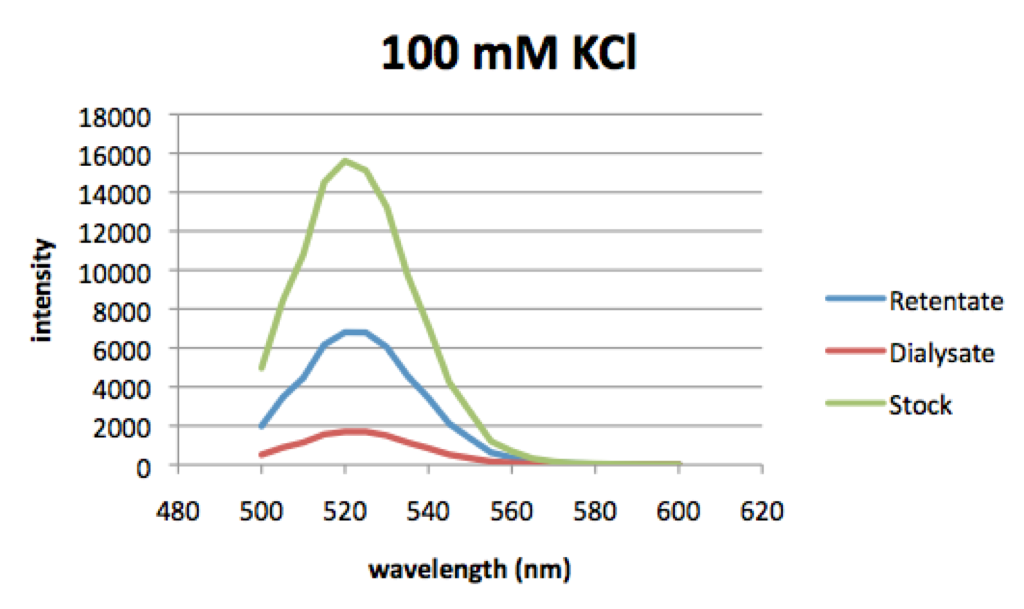
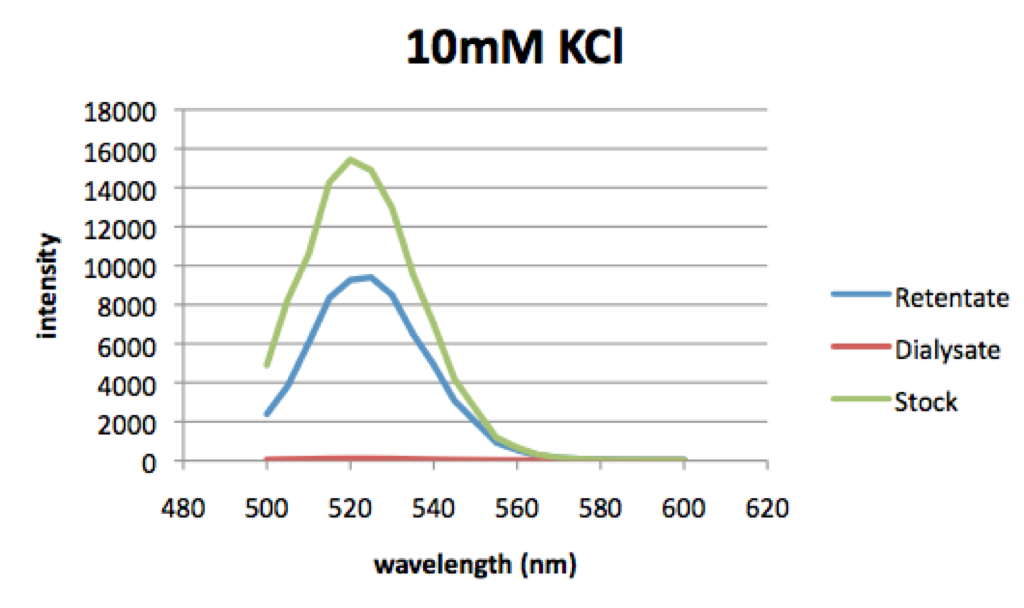
More QDs pass through the 100mM sample in 24 hours. In both cases the stock is higher than the sum of the retentate and dialysate – this could be due to adsorption.
Sieving coefficients:
100mM: 0.24 +- 0.02
10mM: 0.02 +- 0.01
I’ve performed a quick computational simulation of this system using the COMSOL model from the diffusion paper:
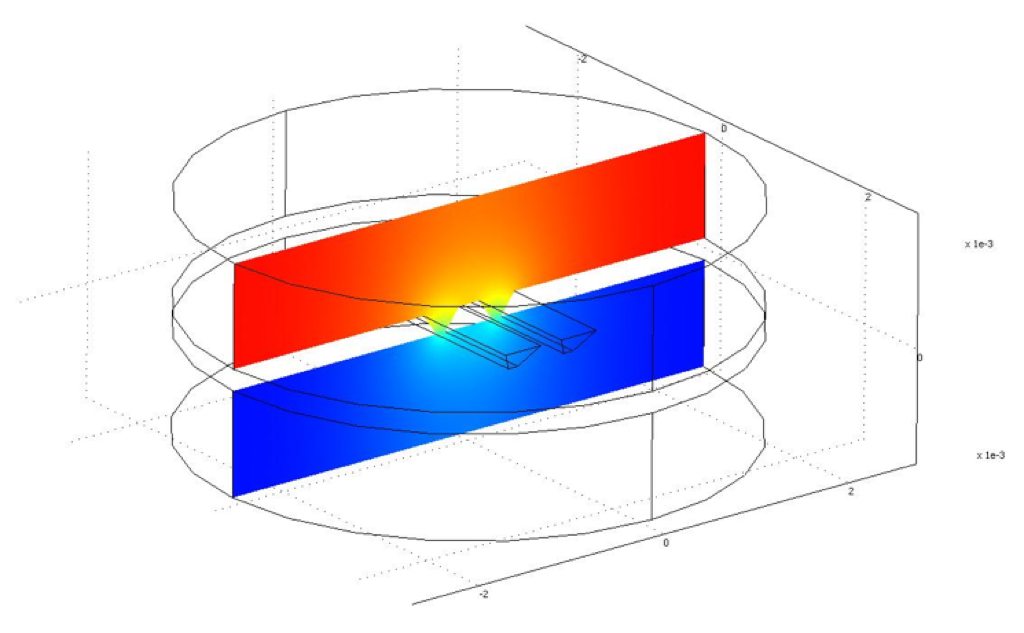
Sieving coefficent from model (100mM): 0.21
This is good agreement with the experimental data. The next step is to look at the model for low salts to see how that holds up to the data.