Adsorption of F-BSA on PEGylated pnc-Si, PEGylated Glass, Glass
This study was run to test test the efficacy of PEGylation in blocking BSA adsorption. Three surface types were used, glass, PEGylated glass, and PEGylated pnc-SI. The glass was cleaned in Ethyl Alcohol, dried and UV treated, PEGylated glass was procured from Microsurfaces Inc. who also PEGylated our samples of pnc-Si, which did not have etched windows. The PEG from Microsurfaces Inc. is of the high density variety.
5 mg of powdered BSA fluorescein conjugate (F-BSA) was dissolved in 5 mL of 1xPBS, mixed from 10xPBS with ddH2O to make 1 mg/mL F-BSA. 130 mg of azide powder was disolved in 1 mL ddH2O to create 2 M concentration. 5 µL of this was added to the 5 mL of F-BSA for a final azide concentration of ~ 2 mM. This mixture was refrigerated overnight.
Samples of glass, PEGylated glass, and PEGylated pncSi were covered with PDMS in which wells had been punched.
20 µL of F-BSA was pipetted into each well (three on each glass slide and three pnc-Si chips). Petri dished with the samples and a ddH2O soaked Kim wipe were sealed with Parafilm and placed in the refrigerator for an hour. The F-BSA was then pipetted off and replaced with PBS, which was then pipetted off.
The Zeis was used to capture multiple images of each sample. The results are shown in Fig. 1.
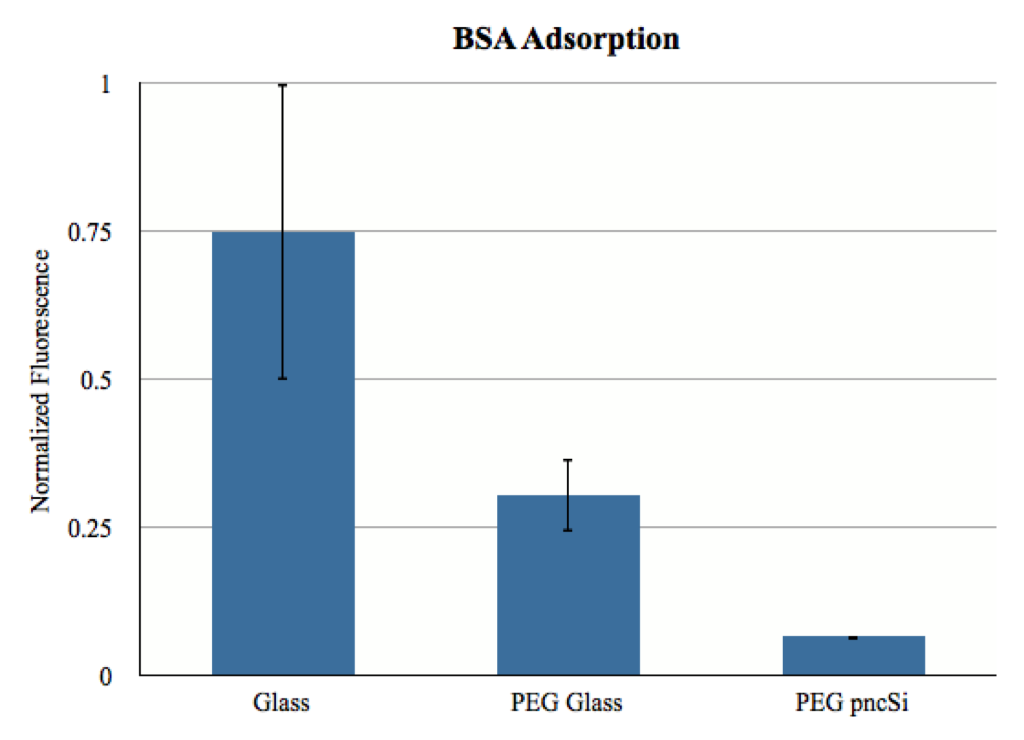
This study will be redone with the addition of low density PEGylated chips from our lab, a background reading, and a more thorough rinsing step to ensure all loose F-BSA and fluorescein is washed away.