Solid State Nanopores in Biosensing
Multi-Nanopore Force Spectroscopy for DNA Analysis
Control of DNA Capture by Nanofluidic Transistors
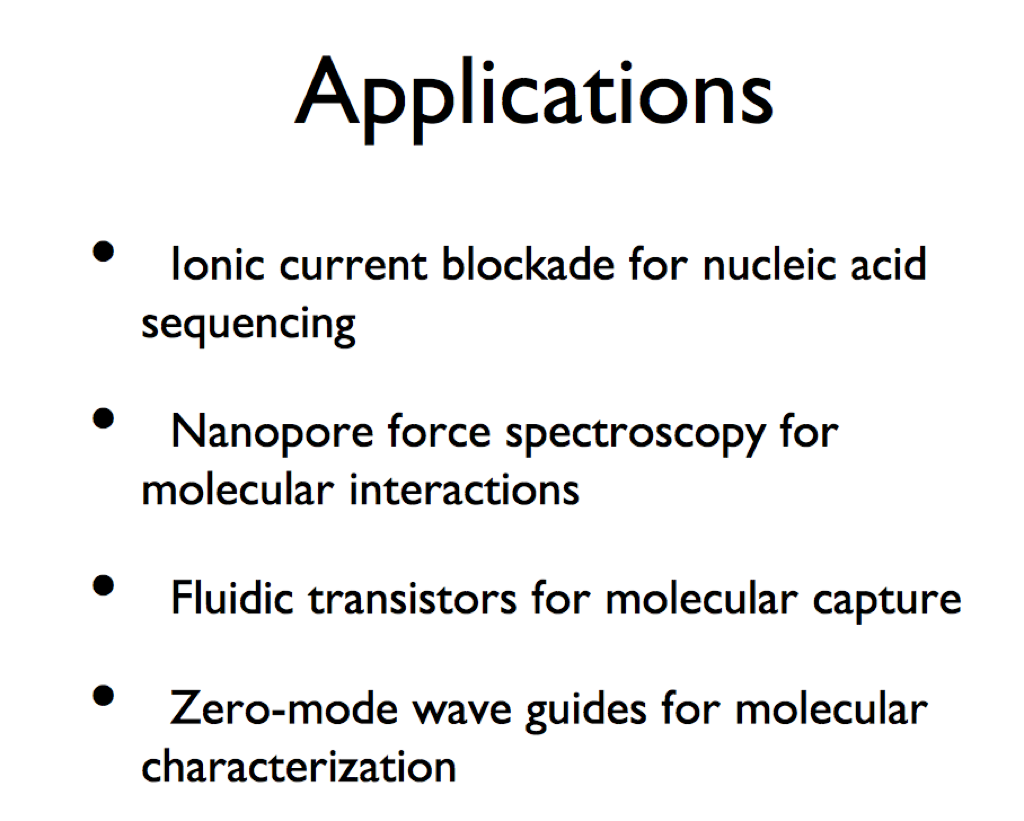

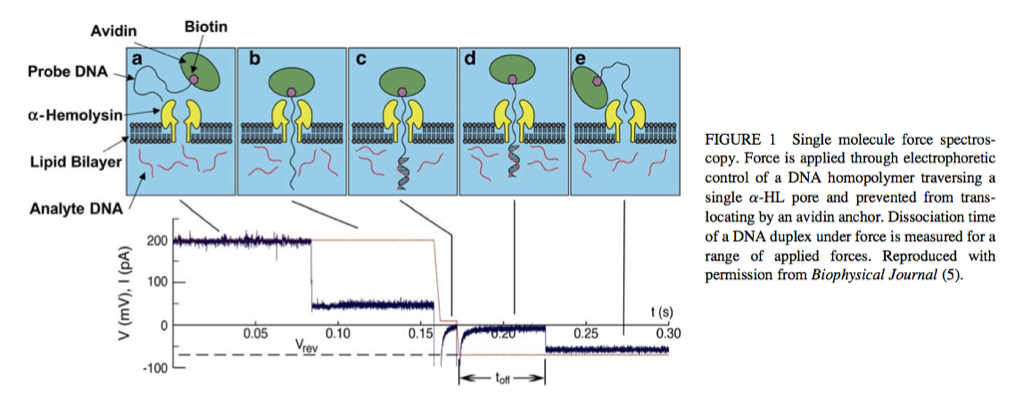


Multi-Nanopore Force Spectroscopy for DNA Analysis
Control of DNA Capture by Nanofluidic Transistors
Samples are from wafers #316 and 318. This is the first time for wafer scale deposition. Processing conditions:1) chamber base pressure @ 6×10⁻⁷ Torr (previously @ 5×10⁻⁶ Torr)2) 15nm Ti + 15nm Au, no vacuum break Estimated “cell resistance”: about 20-25 ohm, much lower than previous measurement. Possible reasons why lower resistance is observed:1) “Au…
In support of the bone infection studies done in the Schwarz lab at URMC, I have recently been tasked with coordinating a new collaboration with Dr. Yates lab in the Chemical Engineering department. The goal of this collaboration is to establish a method to coat our membranes with hydroxyapatite crystals. Two different methods were attempted,…
Membrane chips were amino-silanized with APTES in the YES system. I performed the standard electroosmosis tests with these chips. Here are the flow rates in comparison with non treated and oxidized membranes: Here are the calculated zeta potentials: As you can see, amino silane reduces the rate of electroosmosis and the zeta potential. We would expect…
Here’s a few sketchup animations I made for Dean’s device, based on his PPG presentation last week:
Looking back at production over the last year, I noticed that our porosity has dropped considerably. Now that we have a good handle on controlling pinhole density, it is time to focus on controlling morphology again. Below are two examples of a 15 nm and 30 nm pnc-Si film produced this month and one year…
Chris and I got to play on the new Zeiss scanning transmission electron microscope (STEM) today (learn about STEM here). We didn’t get to spend a lot of time on it, but here are some quick images we snapped. wafer 416 @ 25kx (left) and 65kx (right) Even though we’re imaging in transmission mode, the…