PLA Plastic Acidifies DMEM + 10% FBS
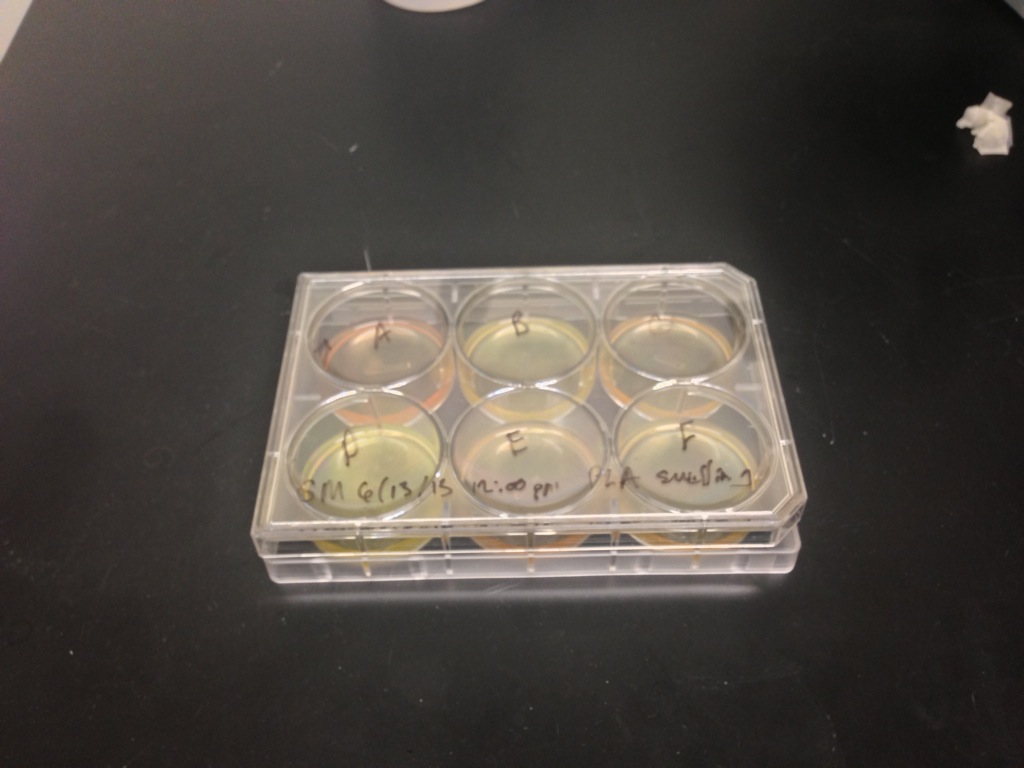
I have been looking into PLA (Poly Lactic Acid) plastic for use in our microfluidics. PLA is a commonly used material in 3-d printers, so it would be great if we could print out our microchannels for cell-culture devices. To that end, I wanted to see if the PLA plastic would react with our cell culture media. I incubated 4 mL of DMEM +10% FBS in a 6 well plate with 6 pieces of PLA. I forgot to do a control 🙁
Here is a cell plate that has been incubated for 48hrs to get an idea of what the DMEM is normally colored:

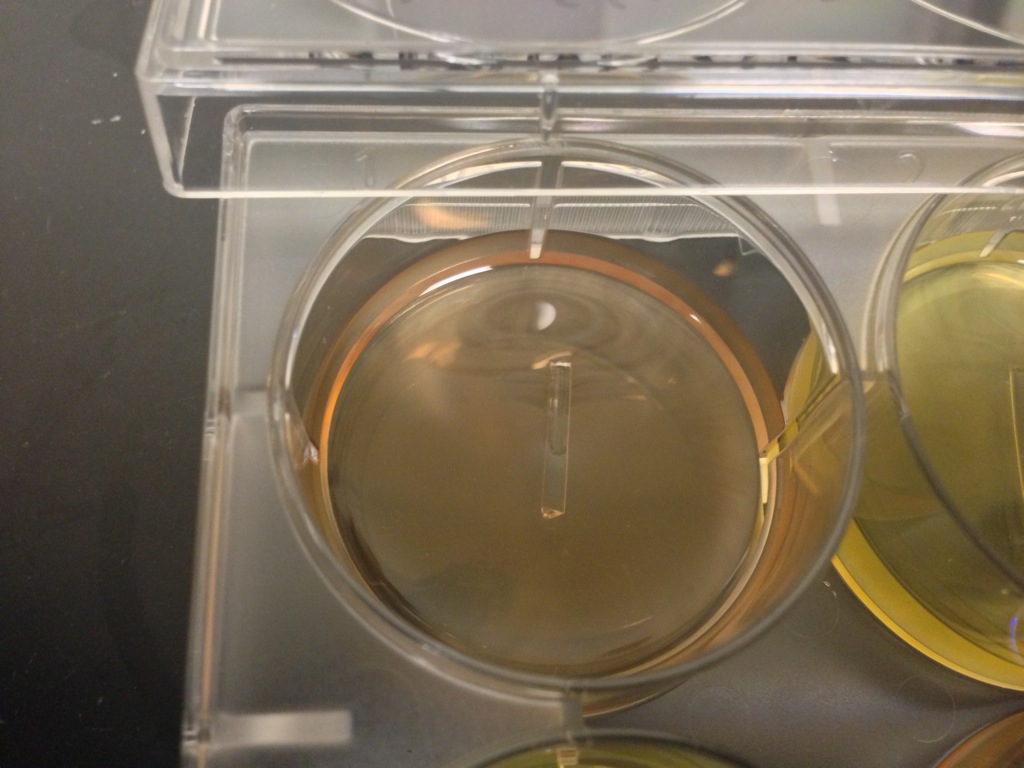
After 24hrs of incubation, I did not note any difference in color between the 6 wells and the Cell media, so I left it in over Sunday. When I returned on Monday morning, I opened the incubator and experienced a pungent smell. Here’s what it looked like.
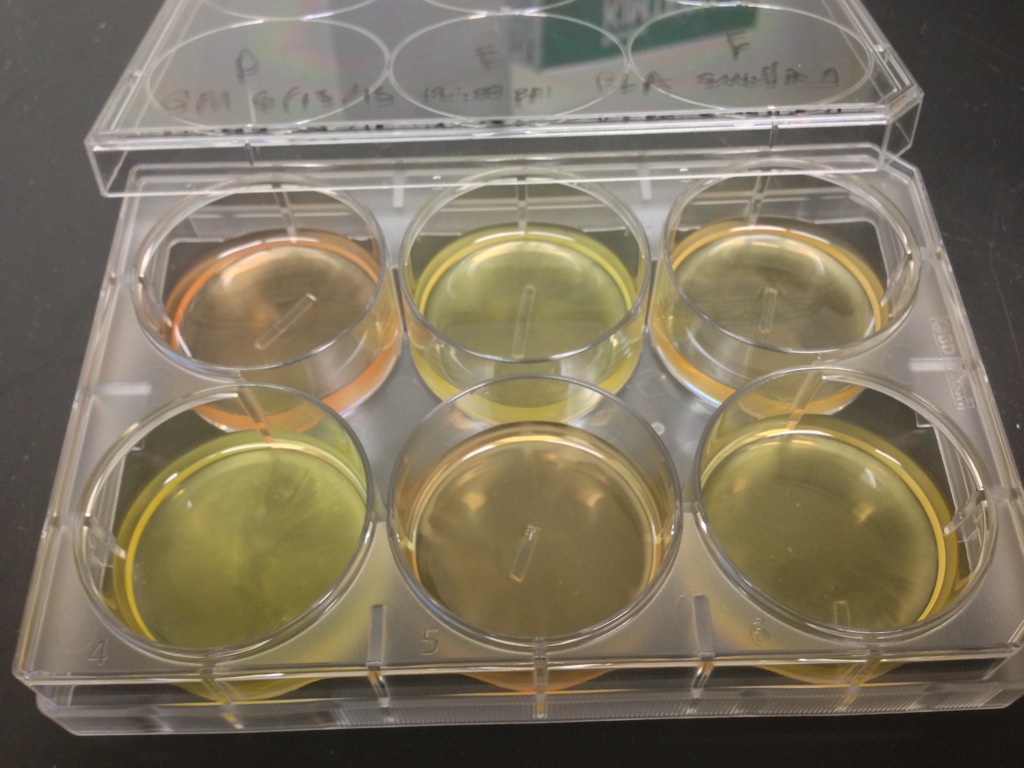
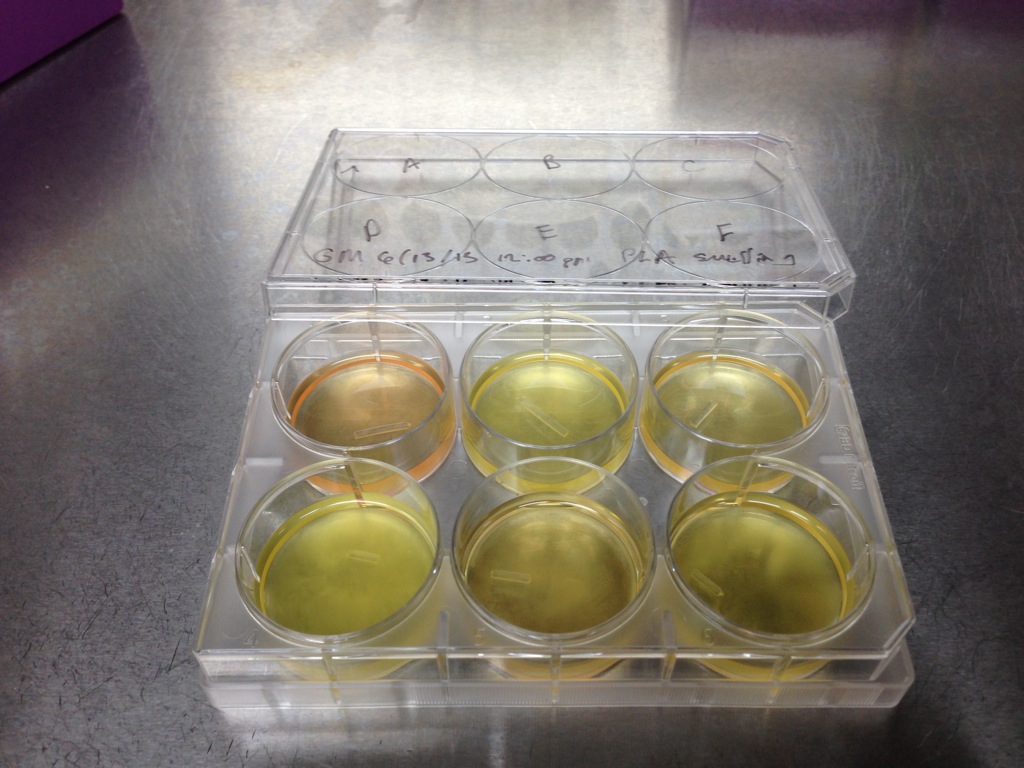
From the color, it’s pretty clear that the Media became acidic. If you look closely enough, you can see wisps of a material floating in the media. I measured lengths and diameters of the PLA pieces before and after to see if there were dissolution/swelling effects. I did not notice any differences in stiffness handling the incubated PLA or a piece of fresh PLA. The PLA pieces are mostly cylindrical, but sometimes I could detect a major or minor axis (+/- 10 microns, limit of the calipers).
| Pre | Pre | Post | Post | %Change | |||
| Piece | Length [mm] | Diameter | Length | Diameter | Length | Diameter | |
| A | 12.45 | 1.75 | 12.78 | 1.73 | 2.65% | -1.14% | |
| B | 14.22 | 1.75 | 14.19 | 1.73 | -0.21% | -1.14% | |
| C | 9.03 | 1.74 | 9.15 | 1.73 | 1.33% | -0.57% | |
| D | 7.11 | 1.75 | 7.08 | 1.74 | -0.42% | -0.57% | |
| E | 8.2 | 1.74 | 8.13 | 1.73 | -0.85% | -0.57% | |
| F | 7.15 | 1.75 | 7.23 | 1.74 | 1.12% | -0.57% | |
I believe you had a fungal infection your plate, explaining the smell, the threads you observed, and the pH change (yellow/orange is a low pH – typical consequence of either bacterial or fungal infection).
How/did you sterilize the PLA samples?
You should dip them for a period in 70% ethanol, or if you’re worried about the solvent effect on your experiment try UV or some other radiation to sterilise the plastic. Ozone exposure or a plasma clean would probably also be effective, although fungal spores are quite tough..
Fungus is bad in general to have in your incubator as the spores can hang about and infect other things later on..
A control in this case wouldn’t necessarily have helped you debug this, as if you didn’t add any plastic to the well you wouldn’t have seen an infection. For the next expt i recommend dipping an equivalent PLA sample into the well for a short period (a few mins) then removing it, to ensure that any contamination innoculates all the wells equally.