Etch cell troubleshooting
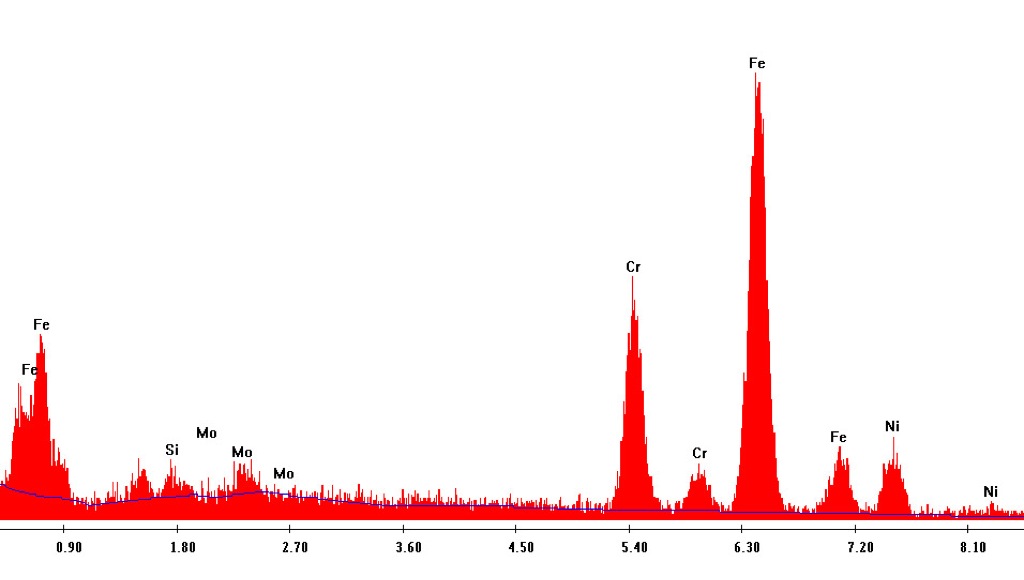
As many of you know, we have been having a lot of trouble with the new etch cell and have not been able to produce high quality membranes. Yesterday, we discovered that the stainless steel used to fabricate the new cell is different than that of the original cell. Here are the EDAX spectra:
Old Cell:
New Cell:
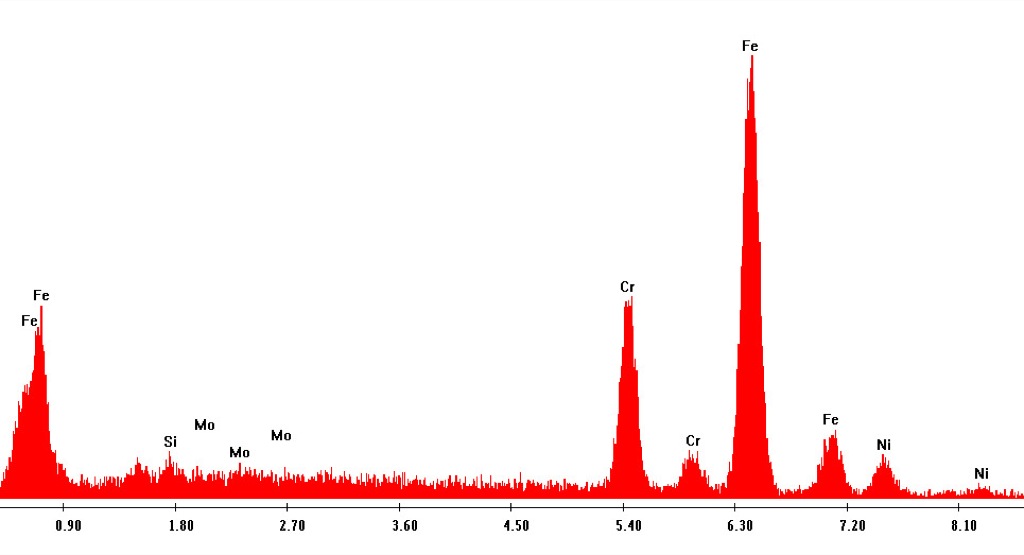
This data indicates that the old cell contains ~2% Molybdenum, a characteristic of type 316 stainless steel that is known to be highly corrosion resistant. This cell was made from scrap stainless steel, so it was always assumed that this was standard type 304 stainless. Typically, stainless steel only has corrosion problems with acids and salts, so we had just assumed that our fairly weak base etchant would not be a problem for any stainless steel. As shown below, this is not the case:
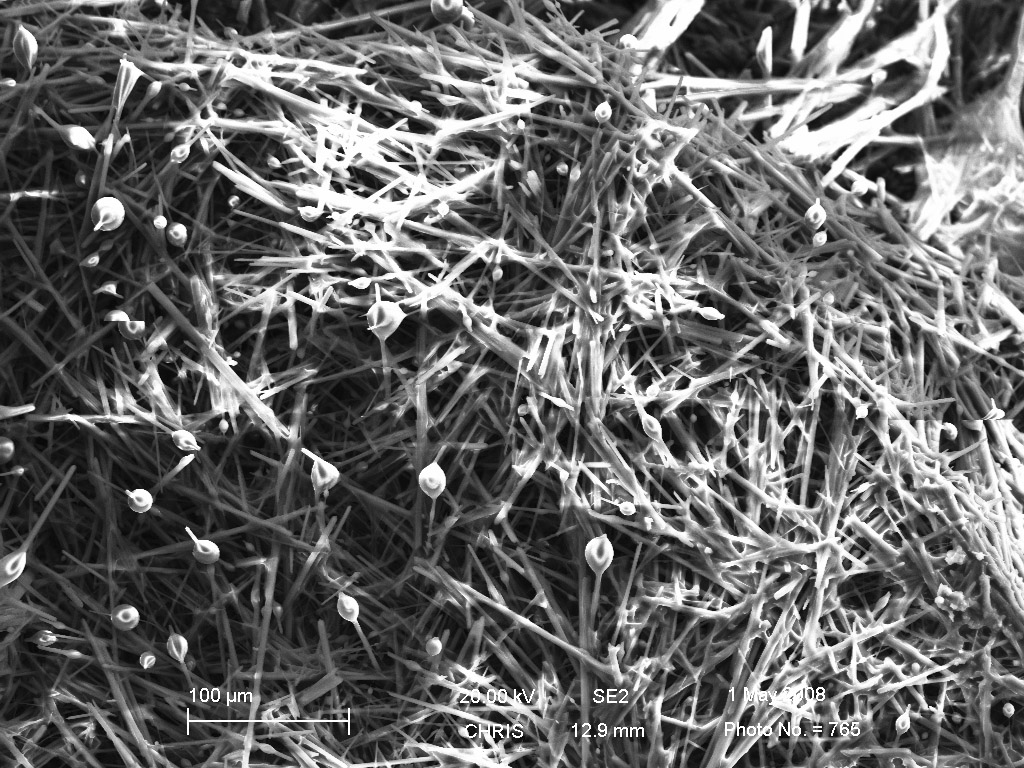
These fibers are the “corrosion” that we see on the walls of the cell and are made of Fe and Si. Since the stainless steel is the only source of iron in the chamber, it is a near certainty that Type 304 is attacked by our EDP etchant.
Therefore, we are now trying to find type 316 stainless steel material for our etch cell, but it is much more rare than 304, especially in some of the geometries that we need. There are local fabricators that should be able to help us with it, though. In the mean time, Dave has developed a process to oxidize the inside of the cell with nitric acid that seems to be allowing some non-ideal etching to be run. We should be able to supply some usable material relatively soon.