Alexander Shestopalov’s Group Update: Silane Oxidized SixNy Sample and Oxidized SixNy Sample
Our main purpose of this project is to reduce or eliminate the protein non-specific adsorption on the oxidized siliconnitride sample surface. By synthesis the PEG molecular on the surface, we believe we can reach the goal.
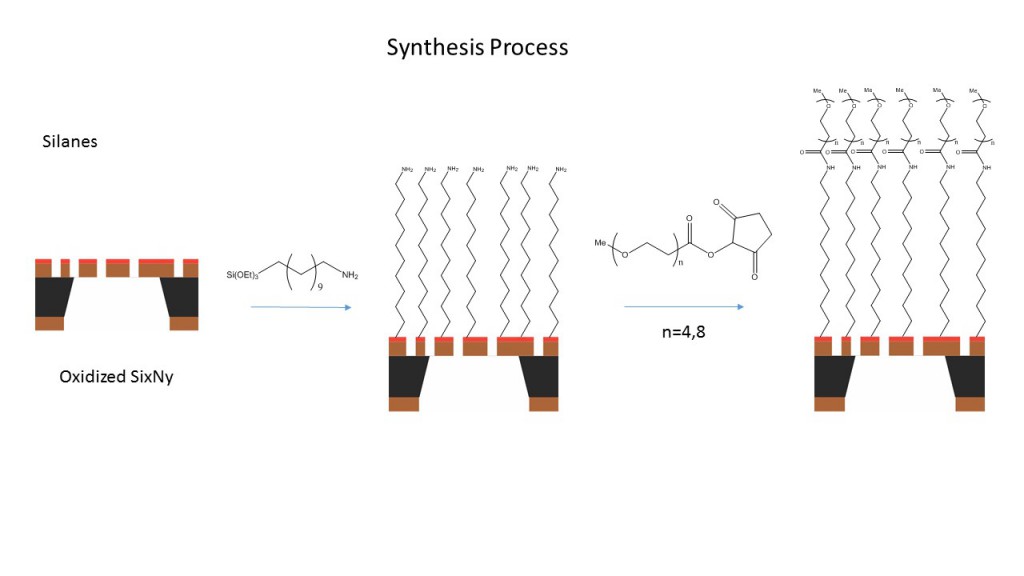
There are different ways to synthesis the PEG on the surface. First is the silanes, after synthesis the silanes, we can get the surface with the amine group and react them with the NHS-PEG to get the PEG on the surface.
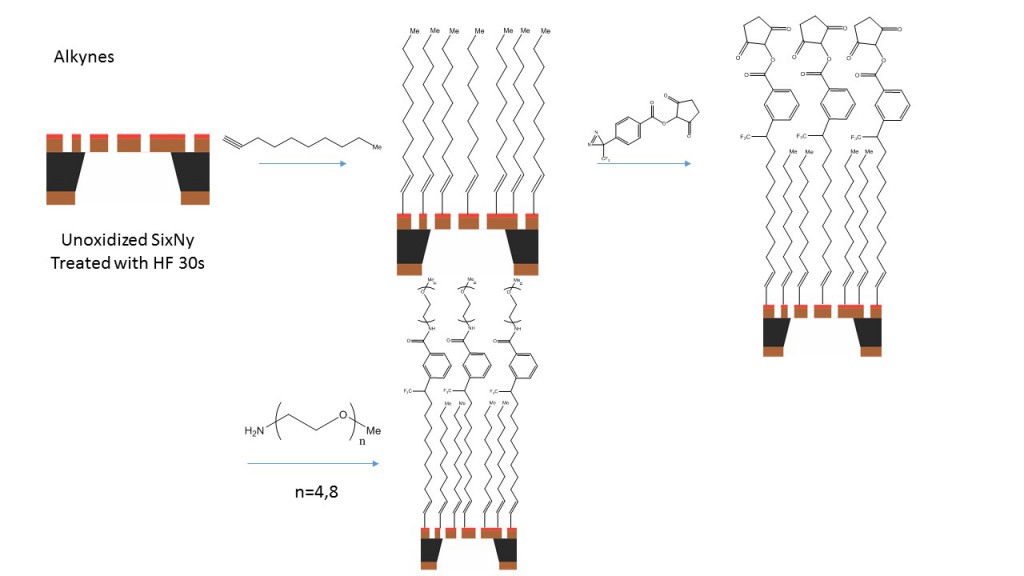
The second method is the alkynes, we are suing the unoxidized siliconnitride treated with the HF 30s and do the following steps which showed in the graph.
In this post, I’m going to discuss the result of the Silane Oxidized SixNy and Oxidized SixNy Sample. We used same condition to make 4 chips for each sample. And we treat them with BSA, IgG, and PBS to rest the adsorption. We are using the SEM, contact angle and XPS as the testing method.
First, we compared the SEM on the two original sample without treat any protein or buffer. After we synthesis the silane on the surface, the surface nanoporous remain same with the Oxidized SixNy Sample. And the static contact angle show us the silane is more hydrophobic than the Oxidized SixNy Sample.

Picture gives the introduction to the XPS.


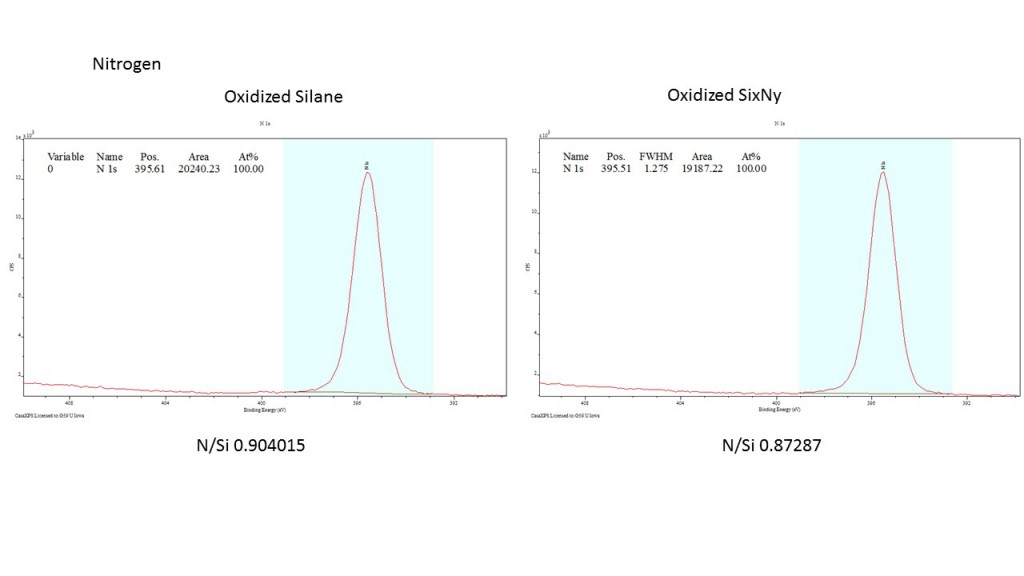
For the N peak in the original two sample, they are almost the same,
For the C, we can see there are two peaks in silane and three in the Oxidized SixNy. The ratio of C to Si is higher than the the Oxidized SixNy which suit our forecast because we synthesis 10 carbon silane on the surface.

The Si peak are almost same, each of them have 3 peaks.
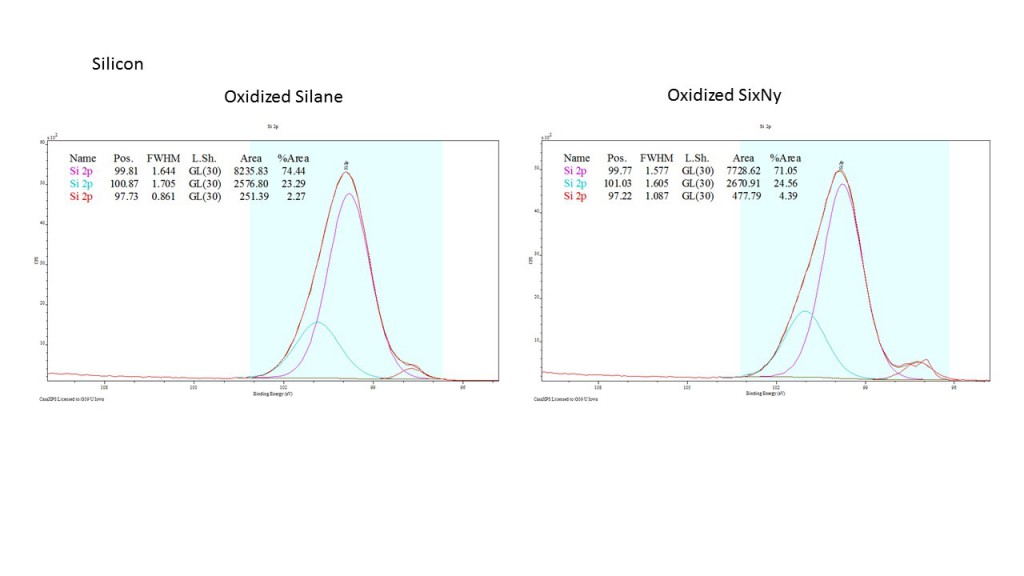
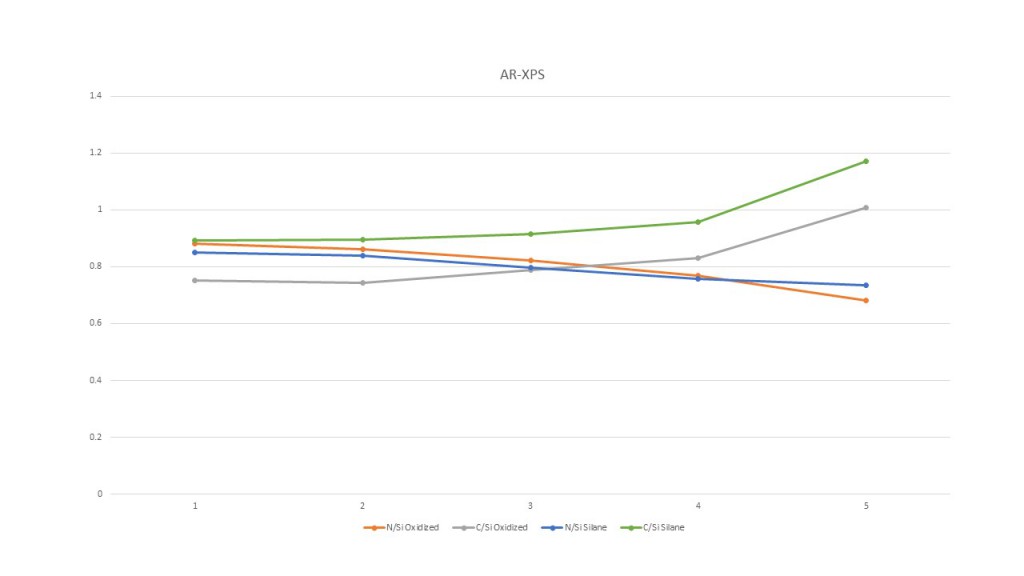
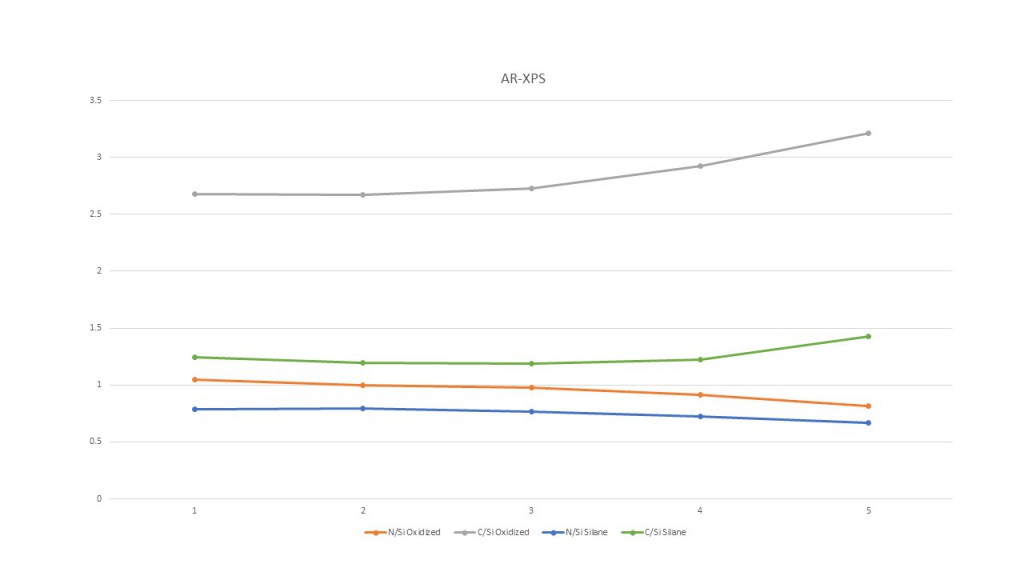
For the AR-XPS, we can see as the angles goes up, the N to Si ratio are going down and the C to Si ratio are going up. That means with the increase of depth, we are closer to the Si substrate. It’s sample with our sample’s structure.
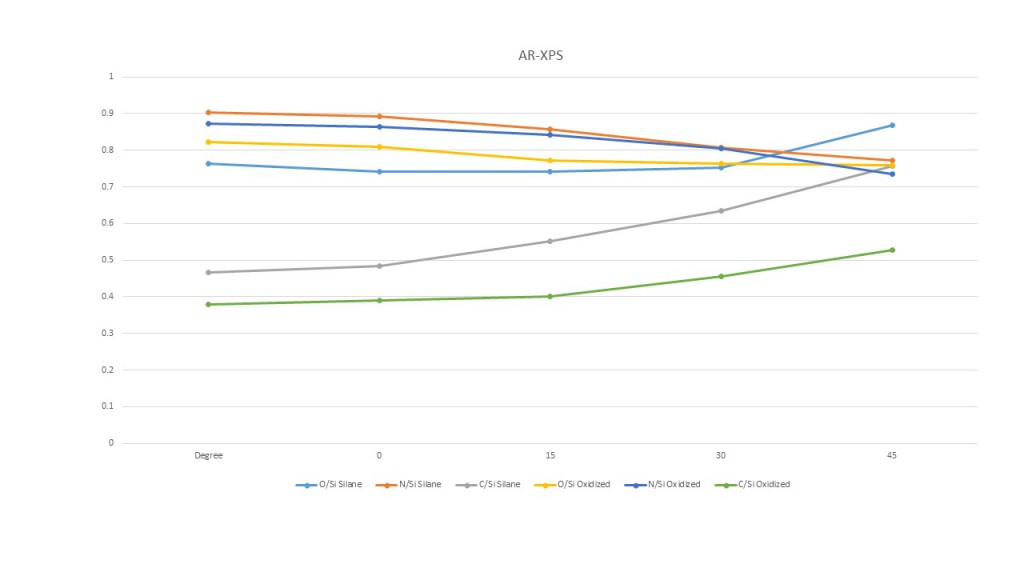
Next part, I’m going to discuss the protein adsorption in BSA and IgG. We are using the PBS as the control group.
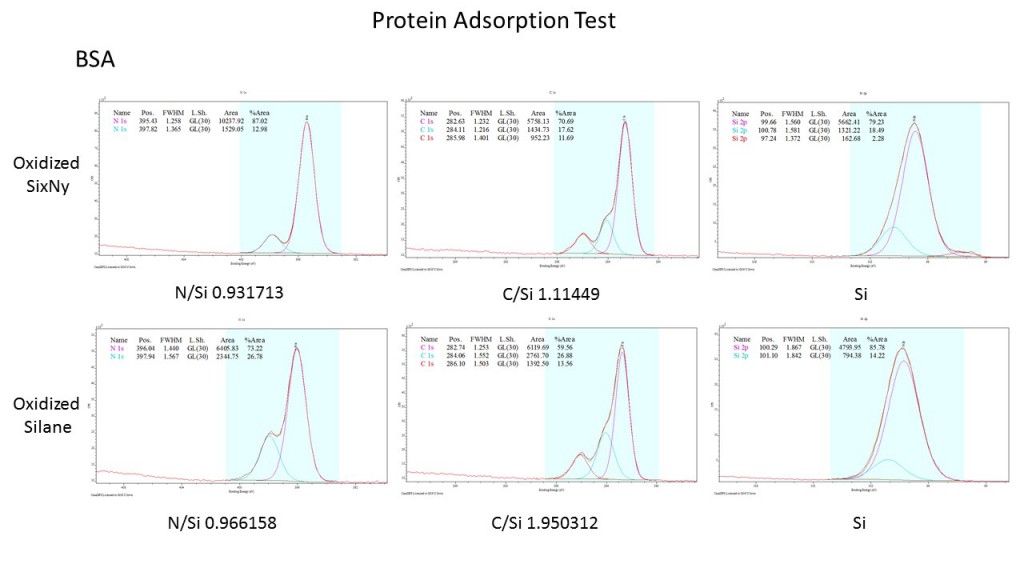
For the BSA, we can see both sample adsorb the protein, the small peak before the main peak in N is the N signal of protein. And the silane will adsorb more protein than the the Oxidized SixNy because the percentage of protein N peak in silane is 26.78% higher than 12.98% in the Oxidized SixNy. AR-XPS shows the same results with the original samples.

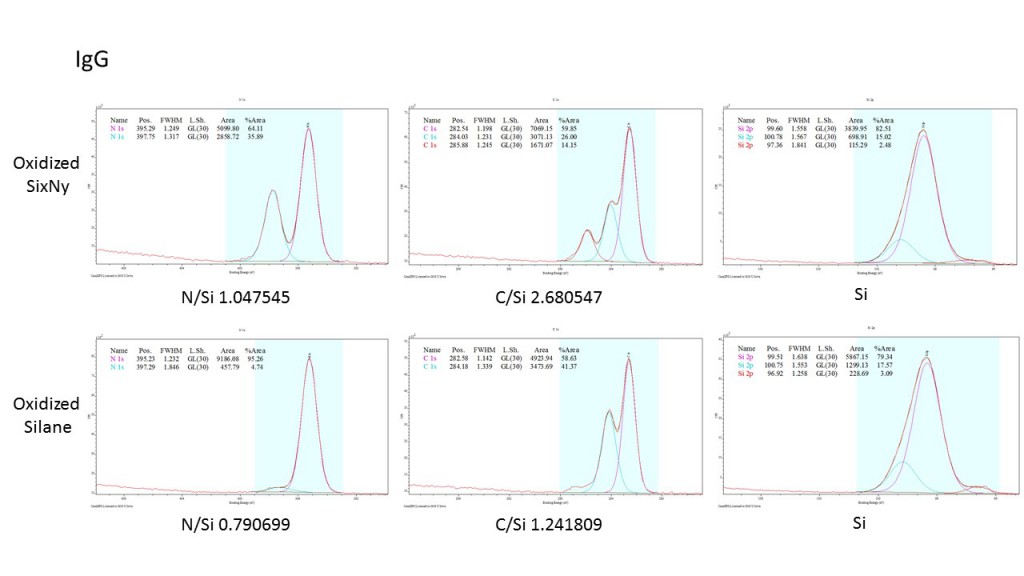
In IgG, the silane will adsorb very small amount of protein. We can see the ratio of N to Si is 1.04 in the Oxidized SixNy which is higher than the silane. AR-XPS still shows us the same results.
For the PBS control group, it’s same with the original samples.