Fisher Team: Summary of Results
In this post I address every objective we started with and summarize our results:
a) Building of research capacity at Fisher.
—–> We would like to to produce our lipid-based nano particles in a cheaper and more reproducible way.
For the last 4 weeks Ryan has been producing phosphatidylcholine liposomes. Depending on the rate of flow, we can consistently produce particles that can range between between 50 and 200nm in diameter. He has now even incorporated an anti-inflammatory molecule (parthenolide) in 100nm particles, which we will test in tissue culture at Fisher.
—–> We would also like to produce our own microfluidics chip at Fisher.
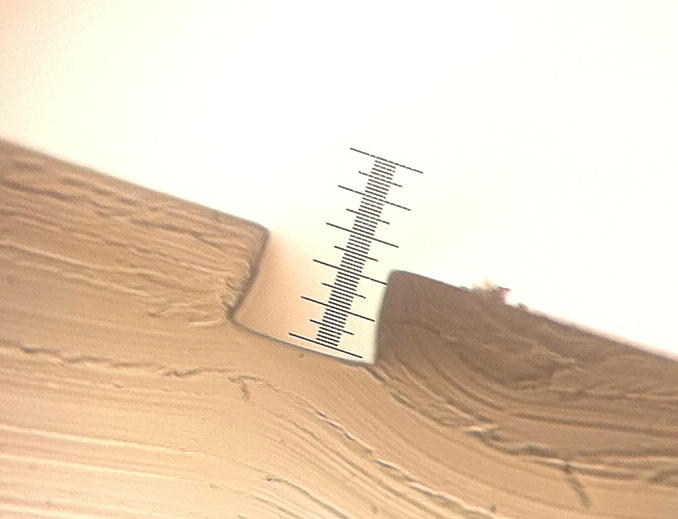
Thanks to the training at the McGrath Lab, the production of SU-8 molds at URnano, and insight from RIT (corona wand), we can now make our chips in-house.
b) Production of instructional materials for the Nanobiology course @ Fisher.
John and Ryan have produced a couple dozen chips that students will use during the fall. John has also produced a SOP to keep at Fisher for students in class and the lab. We also have used membrane set ups and the silhouette cutter for students to check out/work with.
c) Collaborative research with the McGrath group.
—–> Our main research goal is the (nanomembrane-mediated) separation of antibody or nucleic acid-conjugated lipid nanoparticles from free reactants.
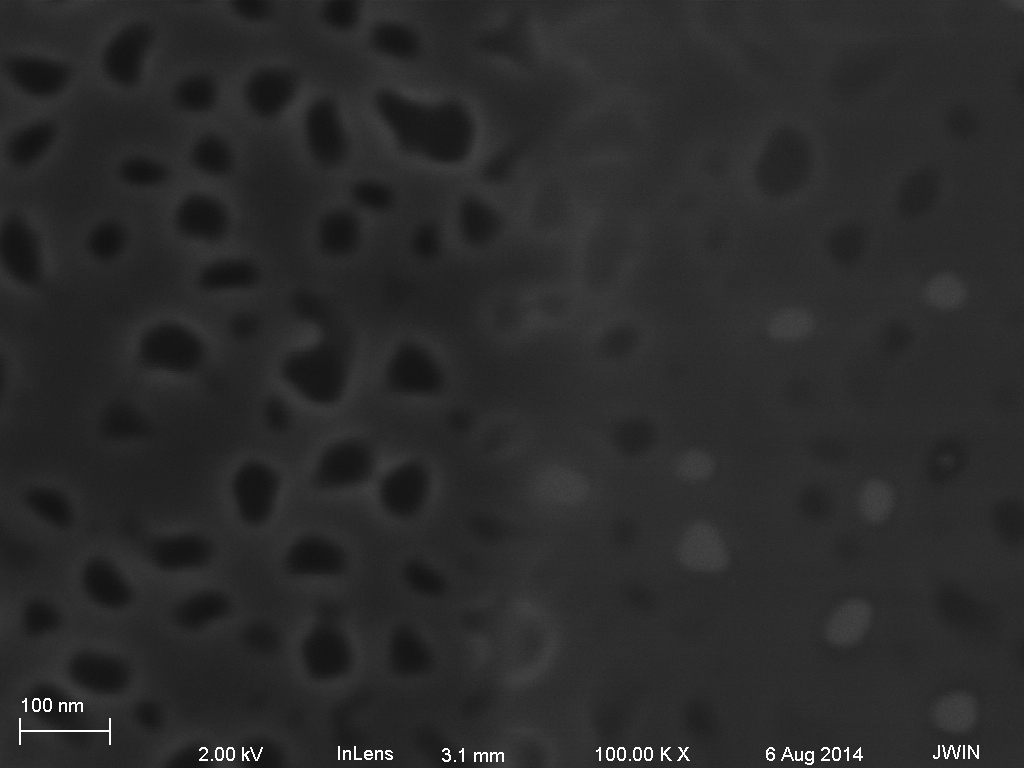
We used membranes with ~40 and ~70nm pores to test how they react to lipid particles. We were able to separate small (~70nm) particles from larger ones (~100nm) using forward (regular) centrifugation. To achieve this we (John) had to play a bit with the conditions in terms of speed, time and sequence of centrifugation (ramping up g’s). We had no luck with reverse centrifugation. When it came time to separate antibodies from particles, we found that at 2mg/ml and higher, the lipid particles were pretty consistently clogging the membranes.
—–> A secondary research goal is the in-chip testing of nano particle uptake by macrophages. We would like to simulate capillary shear flow in cell cultures and measure particle delivery in vitro.
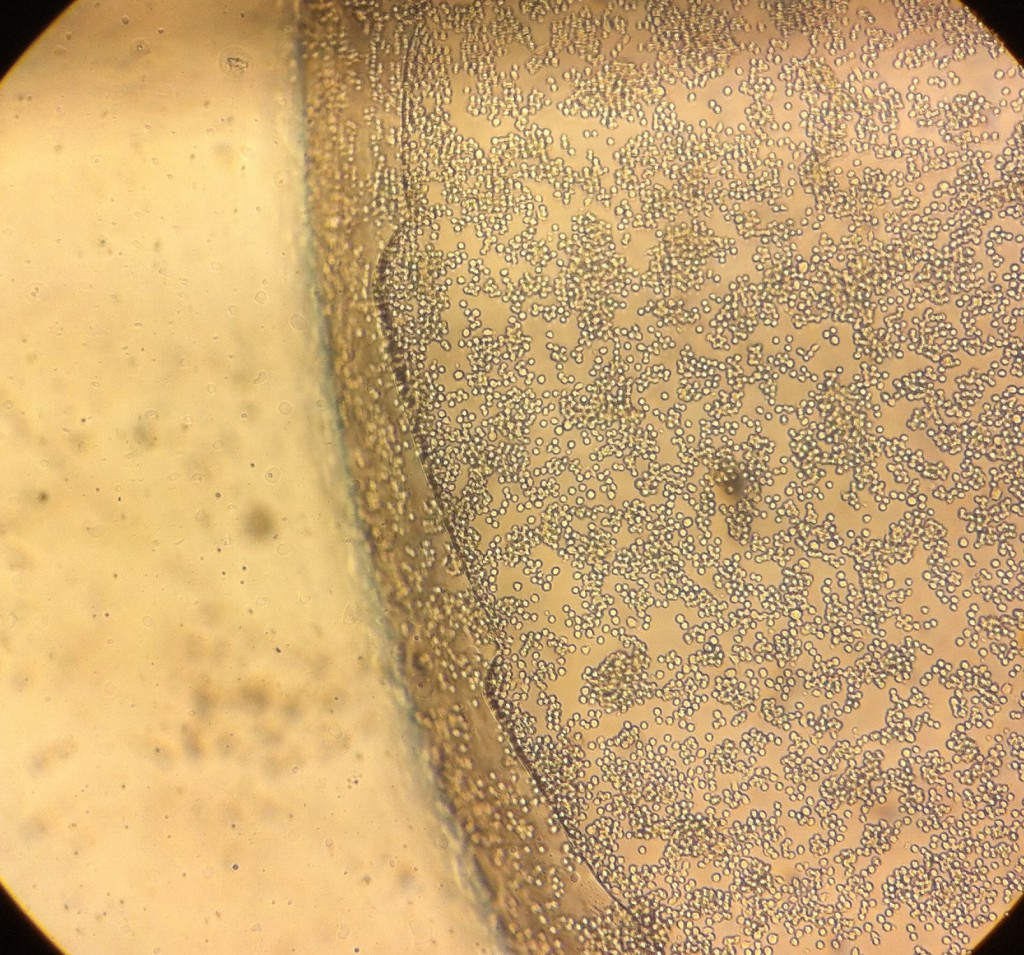
Using PDMS molds and playing a bit with the silhouette cutter, we produced what might be consider macro-fluidic chis in which we (Niecy) successfully grew macrophages. We have still to perform experiments with these chips.
All in all, this was an incredibly successful summer for the Fisher team!
Finally, it was my intention that students would get close to the work and equipment at the McGrath Lab. Ryan and John got to see how the cleanroom works, learned to use the zetasizer, produce chips, work with membranes, use the SEM and the light microscopes. In addition to Jim, we are indebted to everyone in the McGrath, lab, in particular Henry, Greg and Josh, for their time and advise.