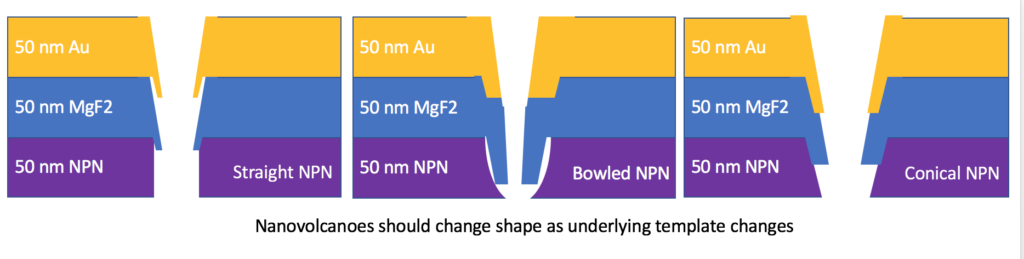
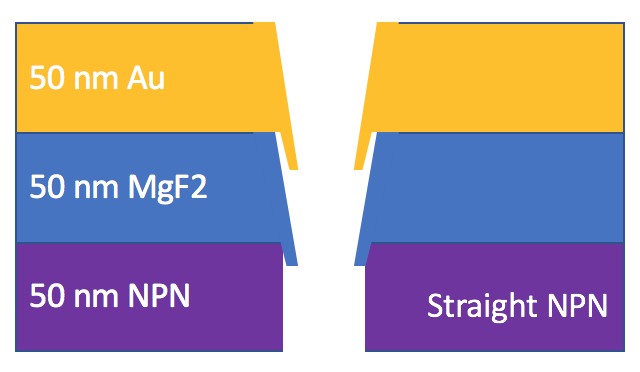
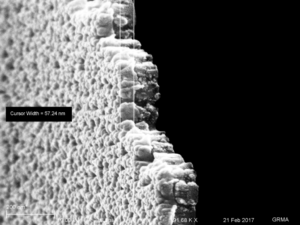
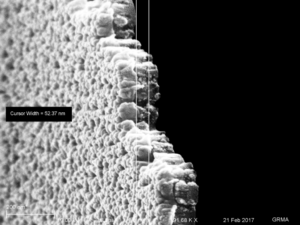
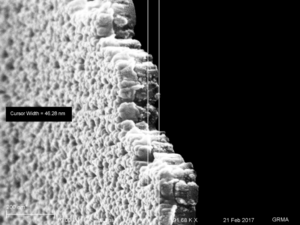
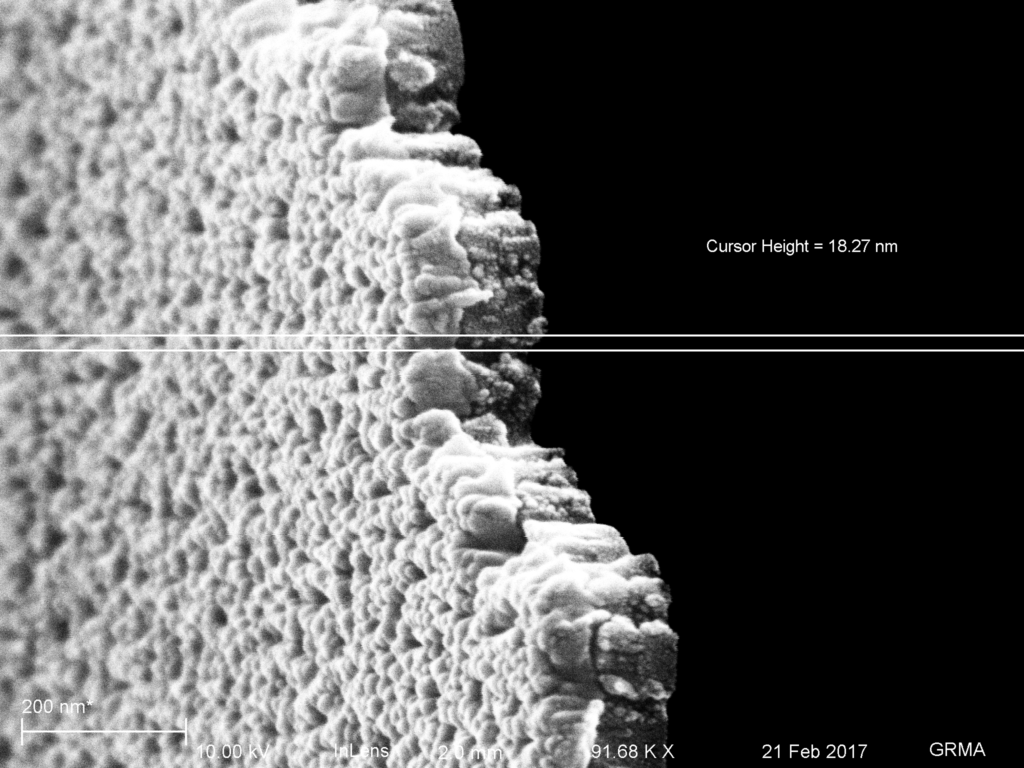
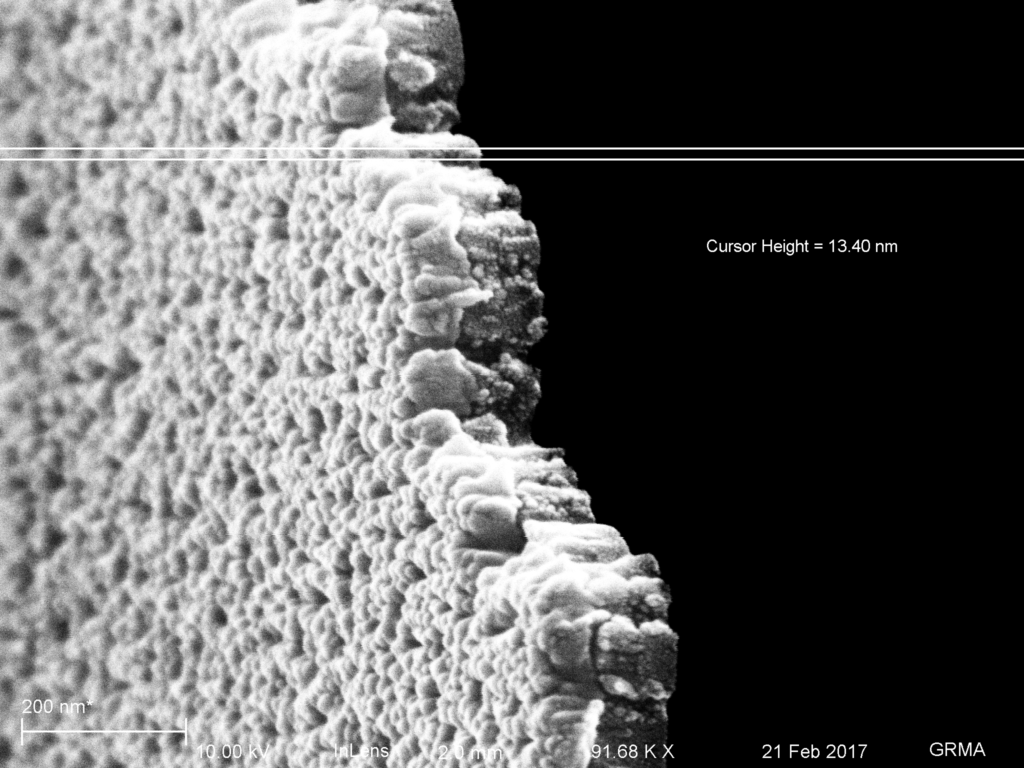
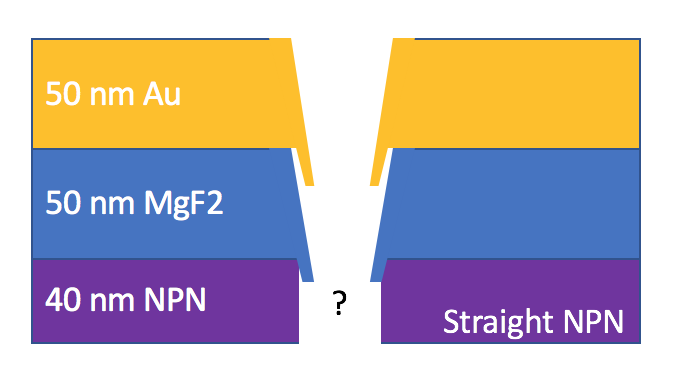
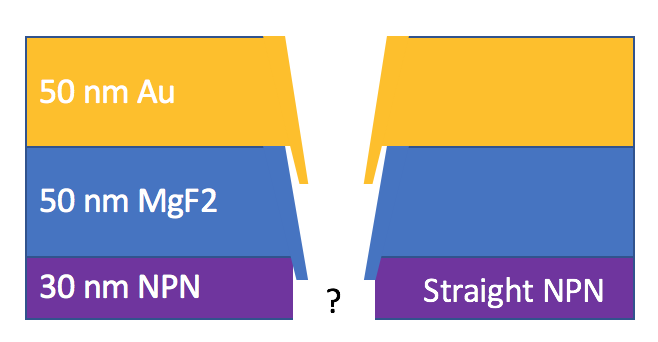
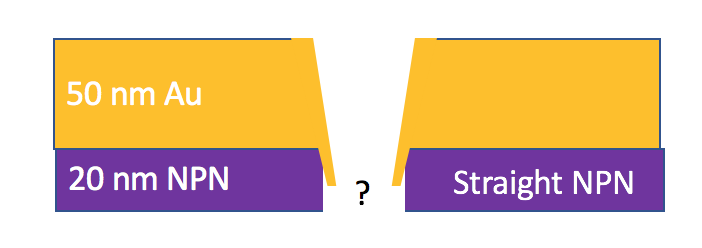
This post is a continuation of the work in Partial Etch RIE Blows out NPN Pores and MgF2 Nanomembrane Fabrication on partially etched NPN substrates. We believe the underlying NPN template influences the shape of our SERS active nanostructures and therefore the SERS properties. In this post, we’ll take a look at some of the structures resulting from partially etching the NPN template, thinning and broadening the template, which will change the shape of the structures that are fabricated upon them.
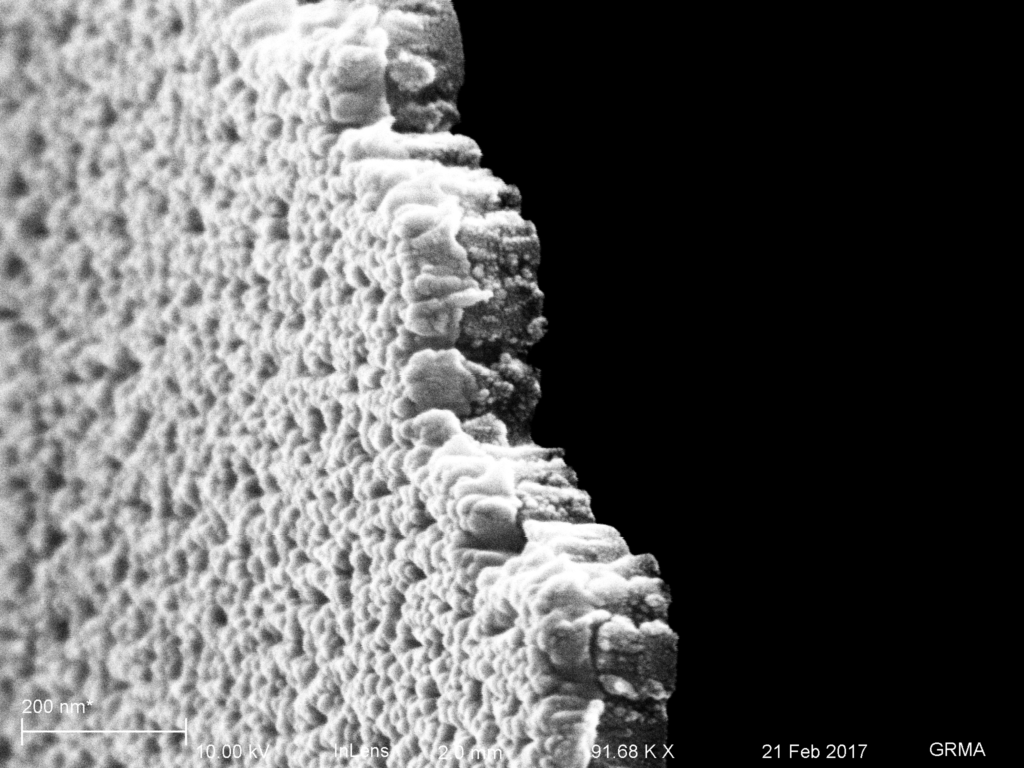
After the fabrication, each of these membranes were fractured and then coated with 8-9 nm of platinum. I will probably use less next time, as it was occluding my crossections.
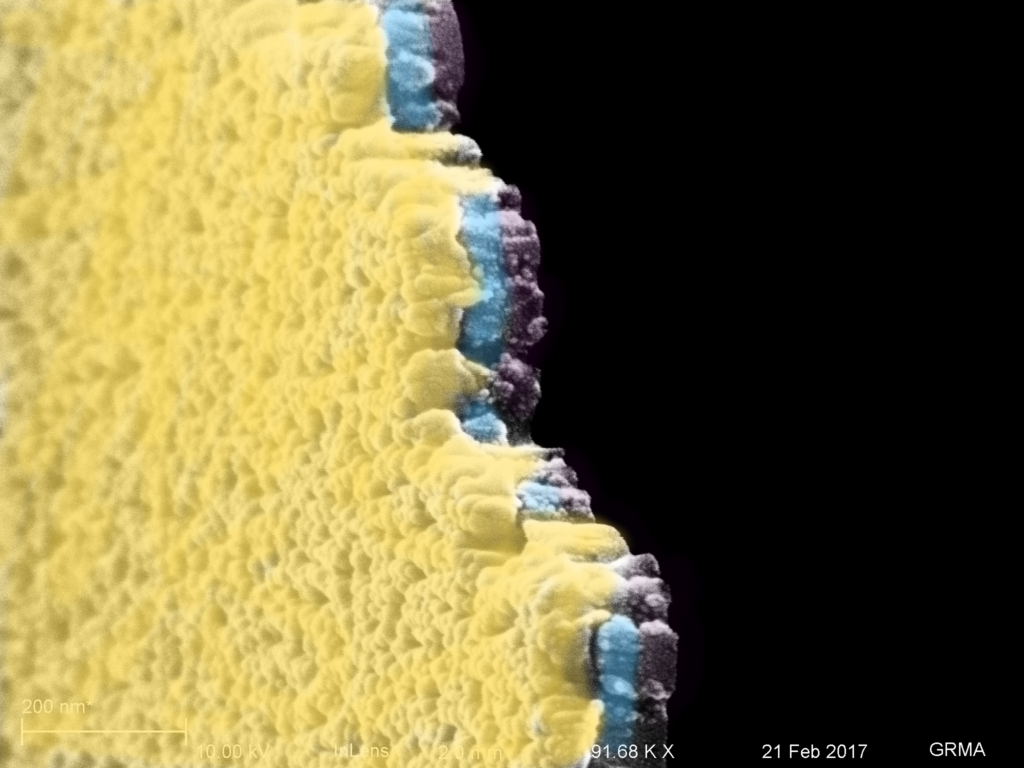
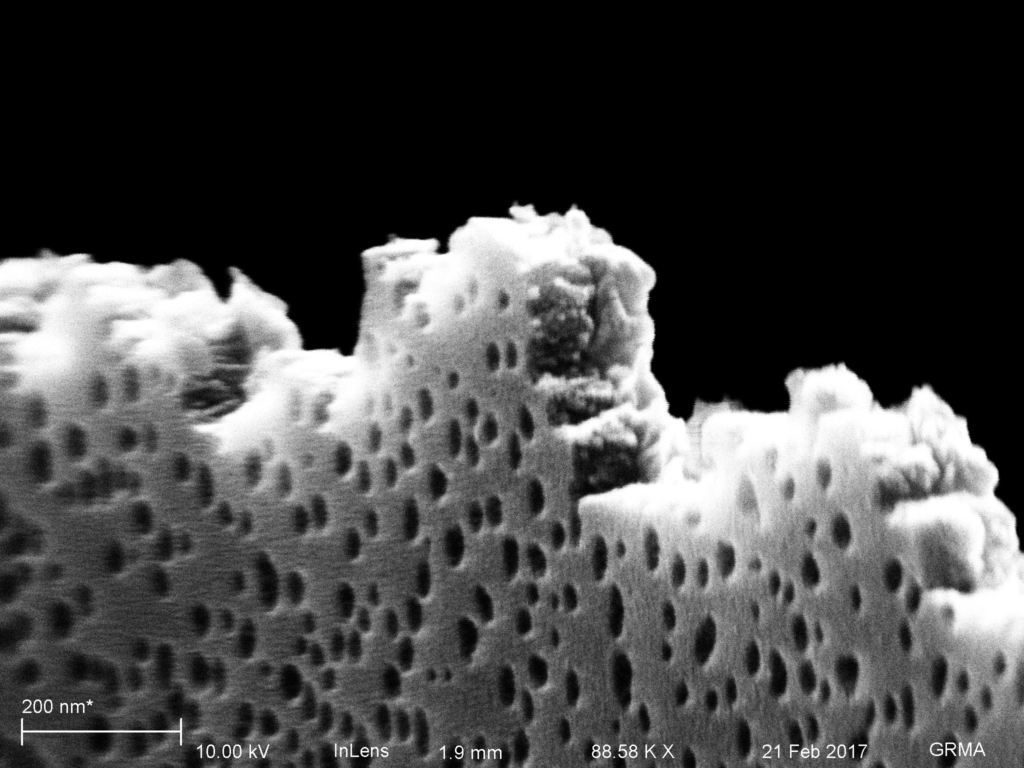
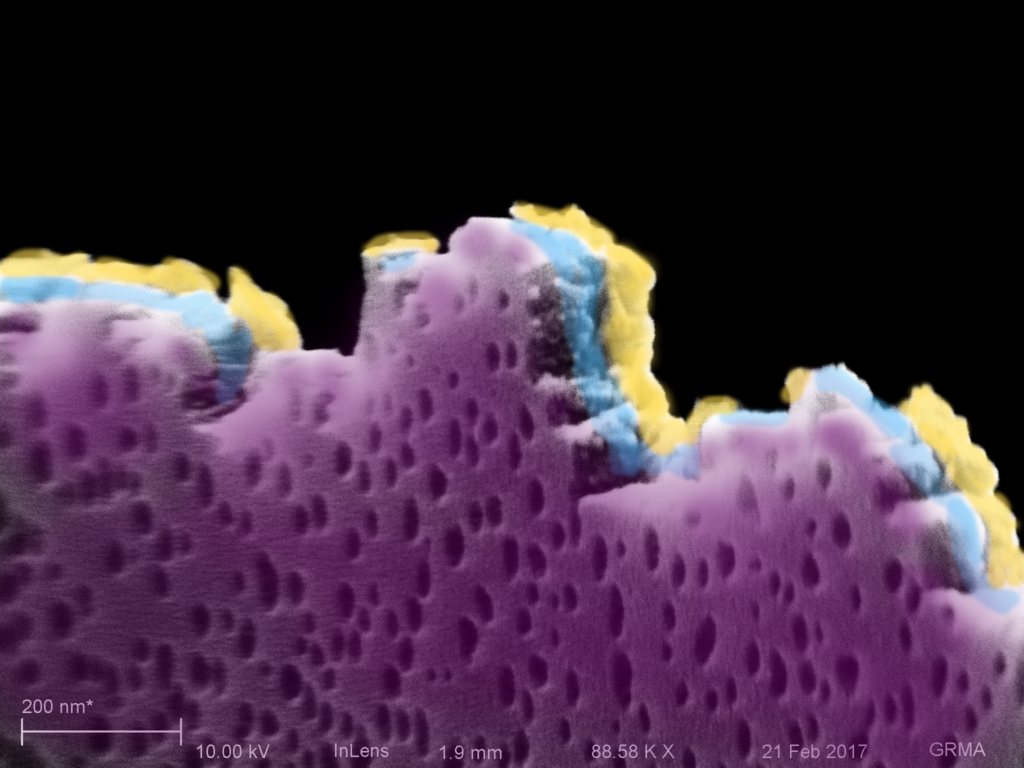
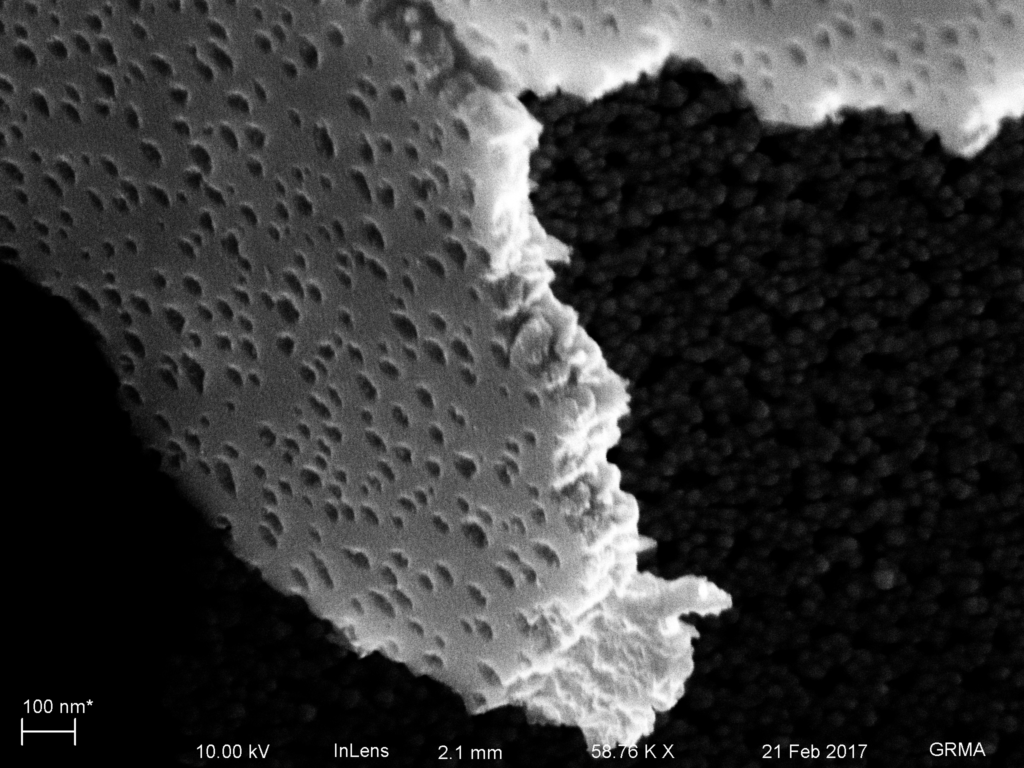
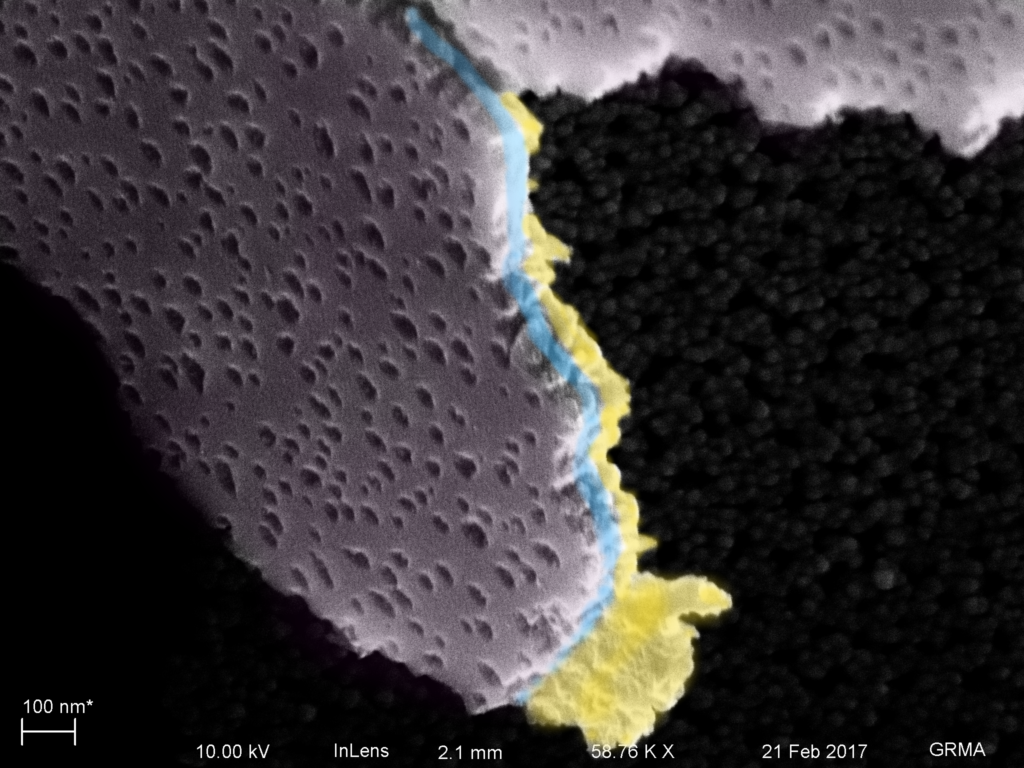
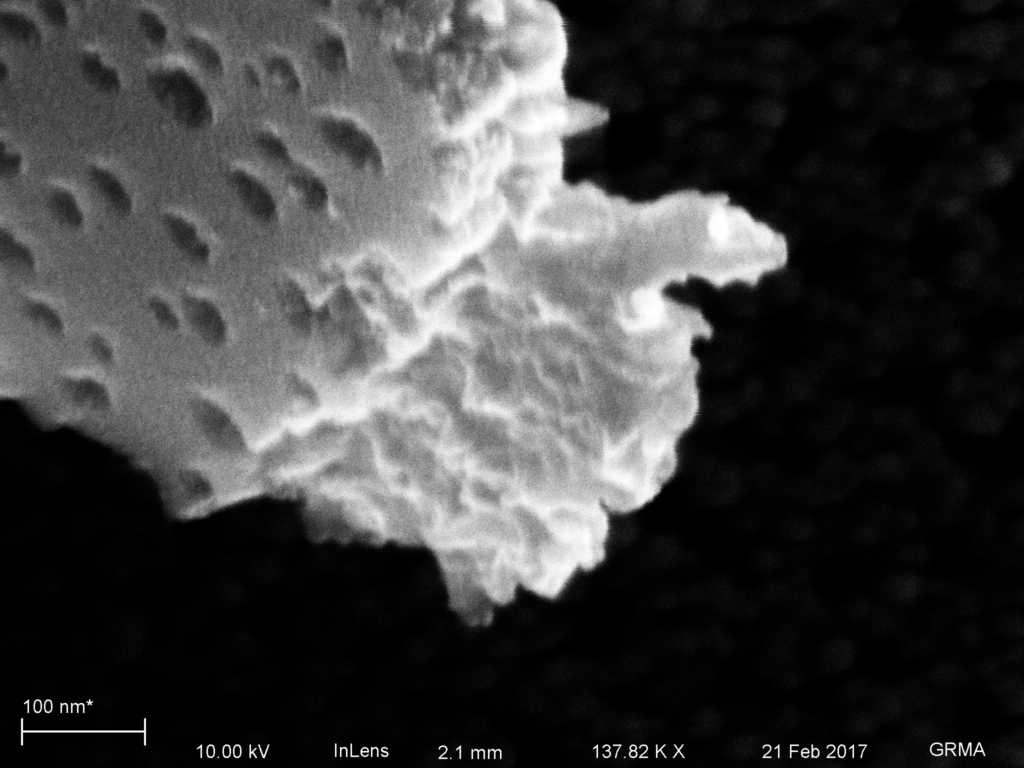
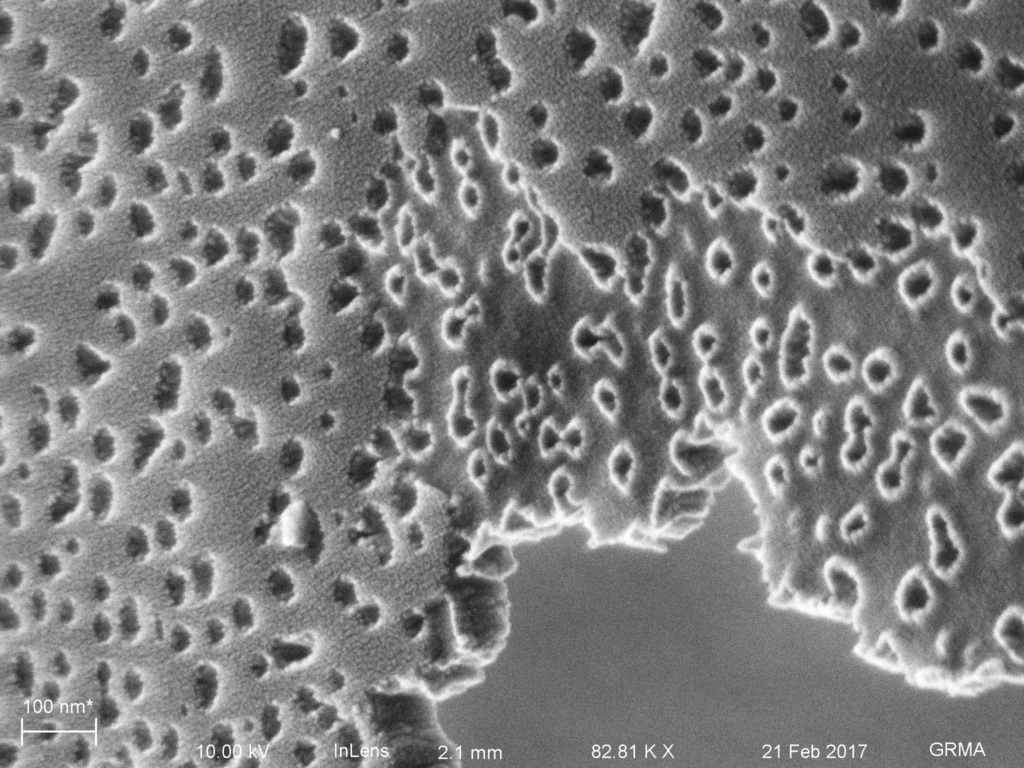
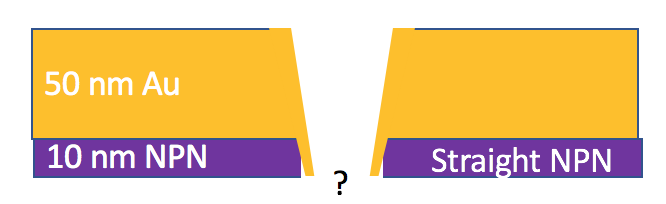
10 s etch viewed from the back. Fractures through the NPN are pretty straight, not conical.
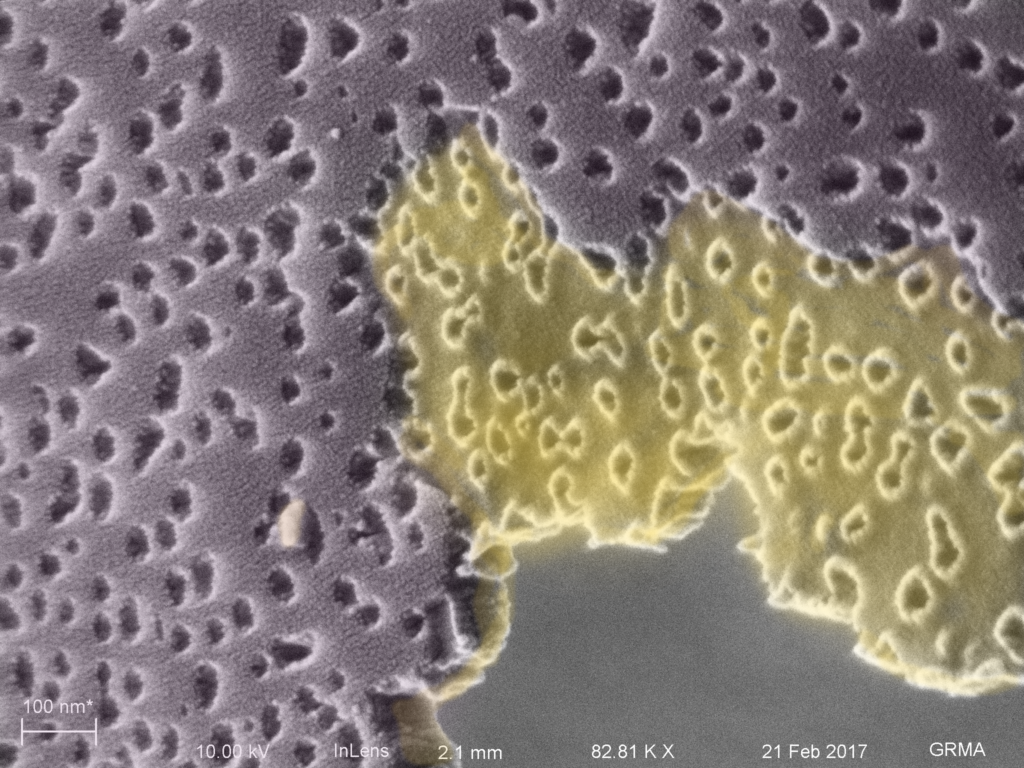
Colorized 10 s etch
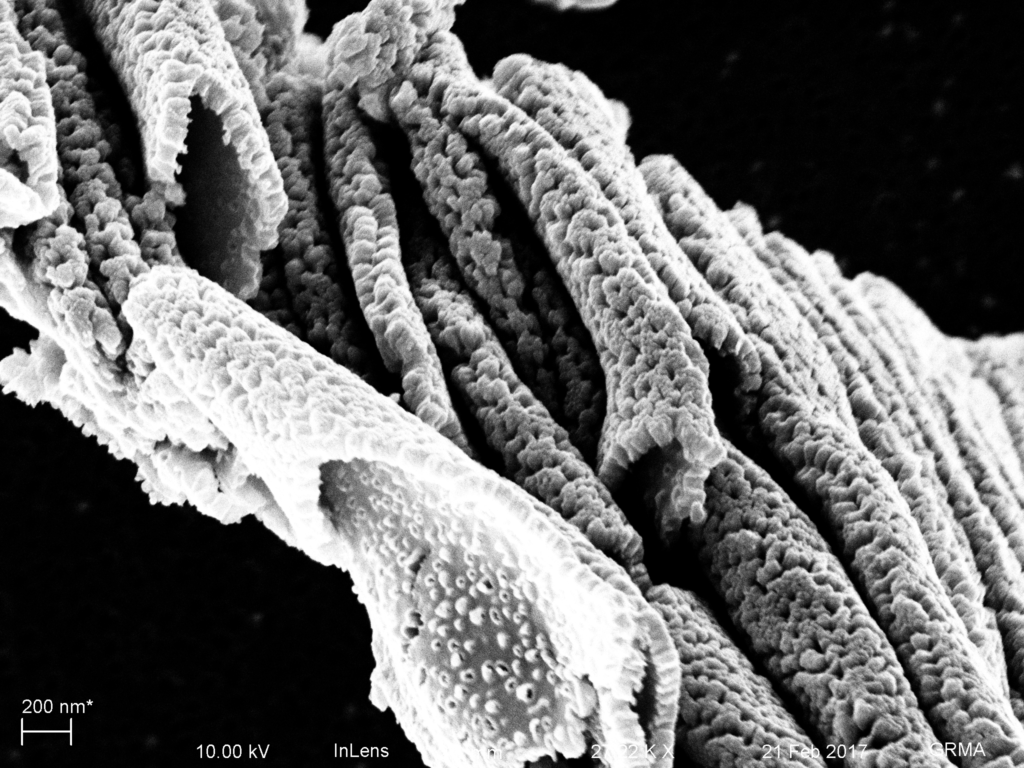
20s etch 1236 NPN + MgF2 + Au
We’re not certain to what degree does the partial etched membrane have conical features.
20s etch. The NPN template is thinning. and we can see that the gold has some interesting pointed shapes when peeled away.20 s colorized
30s etch 1236 NPN + Au
Since the much thinned NPN template cannot survive the MgF2 evaporation stress, we coat gold on the thinned NPN directly.30 s etch. Thinned NPN reveals gold volcanoes.30 s etch colorized.Scraping up the gold in the bulk region shows that volcanoes are formed with some porosity. Internally, they may be more pinched than the shape of the volcano indicates.
40 s etch 1236 NPN + Au
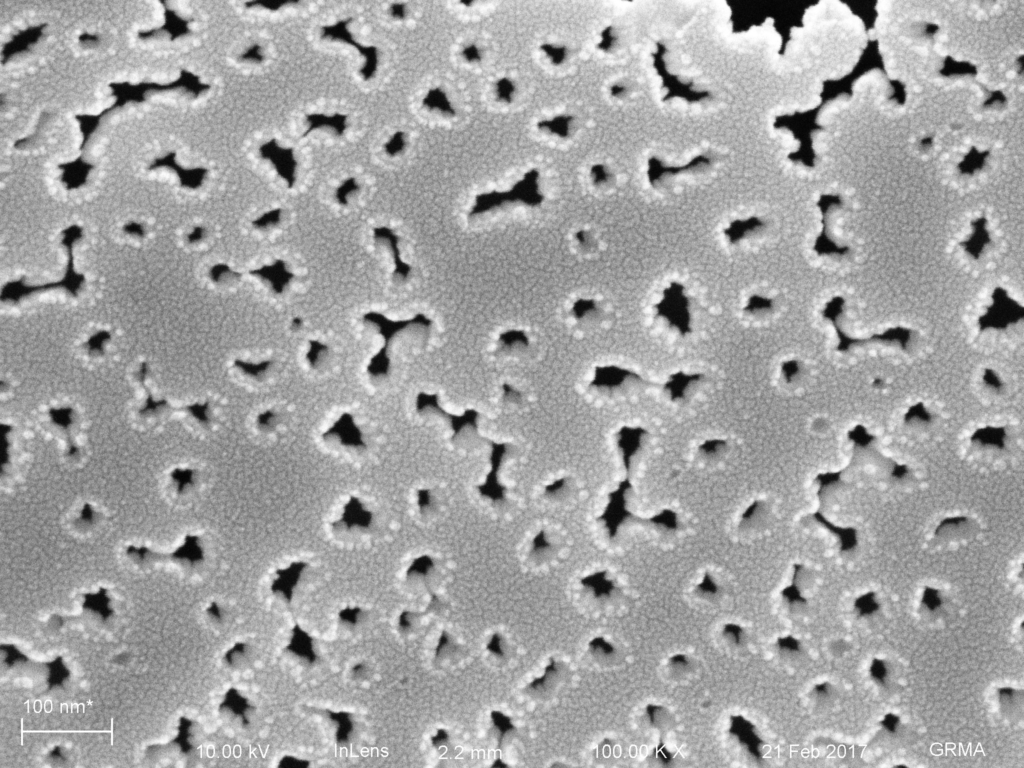
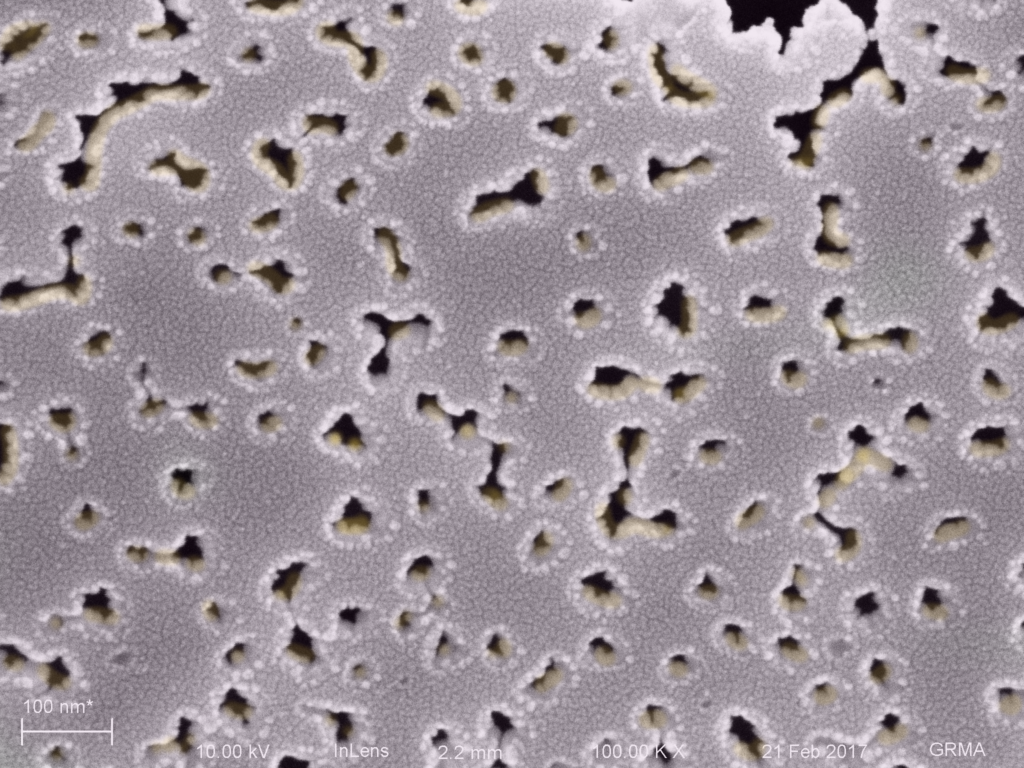
40 s etch. Viewed from the backside, it is clear that the features of the NPN have changed, as more pores have merged together. Thin bits of gold are viewable through the pores, as it comprises most of the film thickness.
40 s colorized
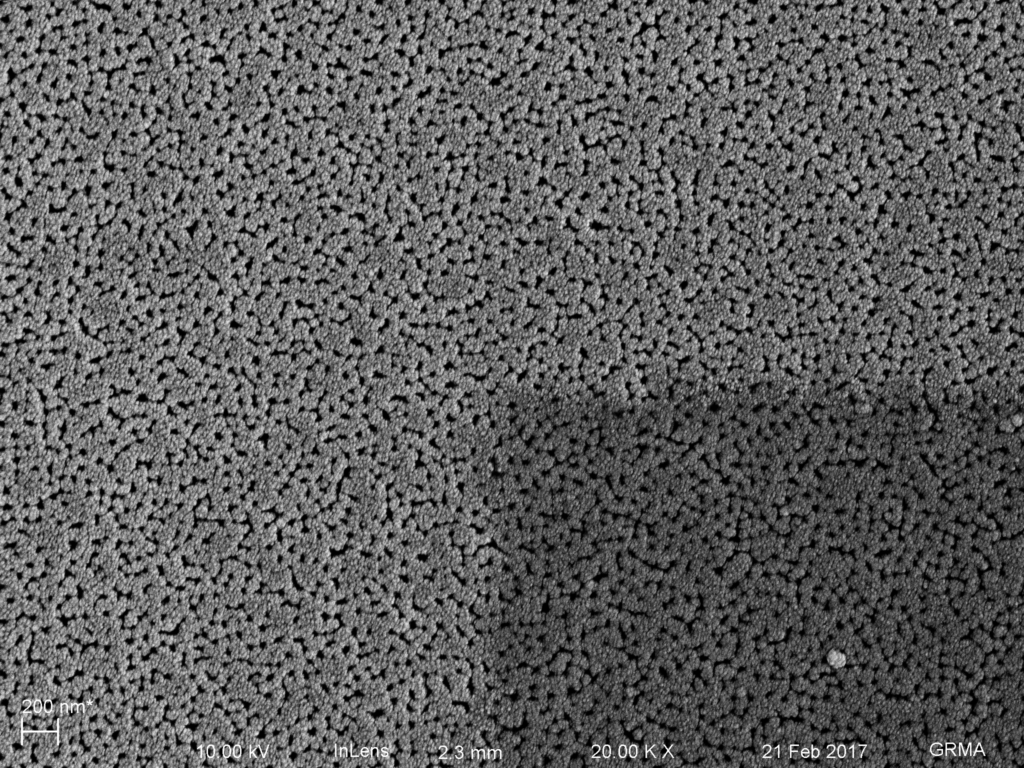
Aerial Image shows a contiguous membrane into the freestanding region (darker).
Jirchai summarized his data in this table … A question raised by a reviewer of our PNAS submission – and one that we’ve had for a long time – is what is the efficiency of the pump. The electrical power provided is calculated in the table for each configuration. As Chris mentioned in group meeting,…
Introduction This post is meant to introduce the new NPN-enabled slide-based devices produced by Ibidi. These devices feature an NPN membrane and microfluidic channels positioned perpendicular to one another formed by PSA and COP layers (Figure 1). Channels above and below the membrane allow for flow-based experiments including tangential flow filtration (TFF) such that biofluids…
In this experiment I use a syringe pump to move urea dissolved in ddH2O through a 10 mm long, 300 µm high, 500 µm wide dialysis channel. The retentate is collected in a fraction collector then measured using a urea assay from Abcam. Our first experiment on Urea clearance with BSA was performed with 0.5…
Oxygen plasma cleaners are a very commonly used tool when bonding PDMS sheets to materials such as PDMS, glass, Si, and SiN. Even though plasma cleaners have proven to be highly effective and reliable tools in this application, they continue to be relatively costly pieces of laboratory equipment. It has been realized that corona discharge…
Four different post-production treatments with the objective of improving membrane stability in culture were run last week on W615, a pinholed wafer laden with the circular features we have been seeing recently. I ran four different conditions for cell culture: no treatment (n=3) UV/ozone for 5 minutes at room temperature (n=4) RTP in Ar for…
This post is dedicated to our ongoing collaboration with Dr. Marchi at Centre national de la recherche scientifique (CNRS) in France. The basic concept of the project is simple (Fig.1) and involves attaching a microporous membrane on top a 3D printed “drawer”, seeding endothelial cells on top to confluency, seeding epithelial cells on the bottom…