Diffusion tests with Nylon and Nitrocellulose
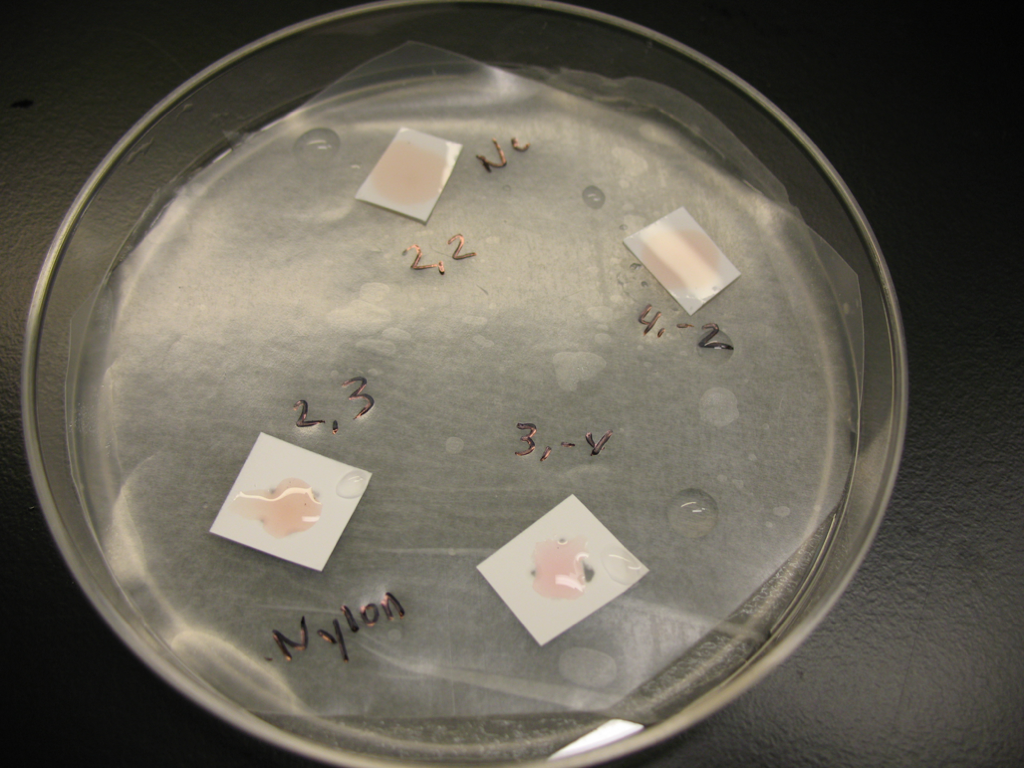
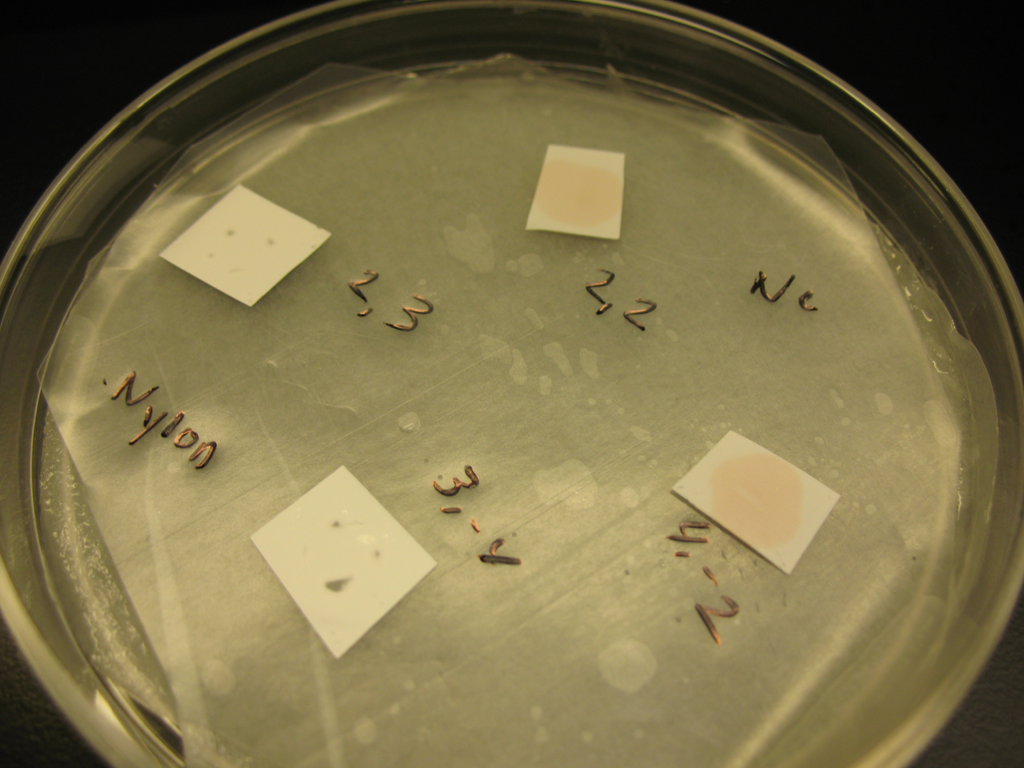
Last week I tried to diffuse Cytochrome C through our membranes onto PVDF and PES membranes to see if we can detect protein adsorption on the other membranes. The trial illustrated that cytochrome c will diffuse through our membranes and stick to the PVDF and PES membranes. I ran the experiment again, but I used nylon (N) and nitrocellulose (NC) this time. I used membranes from wafer 412, positions: (2,2) NC, (2,3) N, (4,-2) NC, (3,-4) N. After removing our membranes from the other membranes, I saw cytochrome c on the other membranes. However, upon rinsing the other membranes, the cyto c “stain” rinsed off the nylon, leaving no color detection. The red stain still remains on the nitrocellulose after rinsing.
The nitrocellulose membrane is very sticky and is typically used for immobilizing proteins in western blots and DNA in northern and southern blots. Nylon is suppose to be the superior of the two membranes. It is stronger than nitrocellulose, tearing less easily, and has a higher binding affinity than NC. Because nylon is hydrophillic, pre-wetting is uneccesary, however I pre-wet both membranes for this experiment.
Below are the pictures I took upon removing our membranes from the other membranes, and after rinsing/drying.
How does the stickiness of nitrocellulose compare to the previous membranes that you tried? I know very little about nylon, but if it is hydrophilic, I’m not sure why protein would bind very efficiently…