Recent Discoloration in other Projects
Bernhard Group:
Discoloration was observed during DNA separation experiments. Further study led to these results:
- No discoloration observed with low pH buffered NaCl.
- Discoloration with high pH buffered NaCl.
- Worried that Cl was the culprit, sodium acetate was tested. Discoloration observed with sodium acetate.
- In one early experiment, 4 areas were tested on one chip. Only one of the areas discolored. Solution at all areas was NaCl. Drop that discolored also grew in size in humidity chamber.
- Water deposited on one chip led to a slight color change after drying. (Couldn’t capture this in a picture but observed it under a scope).
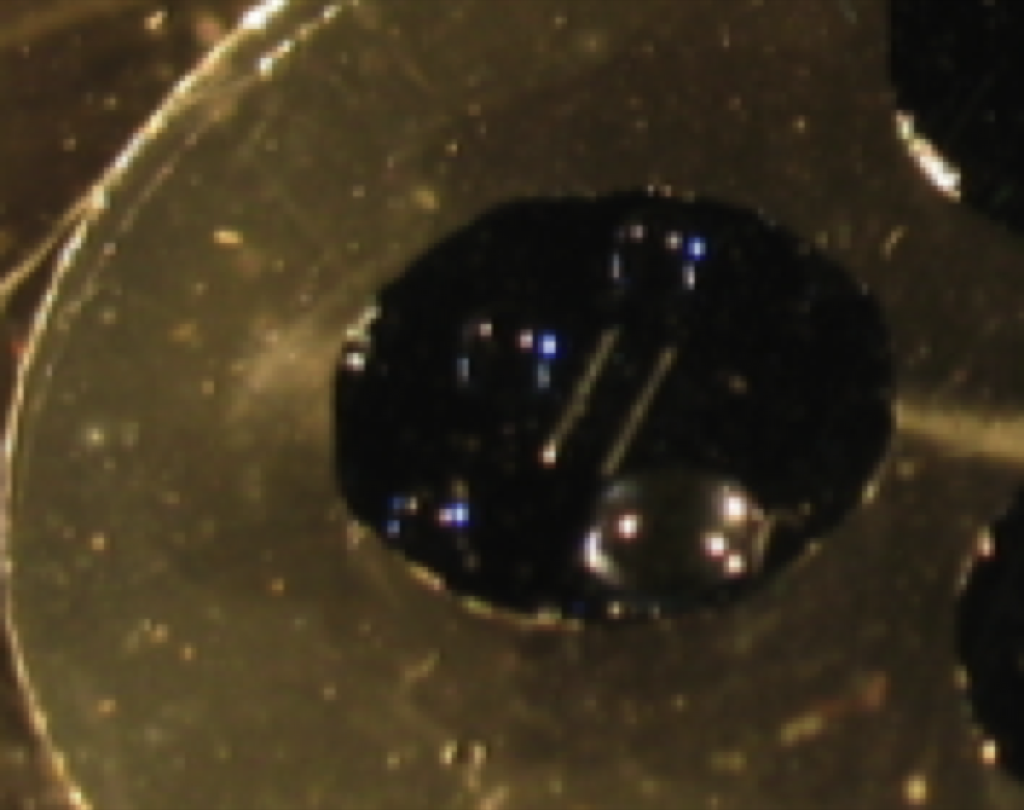
I think we’re already aware that base has more of an effect than acids. Some of the strange discoloration can be explained by the fact that these experiments were performed on w620, which was during our “pentane contamination” problem. I think just by putting water on these samples, you dissolve the contaminant, which may be enough to cause ablation. Also I think any of these contaminated wafers discolor more quickly than others.
I’ve handed off membranes from w677, and hopefully they’ll be able to achieve some good results with these.
Here’s a trial that I did of the Bernhard group’s method of testing ablation using 670 and 3mg/mL Na Bicarb:
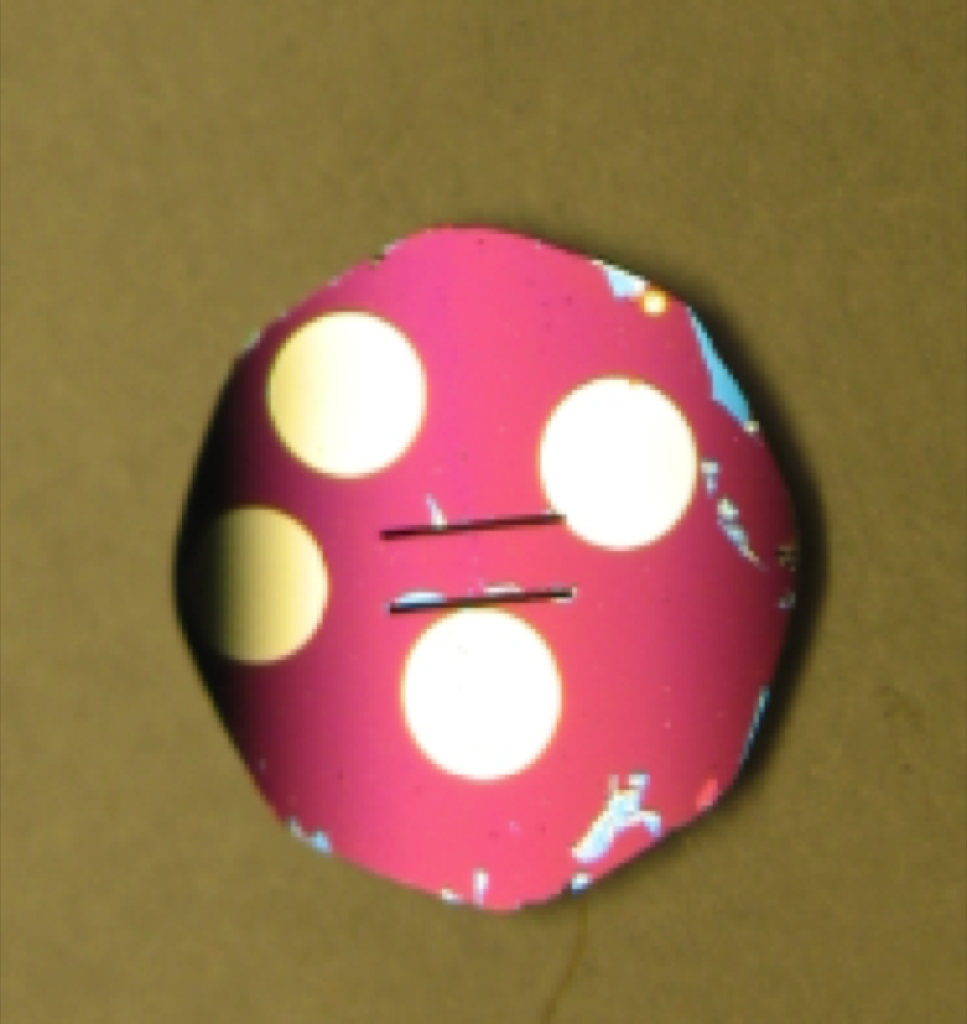
This sample turned gold after 2 hours and silver after 3. Test was done in a humidity chamber, and it’s not simple to take in between pictures.
Diffusion experiments with 670:
While I found earlier that 673 did not seem to change during 8 hours, there was a noticeable difference with 670. Here are images at 7 and 18 hours. One sample discolored faster than the other.

The slits were intact after 7 hours, but not 18. I could potentially run the 8 hour experiment, however since the results from 673 aren’t great at the 8 hour point, it might not be a good idea to waste these now. Since Barrett does not see a difference in PBS alone, I would guess either the proteins or constituents of the protein mixture (EDTA, glycerol, sodium azide) increase the rate.
Dave and I have been buried on a number of fronts, but as soon as we get a few spare hours, we’ll give the carbonization process a try. There are probably 100 papers devoted to the issue of degradation of porous silicon in various fluid environments, and Philippe has had at least 2 students who have studied it. It looks like the same thing that we are struggling with. The carbonization process seemed to work like magic for PSi people and I don’t see why we would be different. It would also be a quick paper, if it works.