Leukocyte Isolation (Pt. 1)
The goal of our work is a low-cost, portable device that will perform rapid and efficient leukocyte count assays required for treatment of HIV positive patients. The device in mind will benefit from the advantages associated with microfluidic systems such as reduced reagent volume requirements and compact device format. It will utilize patterned microporous membranes to selectively pass and erythrocytes and impede leukocytes with carefully selected pore size. Do to unresolved liability issues, appropriately sized fluorescent polystyrene beads will be used in lieu of human leukocytes and erythrocytes to act as a an effective yet safe model.
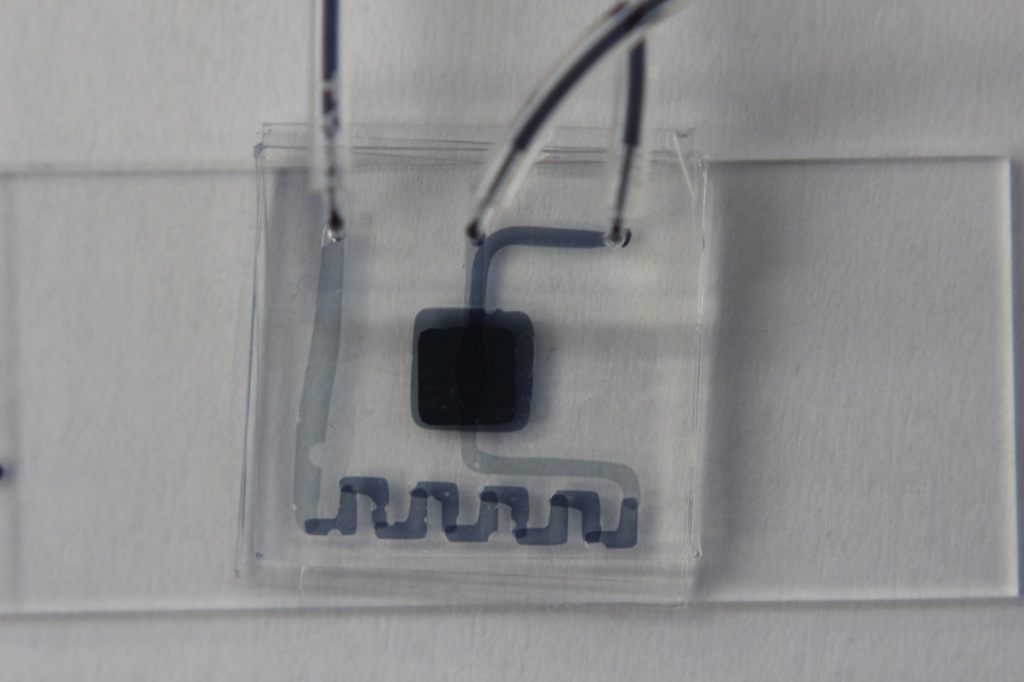
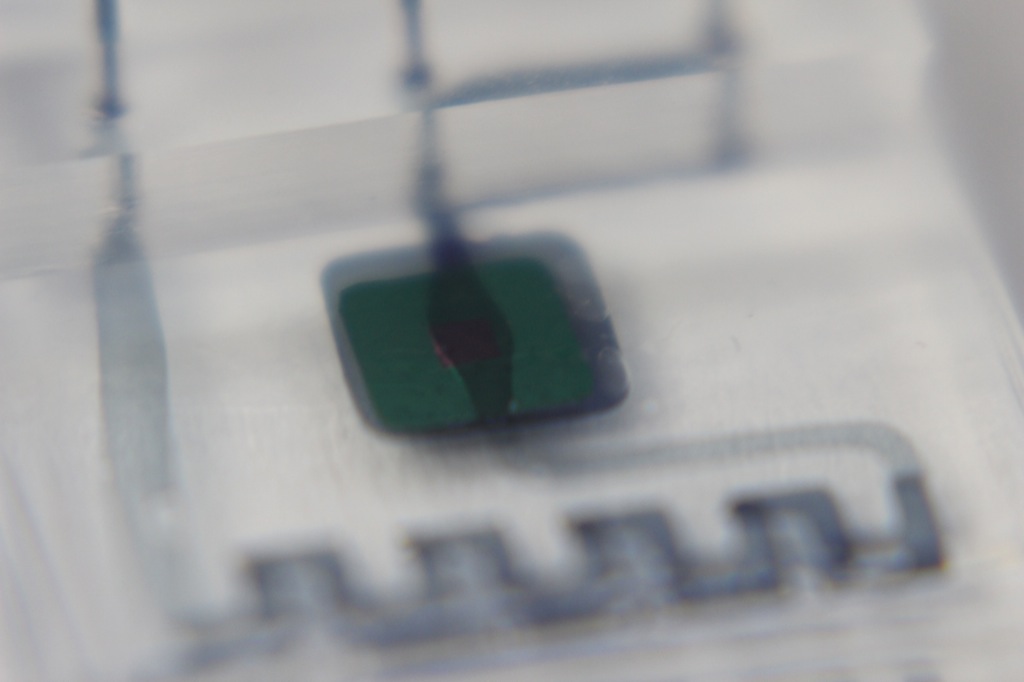
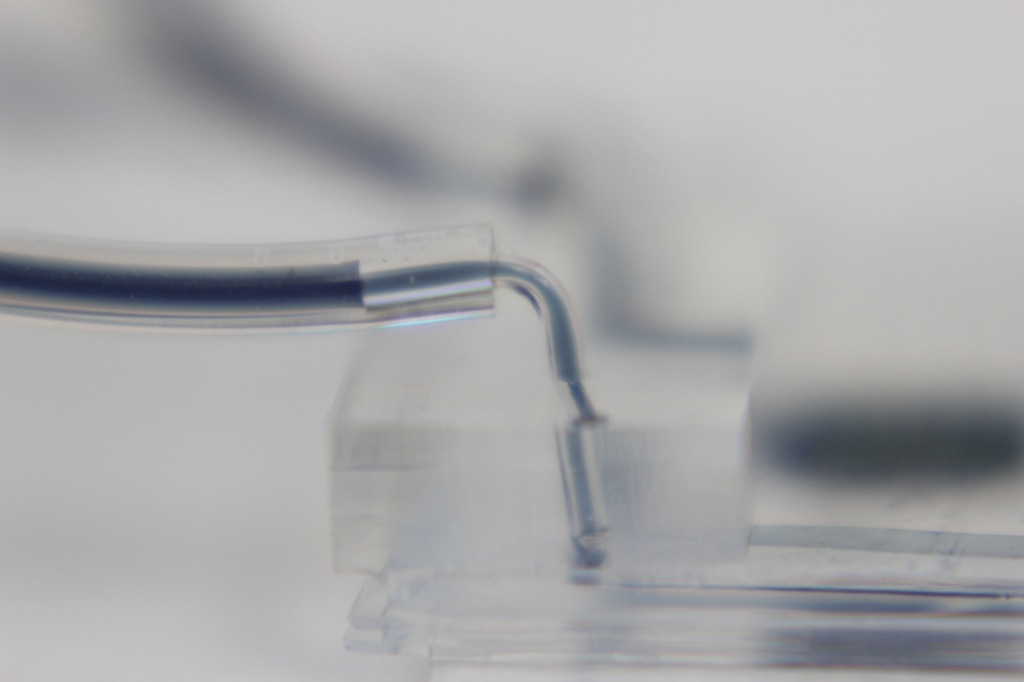
The first approach used a simple one inlet, one outlet trans-membrane pressure gradient to conduct filtration. The five-layer fluidic device that housed the membrane was fabricated by cutting individual layers in cured PDMS sheets using low-cost computer controlled knife cutter. The device was assembled by stacking the individual PDMS layers on a microscope slide in sequence along with inserting the membrane and scaffold. Early versions did not utilize any form of boding to secure layers.
http://youtu.be/dBQ33C2wFKA
Several disadvantages of this design were immediately recognized. The most crucial shortcoming was the relationship between pore occupation and membrane flow resistance. This coupling prevented independent control of unfiltered sample flow rate and trans-membrane pressure. Unbonded PDMS layers also proved to be problematic as delamination occurred at unacceptably low internal pressures.
Later revisions of the device used a two inlet, one outlet architecture. Introducing another port on the inlet side of the membrane enables control of a pressure gradient along the surface of the membrane in addition to the trans-membrane gradient. This additional degree of freedom enables a method of maneuvering irregularly seated particles that are already on the membrane surface by creating a pressure gradient tangential to the membrane surface. Layer bonding was was performed using the “stamp and stick” method that utilizes thin (~2um) coatings of Sylgard 184 to adhere layers.
http://youtu.be/NBZ8hotnxB4