BBB Device V2.6 Flow and TEER Test
Following my fabrication process from my previous post, here are the results from my flow test of BBB device v2.6:
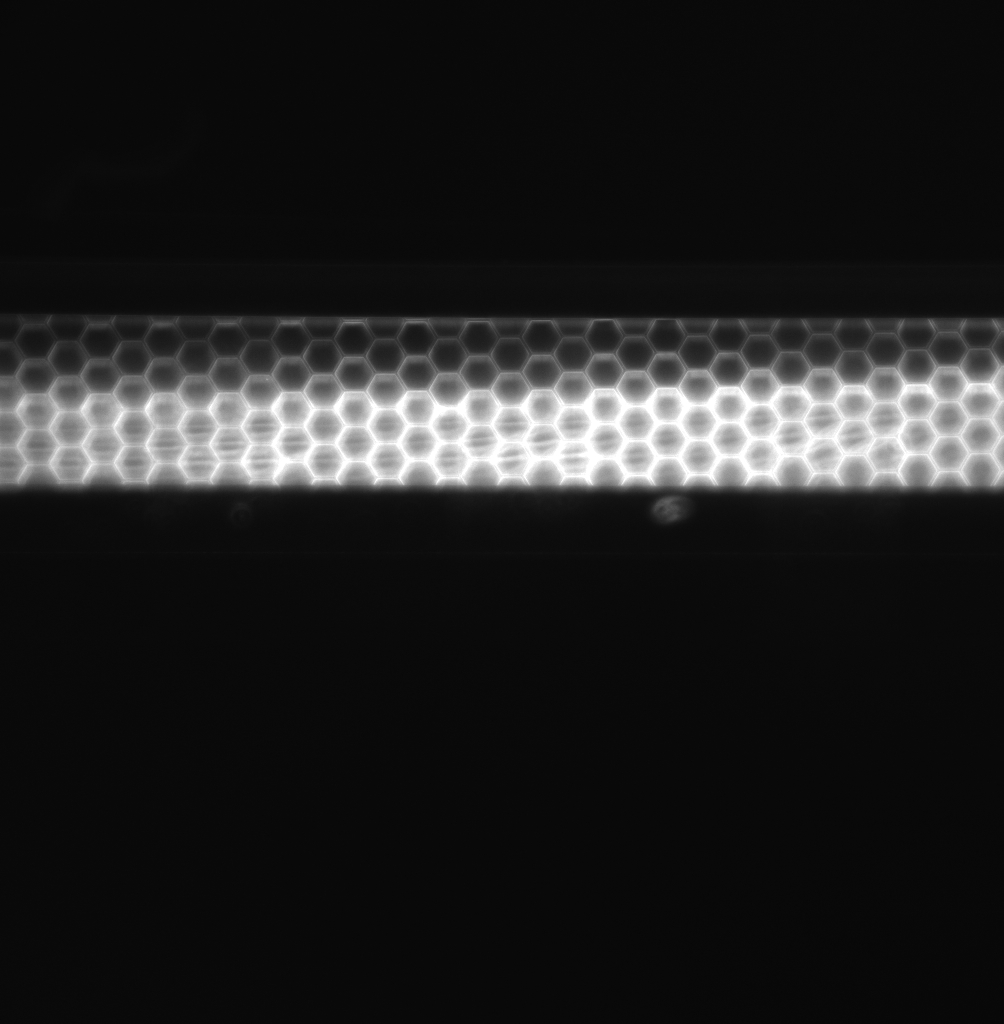


The difference in the quality of the electrodes is apparent from these images. The microscope slide electrode was difficult to spin coat, resulting in an uneven photoresist coating, and worse patterning. Etching in 12M HCl was normal. In lieu of purchasing a microscope slide holder for the spin coater, I may attempt to spread on photoresist manually later. Other suggestions have been made to me, such as making an occluding sputter mask, which forgoes photolithography entirely. I may be able to cut out a mask from aluminum foil using the Silhouette. In this version of the BBB device, I sputtered 1500A of ITO on each substrate, and measured a pad-finger resistance of ~1.5k ohms for each substrate, which is less than the 3-4 kohms than I was getting with the 1000A ITO coat.
In these videos, the pdms foot on the outport was occluded from my insertion of the capillary, so I removed it in order to demonstrate the flow.
BBB device 2.6 filling top channel blue fluid
BBB device 2.6 filling bottom channel red fluid
With the tap water wetting the electrodes, I measured a TEER value of 1.25 kohms, which was not cyclical over time, as has been noted before. This measurement should be met with some skepticism due to the irregular electrode pattern on the microscope slide electrode. Unfortunately, the coverslip cracked in many spots when I attempted to swap out the tap water for DI water, so I was unable to confirm that the TEER had changed when swapped out for a high. In the future, I will be using conductive tape to interface with the ITO on the slide, so no pressure contact is made with the fragile coverslide.
BBB device 2.6 pumping out blue fluid
BBB device 2.6 pumping out red fluid
My next work will be to make 4-5 devices, see what the variability across the lot is, culture some HUVEC cells, and make some TEER measurements with cells intact.
Summary
1. Improve ITO pattern transfer through photoresist application or shadow sputter mask.
2. Find a way to insert the capillaries more cleanly. Debris is clogging the ports.
3. Use conductive tape to interface with the coverslip electrode; it’s too fragile to directly interface with alligator clamps.
