ITO + Circuit Ink Simple Biocompatibility Test with Yuchen Wang
We grew some endothelial cells on ITO and glass slides to see if there were biocompatibility issues. We also put some of the thermally cured circuit writer ink afterwards to see if they were cytotoxic. Two devices were constructed: one where cells were growing on ITO and another device where the cells were growing on glass. Correspondingly, we placed ITO coated lids on the glass-grown cells and glass lids on the ITO-grown cells to see if there were noticeable leaching effects. We grew the cells for 1 day, took pictures using phase microscopy, then let them grow for another day before removing the lids and depositing circuit writer ink on them. After replacing the lids, the devices were incubated for another ~16 hrs before taking pictures again with phase microscopy.
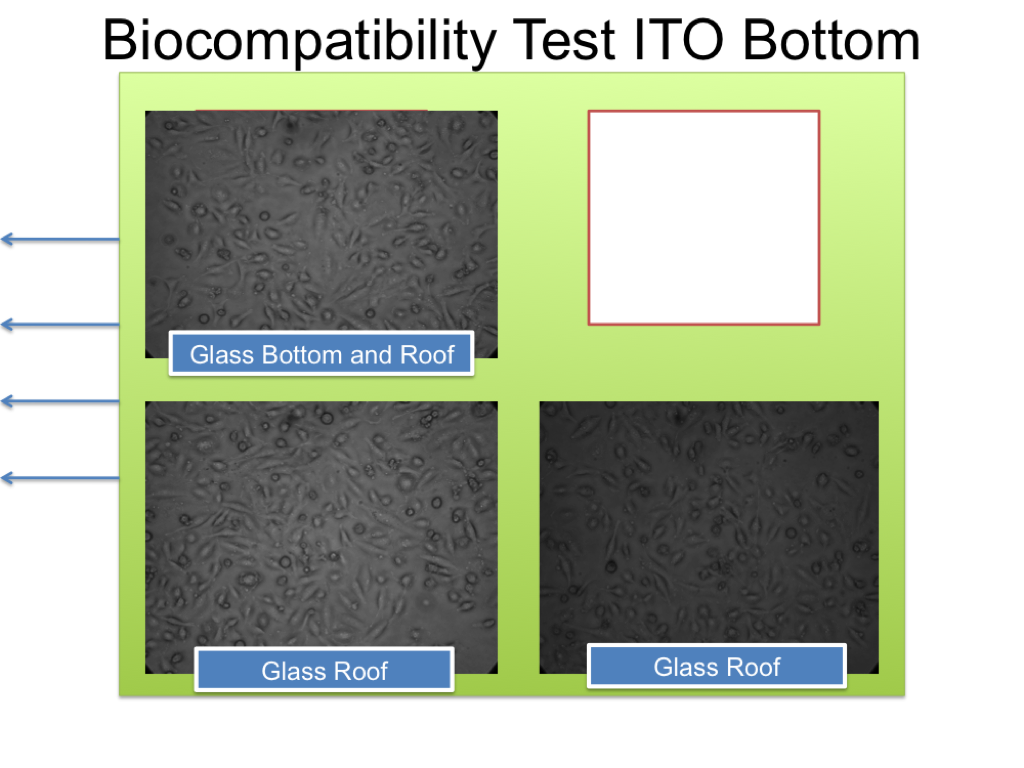
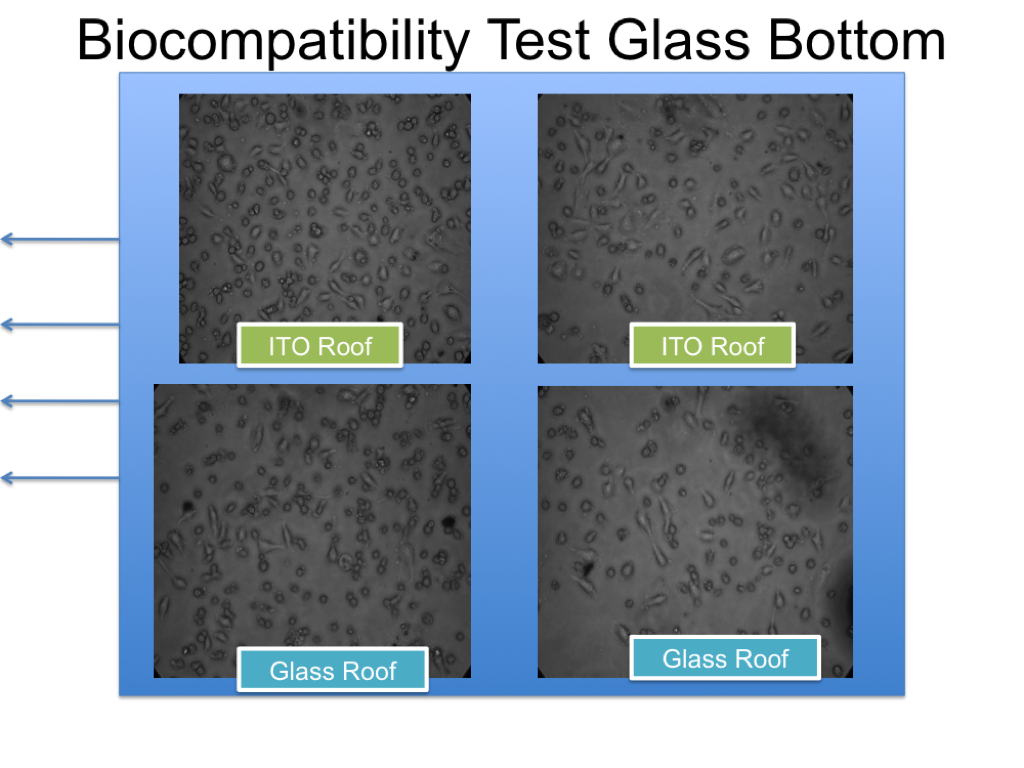
There are many more dead cells on the glass-bottom device than in the ITO one. Systematically, it may be an issue with one of the glass slides, or a user seeding issue. The devices were created from the same ITO slide (broke in two), but two different glass coverslips. Morphologically the cells to be in similar states of health from well-well in each device. I think the ITO bottom device provides some good evidence in support that the ITO is not cytotoxic. The glass bottom device appears to have other issues that prevents me from concluding that the ITO is not cytotoxic.
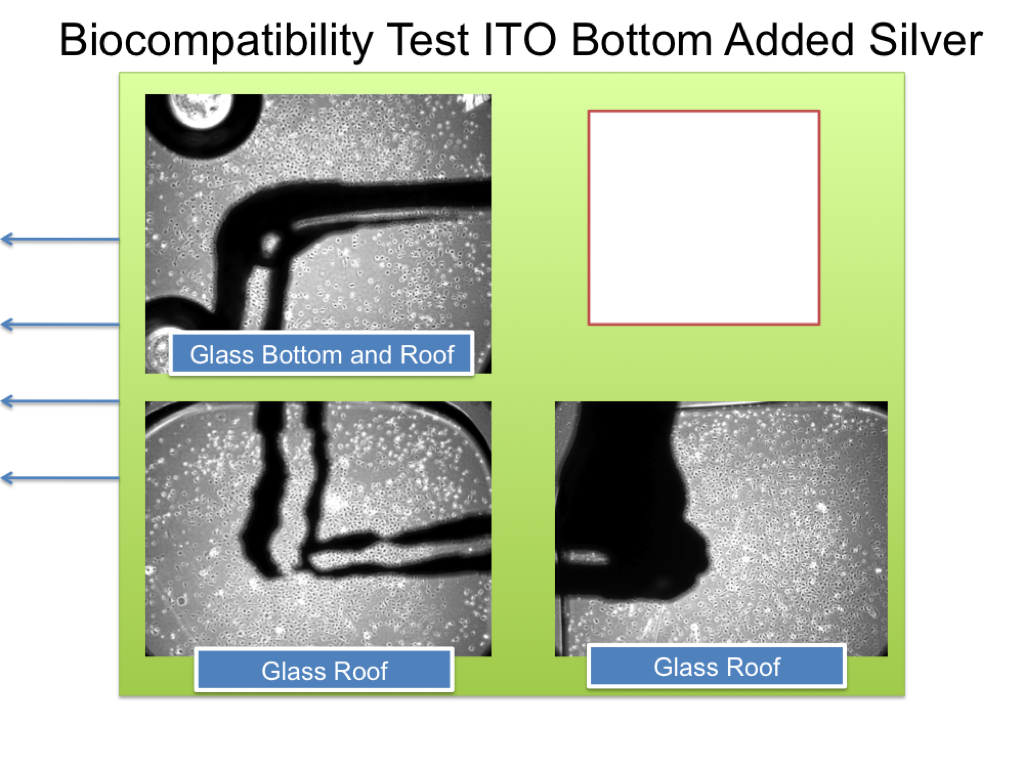
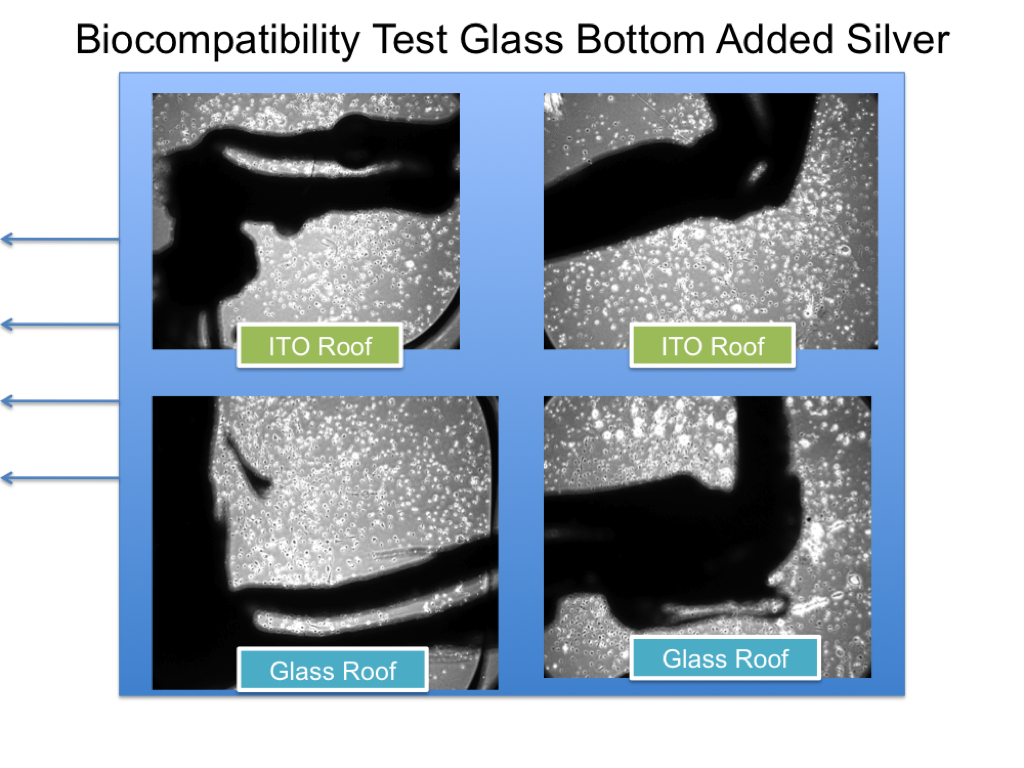 Here the cells are all clearly balling up and dying. Where the cells were nice and flat in the original picture, it is easy to see that they are retracting and unhappy. This is not much of a change in the glass bottom device, but in the ITO device, differences are clear. It appears that the Circuit writer ink is cytotoxic when immersed in media.