Similar Posts
Permeability w/ PBS
In a first attempt to reduce the electrostatic drag that might be slowing water transport, I ran an experiment with 1x PBS. The membranes were first ozone treated and then assembled into the SepCon inserts. From these first trials, it appears that PBS does pass through more quickly than DI water.
We have the Tecan M200 until Oct. 6th!
Demos of the Molecular Devices M2e and Tecan Infinite M200 are done. Erik from Tecan left us the M200 to use until October 6th. Please come try out your assays on it. Or check sensitivities. Jess or I could probably steer you in the right direction as far as the software is concerned. My impressions…
RTP Treated Membrane Stability in DMEM
(Transferred from old blog) Wafer 303 samples, both non-RTP and RTP (800C for 5 minutes), were tested in cell media (DMEM supplemented with 10% FBS) or deionized water, and placed in the incubator (37C 5% CO2) or oven (approximately 37C). Discoloration, pH, and the bead assay were measured initially and every 24 hours. Deionized water…
hiPSC Differentiation to Brain Microvascular Endothelial Cells (BMEC)
INTRODUCTION The blood-brain barrier (BBB) is a highly selective endothelial barrier that serves a crucial role in maintaining tissue homeostasis in the brain. Many current models, however, suffer from low TEER and permeability values far greater than physiological levels. Recently, human induced pluripotent stem cells (hiPSC) have been differentiated into BMECS with very high TEER…
Creating Endothelial Cells from Adipose-Derived Stem Cells
In conducting experiments to address reviewer comments, we again created endothelial-like cells from adipose derived stem cells (ADSCs). As in the past, the vast majority of ADSCs express some CD31 (PECAM-1) after culture in endothelial media (M200) supplemented with 50ng/mL VEGF (on 0.5LP, 3.0LP and TCP). The expression of this CD31 is relatively low and…
Aliens, Voodoo, or Magic? How does DNA Extraction via Silica Adsorption Actually Work?
The first DNA extraction was done over 150 years ago in 18691. Since then, the process has been refined and expanded to include multiple physical and or chemical methods. For the waste water epidemiology project (described here), we will be focusing on DNA extraction via silica adsorption without the use of chaotropic agents. The mechanism…
3 Comments
Comments are closed.

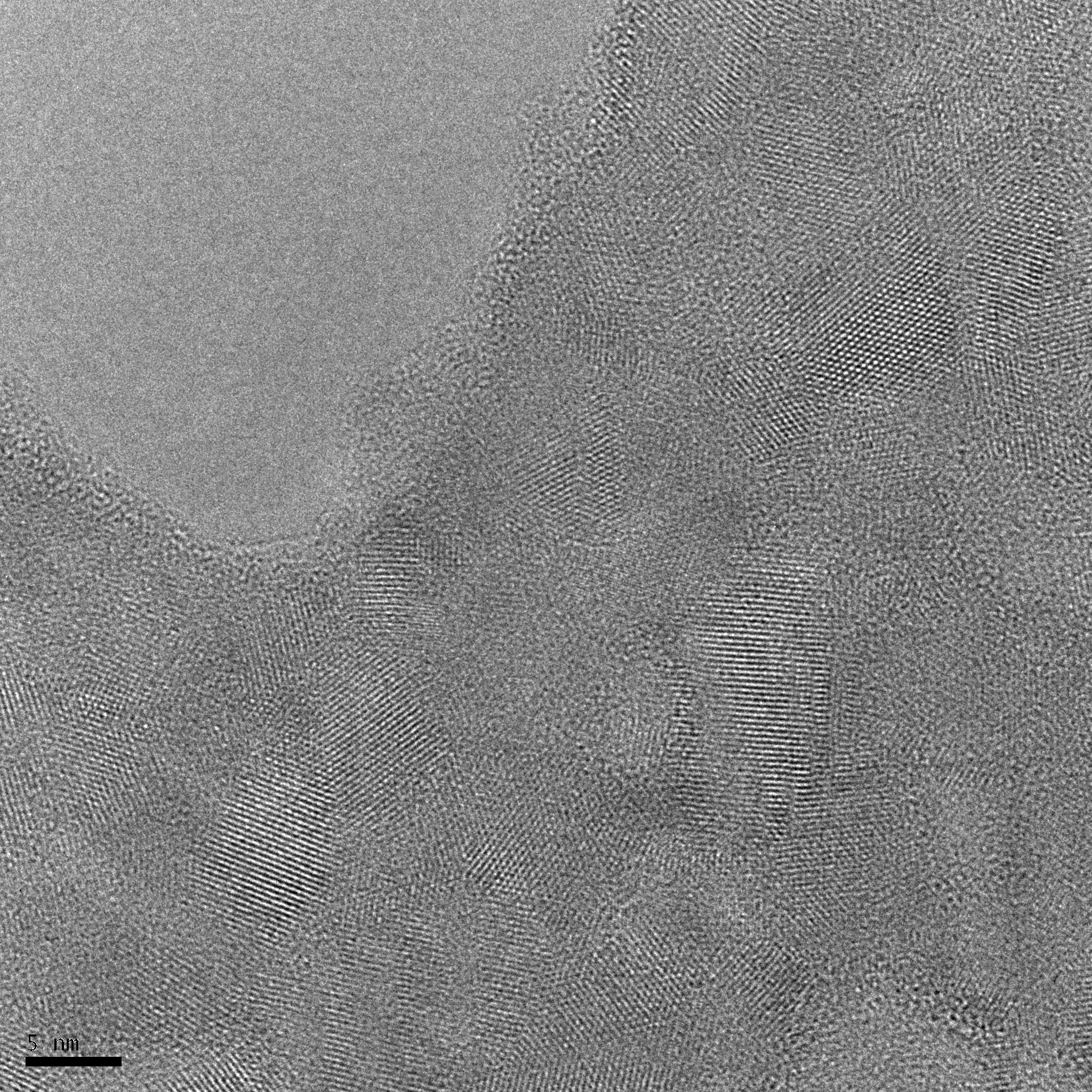
This is great news! The image is fascinating- there is no clear evidence for this amorphous phase here- and the apparent shape of the nanocrystals is very interesting- not at all spherical, it seems! Do you have more of these pictures? I think they can give us important clues on how the pores form.
Is the low throughput due to inexperience with the tool or is it the nature of the tool?
I agree, this material is highly crystalline. (On a similar note, Brian said that we need to be within +/- 0.5 degrees of the Bragg condition to see diffracting crystals.) I was only able to look at one sample today because it was the first time I touched the tool and we were being trained.
Throughput is limited on this TEM because you can only load one sample at a time (vs. two w/ Karen’s) and the pump time is significantly longer because of the higher vacuum requirement.