Mr. Smith goes to Boise
On June 10th, 11th, and 12th I was in Boise, ID for the North American Membrane Society (NAMS) annual meeting. While there, I presented Jess’s work on the EO pump in a poster session. I got the chance to meet Andrew Zydney of Penn State, Peter Pintauro of Vanderbilt, and hang out with our Clarkson collaborators Ruth Baltus and her student Basavaraju (Raju) Agasanapura. The NAMS conference was a busy place, and four talks were running at any given time. Given that, I chose the talks that sounded as if they were most relevant to the lab and to my personal research. Some highlights:
David Jassby’s (UC Riverside) talk “Electrically Conducting Carbon Nanotube Polymer Composite Nanofiltration Membranes for Biofouling and Scaling Control” used a coating of conductive carbon nanotubes to apply a surface charge to a desalination membrane. Because bacteria have an inherent negative charge, charging up the membrane could inhibit biofilm growth, and an alternating current was even better at preventing biofilm growth. The power needs of the membrane were reasonable. Additionally, positively charging the membrane cause gypsum crystals (scaling) not to form as readily – the reason for this was not as well understood. My own interests in metallized membranes made this talk particularly interesting.
Bruce J Hinds’ (U Kentucky) talk “Unified Pressure and Electroosmotic Flow Enhancement Mechanism in Carbon Nanotube Membranes” helped me understand better the reasons that flow is so much higher in carbon nanotubes. I found that they make CNT filters by embedding 10uM NT’s in epoxy, then slicing them every 5uM. Porosity tends to be around 0.6%.
Sangil Kim’s (Lawrence Livermore) “Breathable and Protective Fabrics Based on Carbon Nanotube Membranes” made the case for using carbon nanotubes for the next generation of gore-tex fabric. In particular, CNT’s can allow water vapor to escape but water (and bioweapons/chemical weapons, since this was a military project) are rejected by the narrow pores. CNT-based fabric isn’t very flexible, so this seemed to me to be pretty limited in application – you’d need patches of breathable fabric in the few places your body doesn’t typically bend, and the stiffness would probably make it uncomfortable and impractical.
I saw (but did not introduce myself to) the other James McGrath, James E. McGrath at Virginia Tech. One of his students gave a very technical talk about the gas permeability of a thermallly rearranged polymer.
Randall Partridge’s (ExxonMobile) “Onboard Gasoline Separation for Improved Vehicle Efficiency” discussed a new system where normal pump gasoline is filtered to separate the higher octane components from the lower, so that the higher octane fuel is only used during rapid acceleration. It was a nifty solution, but someone in the audience asked why we couldn’t just ask people to fill up two gas tanks at the pump. Partridge claimed market research said that consumers would never agree to do that, but they already do that in Brazil, where cars with a tank for ethanol and another for gas are relatively common.
Ryan Holloway (Colorado School of Mines) gave a surprisingly exciting talk – “UFO MBR – A NOVEL Potable Reuse and Nutrient Recovery System”. The Colorado School of Mines has an experimental wastewater treatment facility that is fed by a student housing complex. The talk discussed strategies for reclaiming phosphorus from the wastewater, as well as how to clean up the water to a standard suitable for non-potable uses like watering lawns or running toilets. A detailed and fascinating look into the actual daily operations of the experimental facility made this one of my favorite talks.
I learned a great deal at the conference, and it was great rubbing shoulders with some of the giants of the field.
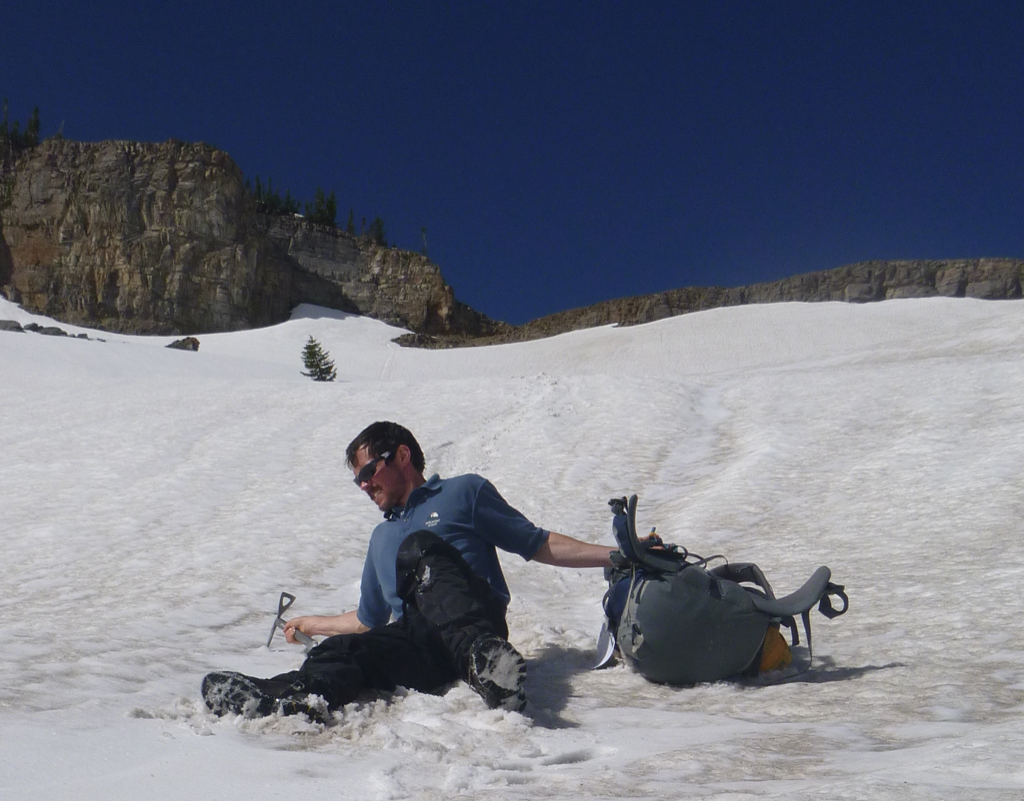
Immediately after the conference, I rented a car and went backpacking in the Tetons: