Review: Blood Purification 2013
In vitro Clearance and Hemocompatibility Assessment of Ultrathin Nanoporous Silicon Membranes for Hemodialysis Applications Using Human Whole Blood
Morteza Ahmadi Maud Gorbet John T.W. Yeow
Department of Systems Design Engineering and Waterloo Institute for Nanotechnology, University of Waterloo, Waterloo, Ont. , Canada
Summary
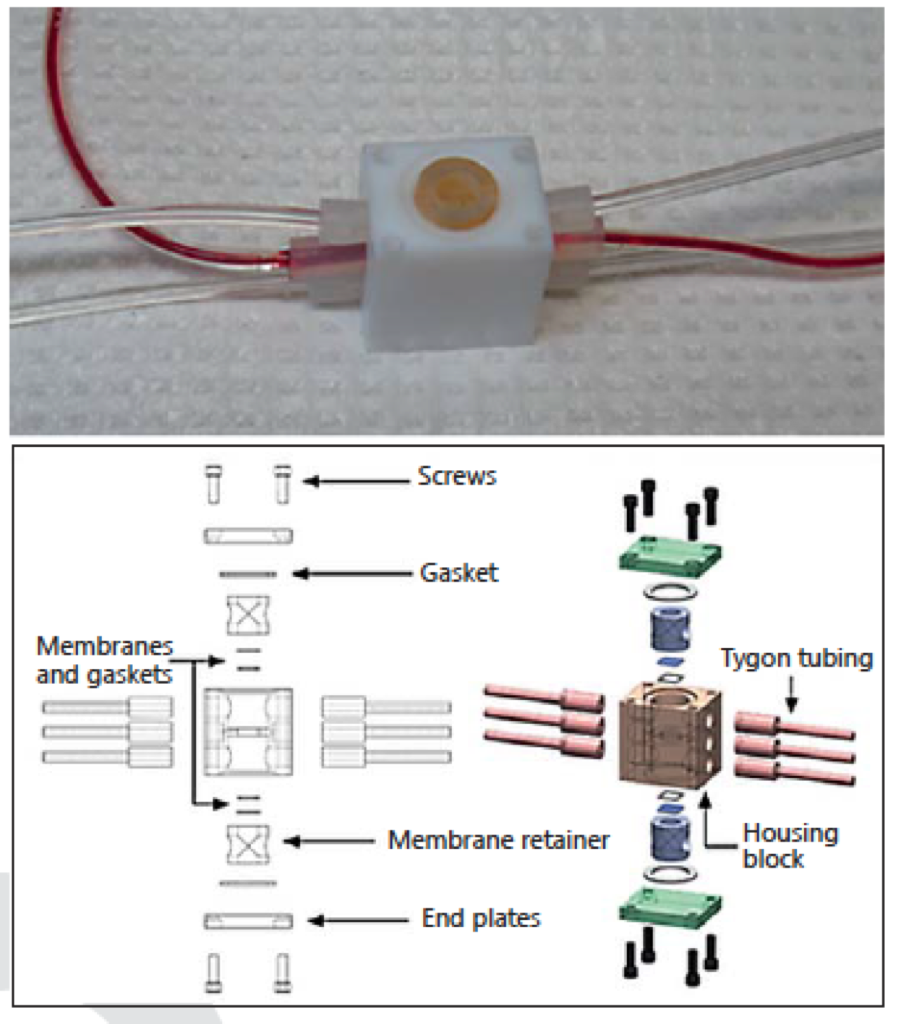
Two pnc-Si chips mounted in teflon block with blood flowing between the chips and dialysate flowing along both outside surfaces.
Clearance is calculated based on the concentration of sodium, chloride, ionized calcium, total CO 2 , glucose, creatinine and hematocrit measured before and after dialysis. Blood activation is assessed by flow cytometry.
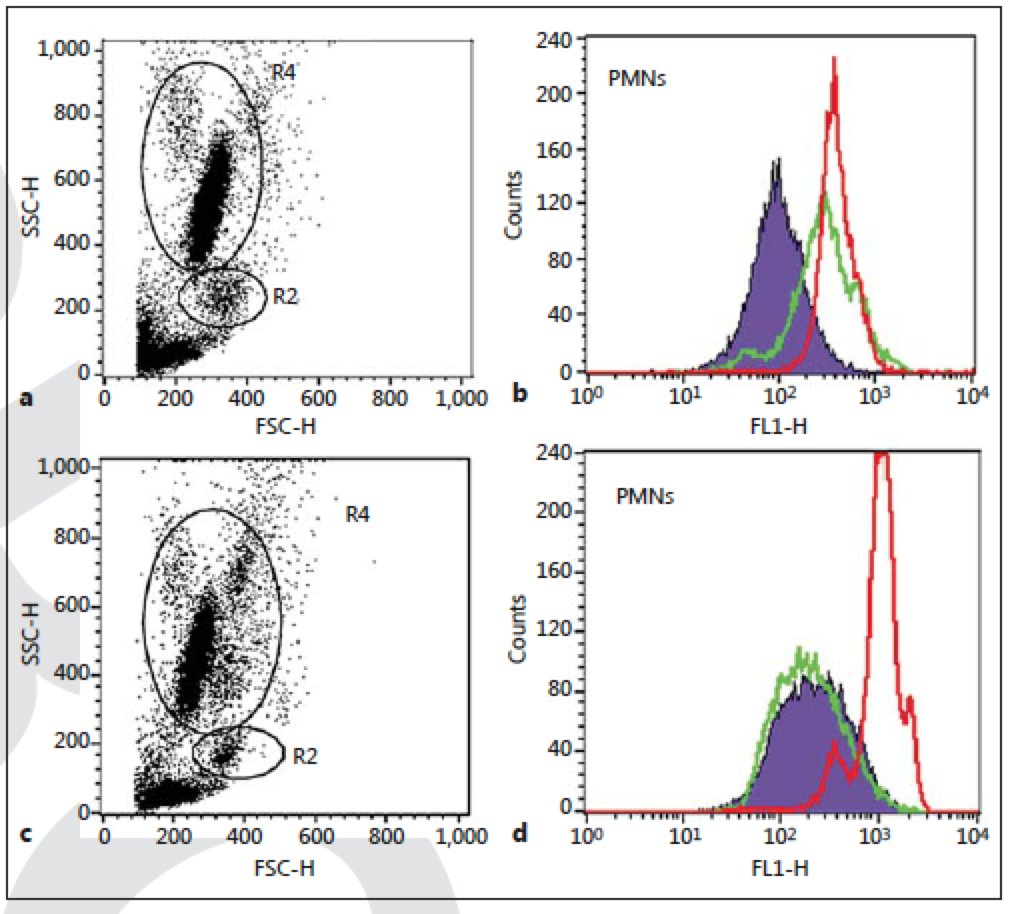
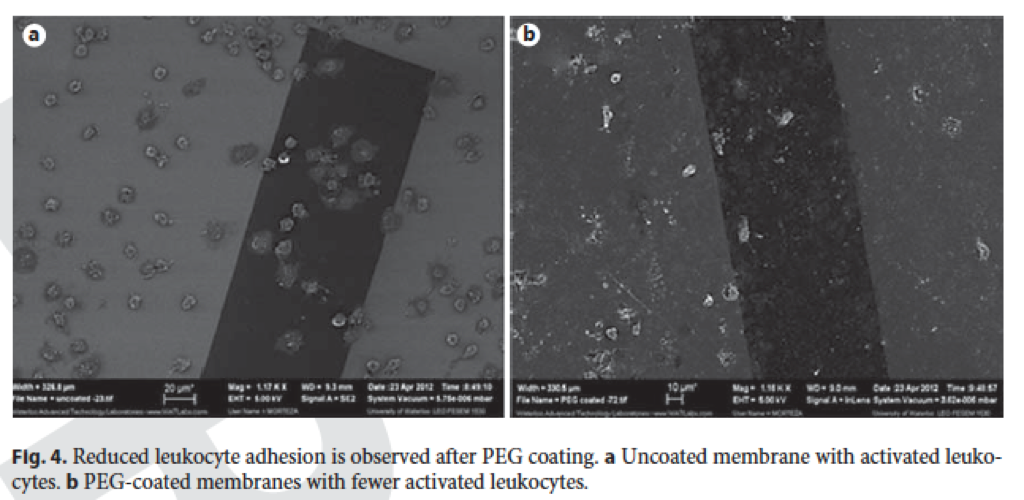
Blood contact with the nanoporous membranes induces considerable leukocyte activation. Coating of the membranes with polyethylene glycol significantly improves hemocompatibility without blocking the nanopores.
Silicon nanoporous membranes are potential candidates for fabrication of miniaturized blood dialyzers. Their mechanical strength and hemocompatibility can be further improved.
Methods
Whole blood with heparin (10 U/mL). 5 window (1.5 mm2 pnc-Si 5 nm and 20 nm pores 30 nm thickness. 1 mm between chips
PEGylation. toluene and 2-[methoxy(polyetheneoxy)propyl]trimethoxysilane
Blood flow rate 82.5 µL/min
The blood is then incubated with fluorescent antibodies and analyzed on a flow cytometer (BD FACSCalibur) for platelet and leukocyte activation. Platelet activation is assessed by measuring the formation of platelet microparticles in the bulk via flow cytometry. Leukocyte activation is assessed by measuring the upregulation of CD11b (also known as Mac-1) as well as by formation of platelet-leukocyte aggregates.
Results

Conclusion
1. Clearance rates for a number of solutes are very good for our membranes, even in whole blood.
2. The effect of the membranes on the average total lysis is less than 0.5% of the whole system (syringe pump, tubing etc.
3. PEG coating did not block pores and did reduce leukocyte activation.