Secrets of the NSF
While serving on an NSF MRI (Major Research Instrumentation program) review panel today the director shared his analysis of funding probabilities as a function of score. The analysis was only done for the Directorate of Math and Physical Sciences, but I bet it is a good rule of thumb throughout NSF. I sketched his power point slide as accurately as possible. Note that a perfect score has only a 90% chance of funding.
 Here are the 6 directorates under the Division for which the analysis was done …
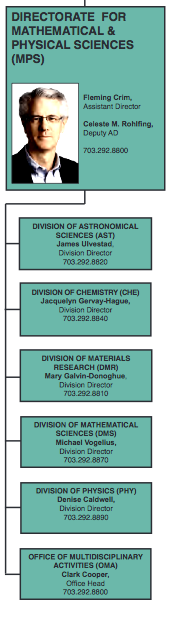 Of the 17 grants submitted to our panel, only 3 had fundable scores. All total the MRI program had
  11M to give out.
Some others observations and notes …
- Asking for the most expensive equipment when there are cheaper alternatives that fit your needs, can be fatal in the MRI.
- Most grants lists a few flagship projects that the reviewers can sink their teeth into and then a collection of other projects that will benefit from the acquisition.
- Every project listed in an MRI application needs to explain why the device is needed.
- Reviewers are averse to applications that attempt to impress with a ‘laundry list’ of individuals if those folks aren’t really in need of the tool.
- If you propose to place a FIB in a clean room you better make sure that electrical and vibration issues are addressed (highly specific issue but I wrote it here so I don’t forget).
- Regional impact is very important
- Its important to have a credible plan for tool maintenance over the long haul including service contracts. My review panel was not impressed with teams that thought they could maintain the tools themselves.