Sham Dialysis Study
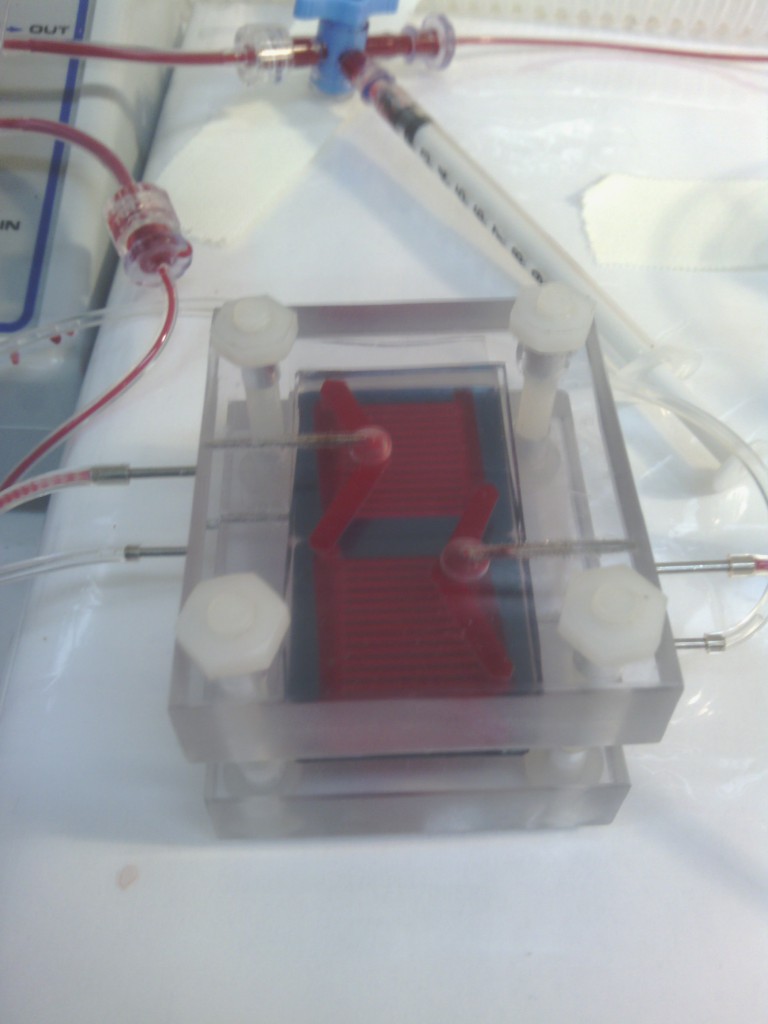
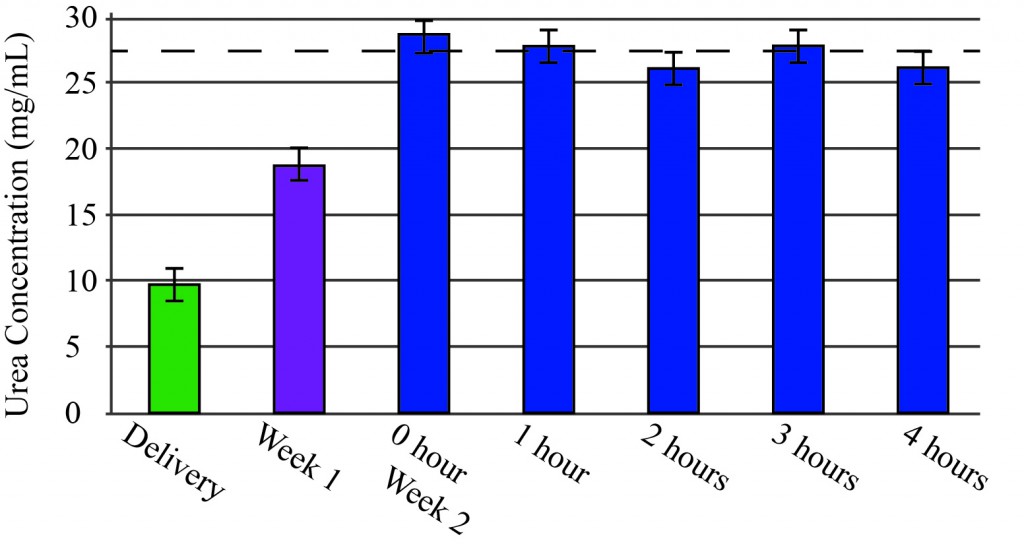
We performed four hours of sham dialysis, using two non-porous nitride membranes. The set-up is described in an earlier post. Blood samples were taken when the animal was received, after one week of the adenine containing diet, then at 1 hour intervals during the dialysis. The data shows that the urea level, which was increased over a two week period on the adenine containing diet was unaffected by the dialysis, as expected.
The data below is from R1, R2 and R3 experienced premature experimental termination. R4 has similar data, which will be reported later.
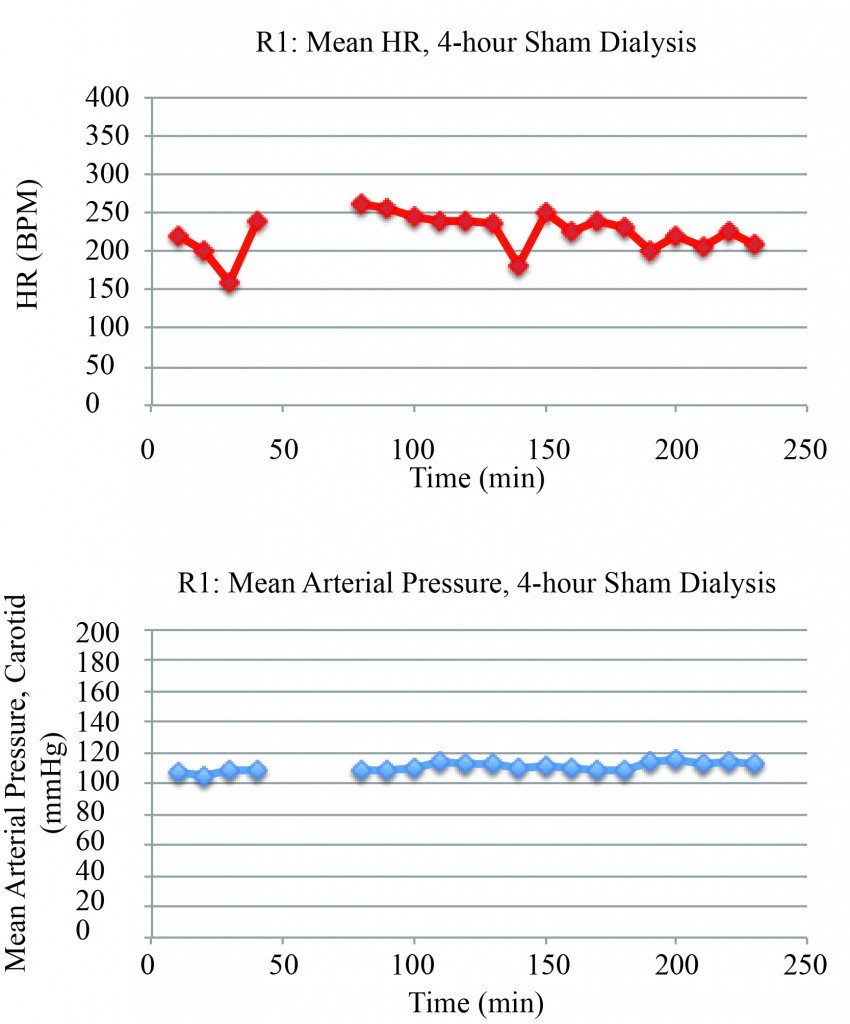
The following plots show the Mean Heart rate and Mean Arterial Pressure. 1 min of data was averaged every 10 minutes. Missing data at 50 min, 60 min, and 70 min is due to a clot that developed in the carotid catheter. During this time, the BP was stuck at a about 115 mmHg and the HR was not calculable. The low points in the Heart rate occur when the animal sighs and again, the software calculating HR fails. I think a little filtering in MATLAB before the averaging would give up more accurate data at those points. But the message is, the HR and BP remain within normal values for the duration of the dialysis procedure. You will note that the PB does increase over time, in on other animals the BP slowly decreases. This an artifact of the anesthesia with deeper states are associated with lower BP and shallow states with higher BP. The amount of isoflurane, initially 3%, is varied between 1% and 1.5% based on the animal’s breath rate.
I also measured the flow rate provided by the heart for R4. After the four hour sham dialysis, with blood flowing through the two-chip system, a bubble was introduced in the extracorporeal blood line. The front of the following blood was captured on video. The volume of blood flowing along a measured segment of tubing (1/32″ ID) was measured and from this the flow rate was calculated. For Animal R4, the flow rate was found to 0.56 mL/min. For the current two-chip device, this is 0.022 mL/min in each channel (22 µL/min). The mini peristaltic pump pumps at a minimum of 0.4 mL/min and a maximum of 85 mL/min. (The heartbeat in the video is for effect only and not the actual heartbeat of the animal)
Please update the vital signs plots so that it shows a range from 0 to 400 on HR and 0 to 200 on BP.