Paper-Based Microfluidics
Glavan et al 2013 Lab on a Chip
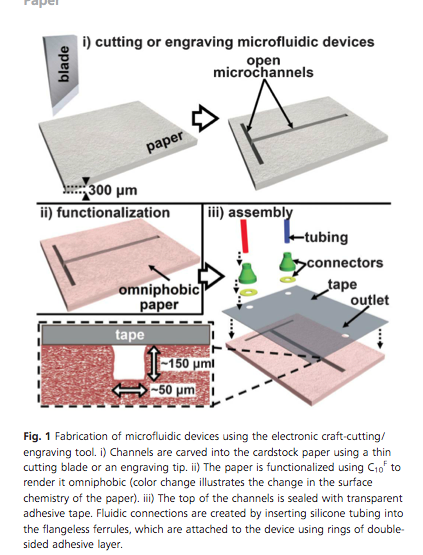
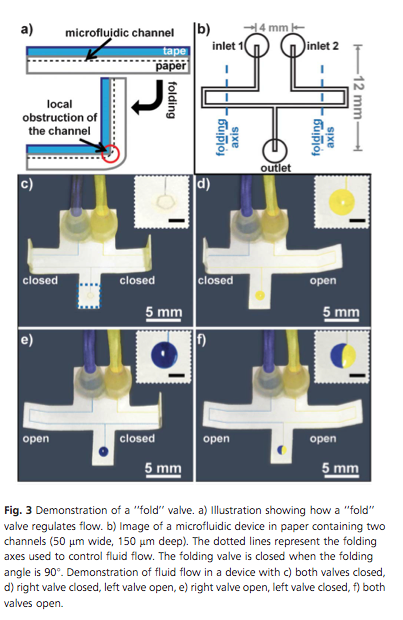
This paper from the Whitesides group details an interesting way to fabricate paper-based microfluidics. They treat ordinary paper with a fluorinated silanization process to render it hydrophobic, and use a Silhouette cutter to scratch a channel into the paper. When covered with double-sided scotch tape, conduits are formed (150×50 microns) that can move fluid around. They demonstrate mixing, routing, and separation functions. At journal club, we can discuss the pros and cons of this material system, and potential ways to introduce similar concepts to our microsystems.