Webb Device Prototype
Last week, I worked with Kevin to create a prototype cell culture device that could be compatible with his Raman system in Nottingham. The space constraints of the physical system are challenging: The overall working distance of the system must be less than 1.5 mm (smaller is better), must maintain only MgF2, media, and cells in the light cone (else we will get silicone signals, leading to vastly decreased S/N ratios), and must be able to fit in a 13 mm diameter circle at its lowest level.
This video describes my ideal vision of what the microsystem would be. I would embed a 5 mm diameter x 1 mm high MgF2 observation window above the microsystem using PDMS, and use silicone vias to move fluid at different levels of the device, using ozone bonding to join all the different elements of the device together, aside from the very bottom layer, where I would use either simple stiction or a thin veneer of PDMS mortar (I doubt MgF2 is ozone bonding compatible based on what I know of the chemistries).
To test whether I could fabricate such a device, I attempted to embed a thin 9 x 9 x 0.15 mm coverglass into a sample device using either silicone gaskets or a custom PDMS mold made out of PLA. Because of the larger coverglass size, I used a few breakout gaskets to get access to the smaller geometry gaskets underneath.
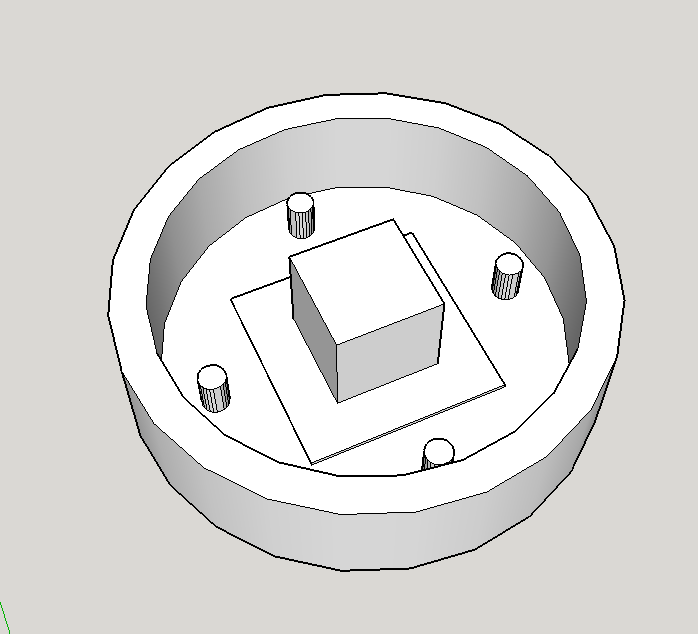
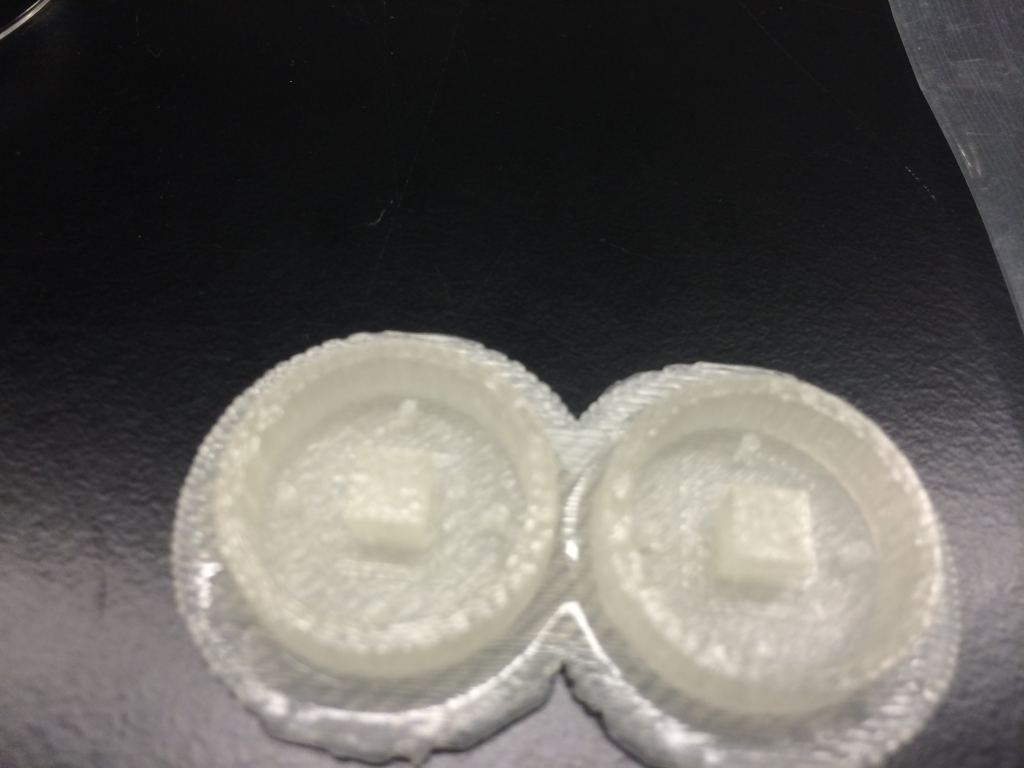

I used 10:1 PDMS:curing agent ratios and degassed the PDMS. To cure the PDMS, I left it covered on a hotplate at 85C overnight. Getting the cured piece out was difficult; I ripped one, but saved the other. Since the curing creates a negative topography, I still had a lot of surface roughness downward facing edges. I attempted to ozone bond the PDMS to the silicone 0r glass, with no success. I bonded other pieces of silicone during the same process runs, so it is not likely that there was insufficient ozone in the system. It is possible something is coating the surface that is interfering with the bond formation. I cleaned the the cured PDMS with ethanol immersion for 24 hrs and tried again with no success. The pieces are substantially less sticky than other cured pieces I have experience with. Next I will try and sonicate to remove any particulates on the surface.
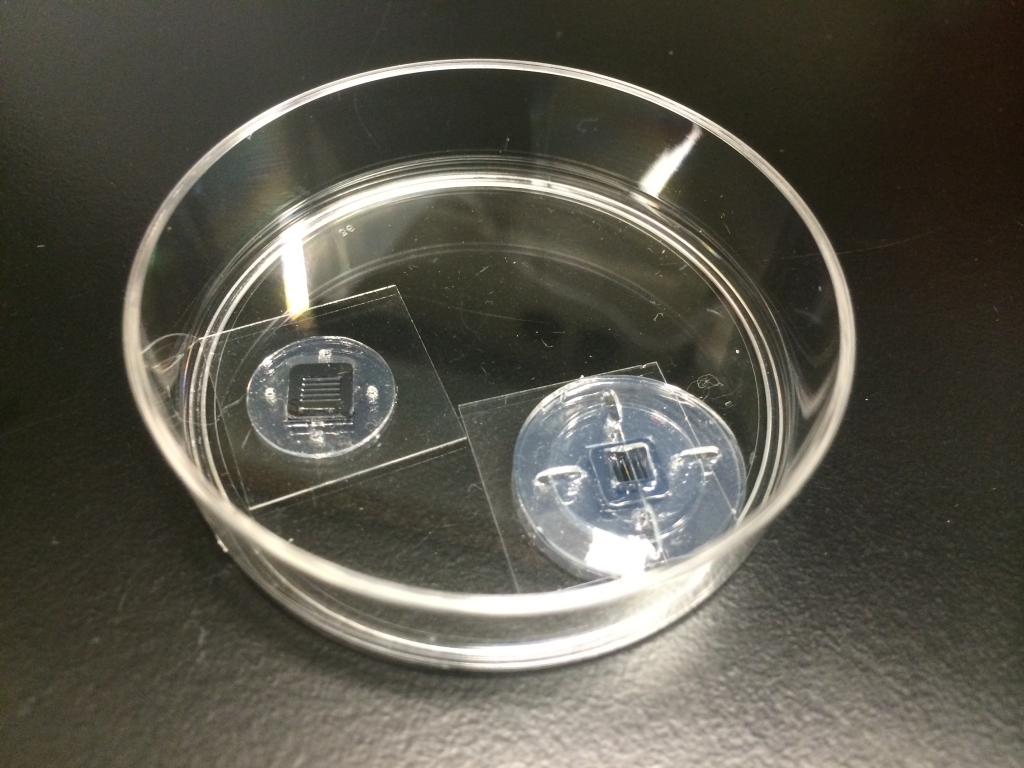
Using the silicone to embed the coverglass, I was able to create the film stack in the second video and cure it, using ozone bonding, a reynolds handivac, and the 70C oven. However, removing the stack from the carrier piece of glass was near impossible. I broke the coverslips in the process of wedging a tweezer underneath to gain leverage. I will need a more inert carrier substrate in the future. I was unable to test the fluidic seal with this batch. However, all the pieces were well bonded together and the whole package acted as one piece, where bonding was extremely tight between the layers, so I am optimistic about this approach.