More Burst Pressure Testing: Front to Back
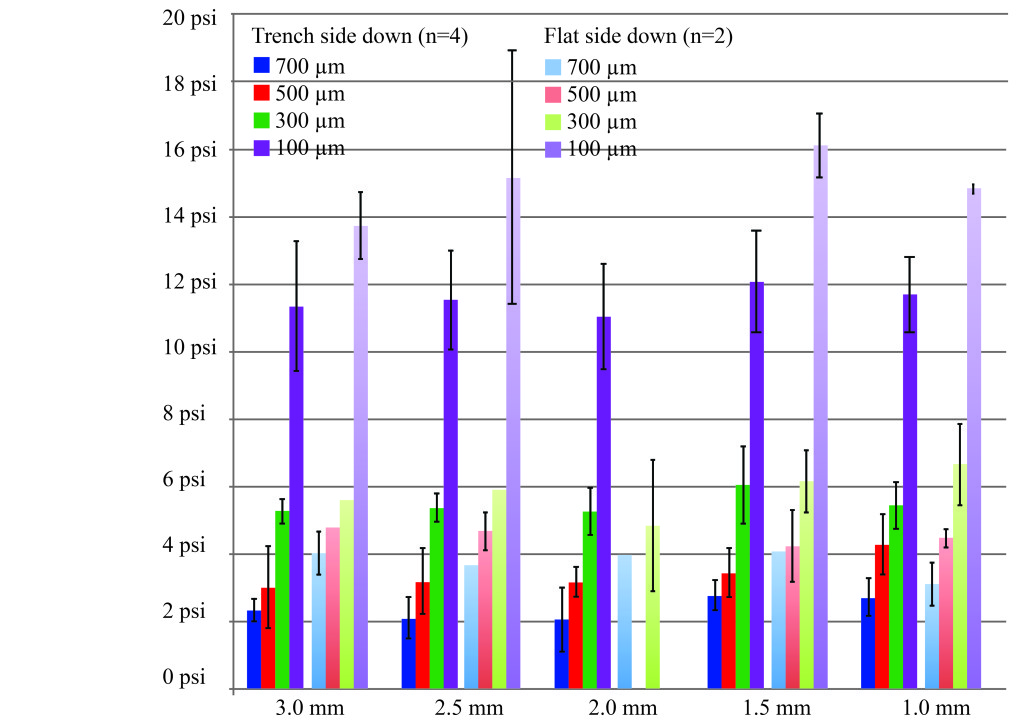
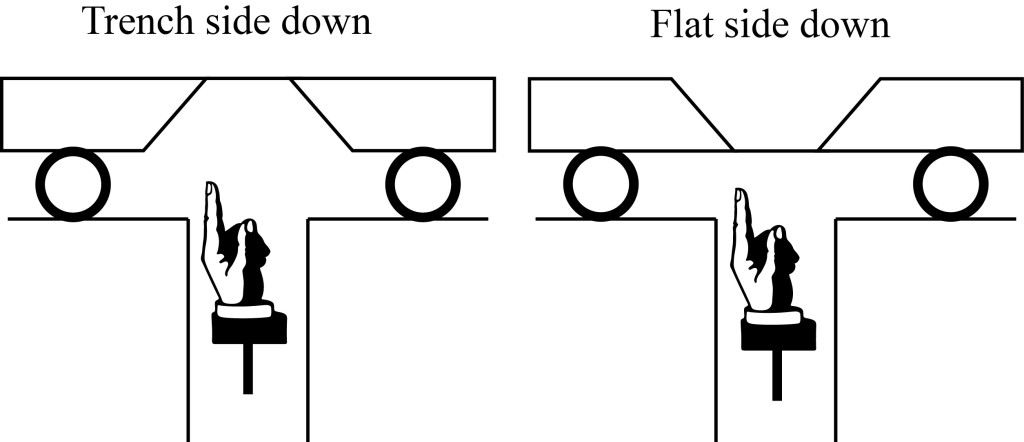
My original post reported burst pressures on rectangular windows with the chips trench side down in the fixture (pressure from below). These values are low compared to square window pressures. My pressures ranged from 2 psi to 12 psi while square windows achieved 10 psi to 50 psi (Sarah Wayson’s post on square windows). So I did a limited set of flat side down tests, n=2. There does seem to be an increase in the burst pressures in general, just not what we were expecting. The increase is about 2 psi where there is an increase.
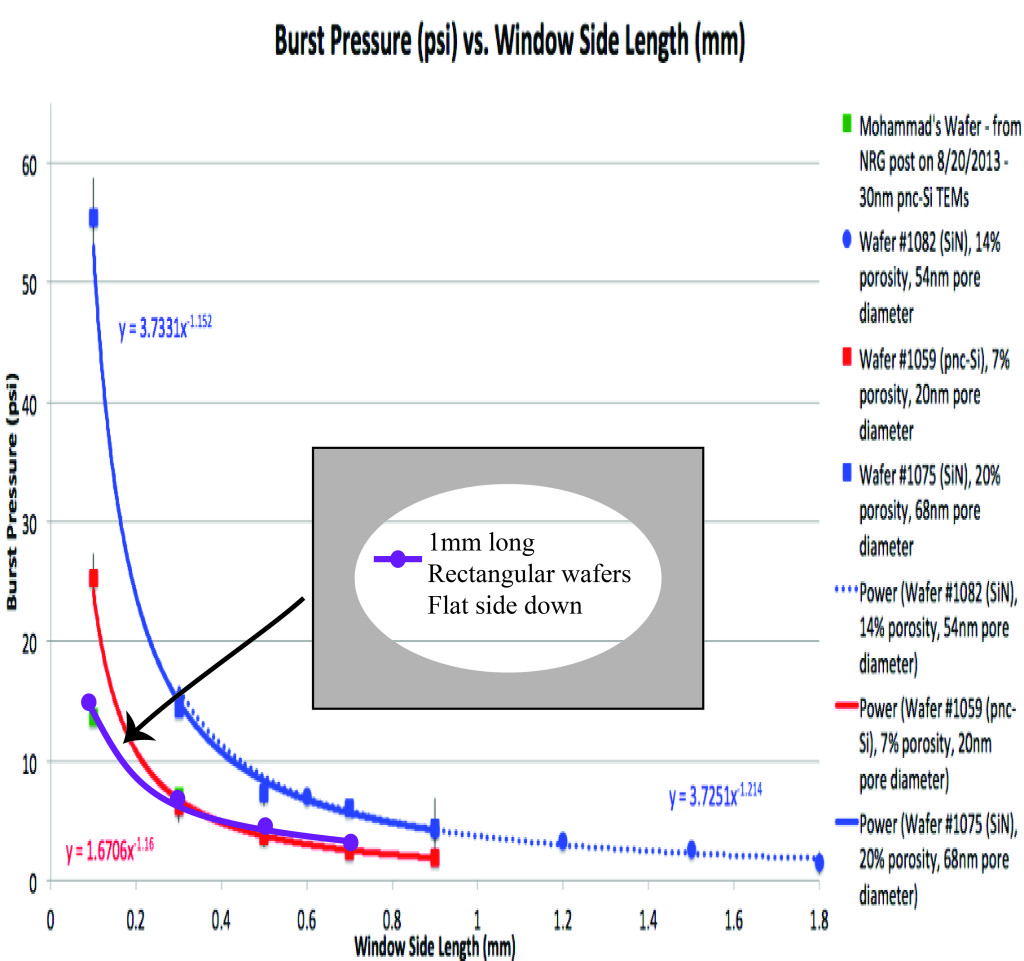
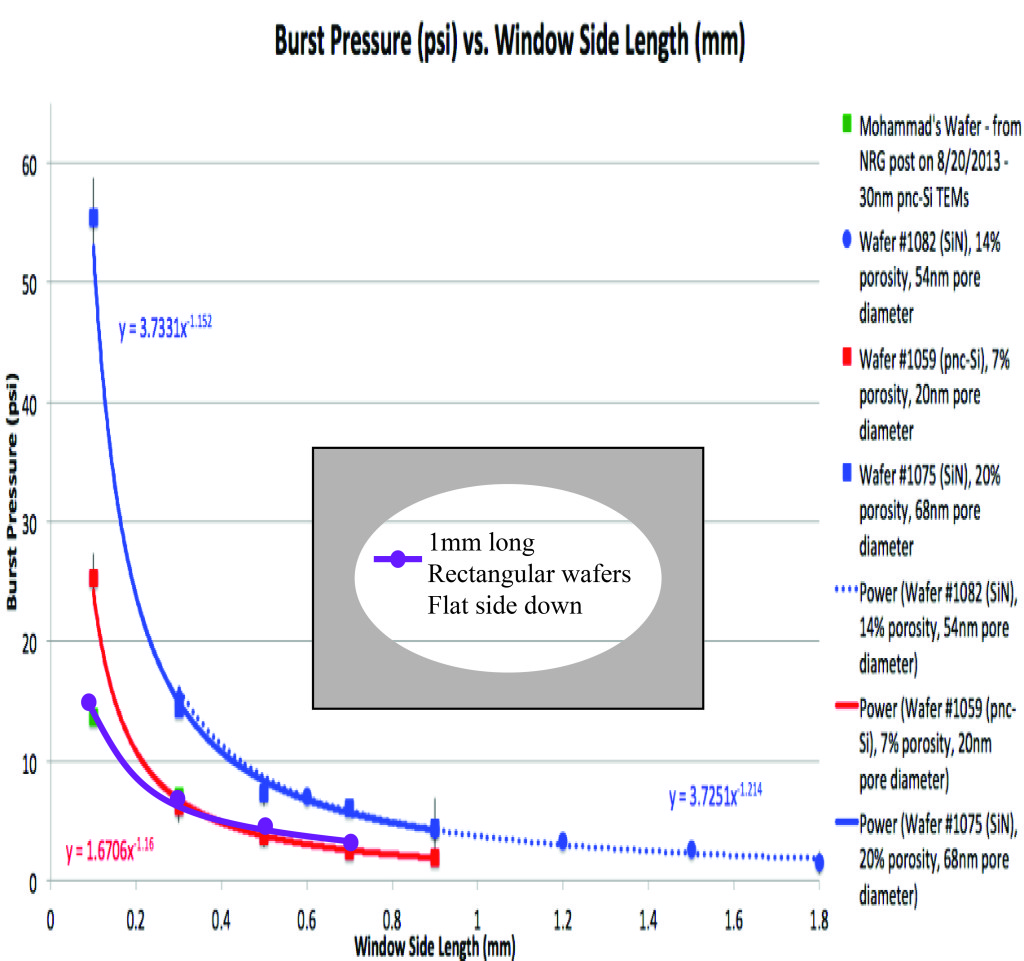
Well, here is the data, grouped by window length and orientation. I’ve included the previous results on the following chart. Dark colors are trench to flat side, muted colors are flat side to trench. If error bars are missing then there was only one datum. I’ve inserted the data from the flat side down (pressure against flat side of membrane) into the chart from Sarah’s post (see above). It does look like we’re getting the same pressures as the pnc-Si instead of the the NPN it is. Perhaps this is due to the wonkiness of the windows. Note, these are not square windows. The data I’ve added are for 1-mm long windows of varying length. The 700 µm x 1 mm window is the closest to square. The smallest window is 100 µm x 1 mm, not at all square, but as I’ve shown, length (in the range of 1 mm to 3 mm) is not a major factor in burst pressure.
The last image is a poor picture of a section of a rectangular window. Very Wonky. Sorry for lack of scale bar.