Review paper: Fabrication Techniques Enabling Ultrathin Nanostructured Membranes for Separations
As you may already know, we are writing a review article for the Electrophoresis journal on nanofabrication methods. This post is to request your feedback on the figures included in the manuscript.
The main objective of figure 1 is to compare top-down and bottom-up processes to justify the use of the methods reviewed in the manuscript; the main idea is that those methods (bottom-up) are cheaper, more easily available, spontaneous and fulfill the task at hand.
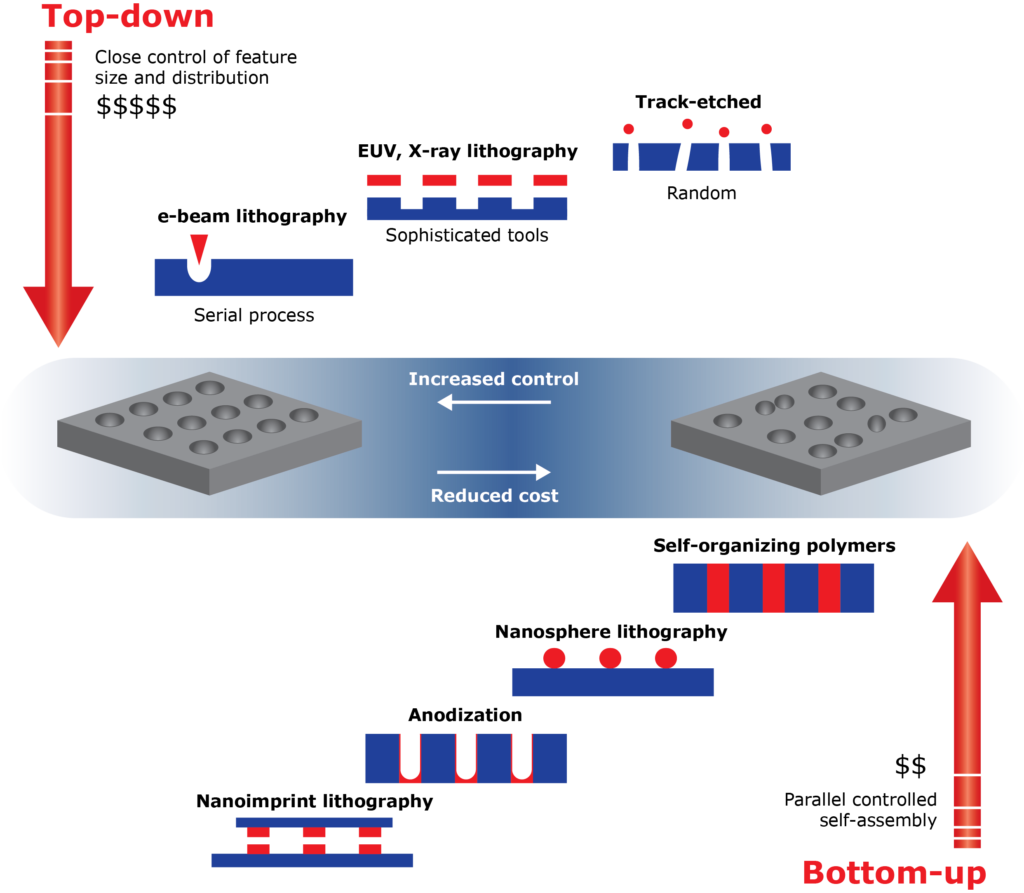
Figure 1 Schematic comparison of top down and bottom up nanofabrication techniques used for the production of nanoporous membranes.
We would like to include some specific aspects of each bottom-up method as a way to critically evaluate or classify them, I am still working on that.
We decided to include cross-sections of some highlighted works, they are presented in the same overall format for simplicity and clarity. Each cross-sections shows the pore diameter and the membrane thickness as labels to maintain the same “visual” dimensions. The idea here is to easily compare materials and membrane stacks while providing some “quick facts”.
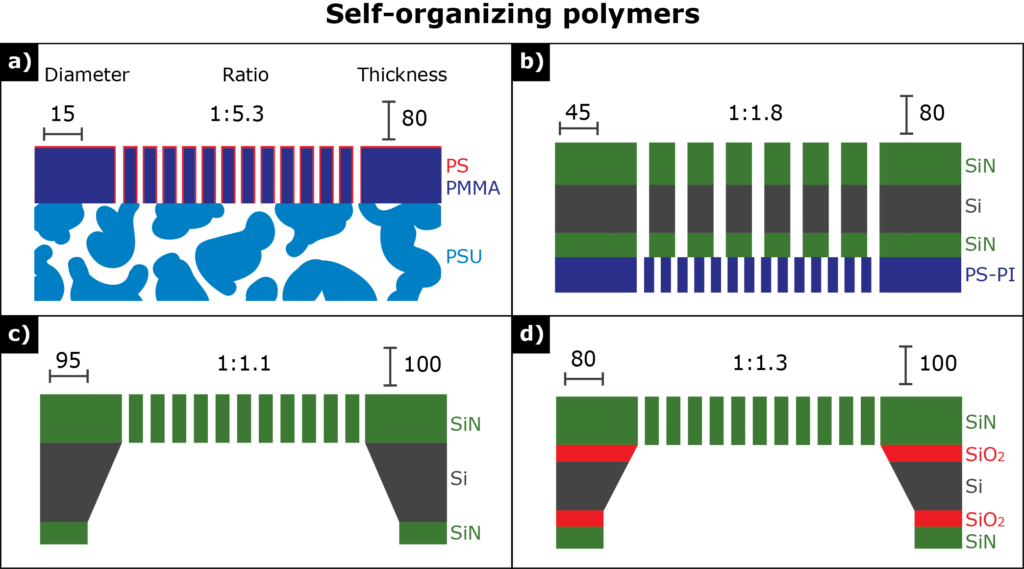
Figure 2 Cross-sectional schemes of nanoporous membranes fabricated through self-organizing polymers: a) PS-PMMA membrane supported on a microporous polymeric substrate,[42] b) PS-PI membrane supported on a microporous silicon membrane,[39] c) SiN membrane fabricated from a micellar monolayer assembled on a 4” Si wafer,[1] and d) SiN membrane fabricated over a 4” Si wafer containing 145 chips 10×10 mm2.[4]
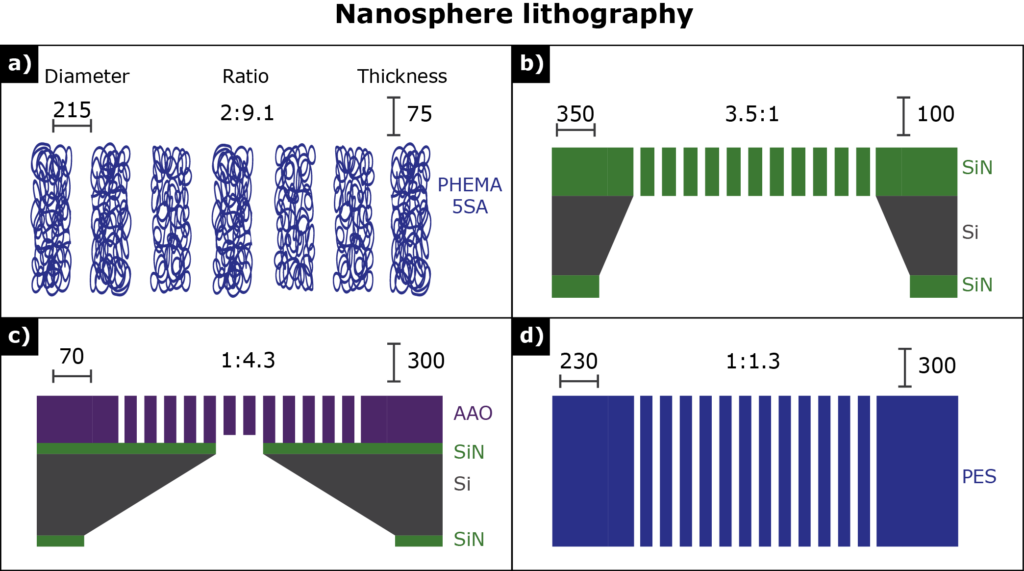
Figure 3 Cross-sectional schemes of nanoporous membranes fabricated through nanosphere lithography: a) Polymeric hydrogel brush membrane fabricated using PS nanospheres,[49] b) SiN membrane fabricated through a Cr etch mask producing from PS nanospheres,[50] c) aluminum oxide membrane fabricated by patterned anodization through PS nanospheres,[51] and d) polymeric membrane lifted-off from its processing substrate by dissolving a cellulose acetate sacrificial layer.[52]
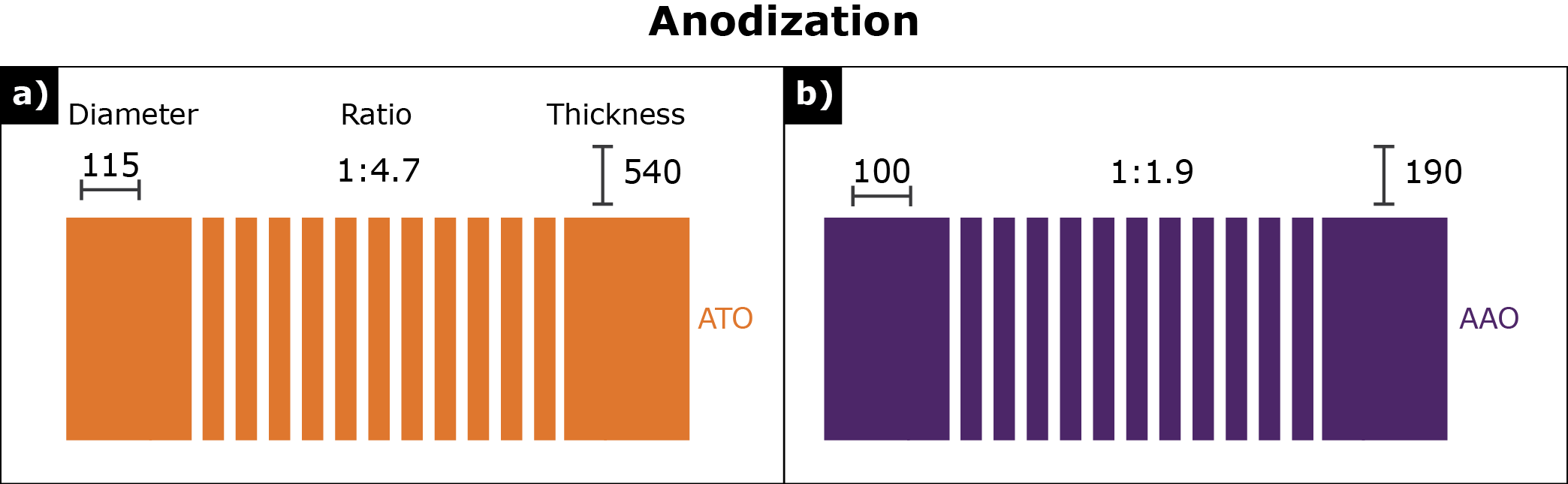
Figure 4 Cross-sectional schemes of nanoporous membranes fabricated through anodization: a) anodized titanium oxide membrane transferred though lift-off onto a receiving substrate,[56] and b) anodized aluminum oxide membrane used as template for the fabrication of silver nanoparticles.[67]

Figure 5 Cross-sectional schemes of nanoporous membranes fabricated through nanoimprint lithography: a) SU-8 membrane imprinted through an AAO template[78] and b) titanium oxide membrane imprinted with a PMMA stamp fabricated from an AAO template.[79]
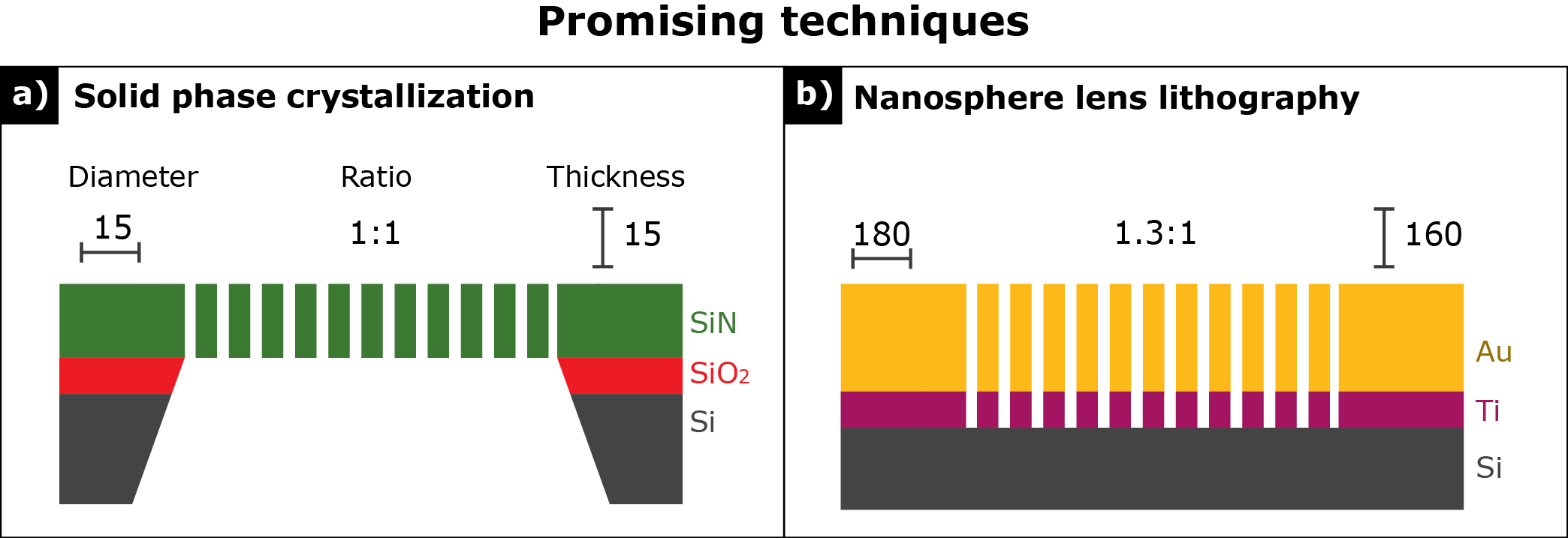
Figure 6 Promising techniques for nanoscale patterning: a) free-standing SiN membrane successfully fabricated through the solid phase crystallization of a Si thin film[91] and b) nanoporous pattern developed on Au/Ti stack through nanosphere lens lithography.[92]
Thanks everyone!