Ian Krout Rotation: Microplastic Filtration and Raman Analysis
Word Document: Blog Write Up 4.8.19
Over the past two weeks I have been working on creating a protocol to eliminate the organic debris from environmental water samples, leaving only microplastics behind on the silicon filters. The goal for this is to be able to really isolate out just the plastic in environmental samples making it easier to identify them and to eliminate background while using RAMAN. Overall, helping us to identify, with confidence, the total plastics in a given sample and their identity.
I started this process by using the NOAA standard of Wet Peroxide Oxidation. This procedure involves heating a mixture of 30% H2O2 and aqueous iron sulfate directly on top of an environmental sample. Upon my first couple attempts at this I was finding that with the 10-micron filter, while able to get rid of the organics, there was an aggregation of nanoscale iron accumulating upon drying of the filter (most likely rust). I attempted to confirm this using RAMAN and am waiting to hear back on these results.
My second attempt involved using 1x protein sample buffer, heated to 60°C, directly on top of a filter containing a pre-filtered sample. The results from this were surprising as it cleaned the samples to a greater degree than the H2O2 digestion. Images are provided to see the comparison between the two. I have been working on solidifying this protocol so that it is replicable. I am also working on getting this samples to the RAMAN to confirm a reduction of background with these cleaned samples and to make sure there is no residual SDS peaks.
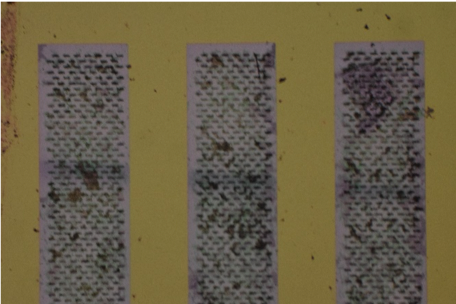

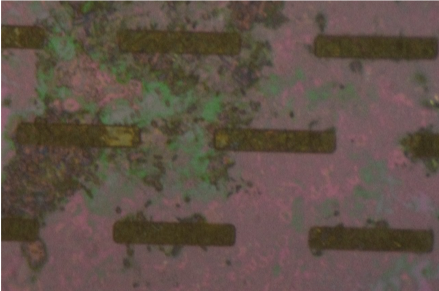
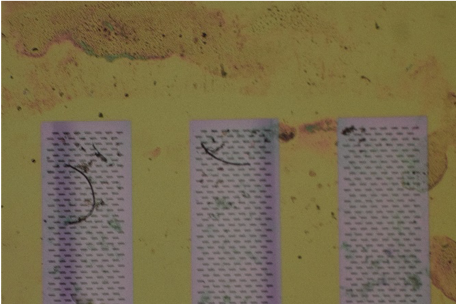
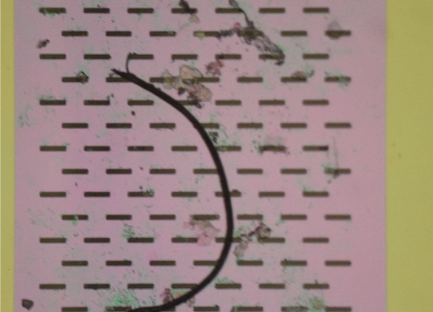

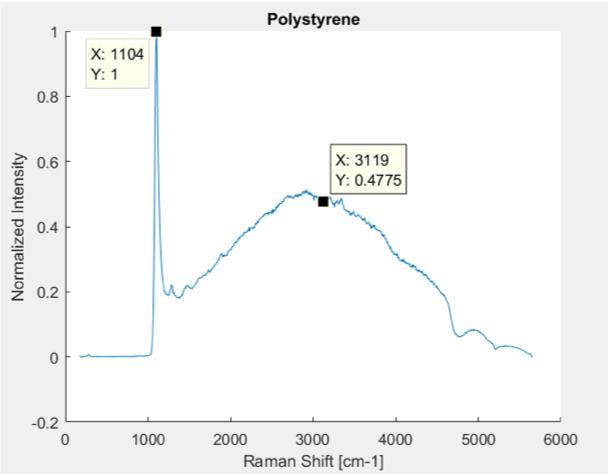
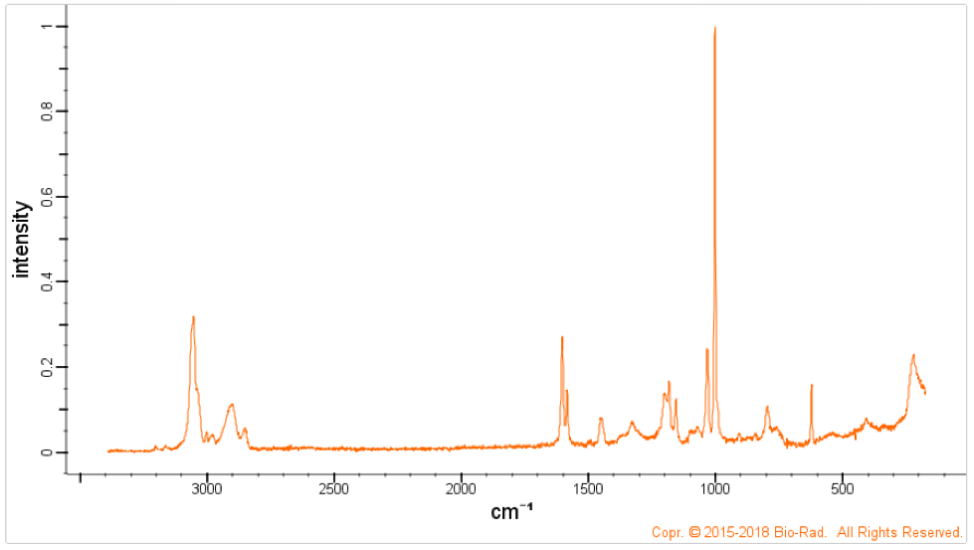
After BufferI am also working on getting these cleaned samples to RAMAN for analysis of the plastics on the filters. One issue I am trying to figure out now has to do with background signal during the RAMAN readings that I am seeing when analyzing plastics on the filters. The silicon membrane peak should not be anywhere near the peak for something like polystyrene, but when using the RAMAN there is signal in the same area as the polystyrene we are analyzing, giving a poor reading. One possibility is that this is from residual SDS which I am going to investigate on subsequent trips to the RAMAN to make sure of. I have included an example of the RAMAN shift we are seeing and that of pure polystyrene.