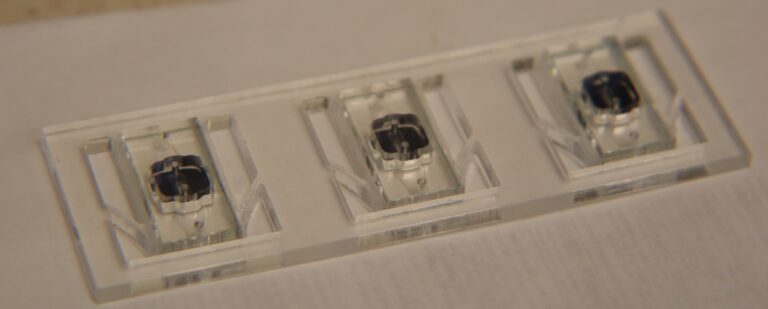
Update on ECM alignment mechanosensing and cell polarization using microporous membranes as masks
As a quick update on the ECM masking with Parylene membrane, we made changes to the device designs. Instead of relying on the peel-off process, we used a simplified design, with the membrane serving as the roof of the channels. Here is the latest design:
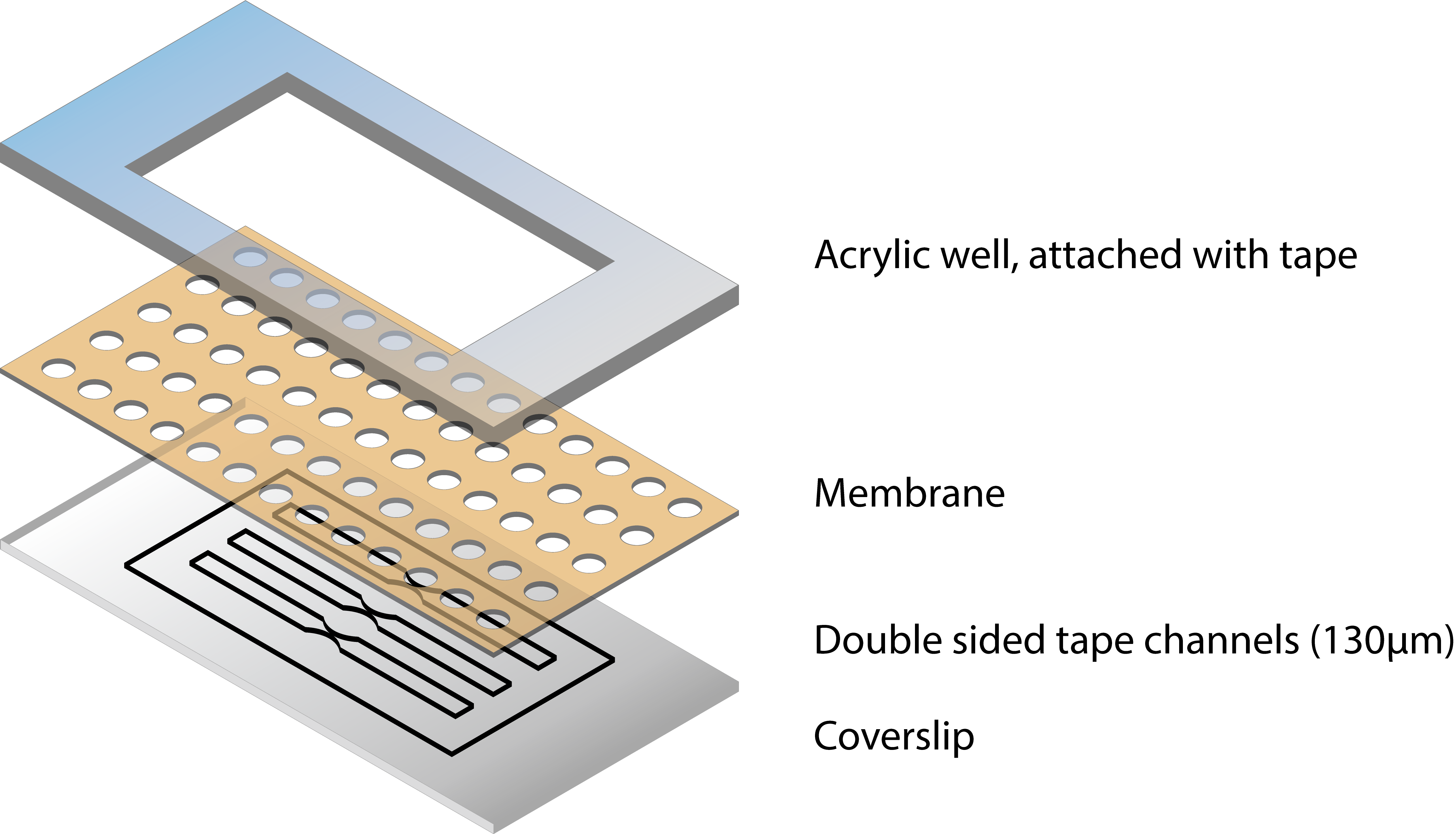
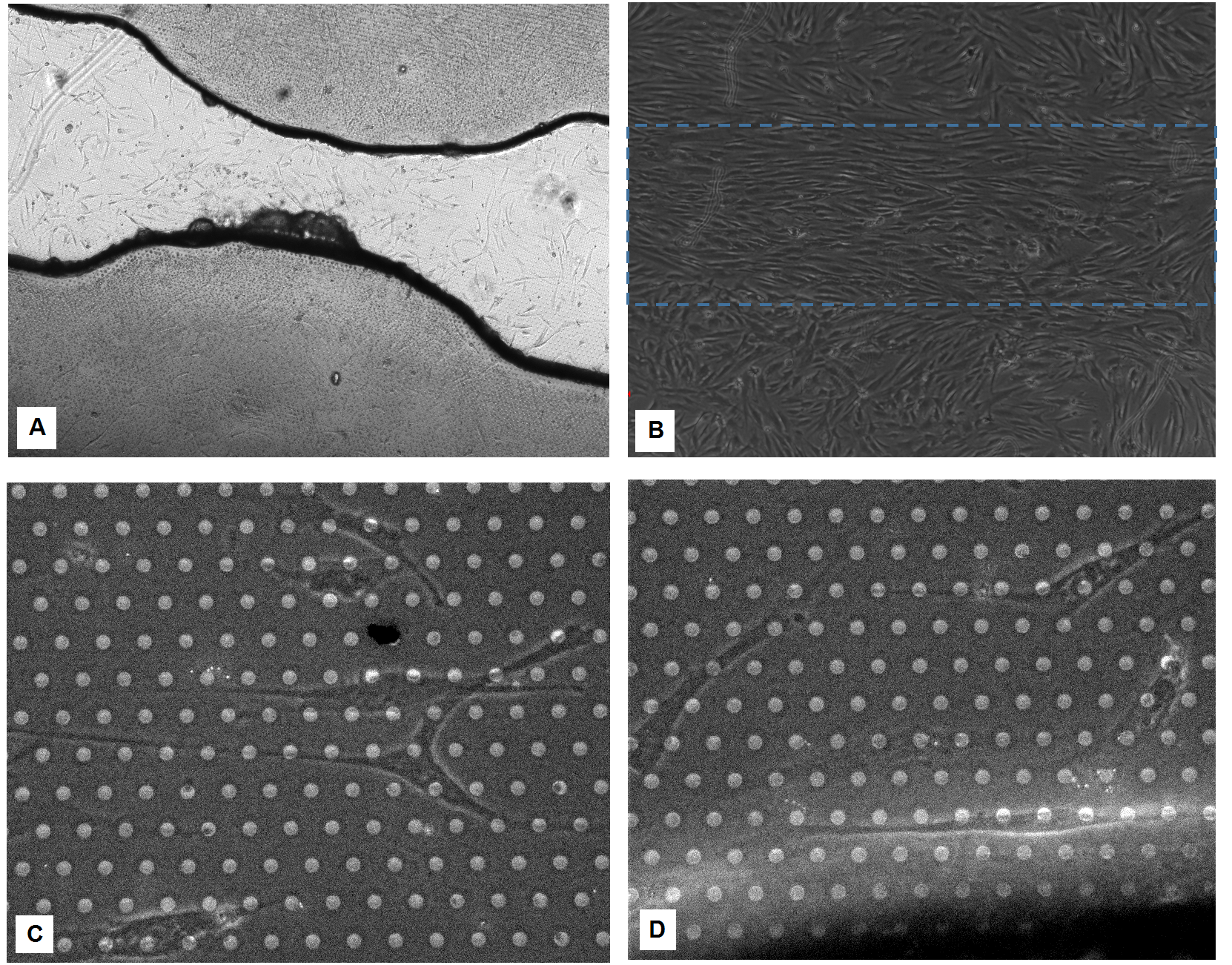
For these experiments we continued to use relatively low porosity membranes (8um pores with ~10% porosity) as we aim to test the limits of cell response to ECM alignment under masked condition. The design turned out to be almost perfect with minimal steps and complications. We used a relatively low seeding density of ADSCs on prepared devices. Here are some preliminary phase contrast images of the fixed samples after 24 hrs:
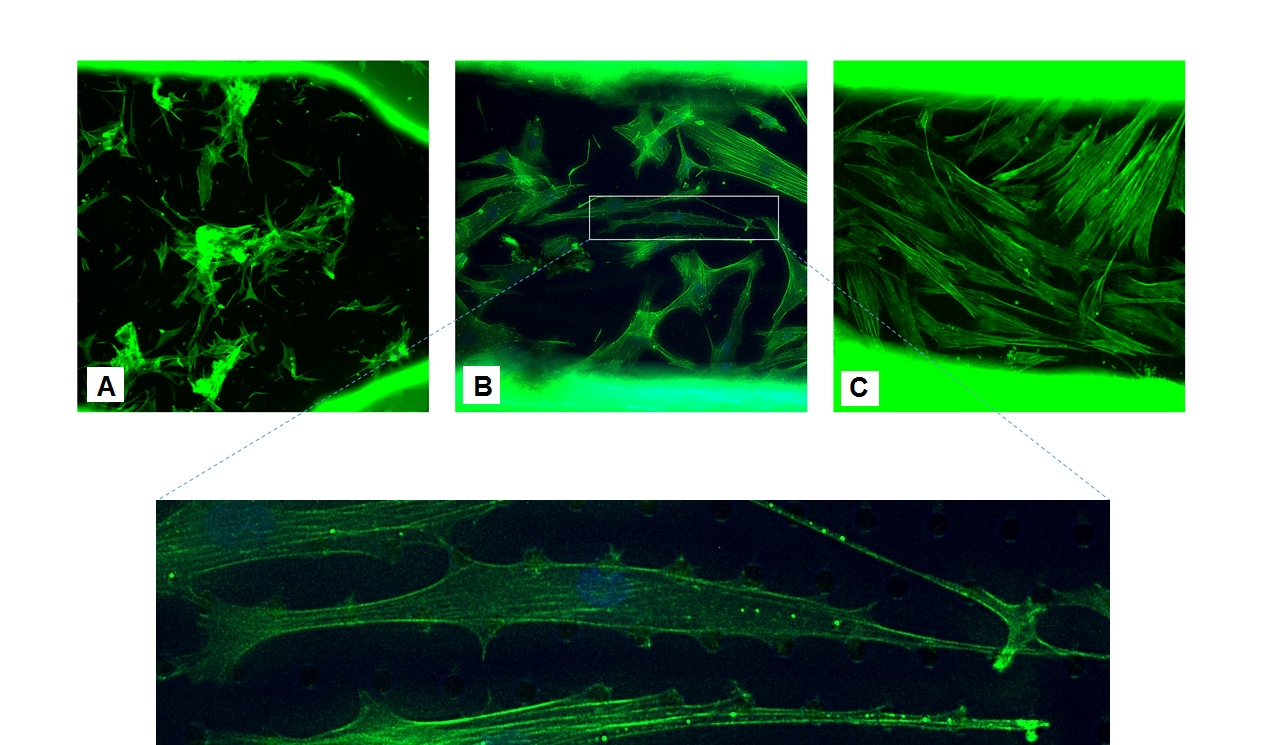
Cells were seeded on coverglass control, membrane control, aligned collagen control and masked ECM samples. After 24 hr, they were fixed and their nucleus and cytoskeleton were stained. Here are some of key takeaway images from these sets of experiments:
Future steps would be testing higher porosities, other pore sizes and using PLL-g-PEG treatment to render the membrane non-fouling, so that the cells only have the opportunity to attach to the unmasked regions.