Notes regarding the PDMS syringe needle stamp
My past devices that utilize a membrane to separate particles have been haunted by mysterious pieces of junk. The other day I took a moment to inspect the holes that are punched using a sharpened 16ga needle in order to mate capillaries.
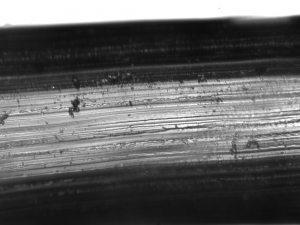
10x brightfield image of a punched hole, viewed horizontally
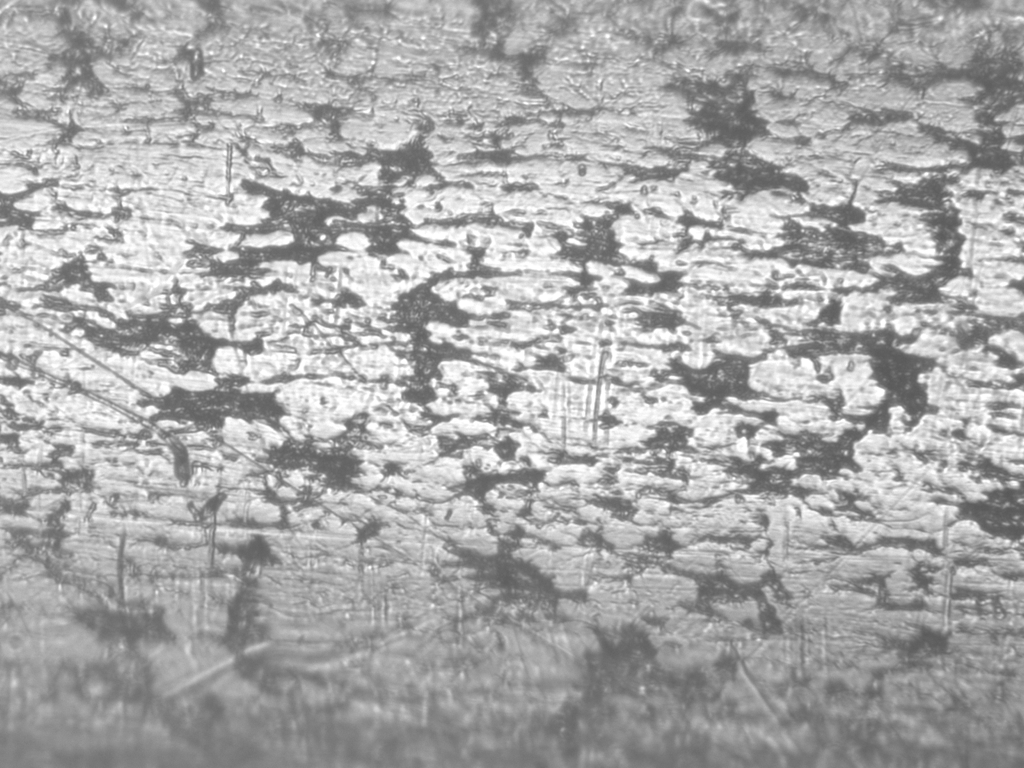
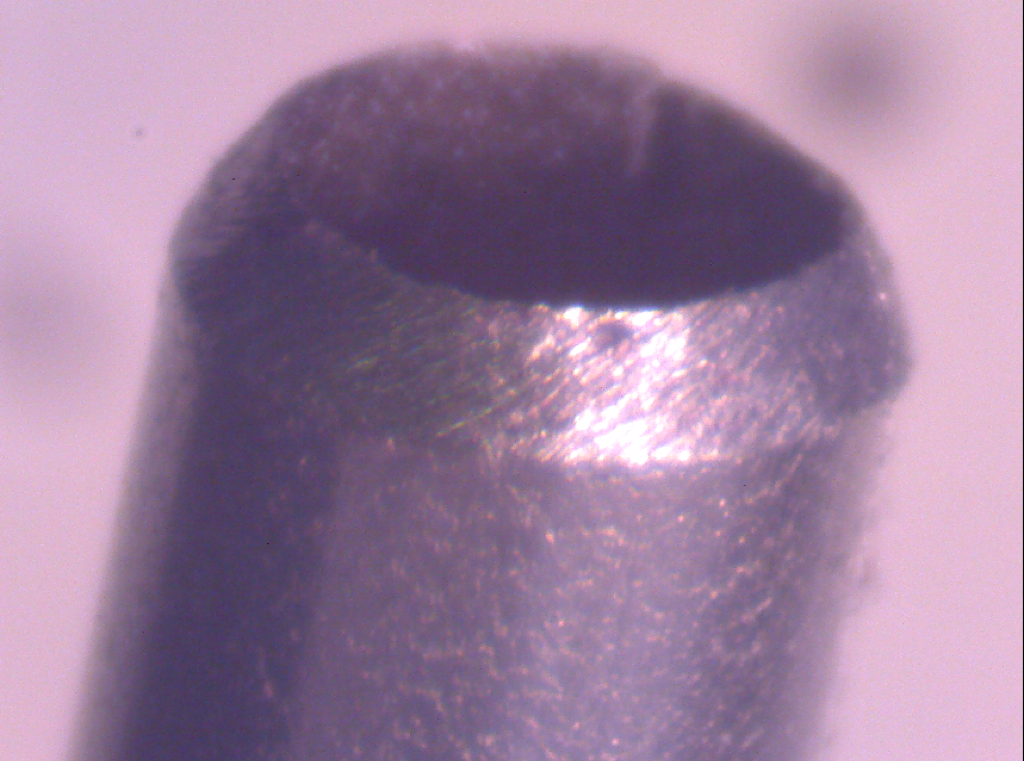
Left: 20x Incident light capture of the surface of the needle. Right: Unknown magnification shot of the filed syringe tip
Additionally, It is occasionally a challenge to insert capillaries into these punched holes without cutting into the walls of the hole. The edges left on the capillary after cutting are quite sharp. A solution to this problem is flame polishing all cut edges of the capillaries. Using the same handheld torch-style lighter that is used to make bends in the capillaries, a 2-3 second exposure to the cut ends is sufficient to polish them nicely.
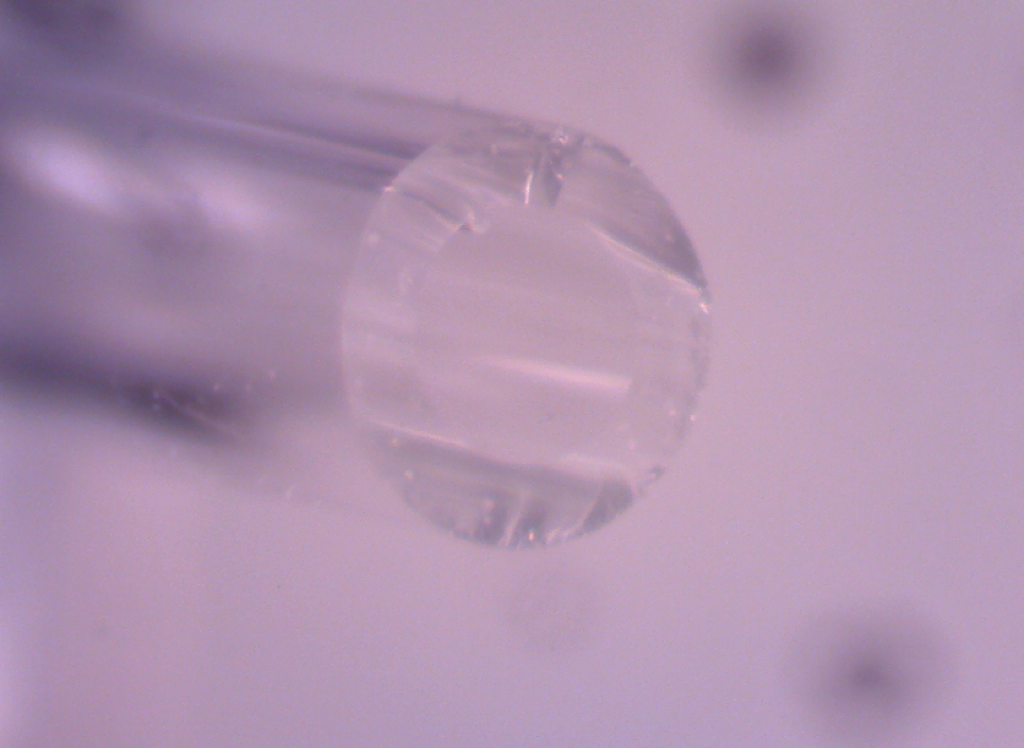
Left: Polished capillary end. Right: Unpolished, freshly cut capillary end.
I would suggest beveling the inside of the needle if possible. I’d try some valve lapping compound, or some other grinding polish, on a tapered rod and chuck the needle in a drill and go to town.
I will give that a try. My concern about an inside bevel is the core getting jammed inside the needle, instead of smoothly sliding within throughout the length of the cut. Also, the punch diameter would have to be decreased significantly to achieve the same diameter hole. Perhaps a double bevel would be best.