Similar Posts
XPS data on oxidized and surface treated NPN
Katia Lyubarskaya in Alex Shestopalov’s lab has been testing different surface conditions of oxidised NPN membranes. I’ve placed her data below. (We used chips from wafer 1070) We started by looking at chips that received different chemical/plasma/thermal processes to create an oxide layer. The thermally treated sample has a significantly higher Oxygen peak, but…
Sepcon vs Polished samples
In an effort to imitate Sepcon, I applied nail polish on two samples covering the edges and the back side (well side) and compared its discoloration to Sepcon format and w/o polish sample in 2D format. I used two polished samples in which I covered the edges in both but the back side was not…
Vapor Condensation Inside a Nanocavity
My recent work has focused on wetting the inner portion of an attocavity with isobaric cooling to create condensation. We are trying to attack the problem of wetting through the nanomembrane without breaking the membrane. A perfectly dry membrane will always rupture before the critical radius for wetting the backside of the membrane is achieved. To…
Initial silicon film density affects porosity
For the last three weeks, we have increased the substrate bias power from 25 W to 32 W (for both oxide and a-Si) to adress some film quality issues. I have found that it is “harder” to open pores in a film deposited at higher bias. Below are micrographs showing the difference in porosity for…
Impact of membrane thickness on EO
ByJimOne of the surprising results of Jiracai’s studies with thick and thin membranes was that the thicker membranes had a lower capacity to support back pressure than the thinner membranes he used (see table in this post). This is counter to our original expectation; Since we know that much thicker EO membranes can support 50…
Creating Unwanted Vacuoles in Endothelial Cells With Flow – Mossu et al – unpublished
ByBrittaVacuoles with pulling flow vs pushing flow This video shows an example of the first trials with the uSim flow cell (Tejas’ early versions) when creating laminar flow over a monolayer of BLECs – see Mossu et al, JCBFM 2018 – the issue we had to overcome was to avoid creating vacuoles in the endothelial…
3 Comments
Comments are closed.

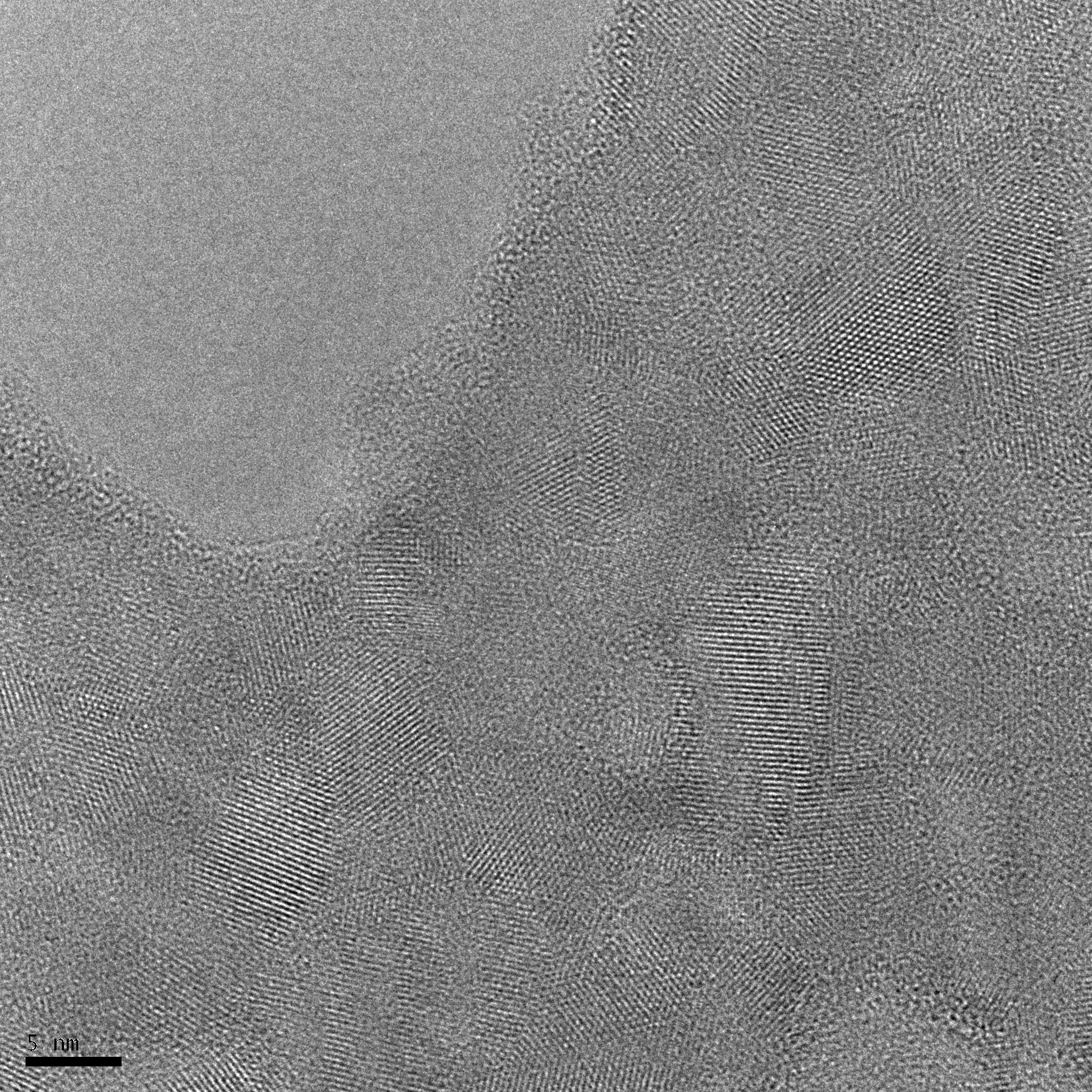
This is great news! The image is fascinating- there is no clear evidence for this amorphous phase here- and the apparent shape of the nanocrystals is very interesting- not at all spherical, it seems! Do you have more of these pictures? I think they can give us important clues on how the pores form.
Is the low throughput due to inexperience with the tool or is it the nature of the tool?
I agree, this material is highly crystalline. (On a similar note, Brian said that we need to be within +/- 0.5 degrees of the Bragg condition to see diffracting crystals.) I was only able to look at one sample today because it was the first time I touched the tool and we were being trained.
Throughput is limited on this TEM because you can only load one sample at a time (vs. two w/ Karen’s) and the pump time is significantly longer because of the higher vacuum requirement.