Magnesium Fluoride Burst Pressure Wafer #2
I was not entirely satisfied with the amount of data that I received from my last burst pressure wafer, so I processed another wafer. This wafer had some yield loss initially, as well as window sizes that were slightly smaller than expected (by about 50 microns). We expect the mechanical strength of the windows to decrease exponentially as the area of the window increases, so small windows that lose a flat 50 microns from their dimensions can have very different areas than what was designed.
Designed window side lengths (0.1, 0.3, 0.5, 0.7, 0.9, 1.1 mm)
Measured Window side lengths (0.05, 0.25, 0.45)
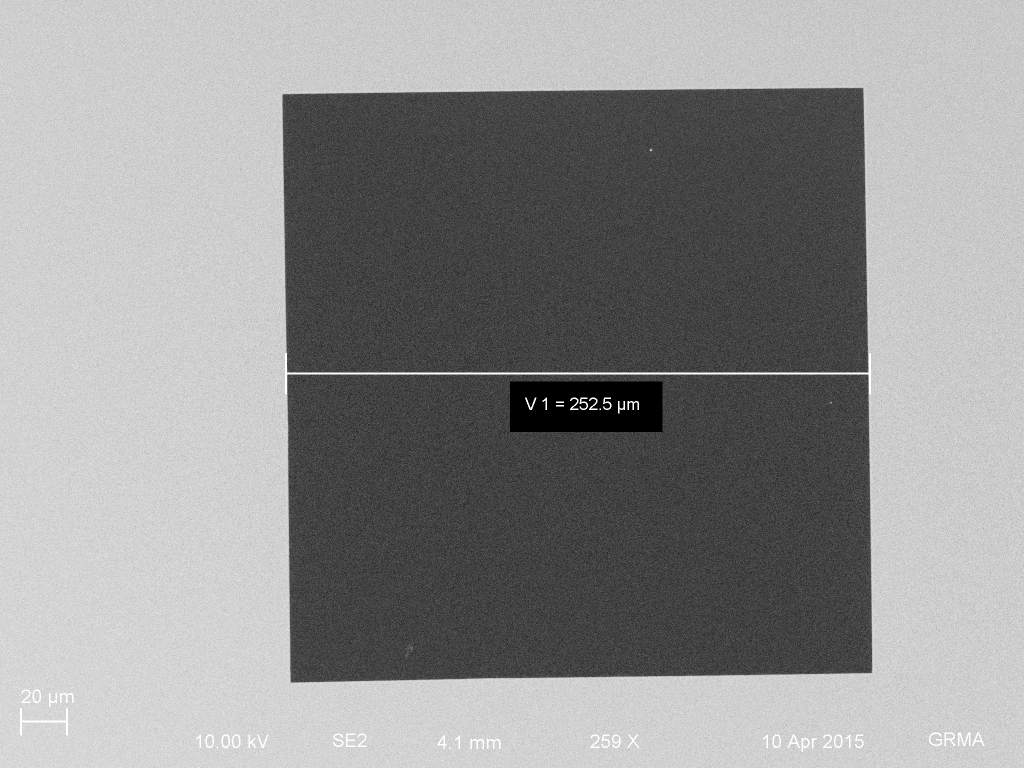
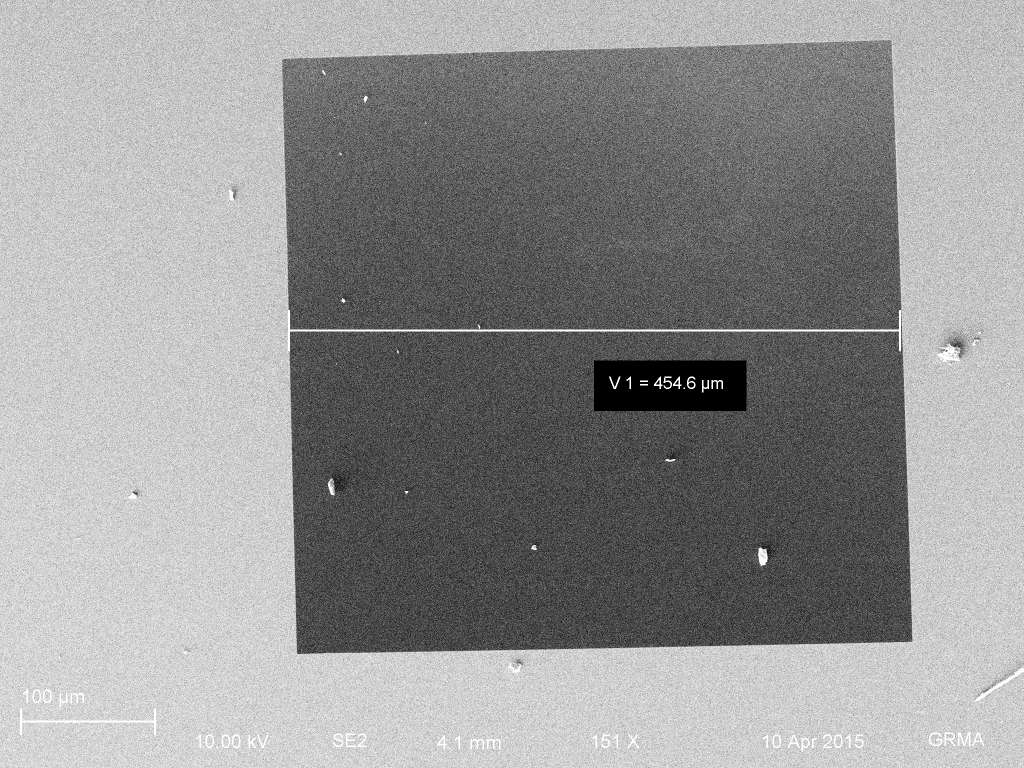
I processed my wafer similarly to what was done before in my previous post, with the major difference being that I broke the wafer up into quadrants to be evaporated.
- 4x 1/4th wafer evaporations
- 50 nm target film thickness
- 0.1-0.3 nm/s deposition rate
- 6 kV Power
- Platen Rotation
- 5e-5 Torr base pressure
- 3x 2hr, 600 C, 1 SCCM Ar anneals in 3″ tube furnace
- Chips placed onto silicon wafers
- 2 hr anneal time, 30 min cooldown before retrieval
- Insertion temperature below 200 C
- 6x CHF3/O2 etches.
- 5e-5 Torr base pressure
- 33 mTorr CHF3
- 2.5 mTorr O2
- 100 W
- 75-100 mTorr operating Pressure
- 60s etch
- at least 2 different window sizes in each etch
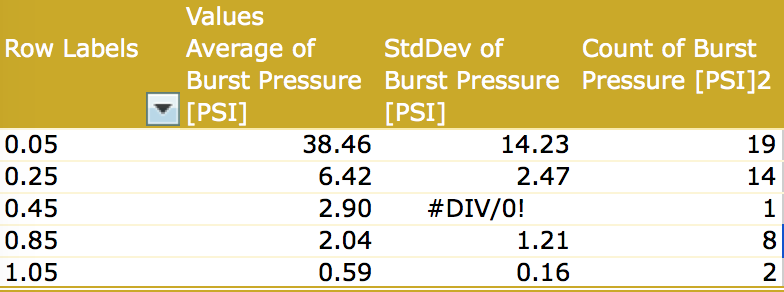
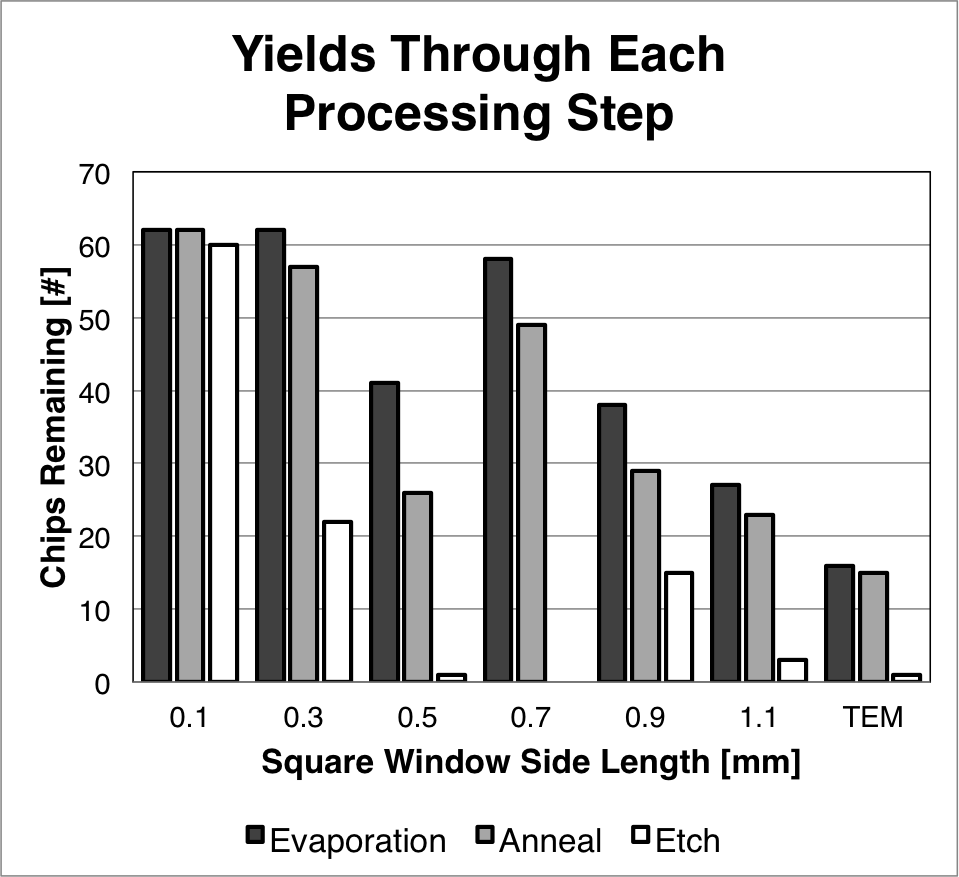
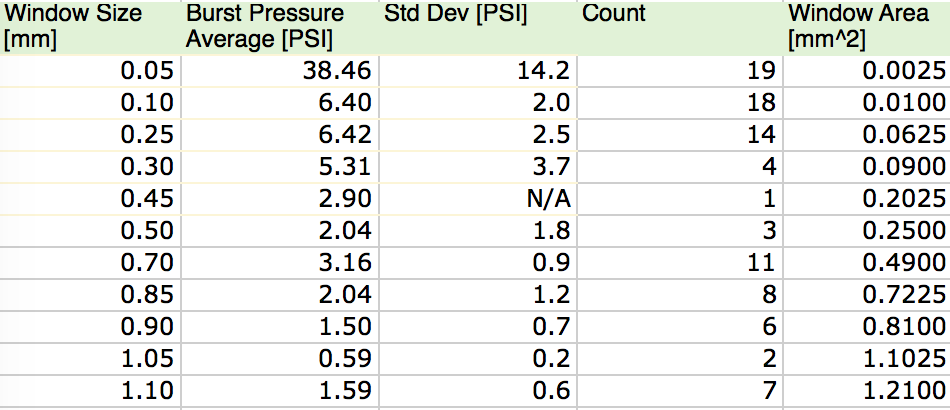
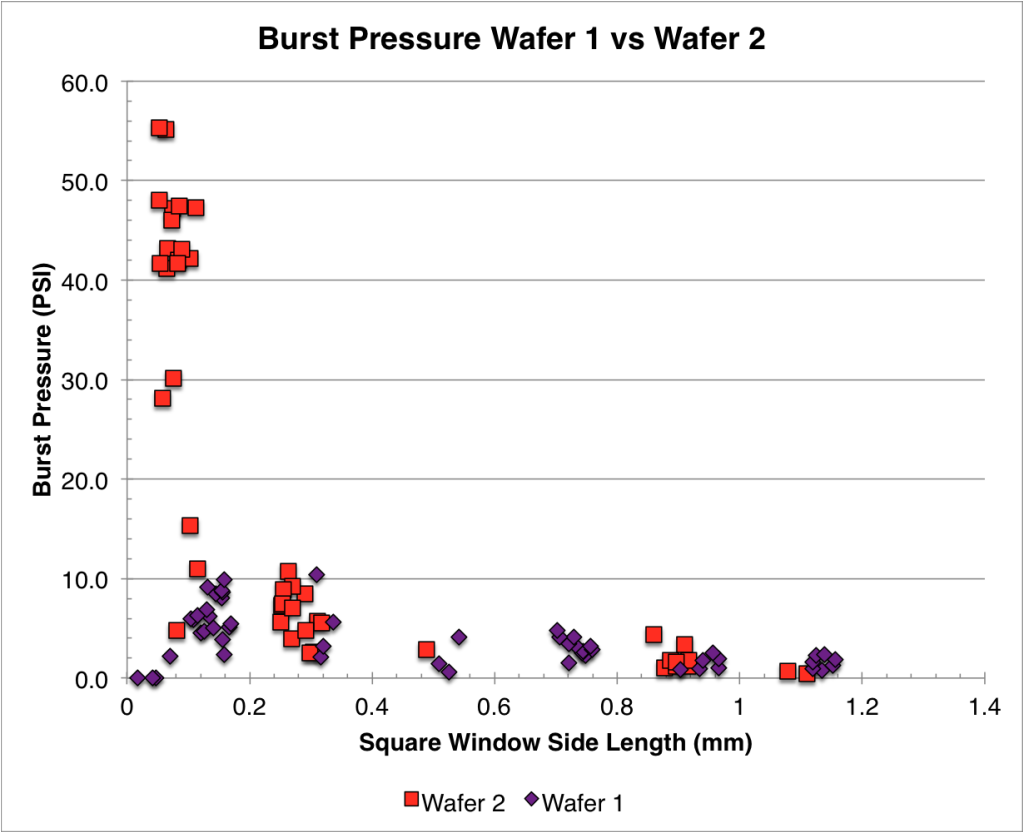
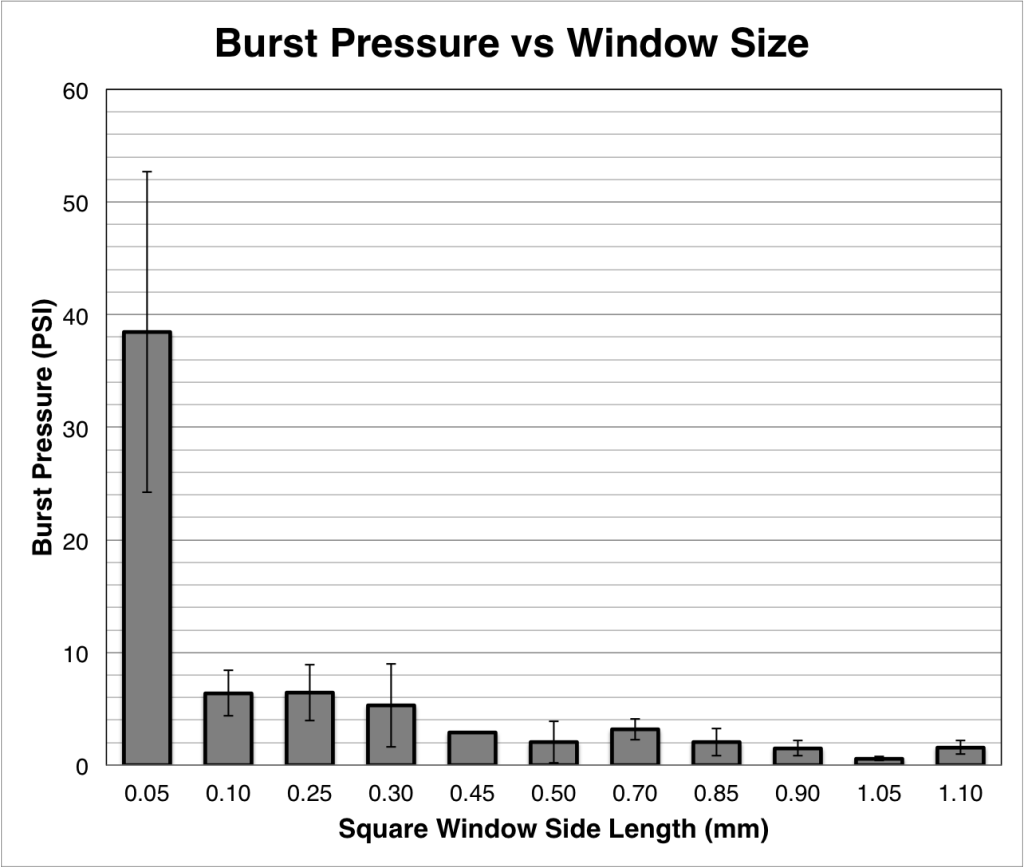
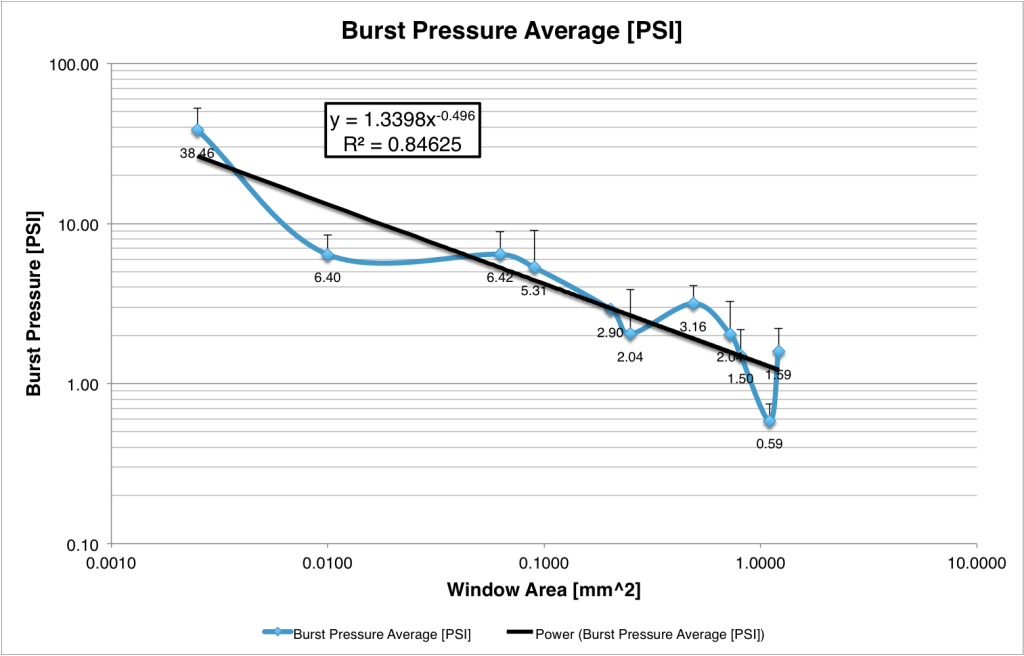
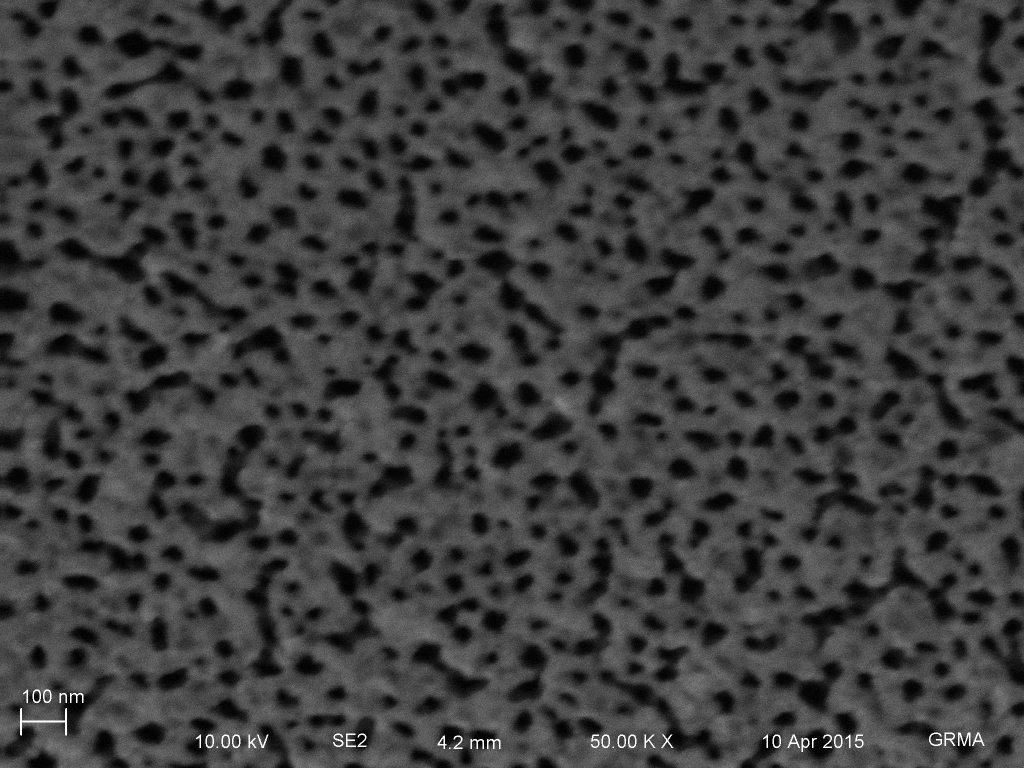
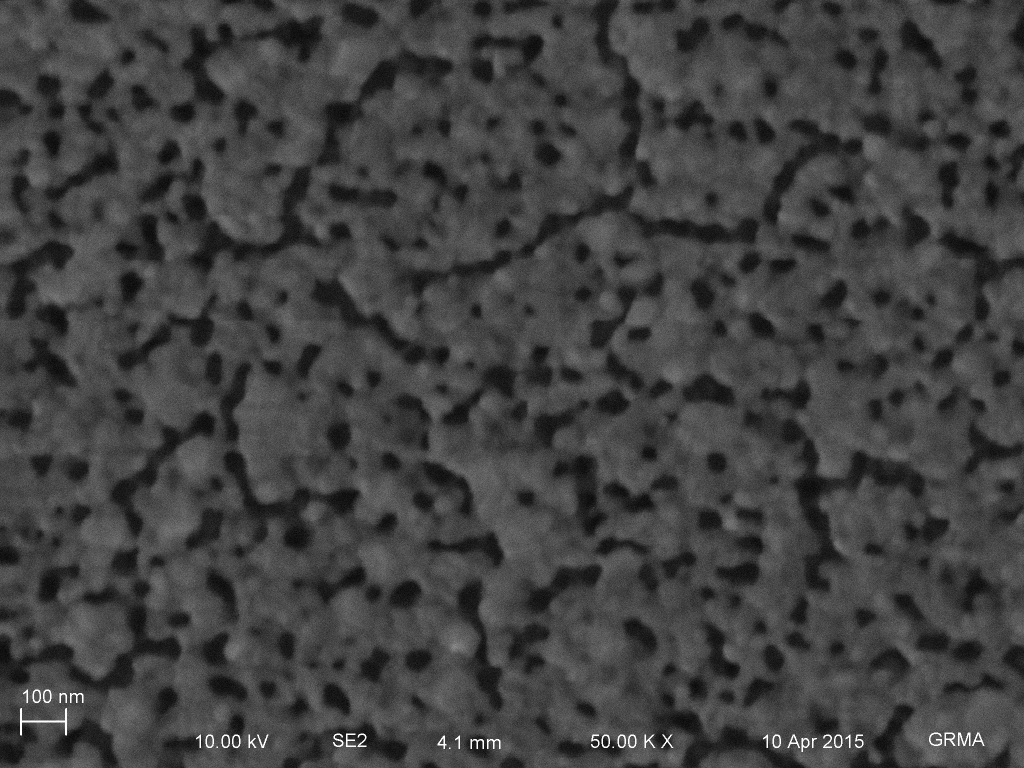
Overall, this run was very similar to the previous wafer (good). I am still puzzled by the very low yields for the middle window sizes (0.5, 0.7) as I would expect them to be stronger than the large window sizes. Moving forward, I will be tinkering with the etch more to improve the yield (lower power, longer) in future processing, but I have enough data to show some basic mechanical strength for my paper. Next up will be a repeat of my cytocompatibility study on the etched MgF2 windows (4x 0.85mm windows were reserved from this wafer).