Preliminary tests on Parylene-C membranes
As the first phase of my thesis, I have been working on parylene C membranes as potential easy-to-make thin polymeric membranes for blood brain barrier models following Dr. Carter’s works. The initial goal is to create membranes with different thicknesses with a reliable technique.
Method
First, the wafers are coated with micro-90 as a sacrificial layer for easier membrane lift-off. Then, the wafers are coated with parylene-C, which the thickness depending on the initial dimer weight and other coating chamber conditions. I have been using the parylene coater in RIT SMFL for several months, but the device has been having continuing issues. Then, they are coated with shipley photoresist. Then the photoresist is patterned with GCA stepper. Drytek RIE is used for etching parylene, which etches both parylene and photoresist and results in porous parylene membranes with the thickness of 500-850 nm.
Cell culture and staining
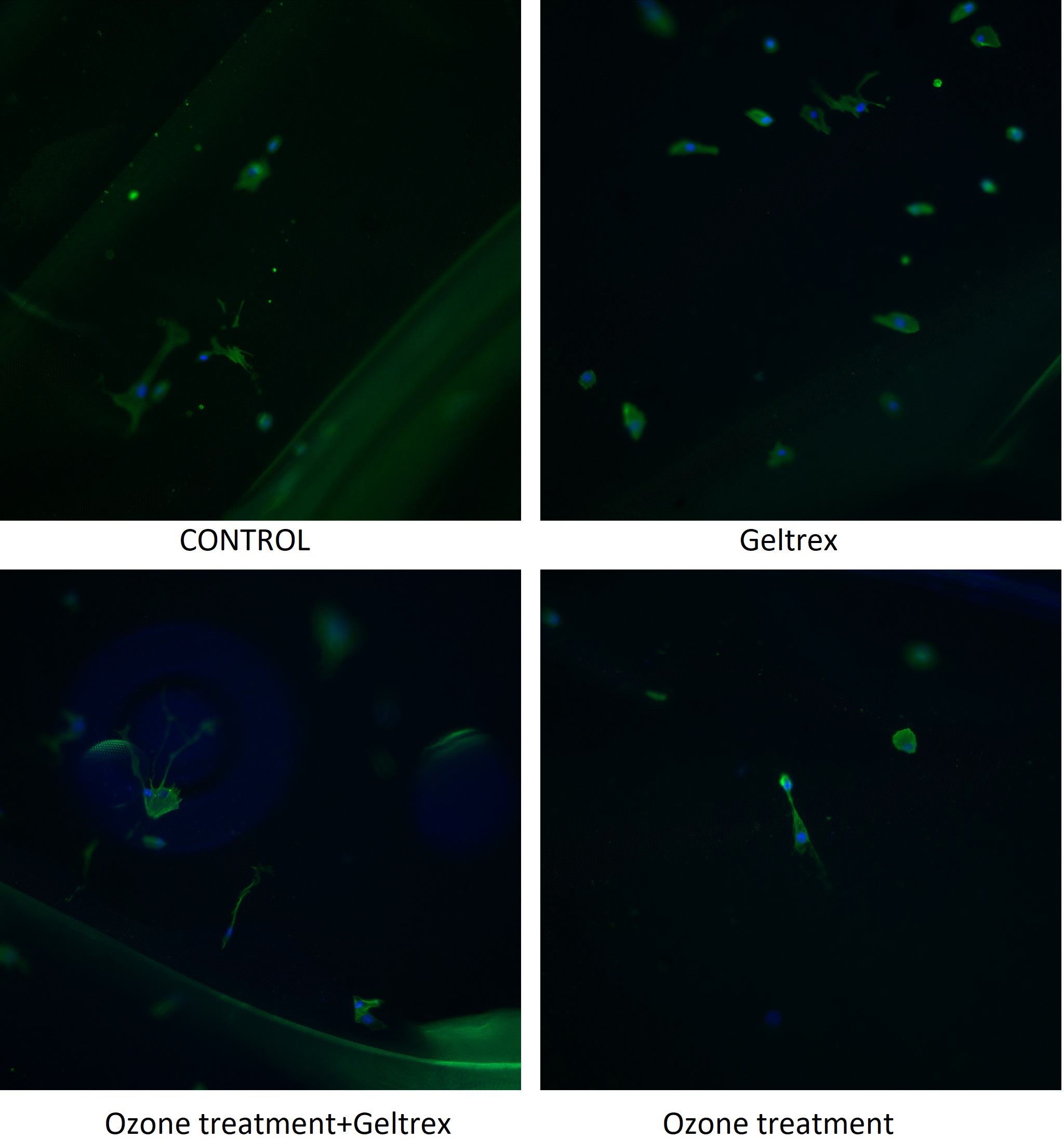
As the first step towards using these membranes for cell culture, ADSCs were cultured on these membranes under different conditions (Ozone treatment and Geltrex) and nuclei and actin staining were conducted on them. The results showed relatively good cell attachment and viability under all conditions.
SEM
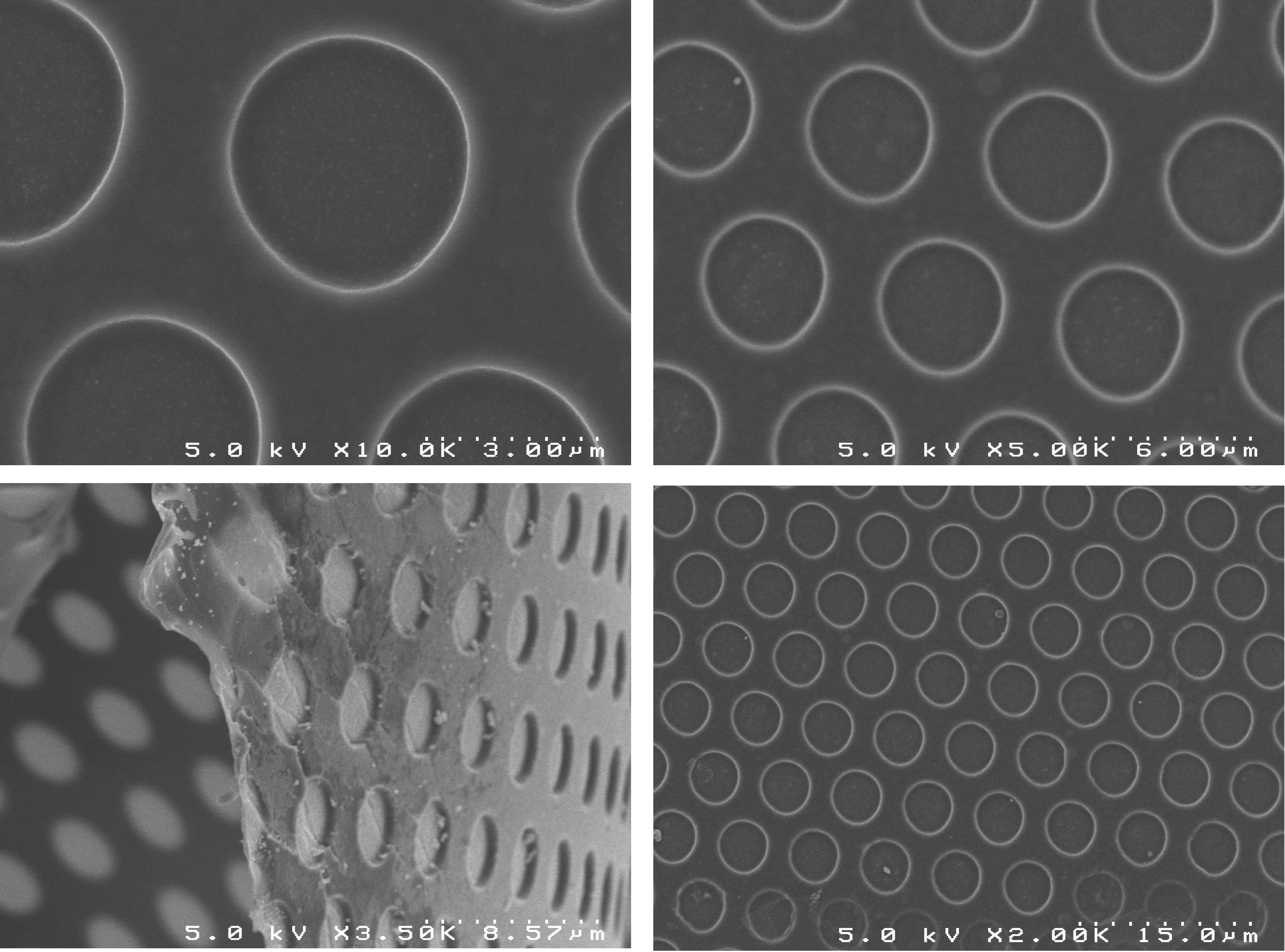
Due to concerns with etching rate and good pore pattering, SEM was conducted on these samples. The previous etching rate for parylene was obtained as 600 nm/min and the prepared samples were obtained under this assumption, but SEM and further experiments with Drytek showed that the etching rate was much lower in later samples and the pores were not etched completely (close to 400 nm/min).