Barcikowski separations
The samples of nanoparticles from the Barcikowski lab finally arrived after 9 days in transport. Regrettably, the ice pack they shipped with was completely dead, and it is possible that the samples were in some way ruined. After we received the shipment, I immediately ran a small amount of each sample in the DLS machine, and got size curves that did not look promising:
Sample 1- 7-10 nm bioconjugated gold colloid with peptide ligands in the supernatant:
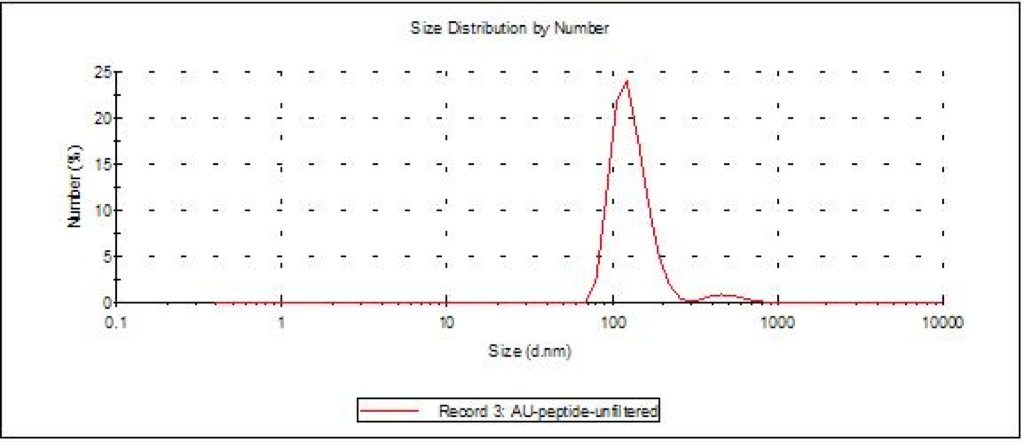
Sample 2- Bimodal gold colloids with fractions 7-10 nm and about 20 nm:
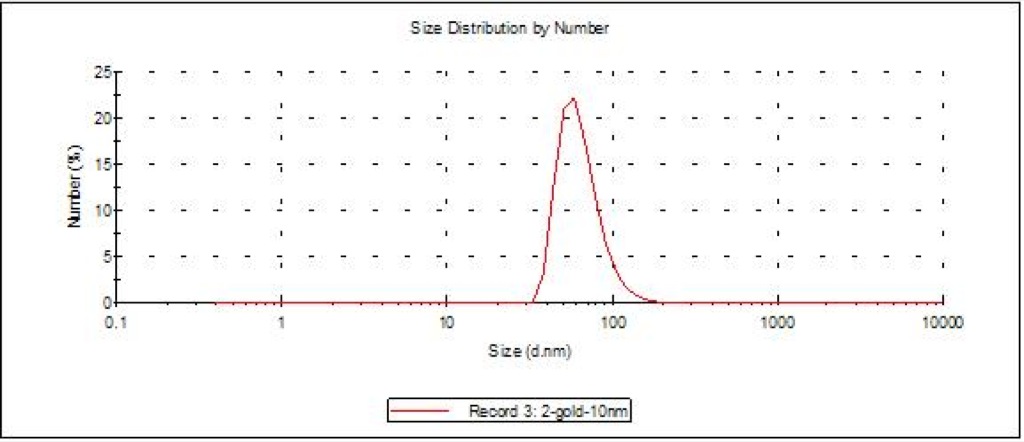
Sample 3- Monomodal gold about 10 nm:
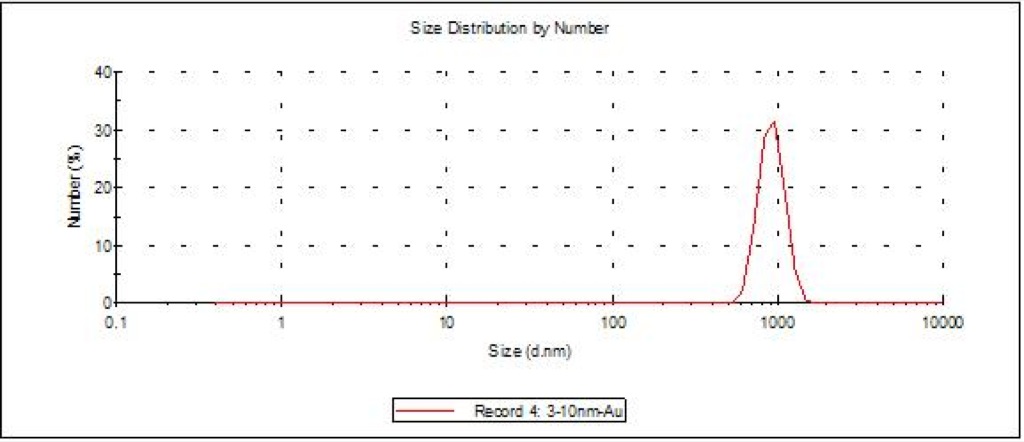
Sample 4- Polydisperse platinum NPs (4-40 nm):
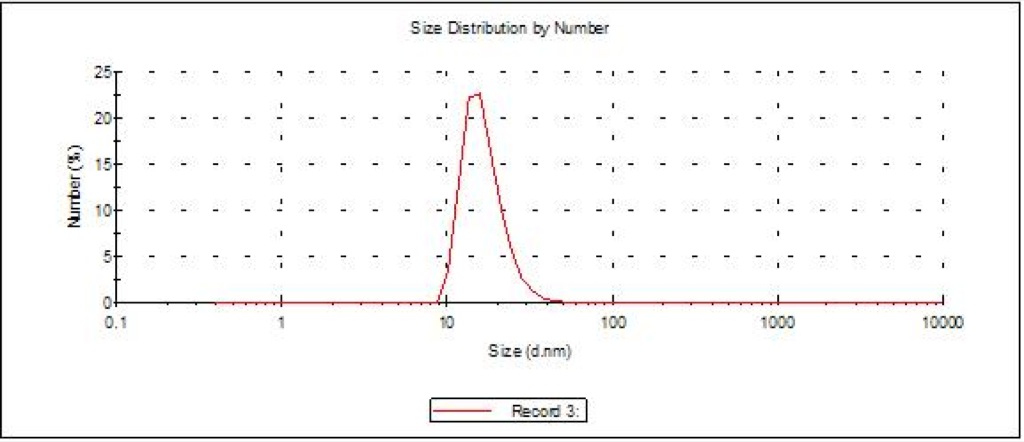
At first I thought that I was doing something wrong with the light scatterer, and rather than waste more of the samples from Germany, I decided to try running a DLS scan on a mixture of 5 and 15nm gold. I got a number distribution like this: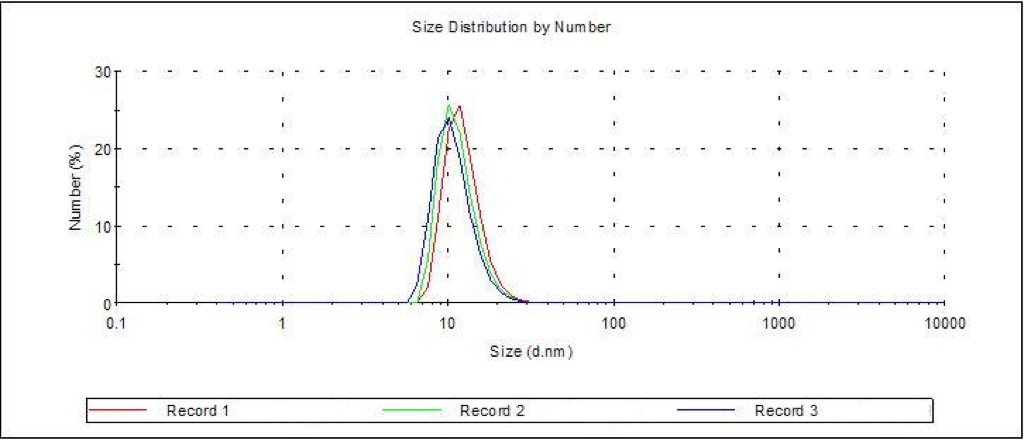
Which seemed to confirm that I was doing something wrong. But then I got in touch with Jess Snyder, who told me that what my graph was reflecting was the DLS’s inability to distinguish particles close in size.
The way the light scatterer works to find the size of the particles is clever. Imagine sunlight streaming through the windows of an indoor pool. Some of the light reflects off the surface of the water and makes an iridescent pattern on the ceiling. It makes sense that judging by the way the pattern of light on the ceiling was shifting we could infer the rough size of the waves on the surface of the pool that were causing the light to dance. DLS is analogous to this – variations in the brownian motion of different size particles causes the coherent light of a laser to form an iridescent pattern on the sensor, and judging by how the intensity of the patterns changes, the size can be back calculated.
Because the signal from a slightly larger particle is significantly greater than the one from a smaller, the larger particle’s behavior dominates the signal. Although 5nm and 100nm gold might be distinguishable, 5nm and 15nm gold should look more or less like 15nm gold. To confirm this, I scanned pure 5nm gold, and got this number distribution:
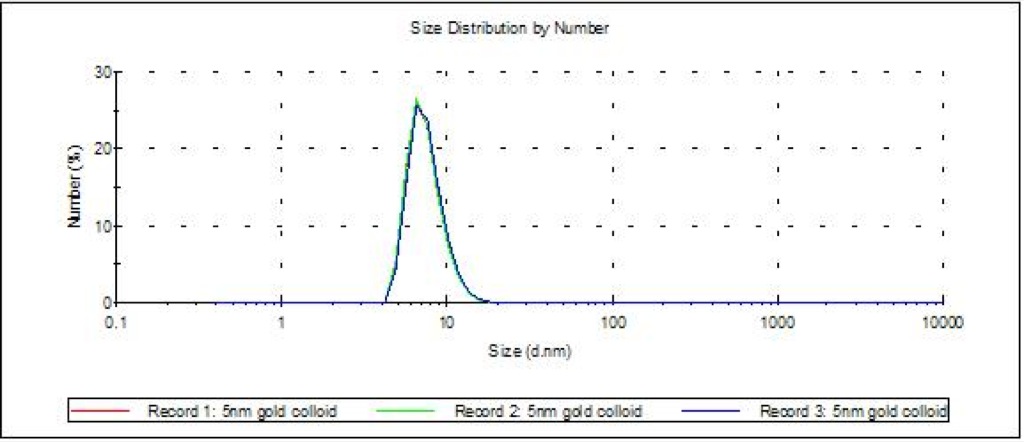
So I wasn’t using the DLS incorrectly.
Back to the original scans of the samples, what seems to be wrong is that there are actually larger particles floating around in the solution, particles large enough to be seen by the naked eye – something I failed to notice when the shipment came (highlighted in red in the image below)
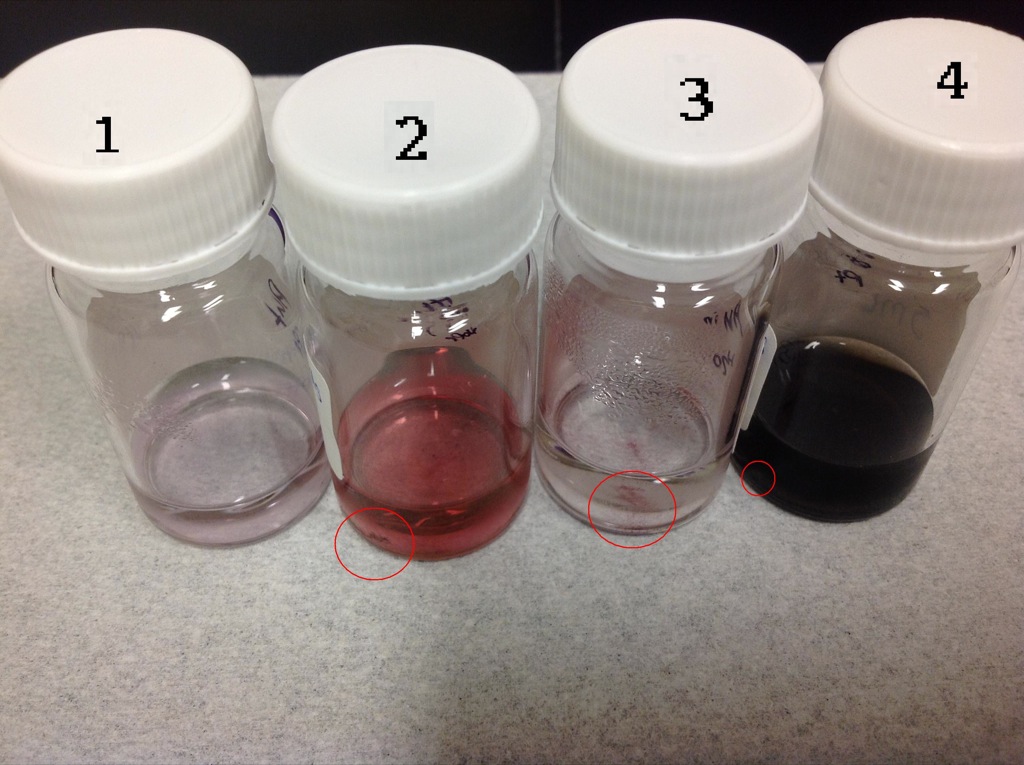
When I emailed this picture to the Barcikowski lab, they recommended shaking the solutions to resuspend them and offered to send new samples if that did not work. I tried to clean up the sample in two ways.
First, I vortexed sample #2 for 15seconds at power level 9. DLS gave the following number distribution graph: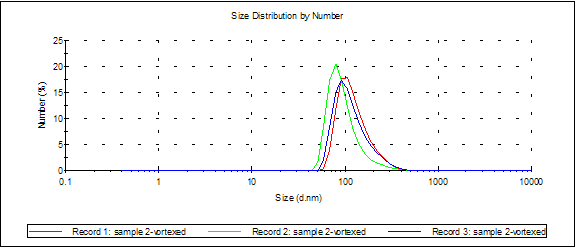
So simply shaking the sample won’t work. Next I tried spinning the solution down in the fixed-angle centrifuge for 10 minutes at 2500 rpm and leaving the pellet. That gave me a number distribution like this:
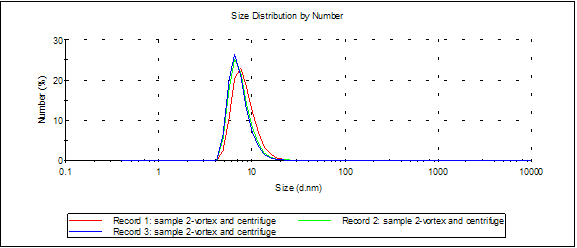 Which has a peak at 7.42nm. It seems like this might give us a solution pure enough to try out the separations.