Pieces of Tong
The ‘Tong equation’ for liquid flow through a nanosieve is
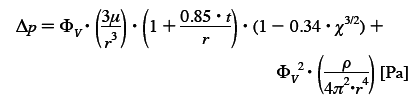
I refer you to the original paper for variable definitions (see page 285).
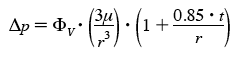
For the flows that we see, this will always simplify to the much simpler equation …
We can first appreciate that the factor
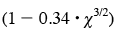
will be ~1. This term decreases with increasing porosity but only falls to 0.989 at 10% porosity. Since the Tong equation describes flow per pore and porosity does not show up anywhere else in the equation, this result effectively means that the the flow through an individual pore is not influenced by the presence of other pores for porosities values we have with pnc-Si.
Next we can appreciate that the second term on the right hand side
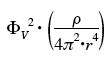
can always be neglected compared to the first term.
We can illustrate this if we compare the magnitudes of the two RHS terms for a membrane with 20nm pore diameters and 15 nm thickness as we vary the pressure between 0 and 50 PSI (recall porosity doesn’t matter so we can plug anything < 10% into the Tong equation and get the same result). Recognizing that each term in the Tong equation carries the units of pressure, the two RHS terms must add to the total pressure on the LHS.
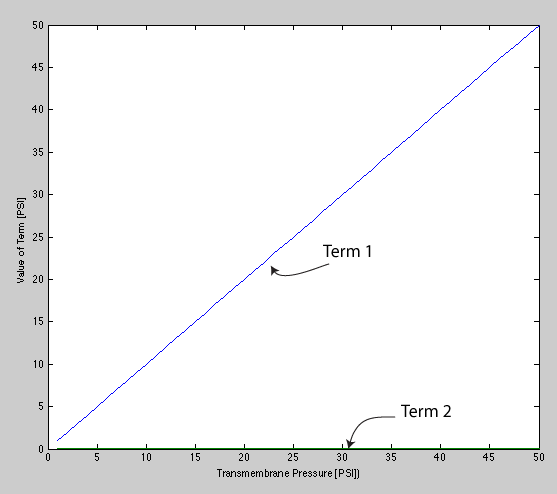
Clearly the first term equals the total pressure in magnitude and the second term contributes nothing to the equation balance. The second term does contribute more as the flow increases, but even if the pores are 100 nm in diameter and the pressure is 50 PSI, the second term only rises to ~1% of the first term.
The first term on the RHS is a viscous resistance term. Note this is the only term carrying the fluid viscosity. We’ll think more about this term in the near future.
The second term on the RHS is a kinetic energy term. We can see this if we recognize that the volumetric flow rate through a pore divided by the pore area is the average velocity through the pore. So the second term has the dimensions (mass*Velocity^2)/Volume – or kinetic energy per unit volume.
The LHS, or the pressure, has the dimensions of work per unit volume: Force/Area = (Force*length)/Volume.
So the simplification says that – for the pore sizes and pressures that we expect with pnc-Si – all the work done by the pressure forces in moving the liquid will be exactly dissipated by viscous resistance.
This is the equivalent of saying we expect low Reynolds number or ‘creeping flow.’ Remarkably, the velocities through our pores are very high (~ 10 cm/s). Still, technically this flow can be called ‘creeping’ because we can neglect the kinetic energy compared to viscous dissipation. The magnitude of the viscous term becomes so dominant because of its inverse forth order dependence on pore radius. I’ll elaborate on this in the next post.
If you read the Tong paper carefully you’ll see they agree with these simplifications. What they don’t make clear is that the equation that matters …
has nothing to do with them. It comes from …
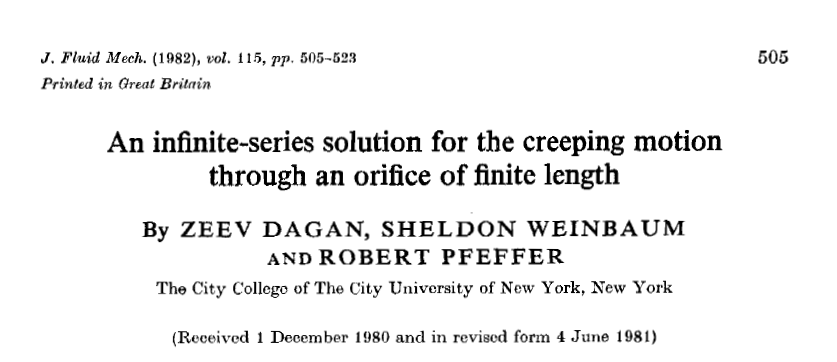
Actually they never cite this paper. They do cite another paper by the this same group and I suspect they meant to cite this one.
Next up we’ll think about the “Dagan” equation in some detail and compare it to the predictions of flow through a pipe.
I was looking for the original Tong paper and I couldn’t find it. The link is broken above, and although everyone talks about the tong paper nobody mentions it’s title. Can you fix the link or email me the article?
Karl – Here it is on the NRG Library under the ultrathin membrane topic.