Electrospinning aligned polymeric fibers on parylene stencils
The aim of this work was to electrospin aligned polymeric fibers on parylene stencils as means to characterize the critical necessary total area and necessary opening sizes to elicit endothelial cell response in the form of cell alignment among other characteristics typically found in human cells that are adjacent to highly aligned ECM.
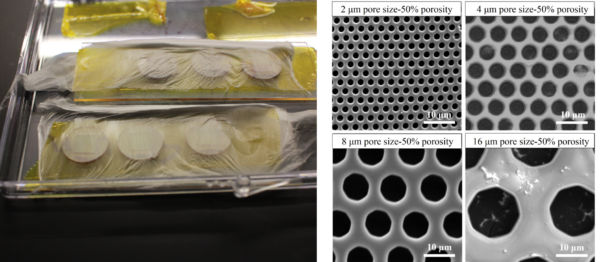
For this purpose and in order to gather pilot proof of concept data, we started by using high porosity membranes of different pore sizes, followed by electrospinning aligned PCL fibers directly on these membranes (Figure 1).
By optimizing the process and working relentlessly to overcome the problems associated with this process, we now have a reproducible process to obtain highly aligned fibers on parylene stensils.
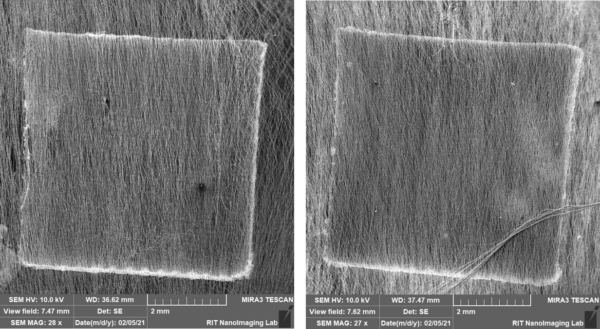
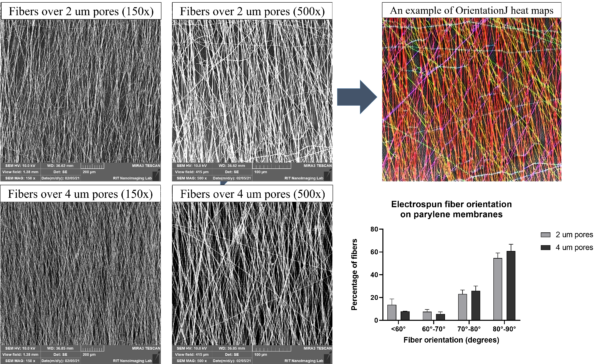
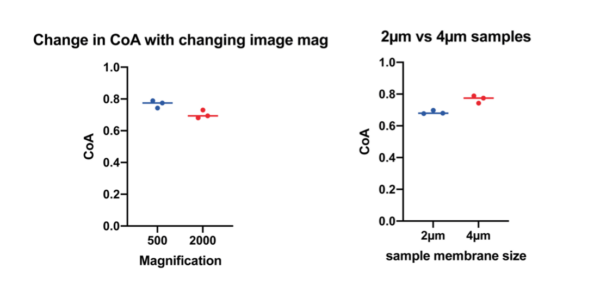
Using SEM images and different modules we characterize the fibers in terms of alignment and fiber length and width.
The next step is to culture HUVECs on masked aligned fibers, using aligned fibers with no membrane and unaligned fibers with no membrane as positive and negative controls, respectively. We will look into cell response in sparse and confluent settings. We have already seeded these samples and are expecting promising results soon.