Production from 2.28.08
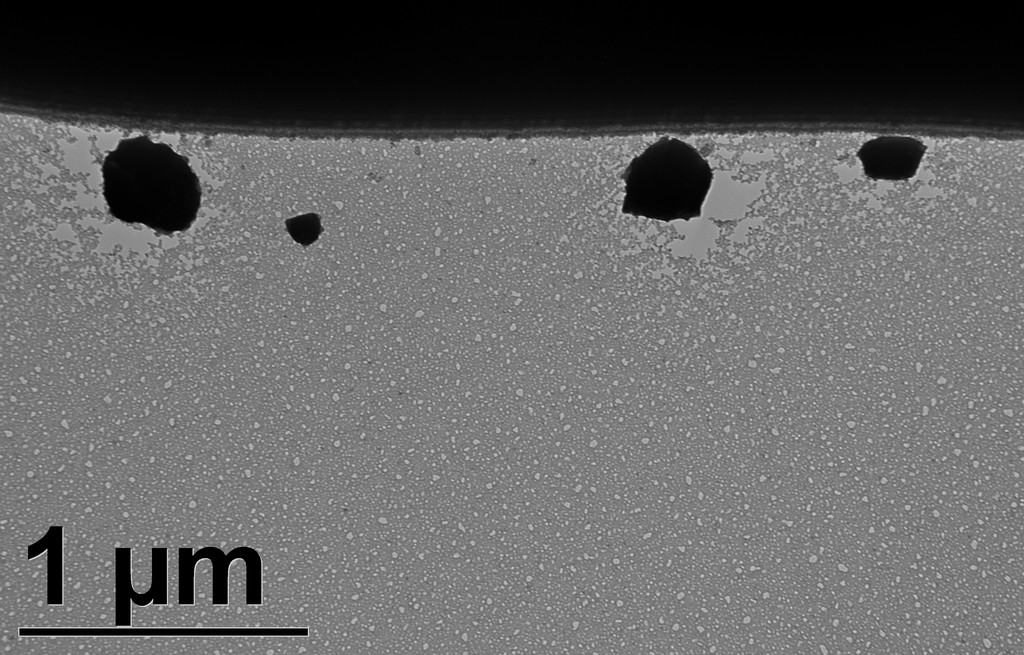
Production this week yielded mixed results. We ran eight wafers through four different RTP temperatures with/without the susceptor. We wanted to test our theory that temperature non-uniformity inside the chamber was causing the morphology change across the wafer. This proved to not be the case! Wafers that were treated with and without susceptor showed the same non-uniformity (smaller, less dense pores in the center; larger, more dense on the edge). The bit of good news is that our membranes have reached record porosity. We also see that the cutoffs are getting lower. Unfortunately, the dreaded “cigarette burns” have returned (although there may be a few samples in this set that are defect free). We’re almost certain now that our etch cell is the source of contamination. A new etch cell is under construction.
Here are the specs:
- 40 nm (sputtered) SiO2 / 15 nm Si / 40 nm SiO2
- 400 C deposition temp.
- Wafer 406: 1000 C RTP
- Wafer 407: 950 C RTP
- Wafer 408: 900 C RTP
- Wafer 409: 850 C RTP (tool malfunction, wafer toast)
- Wafer 410: 850 C RTP
- Wafer 411: 1000 C RTP w/ susceptor
- Wafer 412: 950 C RTP w/ susceptor
- Wafer 413: 900 C RTP w/ susceptor
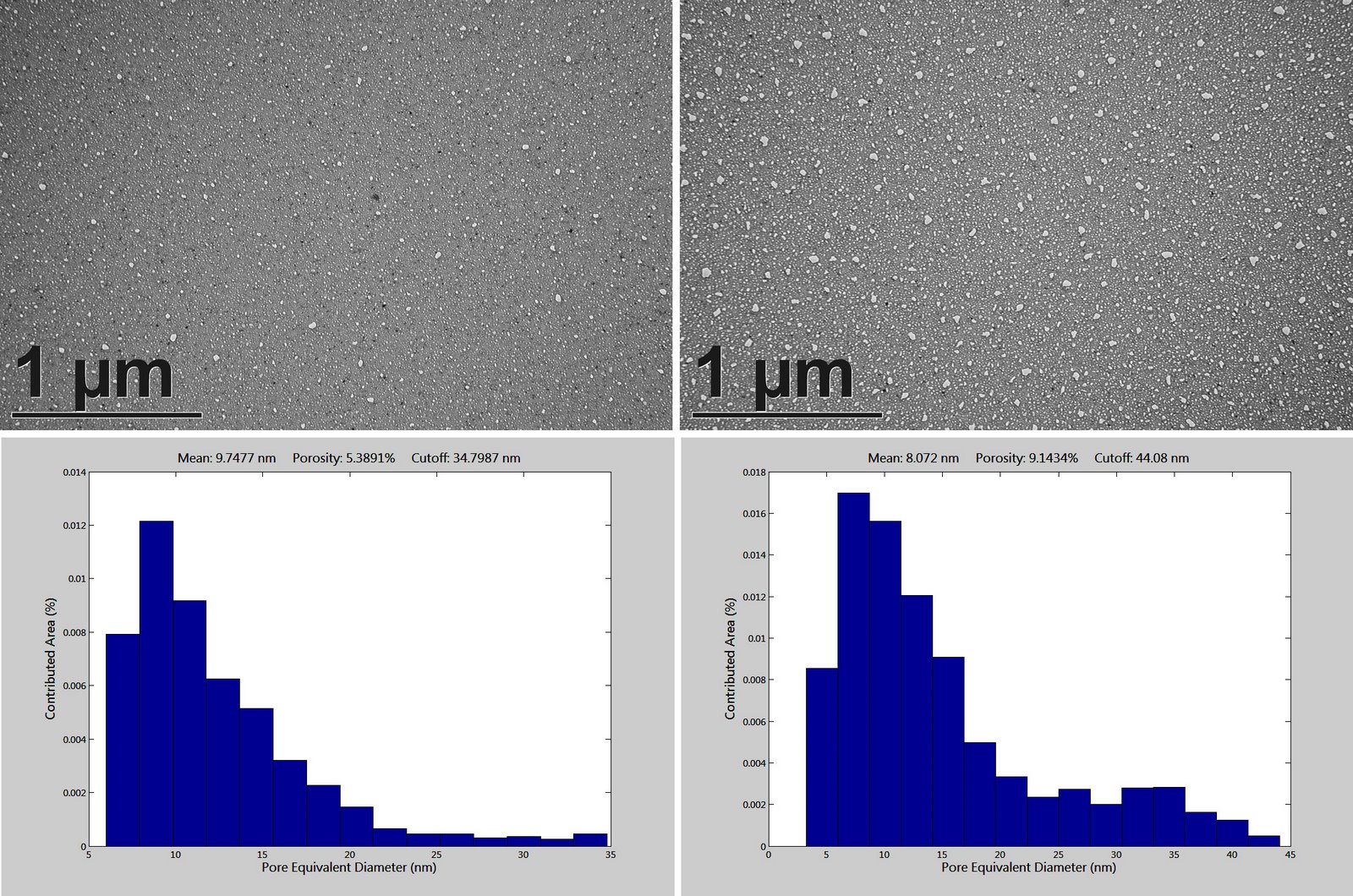 left (0,0) – right (-5,0)
Wafer 408 – 50kx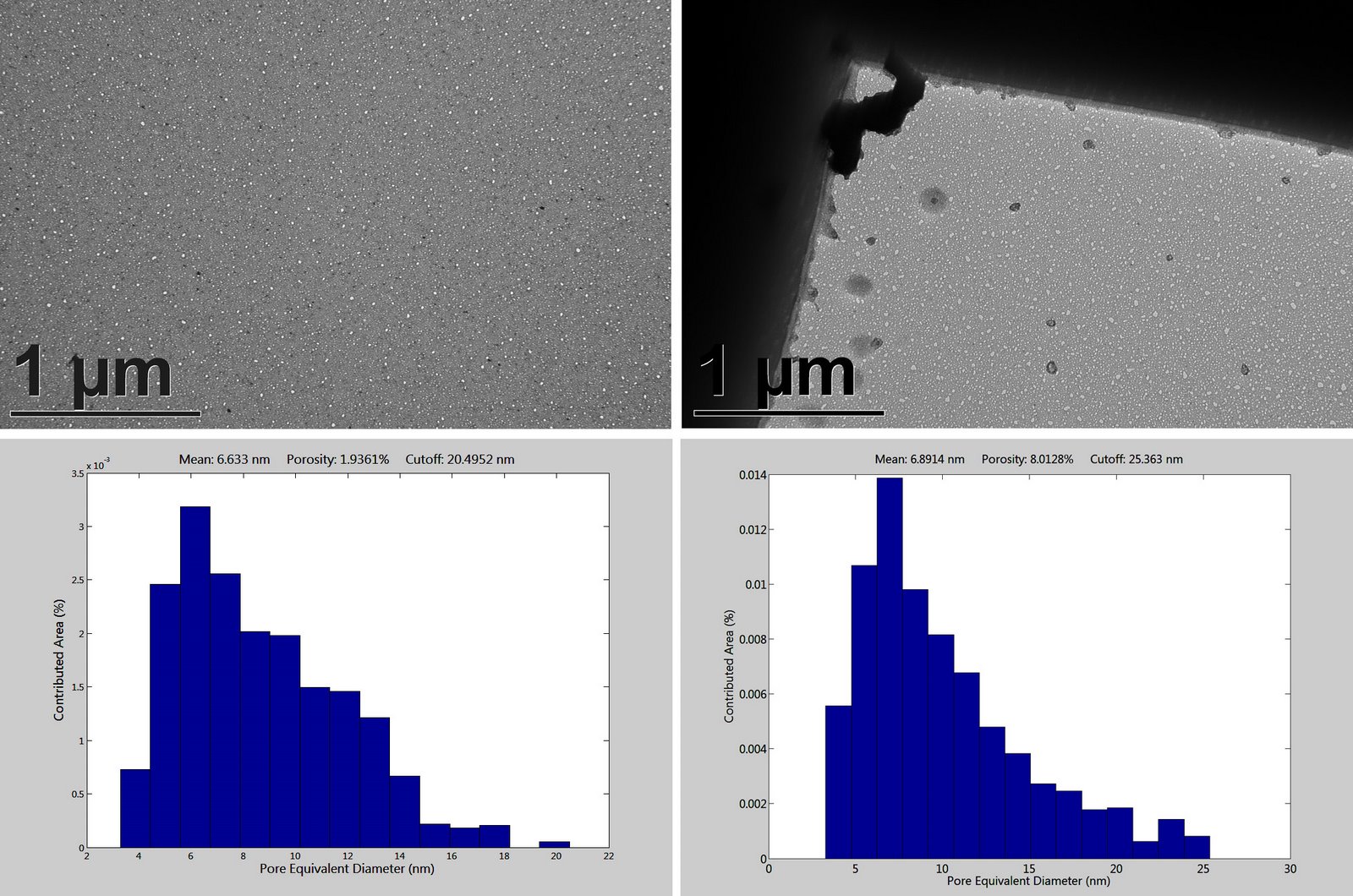 left (0,0) – right (5,0)
Wafer 410 – 50kx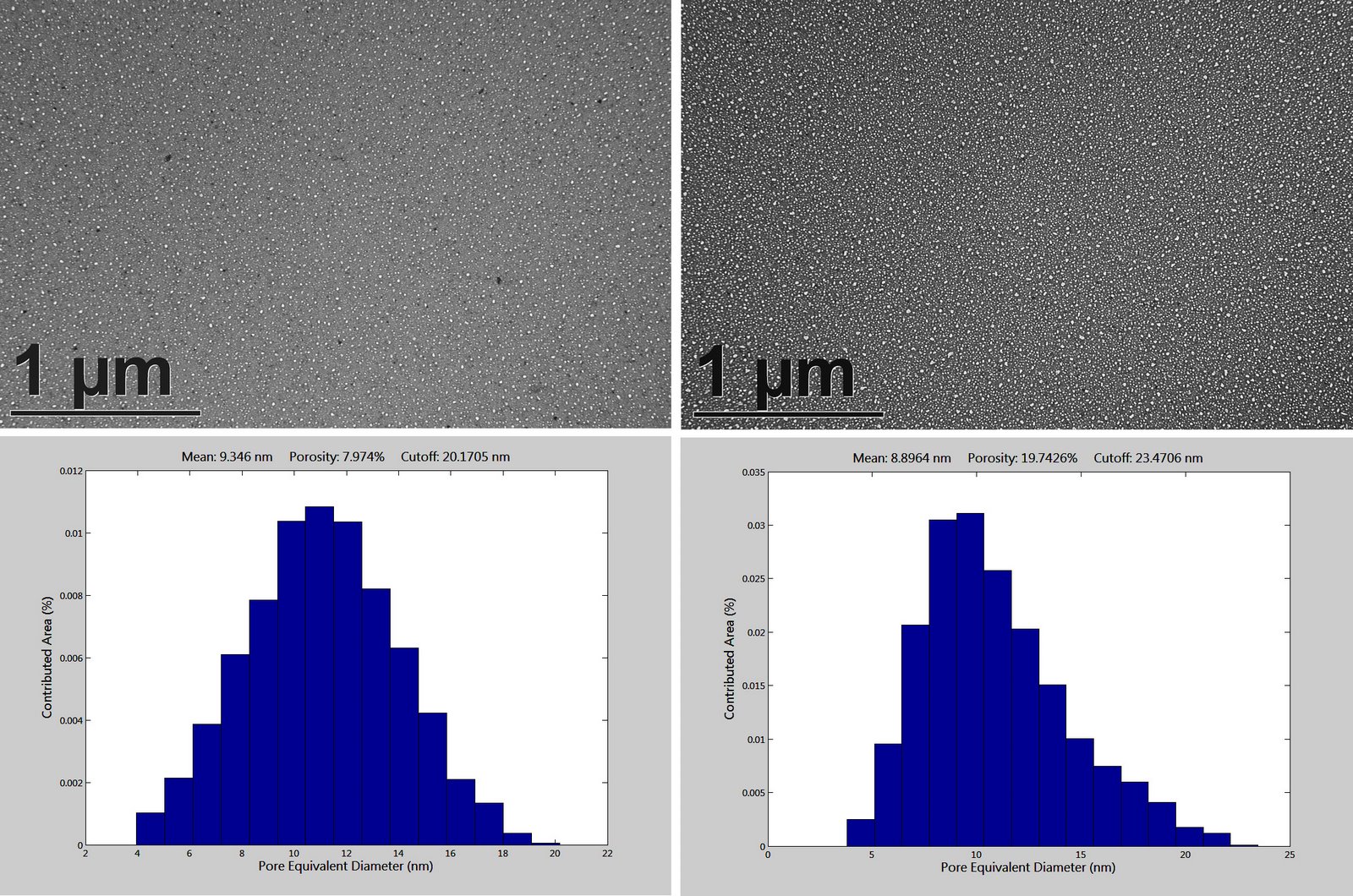 left (1,0) – right (0,5)
Wafer 412 – 50kx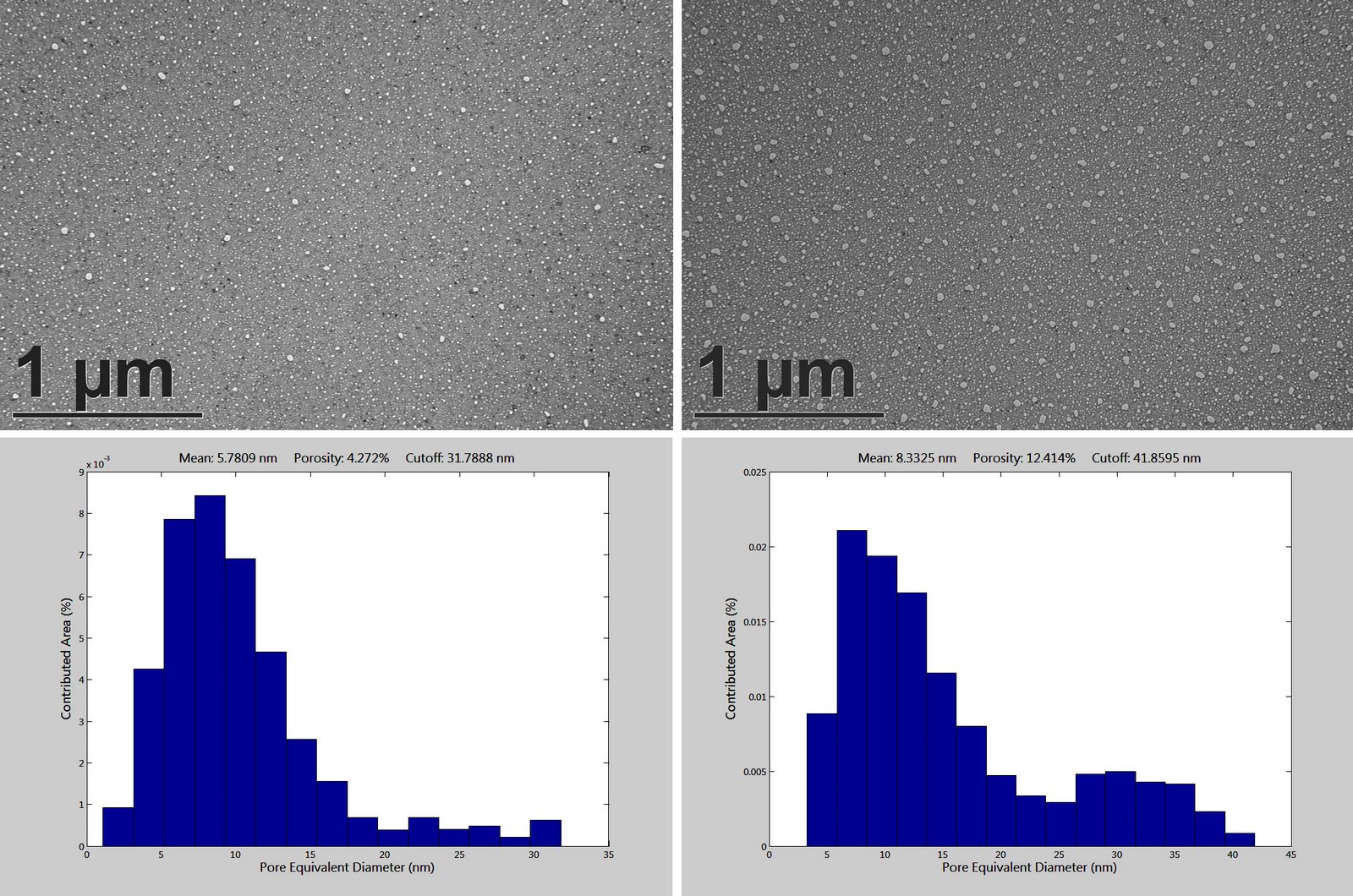 left (-1,0) – right (-5,0)
Wafer 413 – 50 kx left (0,0) – right (5,0)
Membrane devouring contaminant
It is clear that deposition at an elevated temperature is affects final membrane morphology. At high substrate temperatures, adatoms are somewhat mobile and can rearrange themselves. It’s possible that we start seeding crystallization in the dep. tool and finish the rearrangement in the RTP. We can make more of a direct comparison when the 1000 C RTP wafers have been etched.