BSA coating on pncSi (3D vs 2D)
I carried out a repetition of BSA coating experiment with both 2D and 3D formats. With 2D, I get the same result as before, but surprisingly, in Sepcon 3D format we observe the opposite to what we see in 2D! (can be seen in the figure below)
All the three samples with different BSA coatings discolored much quicker than the non-coated sample. (2D samples were imaged after 3 hours in oven, whereas 3D samples were in oven for 5 hours followed by overnight on benchtop.)
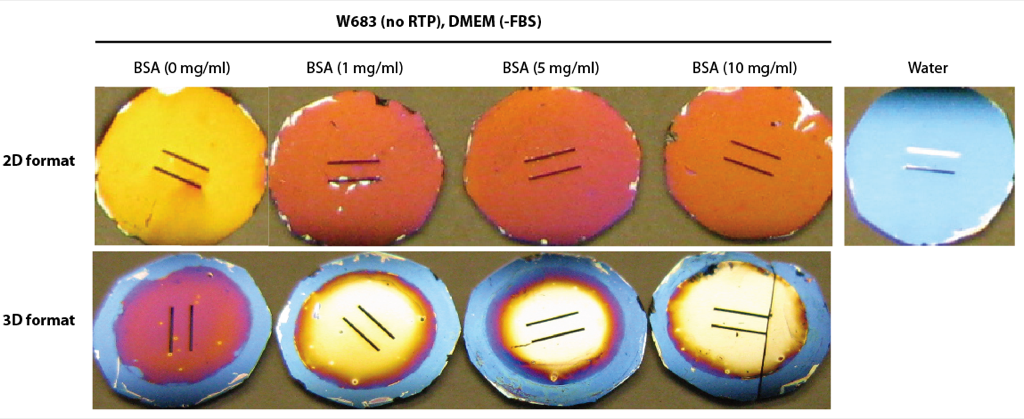
The above results make me think:
Does dipping the sample in BSA soln. and letting it rest on the floor for 30-45 mins coat both sides of the chip?
If not, then it makes some sense that there is discoloration in coated Sepcon samples. In 2D, there in one exposed surface (assuming the side resting on the floor to be barely exposed) and it is coated, whereas in 3D, there are two exposed surfaces and only one is coated. So discoloration can take place in both 2D and 3D. But then, why would the coated Sepcon samples discolor faster than the non coated one?
If yes, then there is somethiing about the Sepcon which prevents the components from media to attack the sample in presence of BSA. Remember, this media is serum free.
Frustrating. I imagined both sides were coated in the first version of this. I do think it is important to know how stable surface-modified membranes are in transwells, but I’m too tired to worry about how crazy effects come about in imperfect experiments. Redo and coat both sides please.
I will try coating both sides by keeping the chip suspended in the BSA solution, but I think there will still be few spots (where grease will be present to provide support) left out. I mean, it might be an imperfect coating. I feel, leaving the sample in the solution for 35-40 mins flat on the floor could coat both sides.