BSA/DDM Separations Using Treated/Untreated SC269
The last post I made about the BSA/DDM separations using “treated” and “untreated” SC269 samples explained a problem I was having in which the initial retentate drop was diffusing around the edge of the sample chip. It seems that SC269 is naturally more hydrophillic than SC267 therefore when “treated” it becomes so hydrophillic that the 6uL drop is able to spread to the edge of the chip and make its way around. I suggested using a smaller volume sample (3 or 4uL) but when I tried this I got the same result. On Friday I set up another diffusion experiment except this time I used vacuum grease to create a ring around the top side of the “treated” chips samples. This appears to have prevented the sample from leaking over the edge.
The diffusion experiment that I set up on Friday was a matrix in which I again tested “treated” and “untreated” SC269 samples against diffusion of BSA and DDM. 6uL of sample was placed on the top (well) side of the chip while 60uL of DI-water was placed on the backside. The experiment was allowed to sit over the weekend and I collected and analyzed the filtrates this morning.
DDM Analysis:
Both the “treated” and “untreated” SC269 samples remained intact after being run with DDM and in the case of the “treated” sample it appeared that the ring of vacuum grease prevented leaking.
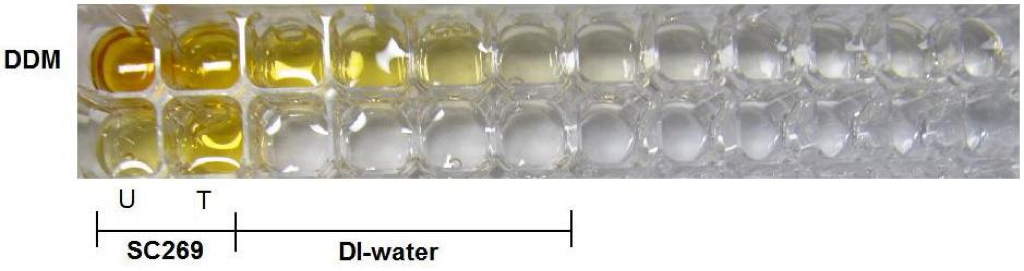
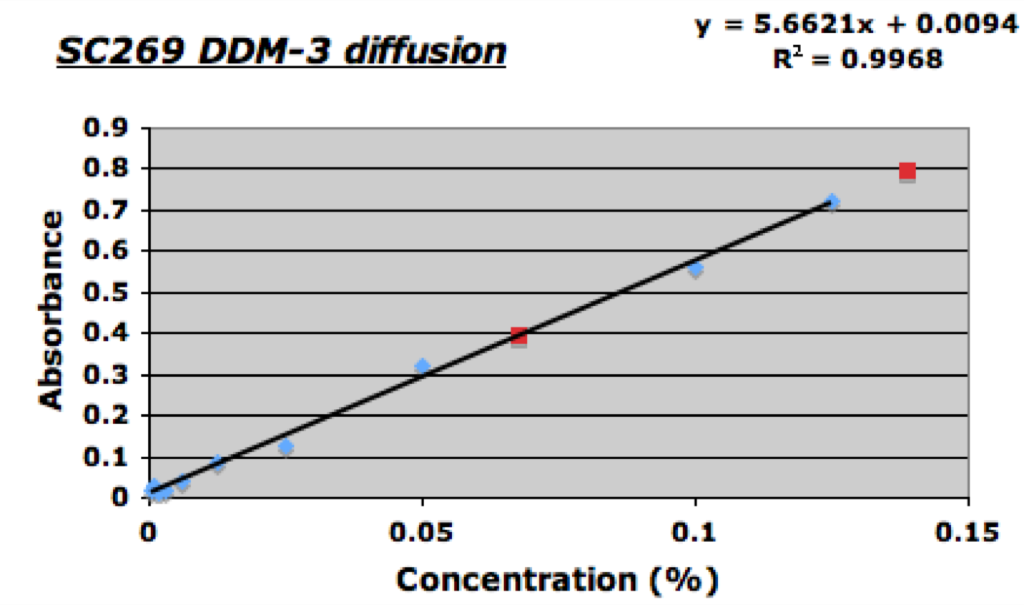
The final calculated filtrate concentration for the “untreated” SC269 sample was ~0.07% and for the “treated” SC269 sample it was ~0.13%. I would have expected that with DDM being approximately neutral in charge that relatively equal amounts of DDM would make it across the membrane in the “treated” and “untreated” cases. Could the increase in DDM movement be a result of the membranes interaction with the BSA in solution? Any input on this result would be greatly appreciated.
BSA Analysis:
Again, both the “treated” and “untreated” SC269 samples remained intact and the vacuum grease prevented leaking in the case of the “treated” sample.
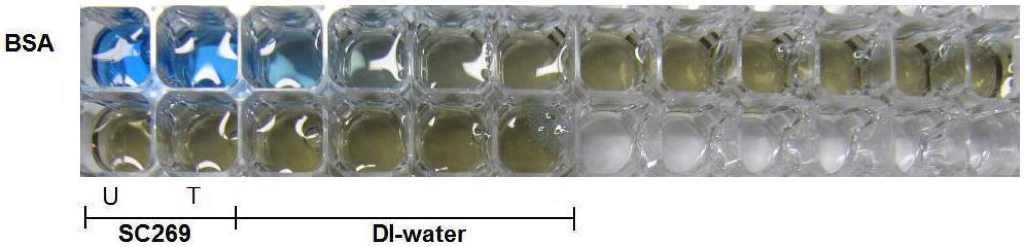
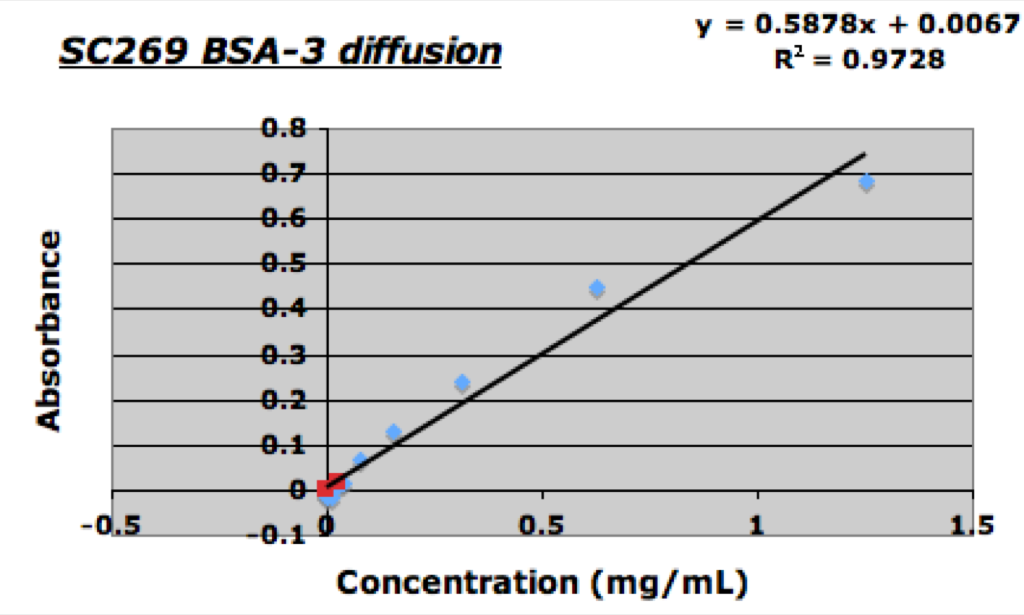
The final calculated filtrate concentration for the “untreated” SC269 sample was approximately 0mg/mL (~-0.007mg/mL) and for the “treated” SC269 sample it was similar (~0.02mg/mL). Unlike in my few previous posts the “treated” SC269 sample appeasr to behave similar to the “untreated” SC269 sample in terms of BSA diffusion. This is a direct result of the vacuum grease ring preventing leaking.