There's something in the water
I’ve become increasing suspicious of the membrane clogging during the hydraulic permeability experiments. I ran an experiment where I took three fresh samples (sc 582) and pushed water through for 5, 10, and 20 minutes. Ideally, the permeability would be the same for all three time points. However, I observed a decrease at each increasing time point.
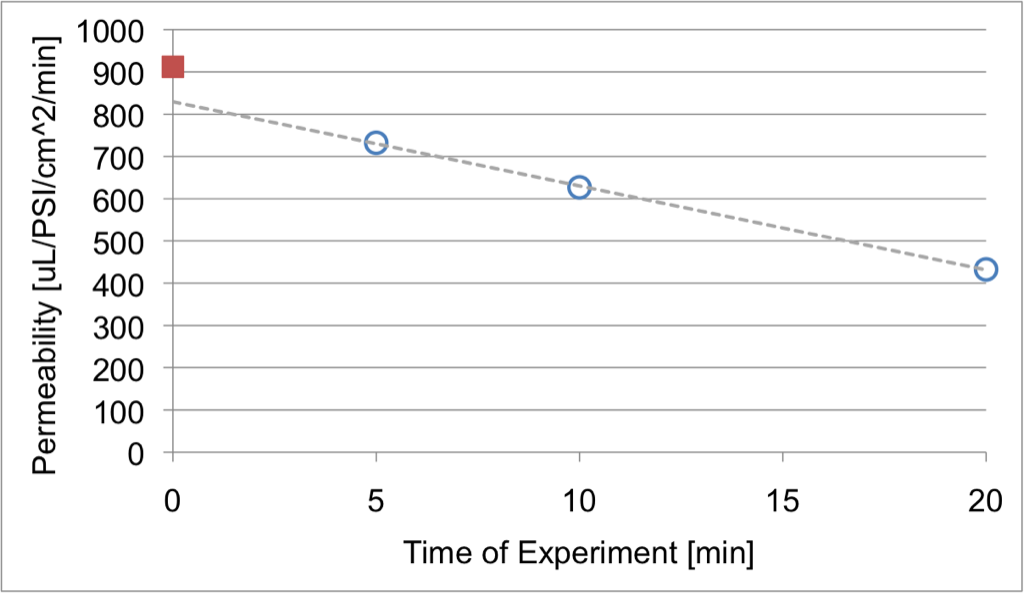
So, we reach theory at time zero!
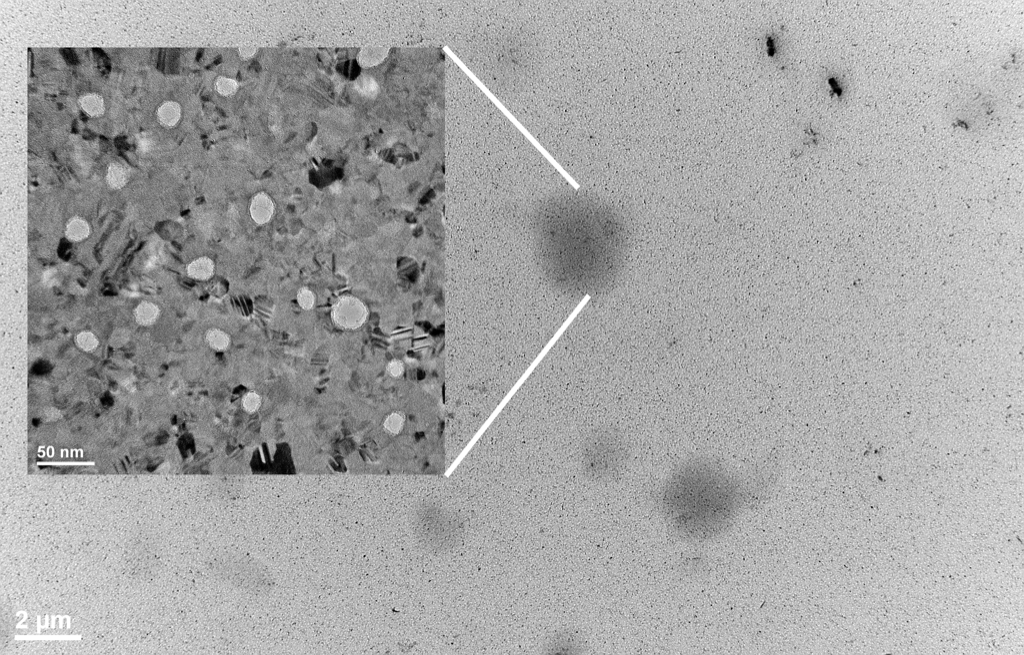
So what could be fouling the membranes? To investigate the possible causes, I pushed DI water and PDMS soaked in DI water through some TEM grids.
DI Water
DI water soaked with PDMS
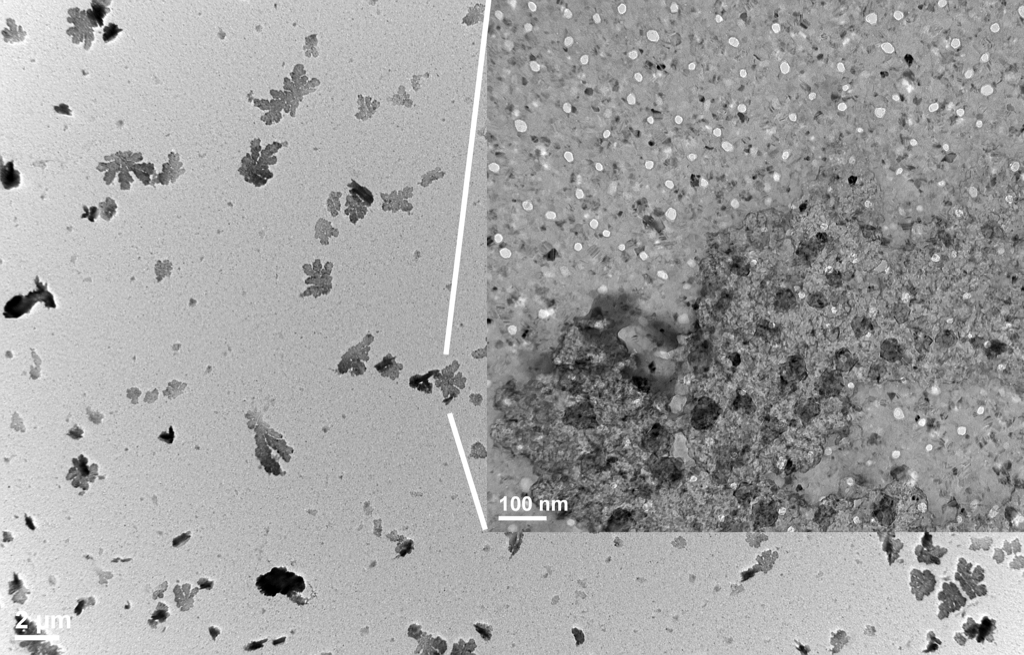
Interestingly, even with the DI water there is something occluding the pores. And not so surprisingly, the PDMS further contributes to the problem.
I am pre-filtering the water with a 0.2 um syringe filter, but I wonder if the Falcon conicals I store the water in could be leeching over time. My next experiments will focus on sonicating all the plastics the water comes in contact with.
It looks like there is a contamination problem all right.
For the DI water there is clearly organic residue – where did the water come from and how was it stored? Also, you might want to try with and without filtering, as the filter itself could be giving off some small stuff. I would suggest using the water from Hopeman (use faucet in the cleanroom after flowing a healthy volume of water to clear the lines), transported in an autoclaved nalgene container of some kind. I would also use it within an hour.
For the PDMS, these almost look like crystallized monomers. What type of PDMS piece did you soak in the water? I wonder how much of this stuff is shedding in our sepcon devices?
This looks like a fairly conclusive answer to why our flow rates are dropping over time.
Dave – I didn’t think organics would be visible in TEM without a stain, but the pores clearly have a ring of gunk on them that is very likely organic, right? The PDMS sample is definitely showing crystals. I’m used to seeing these kind of crystals after drying salt solutions, so they may or may not be there when you are doing the filtering.
The Barnstead system we have in the basement (when its working propertly) treats the source water with UV light to decontaminates, filters and further deionizes. If this is your source, we should change the filter and UV bulb.
I just looked at the instructions and the final fitler shoudl be changed every month and the UV bulb every 6 months. TO my knowledge, neither of these have been changed in the lasst >1 year.
Also, autoclaving plastics will not get rid of all organic residues adsorbed to surfaces. People who are paranoid about these sorts of things usually do a NaOH rinse before autoclaving. IF we’re going to get this worried about organic contaminants, we should do things correctly. Like Jim said, we should probably just get the system up to date anyway.
Jim – if there is enough organic goo, you can see it, but for thin low density layers like proteins, the contrast is quite poor. The thinness of our membranes helps with contrast, but in this case, the organic is probably several times the Si thickness.