30 nm pnc-Si bias series
We have already established that bias is an important parameter in controlling the morphology of 15 nm thick pnc-Si, but have yet to look at its effect on thicker films. This week, made a few 30 nm thick Si films with 02, 05, 25, and 50 W of substrate bias. I annealed these films at 1000 C 100 C/s for 60 s. Below are the TEM histograms and pore distribution.

The low bias samples (02 and 05 W) show a clear broadening in sizes and increased density of pores. The background morphology is also markedly different in the low bias films. There are many more “ghost” pores. These are most likely areas where void nucleation occurred at the interface (de-wetted) but did not grow through the entire thickness of the film to form a pore.
Another interesting feature I observed in the low bias films was that there were a number of large (several micron) “pinhole” defects in the free-standing area of the membrane. These are not the traditional smooth edged pinholes, but instead they have more jagged features. I believe they may have been caused by the high density of “ghost pores”. Because there are so many areas where the Si has de-wetted from the surface the film falls apart.
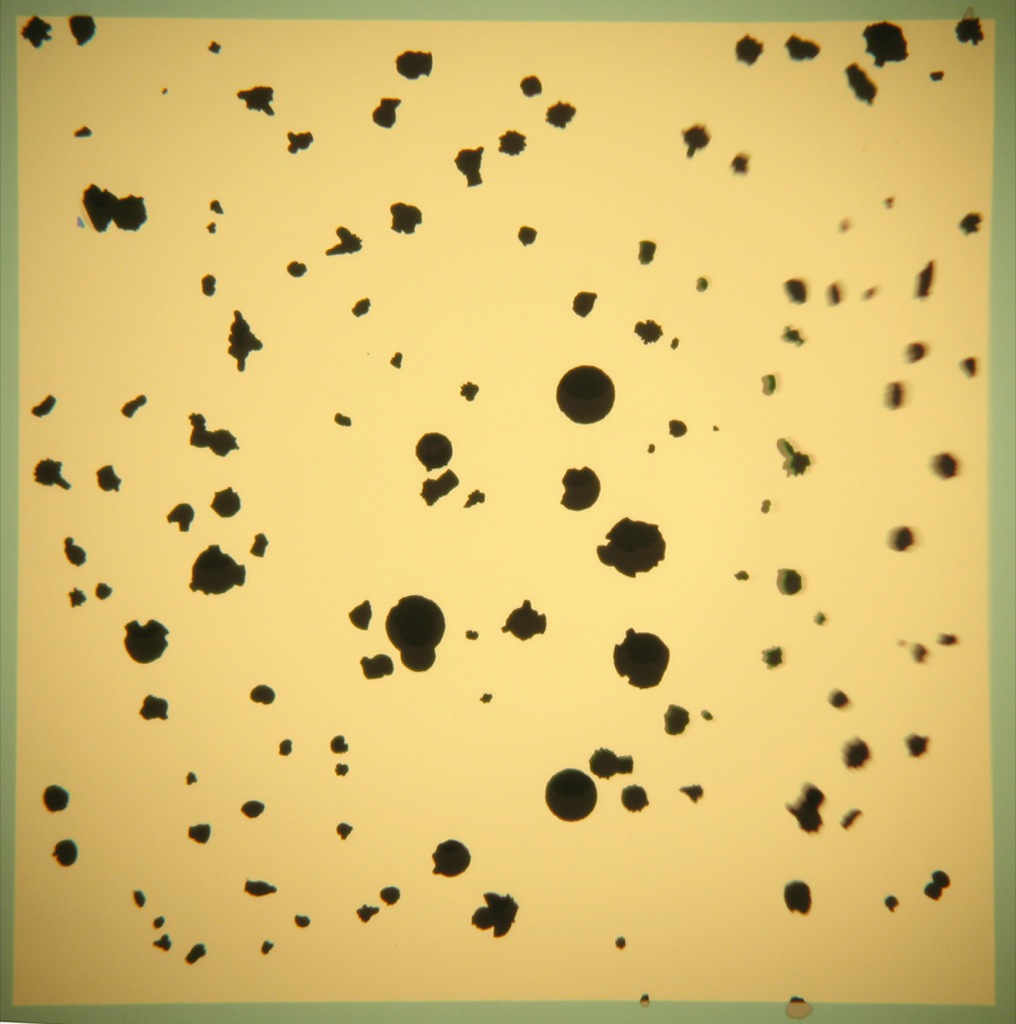
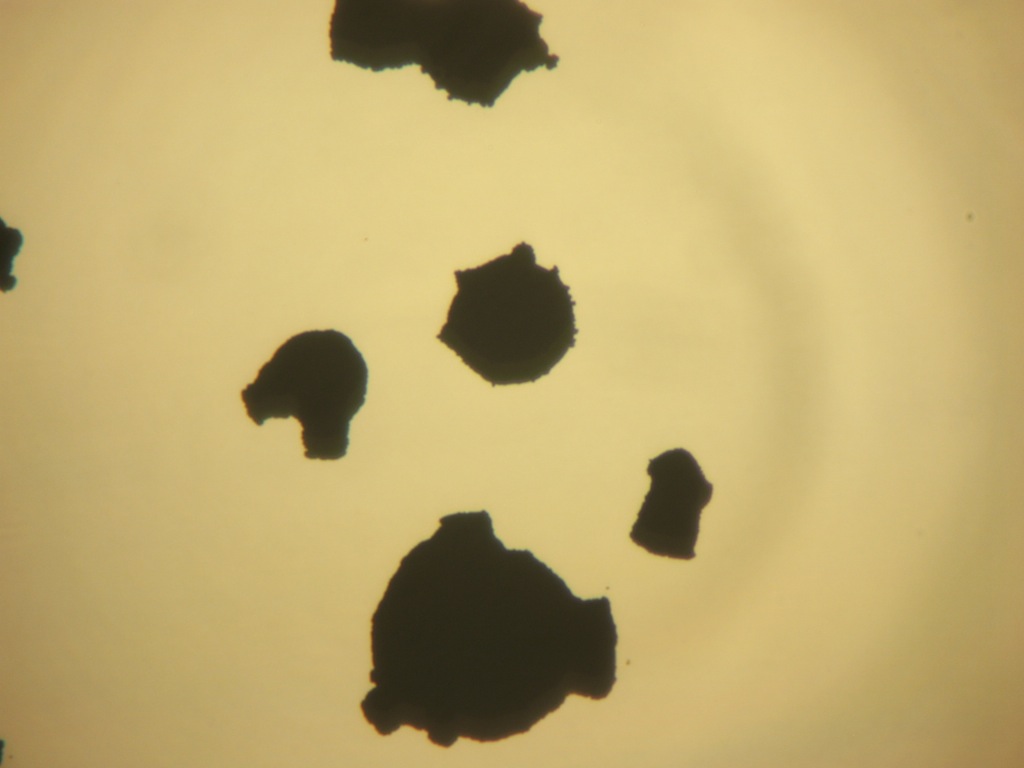
Here is a TEM micrograph at the edge of one of jagged defects:
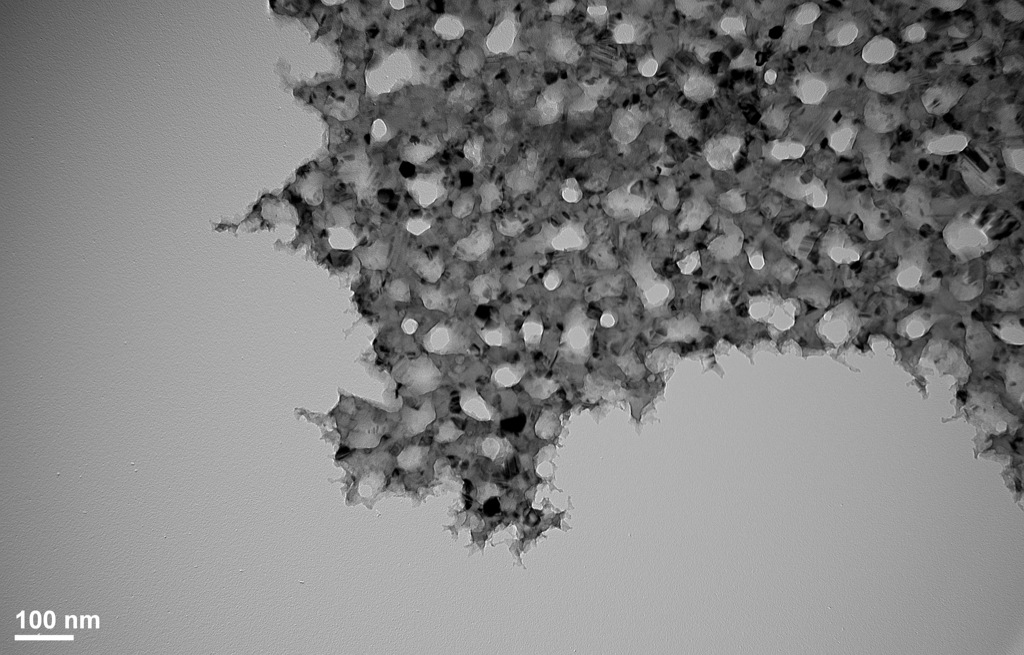
One thing you will notice is how conical the pores appear. This would support the theory that pores grow from the interface.
Here’s a nice picture of a microtwin adjacent to a pore:

I have to think some more about how to eliminate these defects…
I think we really need to determine the exact geometry of the pores in our films. Can we do tomography (3-D) with Brian’s TEM? If not, we can just do AFM on both sides to get an idea of which side is delaminating (the side with the divots that don’t go through, and the larger end of the conical pores).
I did some digging, and in 2004 using Todd’s AFM and membranes made with the old CVC system, I found that the top side of the pnc-Si was much rougher than the substrate side of the film. Today I would interpret this as the a-Si dewetting from the top oxide first as the film crystallizes. It’s unclear to me whether this means that crystallization initiates on the top or bottom interface, but at least it gives us more understanding of the structure.
There is more evidence in the above images that nanocrystals are starting to overlap vertically, so this structure is not surprising. I would suggest trying a slower ramp rate or using the susceptor for the 2W or 5W condition at this thickness, to try a suppress nucleation and get more single-crystals extending between the interfaces. The question is what this would do to the pores….