Compressive Structured Illumination Microscopy (CS-SIM)
I would like to introduce Compressive Structured Illumination Microscope (CS-SIM), which will be built in the McGrath’s Lab. CS-SIM is a novel microscopy framework, which was proposed by me. It is dedicated to alleviate some SIM problems such as motion artifacts as well as photobleaching, and also it might present further resolution improvement thanks to the regularizers. After the brief introduction, let’s see the details.
Ernst Abbe, who was a German physicist, claimed that each conventional microscopes has a resolution limit called Abbe diffraction limit. This limit is proportional to the emission wavelength and inversely proportional to the numerical aperture. In other words, if we use visible light and high numerical aperture, we cannot distinguish tiny structures whose diameters are almost less than 200 nm. It means that most viruses and molecules are invisible under a conventional microscope. This resolution limit is presented in the following figure.
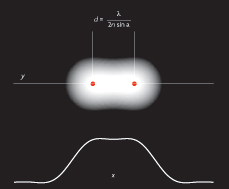
Fig.1 Representation of Abbe diffraction limit.
Since a few decades, some scientists have presented a number of Super-Resolution Microscopy Techniques such as STED, STORM, and SIM. These microscopes are basically dedicated to overcome the diffraction limit, and they have made significant contributions to the science. We are interested in SIM. It does not provide extremely super resolution images but it is the fastest microscope among other super-resolution techniques. SIM utilizes illumination patterns, which are created by Spatial Light Modulator (SLM) or Digital MicroMirror Device (DMD). These patterns are basically stripe patterns, and they modulate higher frequency information of scene into the bandpass region. However, one stripe pattern is not enough to get high frequency information. To extract the higher frequency information of the scene, the phase of the illumination pattern must be changed at least 3 times. In addition to that, we need to rotate the illumination pattern at least 3 times to obtain isotropic super-resolution images. In other words, we need minimum 9 images, which are the multiplication of the illumination patterns and the scene, to get a single super-resolution image. The operations of the conventional microscope and the SIM method are visually illustrated in Fig.2.


Fig.2 Visual illustration of the conventional microscope (the left-hand side) and SIM (the right-hand side) techniques.
Although SIM is the fastest microscope technique among other super-resolution methods, it is not faster than the conventional microscope. The reason behind this is that SIM is not a single-shot recording technique, and this leads to some problems such as photobleaching and motion artifact. To alleviate these problems, the read-out time of a camera must be decreased. However, camera has a limitation because of the transistors. So, it is hard to shorten read-out time. Here, we propose a novel framework which is the combination of compressed sensing (CS) and SIM. In the CS-related optical implementation, camera is not required for scene acquisition, but it uses extremely fast acquisition device such as PhotoMultiplier Tube (PMT). Camera is also known as a sampling device. To sample the scene, DMD is required alone. The frame-rate of a DMD can be 33kHz although camara frame-rate can be 72 or 100 Hz. DMD is incredibly the fastest sampling device. In addition, CS requires a few measurements to record the scene. These are the things to answer this question: “Why does a CS-related optical implementation have a big potential to record a scene fast?”. The first CS-related optical implementation is the single-pixel camera from Rice University. In this implementation, the scene is sampled with a DMD, and the samplings are recorded by a photomultiplier tube. The scientist from Rice University showed that 2 percent under-sampling rate is sufficient to record the scene. This is actually significant contribution in optics, and offers new type of sampling paradigm than the Nyquist-Shannon sampling theorem.
Here, we propose a novel SIM framework which combines the single-pixel camera and the conventional SIM technique. The proposed microscope, CS-SIM, will be built in the McGrath’s Lab, and the schematic of CS-SIM is shown in Fig.3. Firstly, the laser light is polarized, and then projected onto the DMD. DMD generates the sampling and stripe pattens simultaneously. In other words, DMD produces patterns that modulates as well as samples the scene. Once the patterns are created, they are passed through an excitation filter (EF) and quarter wave plate (QWP). EF is used to filter the wavelengths other than the laser source wavelength, and QWP is utilized to equalize phases of each pattern. Passive Fourier Filter (PFF) blocks the zeroth diffraction order to present pure sin wave on the sample. Using dichroic mirror, the illumination and sampling patterns are projected onto the sample/scene. Eventually, emission wavefront is recorded by a PMT device. To build the measurement vector, the sampling pattern must be changed continuously. The measurement vector and the sampling patterns are driven into a CS-recovery algorithm. This algorithm produces one raw SIM image. The get the second raw SIM image, we need to change the parameters of the illumination pattern. Using the same sampling patterns with the new illumination pattern construct another measurement vector. This vector and the sampling pattern are also driven into the CS-recovery algorithm. These processes are repeated when the all raw SIM images are obtained. Eventually, raw SIM images are driven into SIM-recovery algorithm, which produces a single super-resolution image.

Fig.3 The proposed CS-SIM implementation.
CS-SIM implementation and using the recovery algorithms are not sufficient alone. As the scene is presented sparser enough, the accuracy of the CS-recovery algorithm increases. This would be another contribution of my visit at UR. We will propose dictionary learning method which presents dedicated images sparser. Once the dictionaries will be learnt, they will be driven into CS-recovery algorithm. We will propose another contribution for the CS-recovery algorithm. This algorithm will be based on ADMM-Net. I believe it is early to introduce this concepts. So I would like to discuss these contributions with the results in the near future.