Hemocompatibility of pncSi – Platelet activation studies
This is the first set of studies to assess the hemocompatibility of pncSi surfaces based on the paper by Fissell and Roy. It looks for the behavior of platelets in the plasma upon interaction with pncSi surfaces.
Biological Motivation: Platelets are one of the most important components of the human immune system and also one of the key players in the process of thrombogenesis. Platelet activation is desirable during inflammation as it is responsible for blood coagulation and clot formations. therefore, platelets must see the pncSi as a non-thrombogenic material and should not get activated else it will trigger undesirable downstream inflammatory response. In short, our aim is to attain least amount of platelet adhesion, aggregation and activation upon this interaction with our membrane.
Surfaces Used: Three main type of surfaces are investigated for this study. First is pure glass: almost chemically identical to pncSi membrane. Next is the plasma treated pncSi surface. It is a super charged surfaces is believed to trigger the activation of platelets. Third surface is PEG treated pncSi surfaces. Since PEG is an excellent anti-fouling agent, it is supposed to facilitate least cell-to-surface interaction and hence least cellular activation. Positive control used is adenosine diphosphate (ADP). ADP is the main agonist for platelet activation since it initiates platelet aggregation and further activation. No negative control was tested!
Protocol: Platelet-rich-plasma or PRP was used for this study. PRP was isolated from whole blood (in presence of sodium citrate as an anticoagulant) by spinning it at 200g for 10 mins to separate the plasma from rest of the blood. This plasma sample is again spun at 200g for 10 mins to get PRP (bottom half) and platelet poor plasma or PPP (upper half). PRP usually has a count of more than 3.3*10^5 cells/ul. PRP was then dispensed onto the test surfaces and incubated at 37C for 2 hours. Afterwards, the plasma was discarded and the surfaces were washed with PBS and then fixed using 4% paraformaldehyde for 15 mins and then blocked by 1% BSA for 30 mins. The surfaces were then double labeled, first with redCD62P antibody and then with green CD41antibody. [CD41 is a platelet integrin and a marker for platelet cells, while CD62P is P-selectin is an indicator for activated platelets].
Results: As described, the green FITC images indicate the presence and localization of platelets while, red Alexa 546 labeled cells indicate their activation.
[1] Plasma treated surfaces
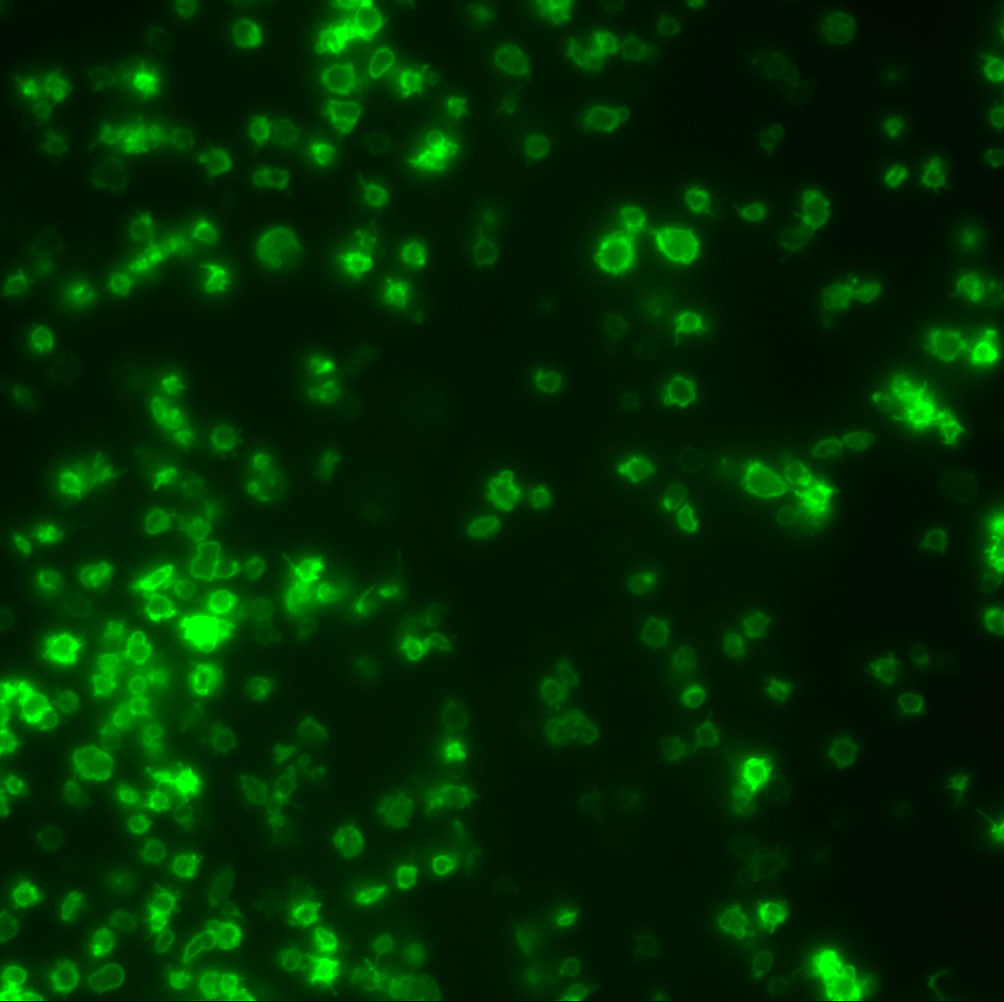
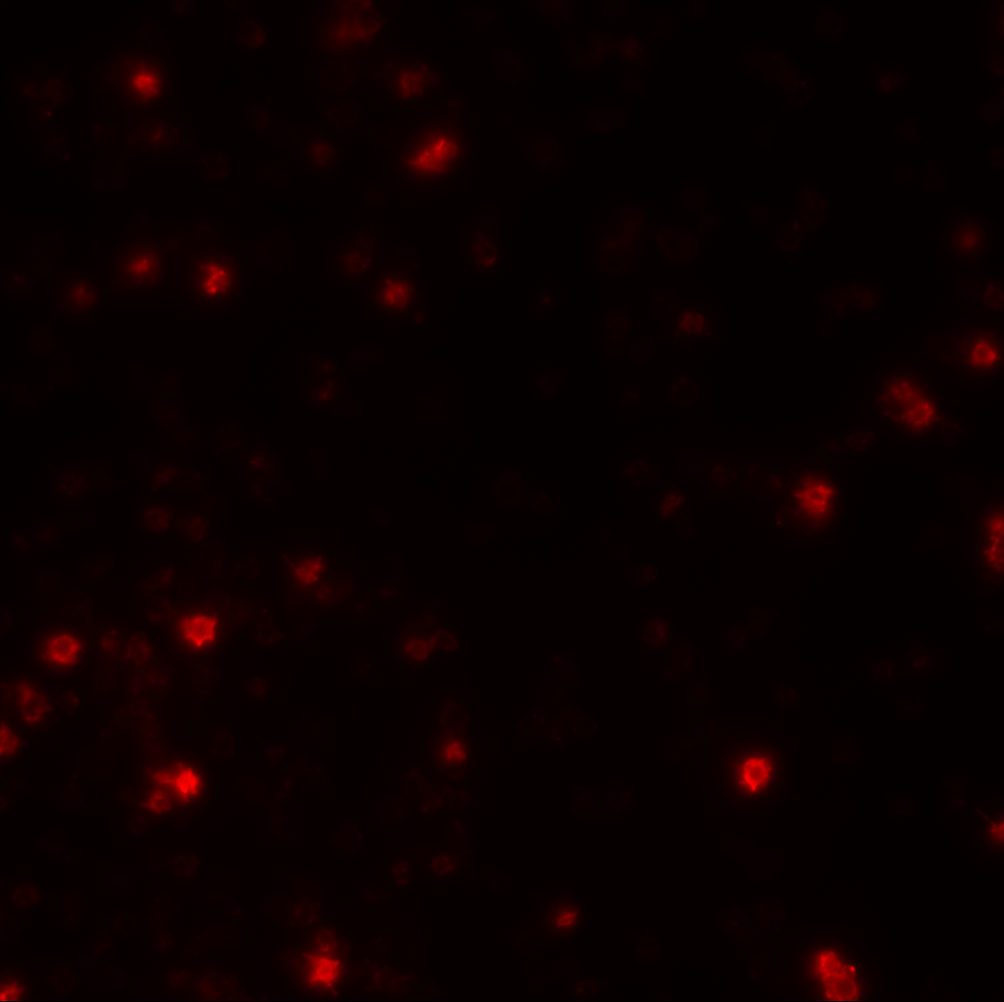
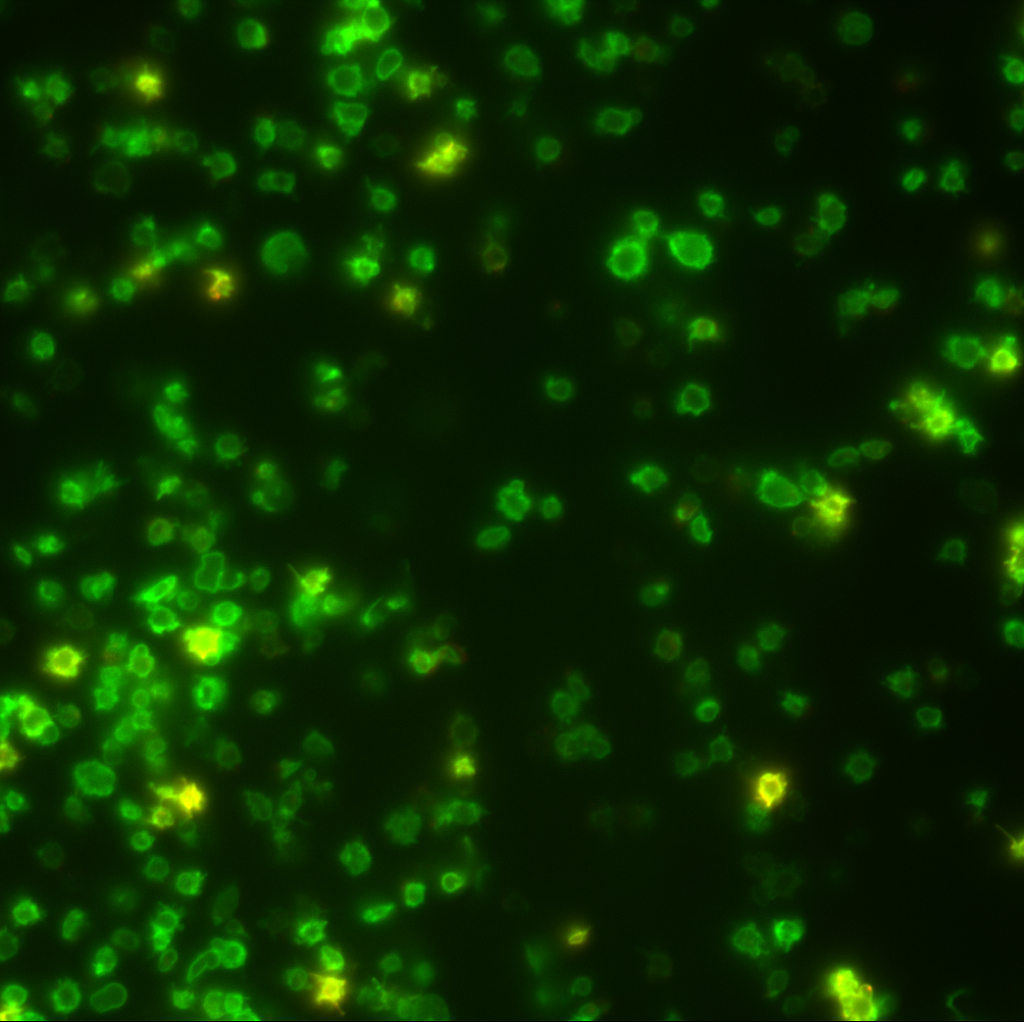
left: platelet maker; middle: activation marker; right: merge
[2] Pure Glass
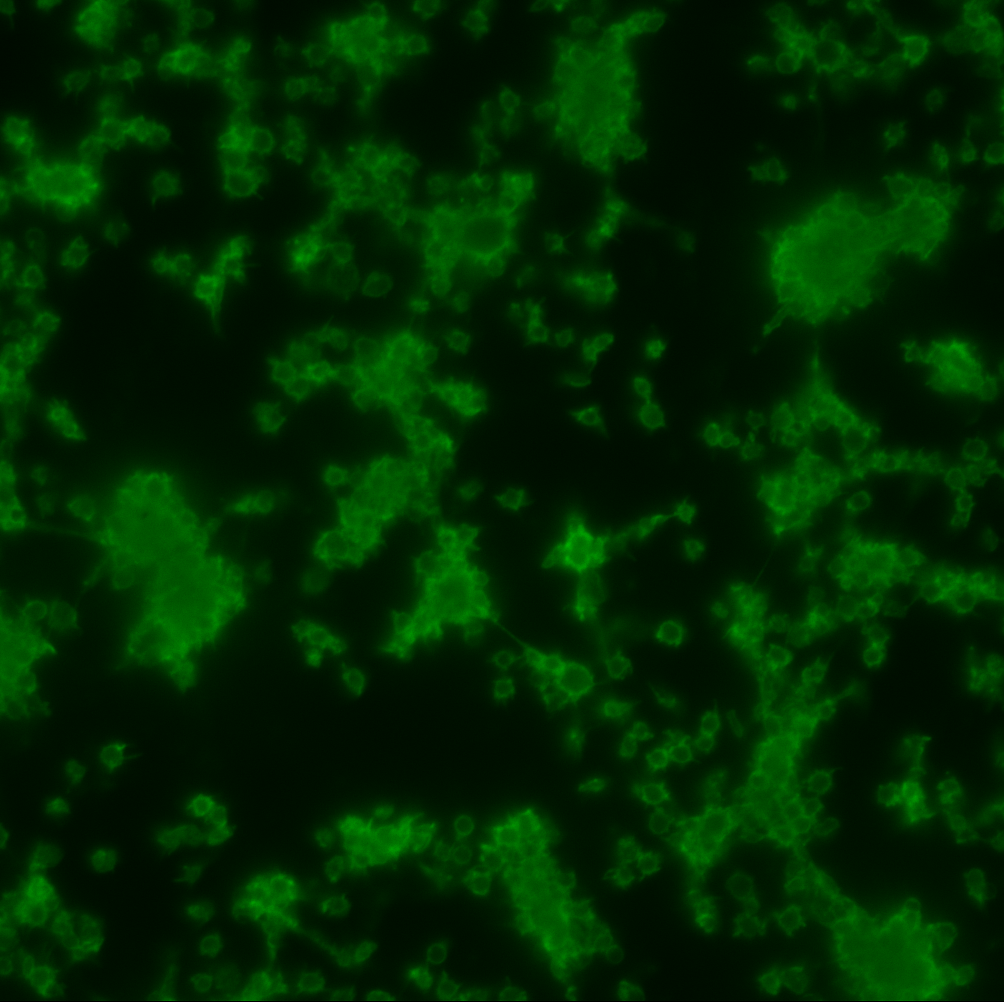
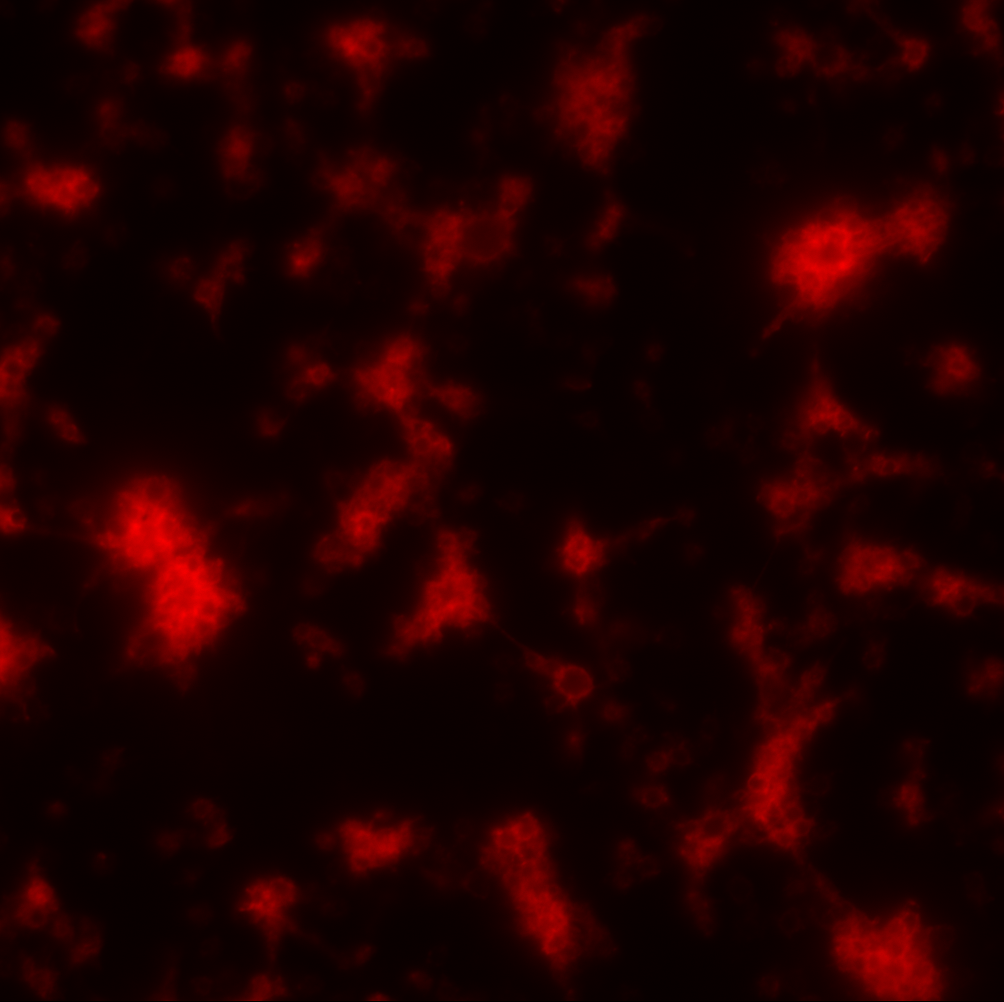
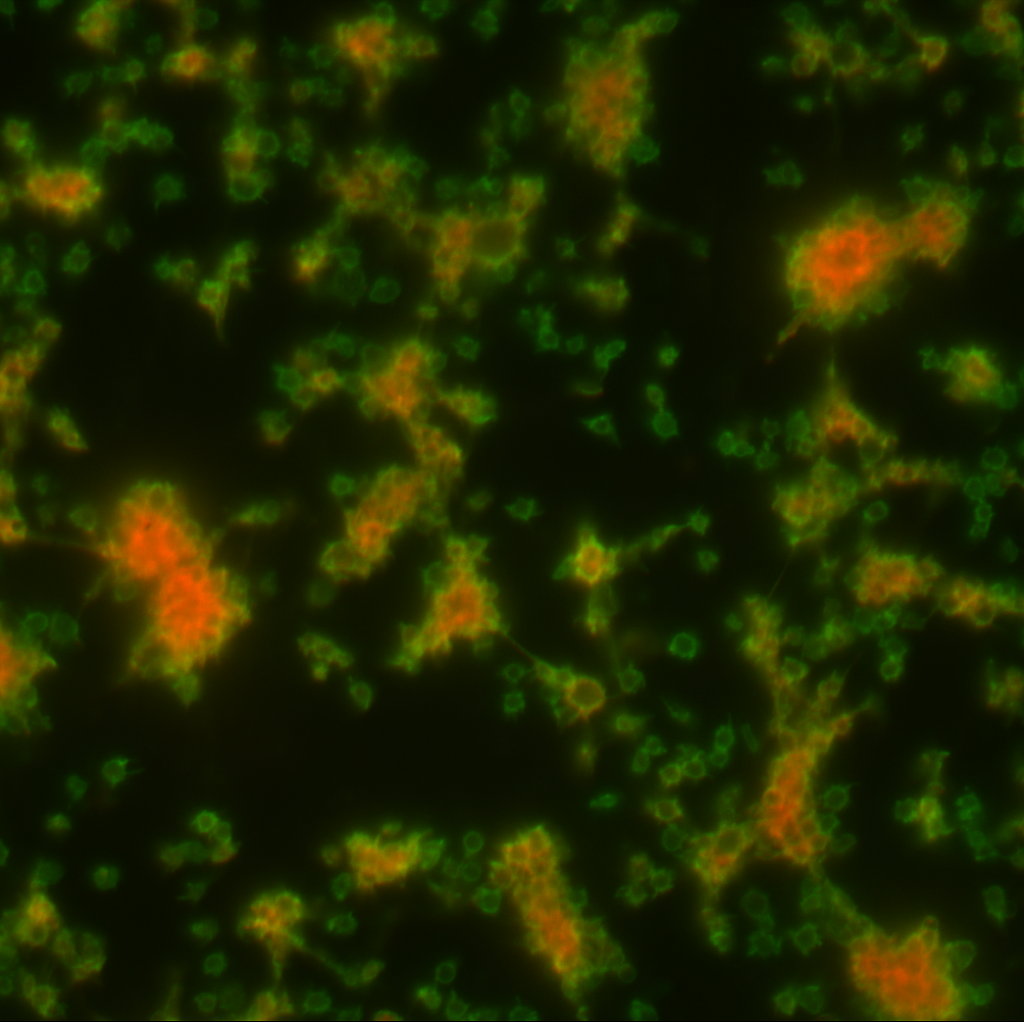
left: platelet maker; middle: activation marker; right: merge
[3] PEG treated surfaces
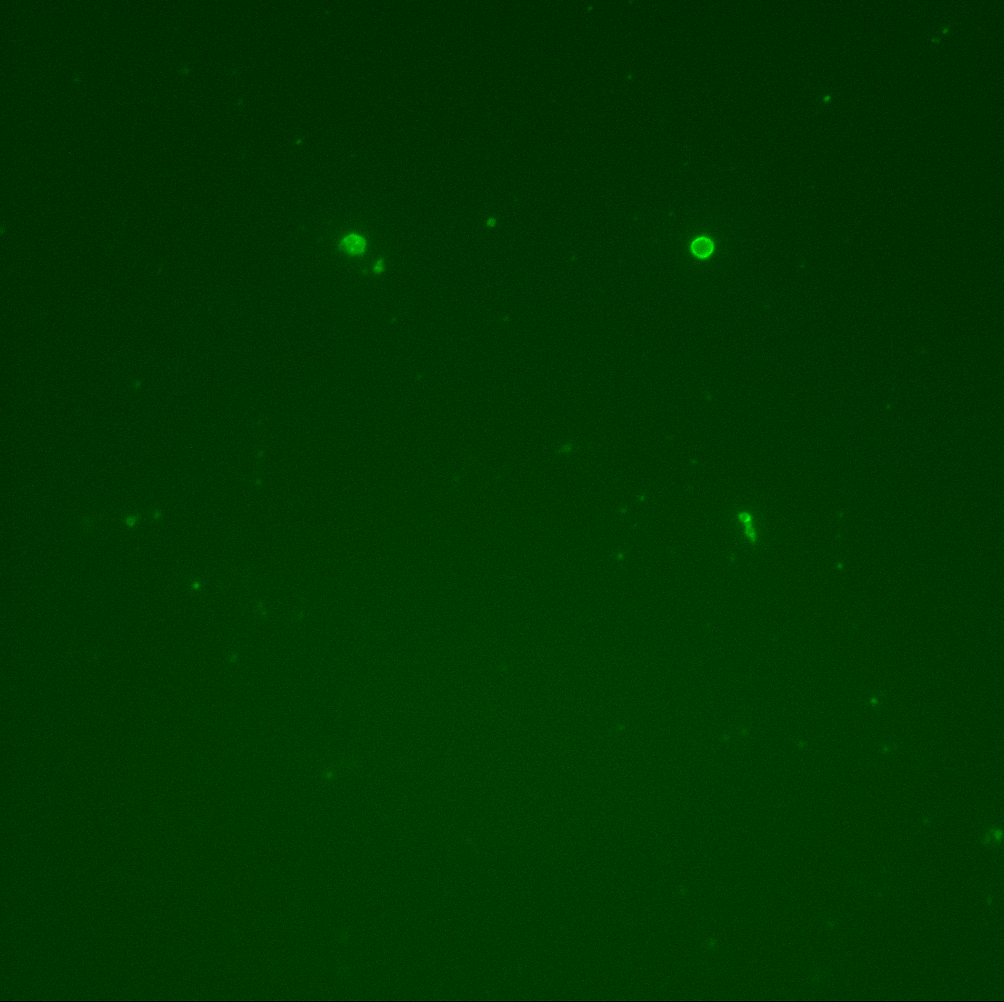

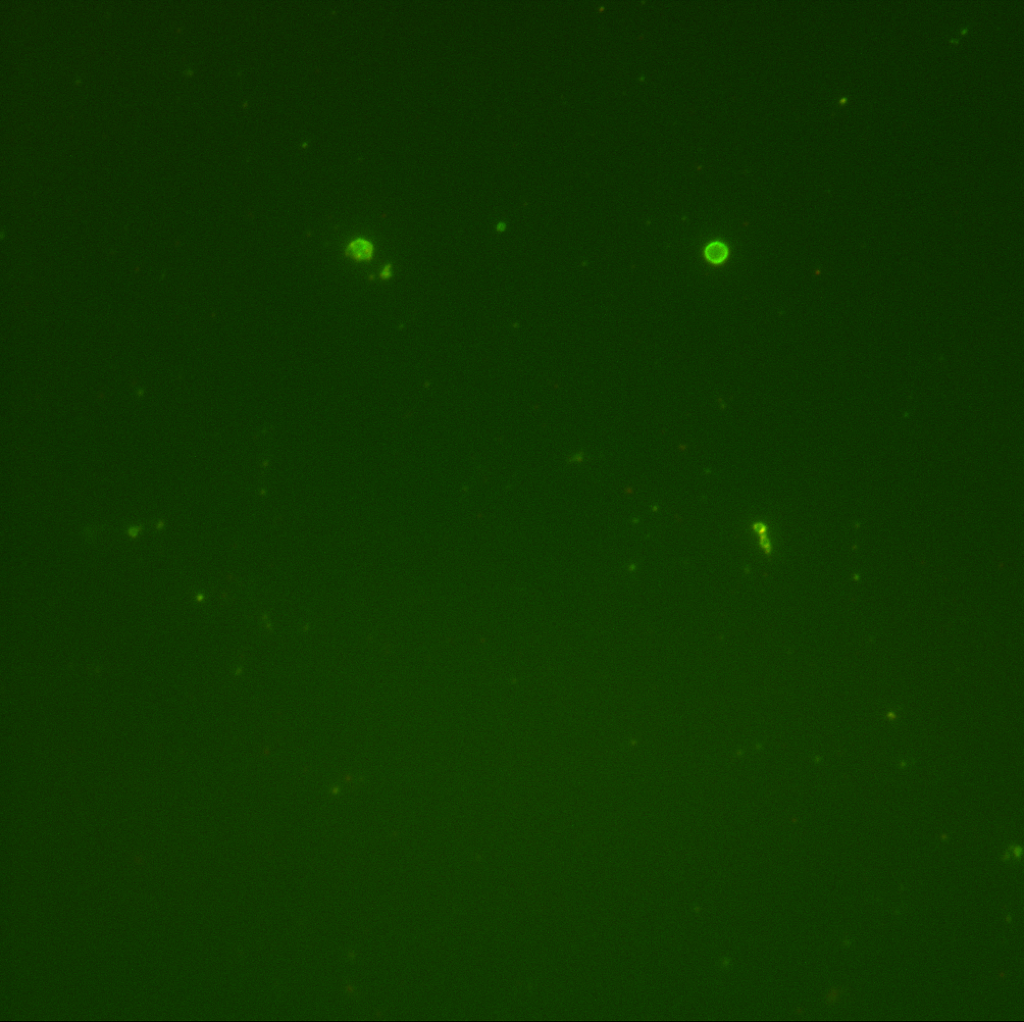
left: platelet maker; middle: activation marker; right: merge
[4] Positive Control: ADP treated platelets on plasma treated surfaces


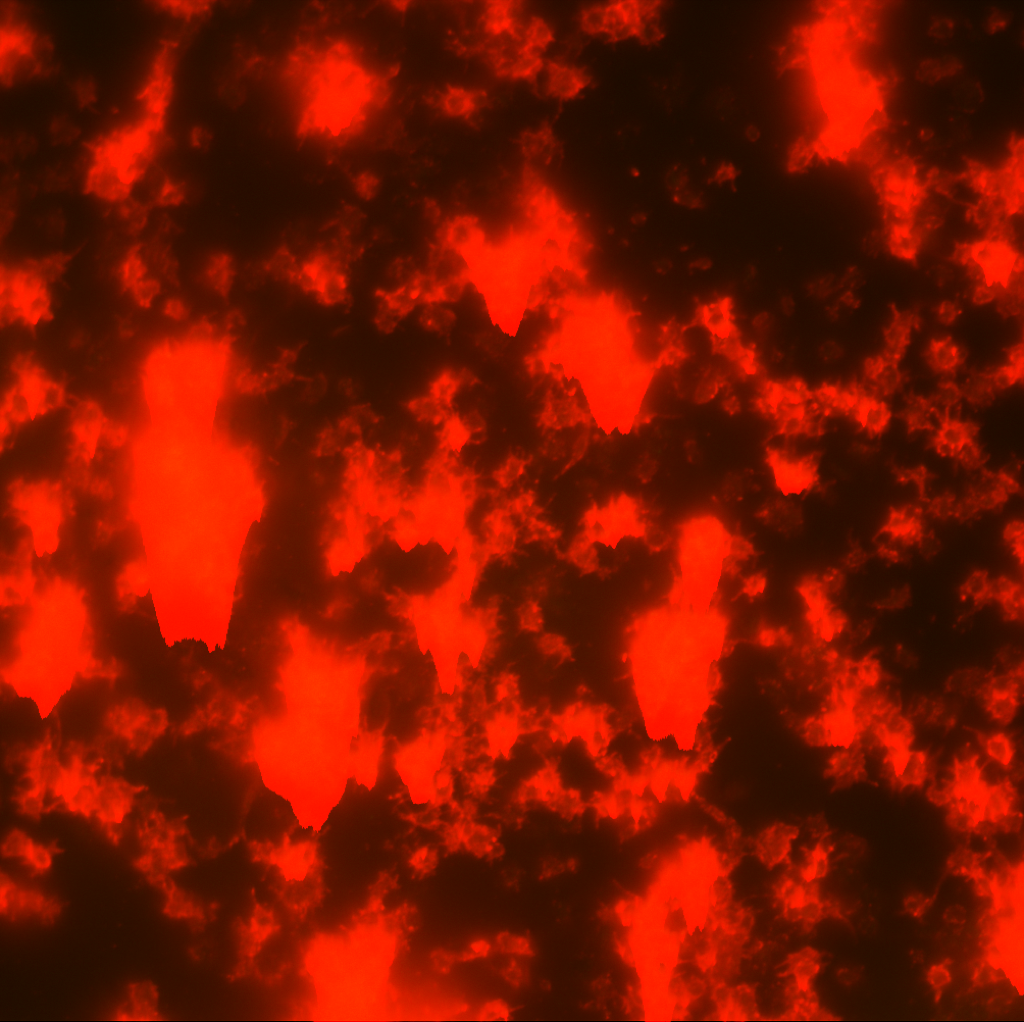
left: platelet maker; middle: activation marker; right: merge
Discussion: The images shown above are quite overwhelming: the untreated or just plasma deposited surfaces exhibit a large amount of platelet adhesion as seen from the green image, but very less amount of platelet activation as seen from the red image. Thus although platelets are getting adhered to the surface due to high charge density, they are not completely activated. Glass surface too show this behavior but up to a limited extent. Glass does facilitate platelet adhesion and also a significant amount of platelet aggregation (as seen in the clustered presence of cells) and also their activation as seen in red. PEG treated surfaces display very less platelet adhesion as seen by the sparse cell distribution on the surface (multiple observation for this case available!). Also none of the three cells present on that surface show any signal in red channel indicating lack of any activation. Lastly, positive control show overwhelming adhesion, aggregation and activation of platelets as expected!
Conclusion: As of now, PEG treatment seems to be a promising option to prevent platelet activation. Long term PEG retention on pncSi still needs to be addressed.