Vacuole formation on Nitride
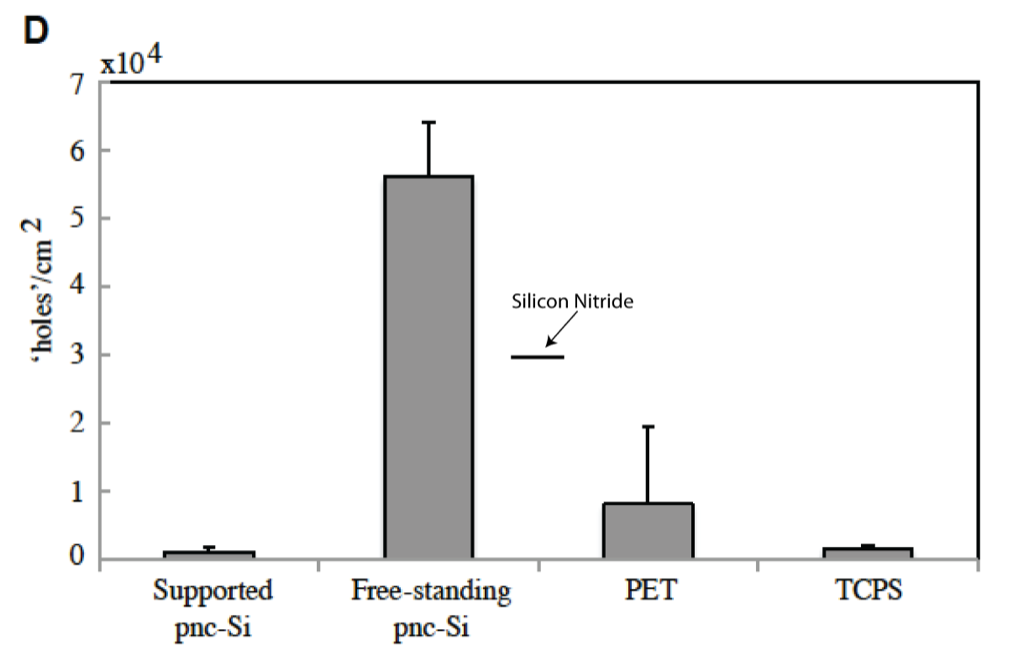
Barrett had discovered that growing endothelial cells on pnc-si or tranwells causes vacuoles to form. The vacuoles on pnc-si formed only on the free standing areas of the membrane where there are open pores. The background on pnc-si chips showed negligible vacuole formation. The density of vacuoles on pnc-si was almost two fold higher than on Polyester track etched membranes.
I was growing endothelial cell line (b.End3 ) cell lines on silicon nitride and pnc-si to test growth rates among various substrates and Jim noticed that some of the cells showed vacuoles being formed.
Cells were grown on cytoVu slides under standard conditions .
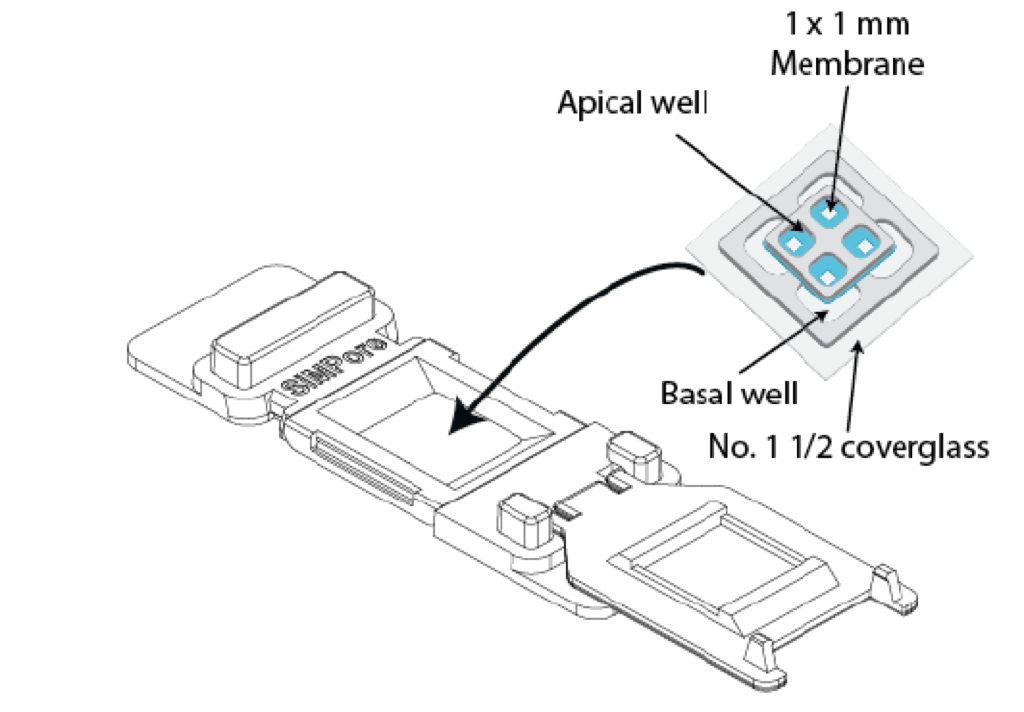
Bend3 (P25) were grown on slides for 3 days before pictures taken. Cells were seeded at about 250 cells/ul in CytoVu Slides. Cells were grown on the basolateral side and flipped over after ~6 hours for them to settle onto the membranes and attach.
pnc-si and Silicon nitride were seeded at the same time to compare different platforms. Only Silicon Nitride wafer 4025 (50nm thick silicon nitride with 3um pores) showed high density of pores. Other silicon nitrides did not. The Hybrid samples ( Silicon nitride background plus pnc-si membranes) had extremely low density of pore formation.





Super imposing the average density onto Barrett’s figure, the density lies between the PET membranes and pnc-si membranes