Furnace annealing of free-standing NSN and OSO stacks (2)
In this post, I’ll mainly focus on the furnace annealing results of OSO stacks. The structure of the OSO stack is also 30-25-30, which corresponding to 25nm thick silicon layer and 30nm thick oxide layers. The annealing temperature ranges from 600C to 1000C with a 100C interval. Each sample was annealed for 30 minutes. The followings are the TEM images of samples annealed from 700C to 1000C.
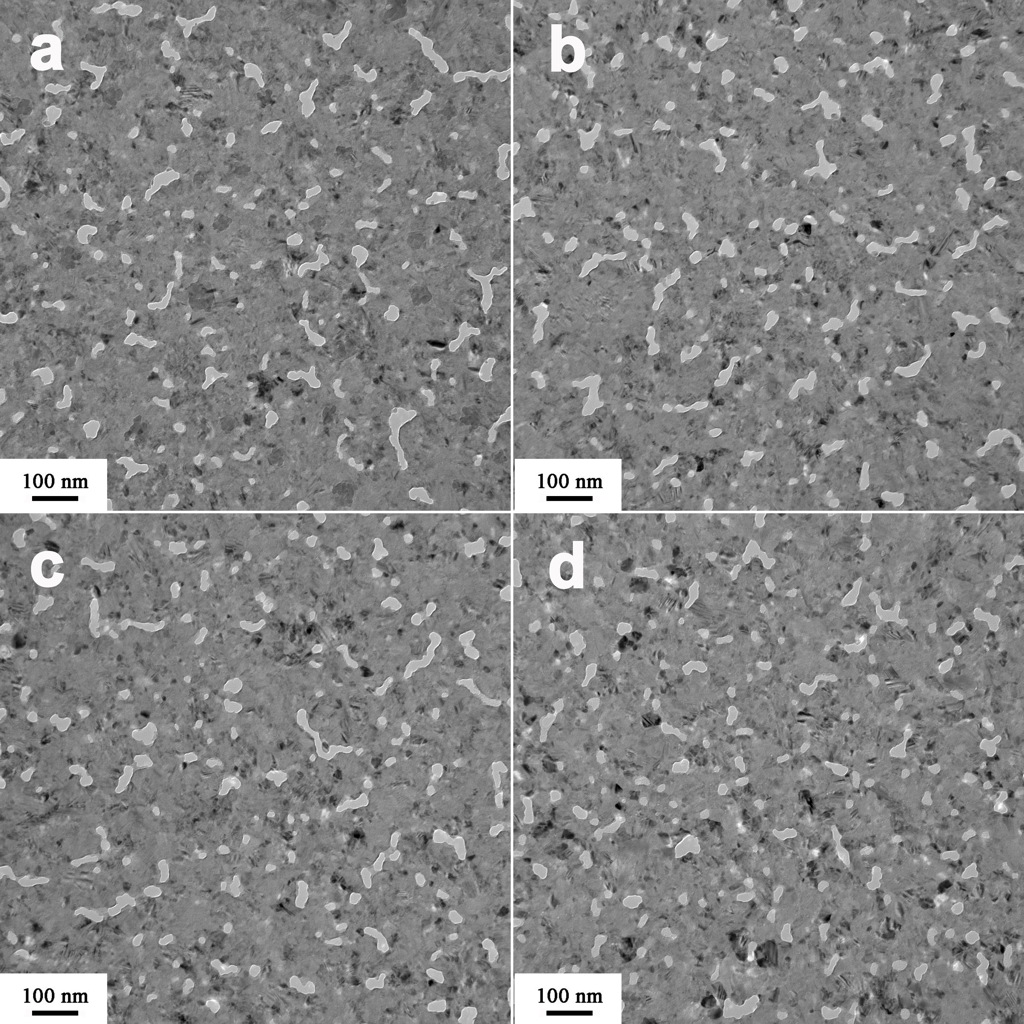
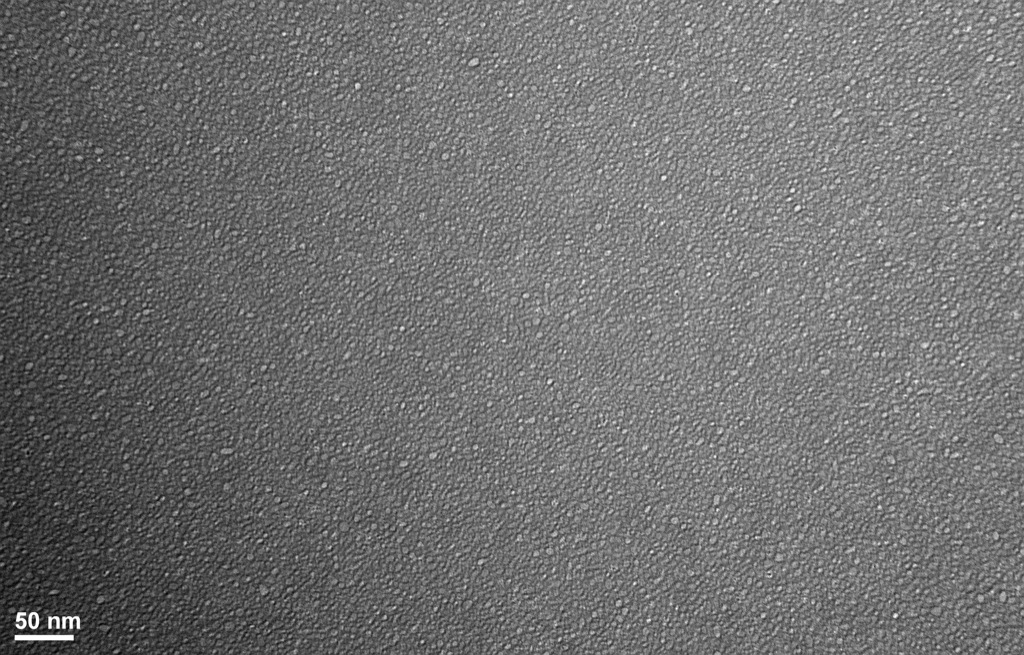
From the TEM images, it can be seen that lots of small but elongated pores are formed in the silicon layer after annealing. The morphology of those irregular pores does not change much with the annealing temperature. This is kind of different from the rapid thermal annealed samples which the morphology is greatly affected by the annealing temperature. The porosity, average pore diameter, pore density and pore roundness plots further proves this trend.
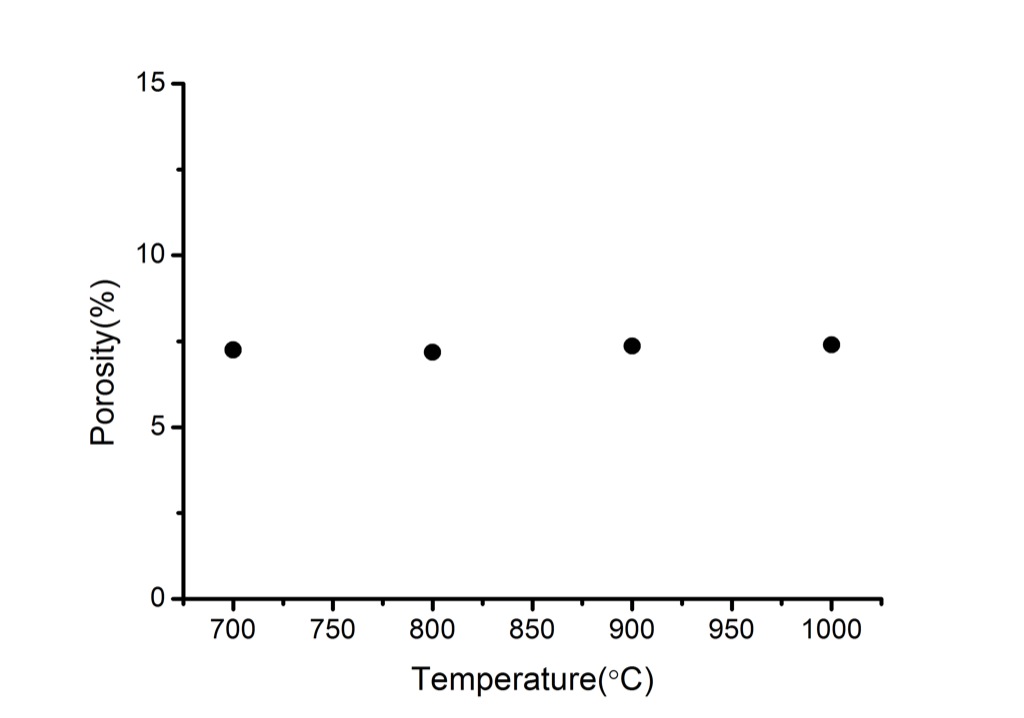
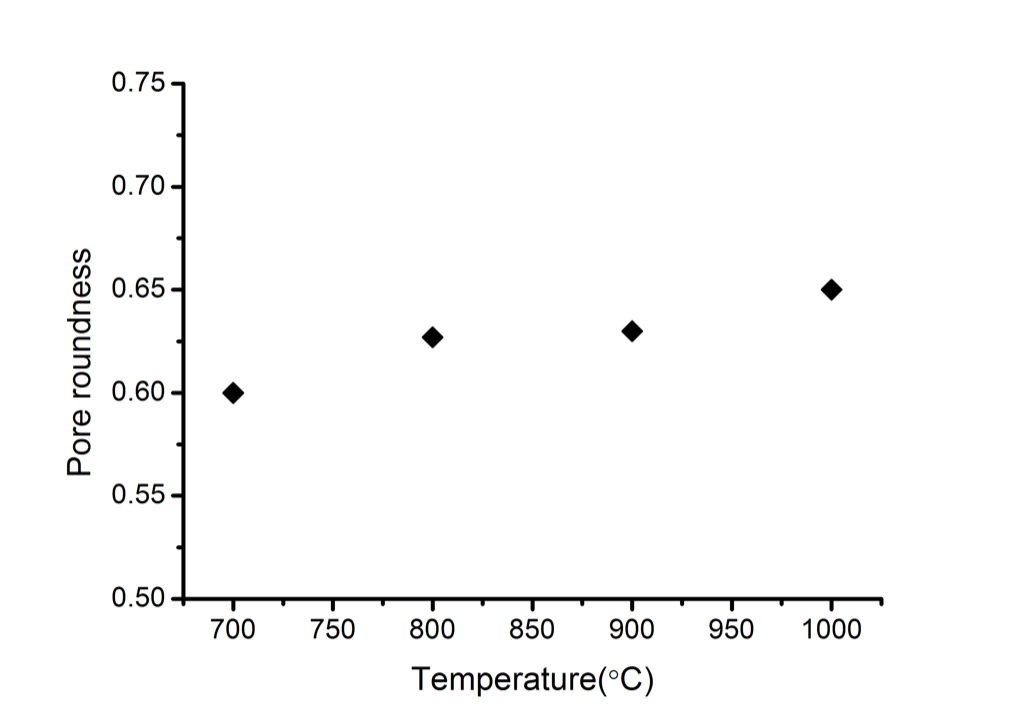
In the porosity plot, it shows that the porosities stay pretty stable with the annealing temperature where the porosities increase with the annealing temperature in RTA condition. Compared with the furnace annealed NSN samples, it can be also seen that NSN stacks yield much higher porosities than the OSO stacks under exact same layer thicknesses and annealing conditions. This is same as the results from the RTA condition.
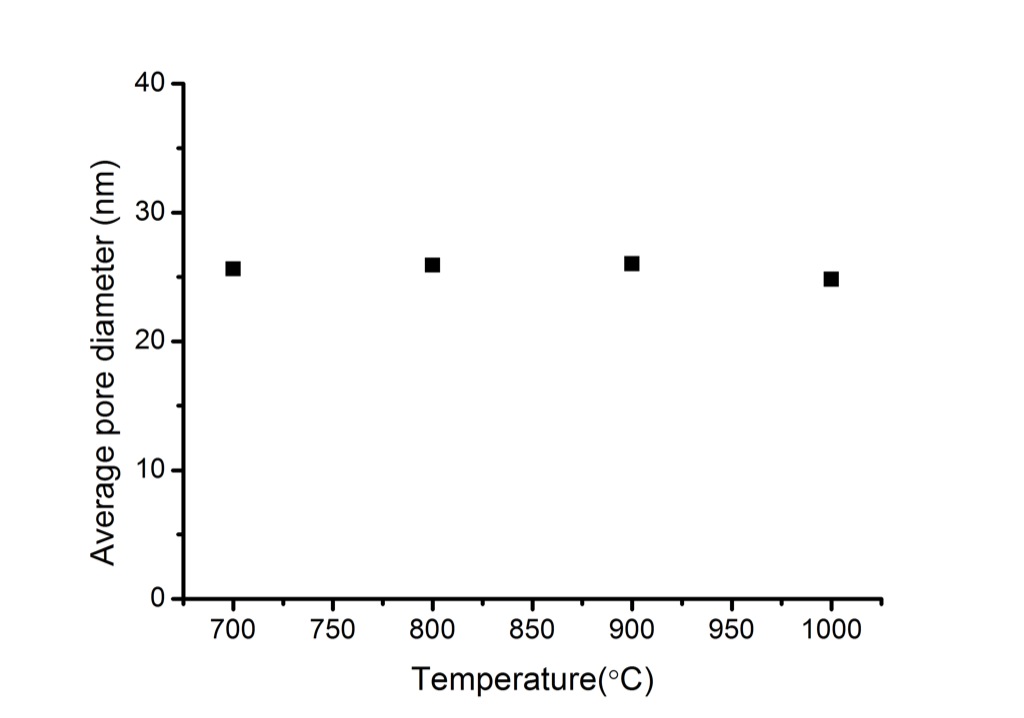
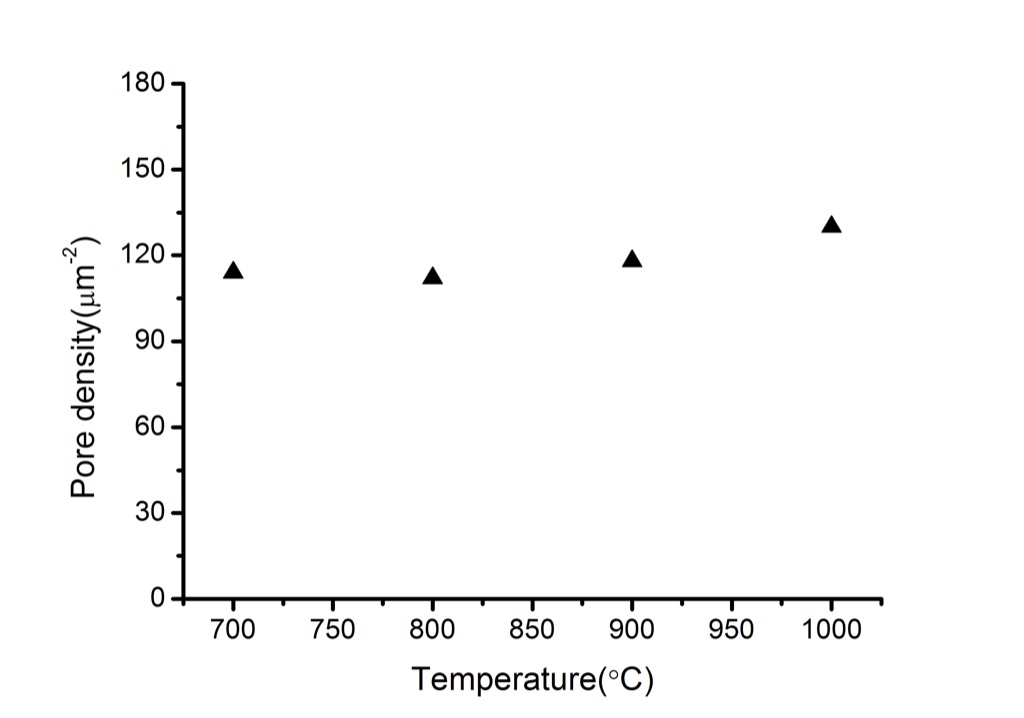
The average pore diameters also barely change with annealing temperature, which shows similar trend as that of NSN stacks. However, the average pore diameters from OSO stacks are much smaller than those from the NSN stacks. The pore density increases a little bit when the annealing temperature goes up to 1000C. The roundness of pores increases gradually with annealing temperature, from 0.6 to 0.65. This is quite different from the that of NSN stack, which the roundness increases rapidly from 0.55 to 0.7.
The annealing result of OSO stack at 600C is very different from that of the NSN stack. From the TEM image it can be seen that the silicon layer is still amorphous status after annealed at 600C for 30 min. No silicon crystals nor pores are formed at this annealing condition.
To sum up the furnace annealing experiments, several results can be reached.
1. Both elongated irregular shape pores are formed in silicon layer from both OSO and NSN stacks.
2. Porosities for NSN stacks gradually increase from 17% to 21% with the annealing temperature while the porosities stay stable around 7% for OSO stack with the annealing temperature.
3. Both the average pore diameters do not change much with the annealing temperature for both NSN and OSO stacks. However, the NSN stacks yield very large pores with the average pore diameter around 49nm compared with 25nm for OSO stacks.
4. The pore roundness clearly increases from 0.55 to 0.7 with the annealing temperature from NSN stacks. However, the pore roundness from OSO stacks barely changes with the annealing temperature.
5. A few amount of silicon crystals surrounded by elongated pores are observed in silicon layer from NSN stack after annealed at 600C for 30 min while the silicon layer is still fully amorphous from OSO stack under the same annealing condition.
6. From the low temperature annealing result and the porosity and pore size data, it indicates that the silicon crystallization maybe enhanced by the silicon nitride layer. As a result, pores are more easily to form and grow in silicon layer.