Simple PEG crosslinking on a microscope
We have re-started the PEG x-linking project at RIT. One of the goals is to create microwells made of PEG on top of a membrane in order to culture individual cells or small colonies of cells with the potential for a co-culture with a confluent monolayer on the opposite side.
PEG is available as PEG-Diacrylate (PEG-DA) that can be cross-linked with a photoinitator and UV exposure. Glass surfaces can be modified with a silane methacrylate to result in firm PEG adhesion to the substrate.
One challenge is uniformly coating a surface/membrane with PEG-DA and then exposing to UV through a mask pattern. PEG-DA is a viscous liquid that is readily thinned with H20, but cannot be dried for typical cleanroom mask alignment exposure techniques. Original efforts to crosslink PEGDA using the UV-filter channel on inverted microscope were unsuccessful – resulting in complete polymerization beyond the masked regions. Through a series of control experiments, we determined that the UV intensity was too great and was bleeding through the mask. At the lowest power setting on the Leica (~25%) fluorescence source (Metal Halide), we were able to crosslink PEG in the open regions and prevent crosslinking in the dark regions of the mask. We also confirmed we could create successful patterns using transparencies printed on a laser printer. We have been successful creating features with heights of several hundred microns.

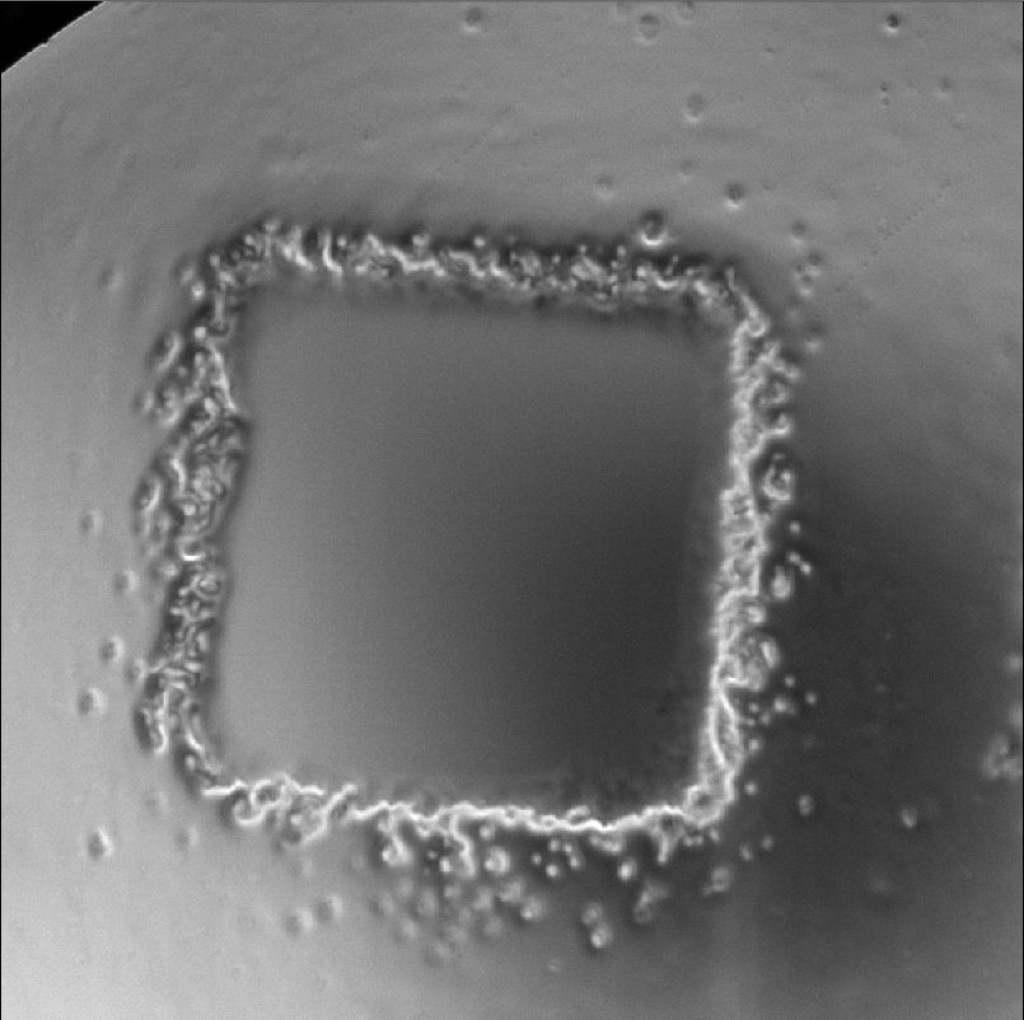
The microscope exposure technique requires that the PEG be in direct contact with printed surface of the mask. This requires some skill and planning when using an inverted microscope. Efforts to mechanically crosslink PEG into microporous track-etched membranes have been relatively unsuccessful to date. Peeling the mask from the membrane after cross-linking results in dissociation of the mask from the polymer membrane. However, the crosslinked PEG takes on a microscale texture, which likely corresponds to the roughness and porosity of the membrane surface. We will be pursing non-stick coatings for the mask to more easily separate the mask without damaging the crosslinked structure.
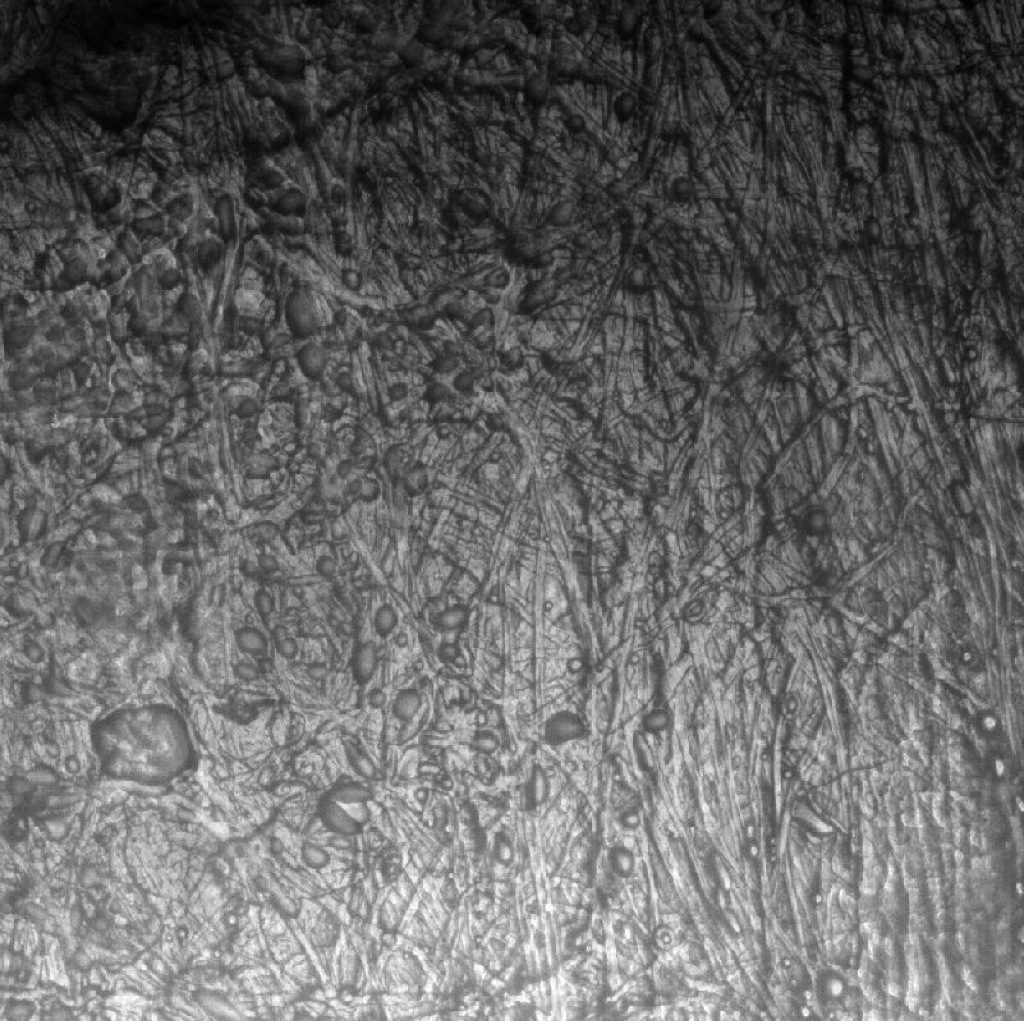
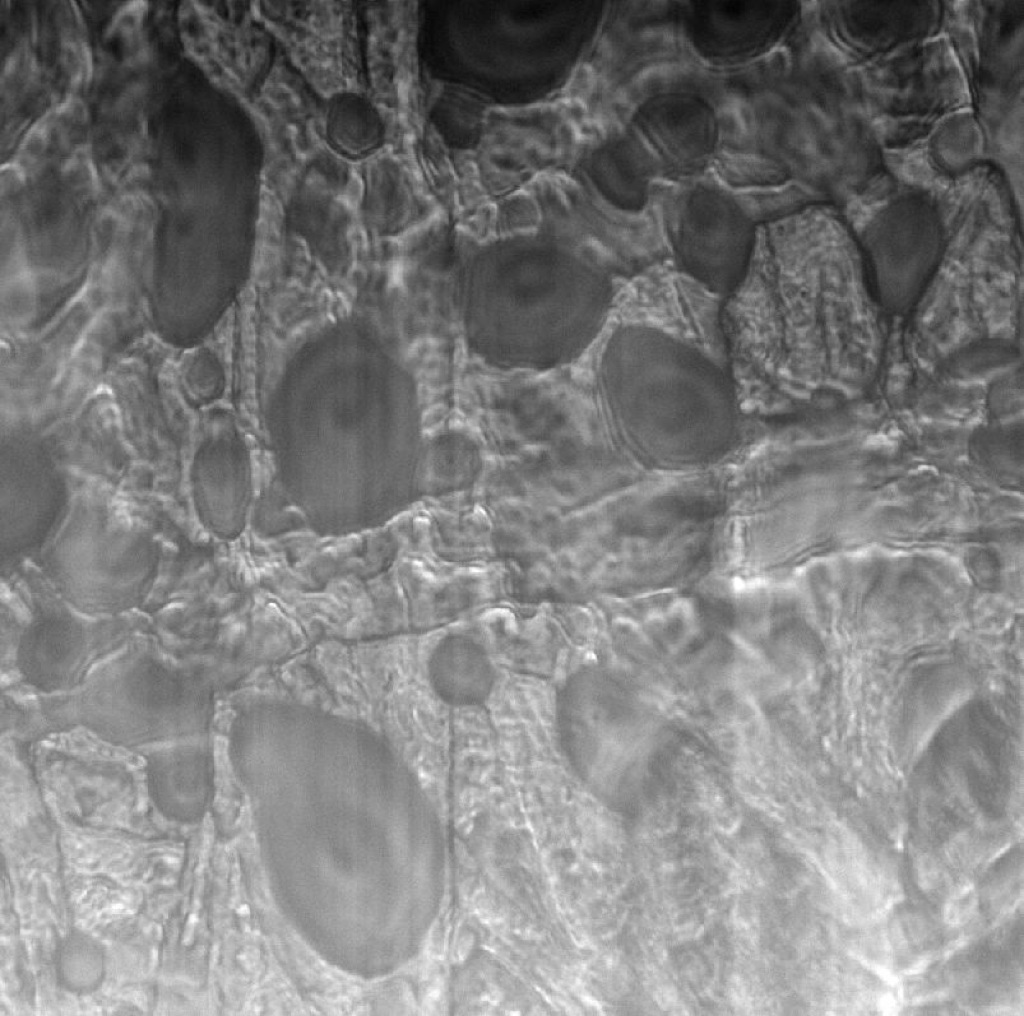
3 micrometer filers: 10x and 64x